
Photo Courtesy: Google
By Raymond Mendoza
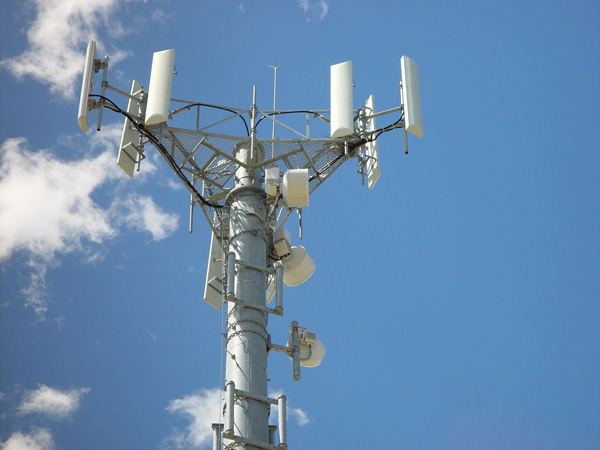
Walnut – More than 800 Walnut residents received a small victory this month as their combined efforts caused the denial of two license agreements between the City of Walnut and Verizon Wireless for cell phone towers – one on Gartel Drive and another at Snow Creek Park.
According to Walnut resident, Heinrich Dy, more than 800 residents signed an online petition at kidsafegps.com, asking City officials to deny the installation of cell phone towers within 1,500 feet of any school and deny the license agreement for a proposed tower at 555 Gartel Drive. Dy and the other residents claimed that the area has no need for a new cell phone tower and that building one so close to residential houses, schools and parks would negatively impact the City, bring down property values and do not fit the usage of the area.
Dy claims that he has working knowledge of how cell phone coverage works, stating that he worked as a wireless network performance specialist for Microcell/Clearnet in Canada: he has also worked for Telus in Canada and Telstra in Australia – all of which are cell phone companies. Along with another resident, Cal Poly Pomona Electrical Engineering Professor and principal investigator at AT&T Bell Laboratories, James Yeh, the two are being called “expert witnesses” in regard to cell phone communication and voicing their concerns about Verizon’s plans.
“With my experience with cell phone companies, what I can say is that a simple drive test coverage map for telephone service is a basic tool that every engineering department of every cell phone company uses,” Dy said. “This knowledge is what allowed the residents to a) create our own maps; b) seek out crowd funded maps; and c) insist on those maps being made available by Verizon – which Verizon refused to provide even in repeated requests. It also allowed us to see that the supposed drive test map that Verizon provided was not the correct map needed to prove ‘significant gap.’”
While Dy and other residents are vehemently opposed to the new cell phone towers, representatives for Verizon Wireless claim that those estimated 800 residents do not speak for the entire city, and especially their Walnut customer base. During the Aug. 12 City Council meeting, Verizon Representative Jane Collier stated that 361 Verizon customers/Walnut residents voiced their approval of the cell phone towers via text messages from August 7-9. Collier stated that the text message was sent out to their Walnut customers as proof of the City’s need for another cell tower and that additional coverage is needed in parts of the City.
“Verizon has provided the City of Walnut with data to demonstrate the need for improved Verizon Wireless coverage and capacity in the area,” said Verizon Wireless Public Relations and Employee Communications representative for Northern California, Heidi Flato. “Customers are increasing their wireless use at a dramatic pace.”
Flato also mentioned that Verizon is expecting the demand for cell phone services to increase by 650 percent by the year 2018, and that the decline of landlines will cause a higher demand for cell phone service to avoid dropped calls to friends, family members and emergency services.
Flato also mentioned that Verizon’s research shows that good cell phone coverage is a positive aspect for perspective home buyers – meaning that increased coverage would make Walnut more appealing to homeowners.
Fellow cell phone tower protestor and Walnut resident, Angela Cinader, also brought up safety concerns for the tower, stating that cell phone towers constructed so close to schools and heavily populated areas have an inherent “risk of collapses and fires.” Cinader noted that if a cell phone tower were placed at either Snow Creek Park or Gartel Drive, Verizon would be putting adults and children in harm’s way.
“They keep coming back despite lack of solid evidence on significant gap and a thorough alternative sites analysis,” Cinader said. “But the fact that both the Planning Commission and the City Council have voted to reject these towers shows that our City government has considered all the evidence objectively, and we residents are grateful for that.”
While the estimated 800 petition signatures can celebrate in their victory for now, the fight is not over, according to Dy. After Verizon’s license agreement was denied on Aug. 5 and 12, the company will have 15 working days to appeal and once again attempt to approve their license agreement and build their new towers somewhere in Walnut.
 ABC PR -Community News, Public Relations and Advertising Services