Category Archives: History 101

History 101

By History.com


May 27, 1937 : Golden Gate Bridge opens


On this day in 1937, the Golden Gate Bridge, connecting San Francisco with Marin County, California, officially opens amid citywide celebration.

Named for the narrow strait that marks the entrance to the San Francisco Bay from the Pacific Ocean, the Golden Gate Bridge was constructed from January 1933 to May 1937. At the time, it was the longest suspension bridge in the world, at 4,200 feet. From the beginning, the bridge’s location posed challenges for its construction, not least because of its proximity to the mighty San Andreas Fault, which passes from north to south through the San Francisco Bay area. In addition, the tumultuous waters of the strait posed grave dangers for the underwater construction work necessary to build the bridge.

Still, the engineer Joseph Strauss waged a tireless 16-year campaign to convince skeptical city officials and other opponents of the controversial project. On the bridge’s opening day, he triumphantly exclaimed: “The bridge which could not and should not be built, which the War Department would not permit, which the rocky foundation of the pier base would not support, which would have no traffic to justify it, which would ruin the beauty of the Golden Gate, which could not be completed within my costs estimate of $27,165,000, stands before you in all its majestic splendor, in complete refutation of every attack made upon it.”

By 6 a.m. on May 27, 18,000 people were lined up on both the San Francisco and Marin sides; in all, some 200,000 showed up that day. At the appointed hour, a foghorn blew and the toll gates opened, releasing the earliest arrivals, who rushed to be the first to cross. Many schools, offices and stores were closed, and the day was designated “Pedestrian Day.” The next day, the bridge opened to vehicular traffic. Across the country in the White House, President Franklin Delano Roosevelt proclaimed the bridge open to the world, and by the end of the day, more than 32,000 vehicles had paid tolls and crossed. According to the official Web site of the Golden Gate Bridge, nearly 2 billion vehicles have crossed the bridge (in both north- and southbound directions) in the 70-plus years of its operation.


History 101

Duke of Buccleuch and Queensberry Collection

May 19, 1536 : Anne Boleyn is executed

By History.com


On this day in 1536, Anne Boleyn, the infamous second wife of King Henry VIII, is executed on charges including adultery, incest and conspiracy against the king.

King Henry had become enamored of Anne Boleyn in the mid-1520s, when she returned from serving in the French court and became a lady-in-waiting to his first wife, Catherine of Aragon.

Dark-haired, with an olive complexion and a long, elegant neck, Anne was not said to be a great beauty, but she clearly captivated the king. As Catherine had failed to produce a male heir, Henry transferred his hopes for the future continuation of his royal line to Anne, and set about getting a divorce or annulment so he could marry her.

For six years, while his advisers worked on what became known as “the King’s great matter,” Henry and Anne courted first discreetly, then openly—angering Catherine and her powerful allies, including her nephew, Emperor Charles V.

In 1532, the savvy and ruthless Thomas Cromwell won control of the king’s council and engineered a daring revolution—a break with the Catholic Church, and Henry’s installation as supreme head of the Church of England. Many unhappy Britons blamed Anne, whose sympathies lay with England’s Protestant reformers even before the Church’s steadfast opposition turned her against it.

At Queen Anne’s coronation in June 1533, she was nearly six months pregnant, and in September she gave birth to a girl, Elizabeth, rather than the much-longed-for male heir. She later had two stillborn children, and suffered a miscarriage in January 1536; the fetus appeared to be male.

By that time, Anne’s relationship with Henry had soured, and he had his eye on her lady-in-waiting, the demure Jane Seymour.

After Anne’s latest miscarriage, and the death of Catherine that same month, rumors began flying that Henry wanted to get rid of Anne so he could marry Jane. Henry had apparently convinced himself that Anne had seduced him by witchcraft, and also told Cromwell (Anne’s former ally, now her rival for power in Henry’s court) that he wanted to take steps towards repairing relations with Emperor Charles.

Seeing Anne’s weak position, her many enemies jumped at the chance to bring about the downfall of “the Concubine,” and launched an investigation that compiled evidence against her.

After Mark Smeaton, a court musician, confessed (possibly under torture) that he had committed adultery with the queen, the drama was set in motion at the May Day celebration at the king’s riverside palace at Greenwich.

King Henry left suddenly in the middle of the day’s jousting tournament, which featured Anne’s brother George Boleyn, Viscount Rochford, and Sir Henry Norris, one of the king’s closest friends and a royal officer in his household. He gave no explanation for his departure to Queen Anne, whom he would never see again.

In quick succession, Norris and Rochford were both arrested on charges of adultery with the queen (incest, in Rochford’s case) and plotting with her against her husband. Sir Frances Weston and Sir William Brereton were arrested in the following days on similar charges, while Queen Anne herself was taken into custody at Greenwich on May 2. She was subsequently imprisoned in the Tower of London.

The trial of Smeaton, Weston, Brereton and Norris took place in Westminster Hall on May 12. At the conclusion of the trial, the court sentenced all four men to be hanged, drawn and quartered. Three days later, Anne and her brother, Lord Rochford, went on trial in the Great Hall of the Tower of London.

The Duke of Norfolk presided over the trial as lord high steward, representing the king. The most damning evidence against Rochford was the testimony of his own jealous wife, who claimed “undue familiarity” between him and his sister.

As for Anne, most historians agree she was almost certainly not guilty of the charges against her. She never admitted to any wrongdoing, the evidence against her was weak and it seems highly unlikely she would have endangered her position by adultery or conspiring to harm the king, whose favor she depended upon so greatly.

Still, Anne and Rochford were found guilty as charged, and Norfolk pronounced the sentence: Both were to be burnt or executed according to the king’s wishes.

On May 17, the five condemned men were executed on Tower Hill, but Henry showed mercy to his queen, calling in the “hangman of Calais” so that she could be beheaded with the sword rather than the axe.

On the morning of May 19, a small crowd gathered on Tower Green as Anne Boleyn—clad in a dark grey gown and ermine mantle, her hair covered by a headdress over a white linen coif—approached her final fate.

With a swift blow from the executioner’s sword, Anne Boleyn was dead. Less than 24 hours later, Henry was formally betrothed to Jane Seymour; they married some 10 days after the execution.

While Queen Jane did give birth to the long-awaited son, who would succeed Henry as King Edward VI at the tender age of nine, it would be his daughter with Anne Boleyn who would go on to rule England for more than 40 years as the most celebrated Tudor monarch: Queen Elizabeth I. ■

History 101

World War I German flying ace Baron von Richthofen with one of his aircraft, a triplane. (Photo by Time Life Pictures/Mansell/The LIFE Picture Collection/Getty Images)

World War I: April 21, 1918

History.com

Red Baron killed in action

In the well-trafficked skies above the Somme River in France, Baron Manfred von Richthofen, the notorious German flying ace known as the Red Baron,” is killed by Allied fire on April 21, 1918.

Richthofen, the son of a Prussian nobleman, switched from the German army to the Imperial Air Service in 1915. By 1916, he was terrorizing the skies over the Western Front in an Albatross biplane, downing 15 enemy planes by the end of the year, including one piloted by British flying ace Major Lanoe Hawker. In 1917, Richthofen surpassed all flying-ace records on both sides of the Western Front and began using a Fokker triplane, painted entirely red in tribute to his old cavalry regiment. Although only used during the last eight months of his career, it was this aircraft with which Richthofen was most commonly associated and that led to an enduring English nickname for the German pilot—the Red Baron.

On April 21, 1918, with 80 victories under his belt, Richthofen led his squadron of triplanes deep into Allied territory in France on a search for British observation aircraft. The flight drew the attention of an Allied squadron led by Canadian Royal Air Force pilot Captain Arthur Roy Brown. As Richthofen pursued a plane piloted by Brown’s compatriot, Wilfred R. May, the Red Baron ventured too far into enemy territory and too low to the ground. Two miles behind the Allied lines, just as Brown caught up with Richthofen and fired on him, the chase passed over an Australian machine-gun battery, whose riflemen opened fire. Richthofen was hit in the torso; though he managed to land his plane alongside the road from Corbie to Bray, near Sailley-le-Sac, he was dead by the time Australian troops reached him. Brown is often given credit for downing Richthofen from the air, though some claimed it was actually an Australian gunner on the ground who fired the fatal shot; debate continues to this day.

Manfred von Richthofen was buried by the Allies in a small military cemetery in Bertangles, France, with full military honors. He was 25 years old at the time of his death. His body was later moved to a larger cemetery at Fricourt. In 1925, it was moved again, at the behest of his brother, Karl Bolko, this time to Berlin, where he was buried at Invaliden Cemetery in a large state funeral. In a time of wooden and fabric aircraft, when 20 air victories ensured a pilot legendary status, the Red Baron downed 80 enemy aircraft and went down in history as one of the greatest heroes to emerge from World War I on either side of the conflict.


History 101

Photo Credit: rrojascms22.weebly.com

April 14, 1865: President Lincoln is shot

History.com

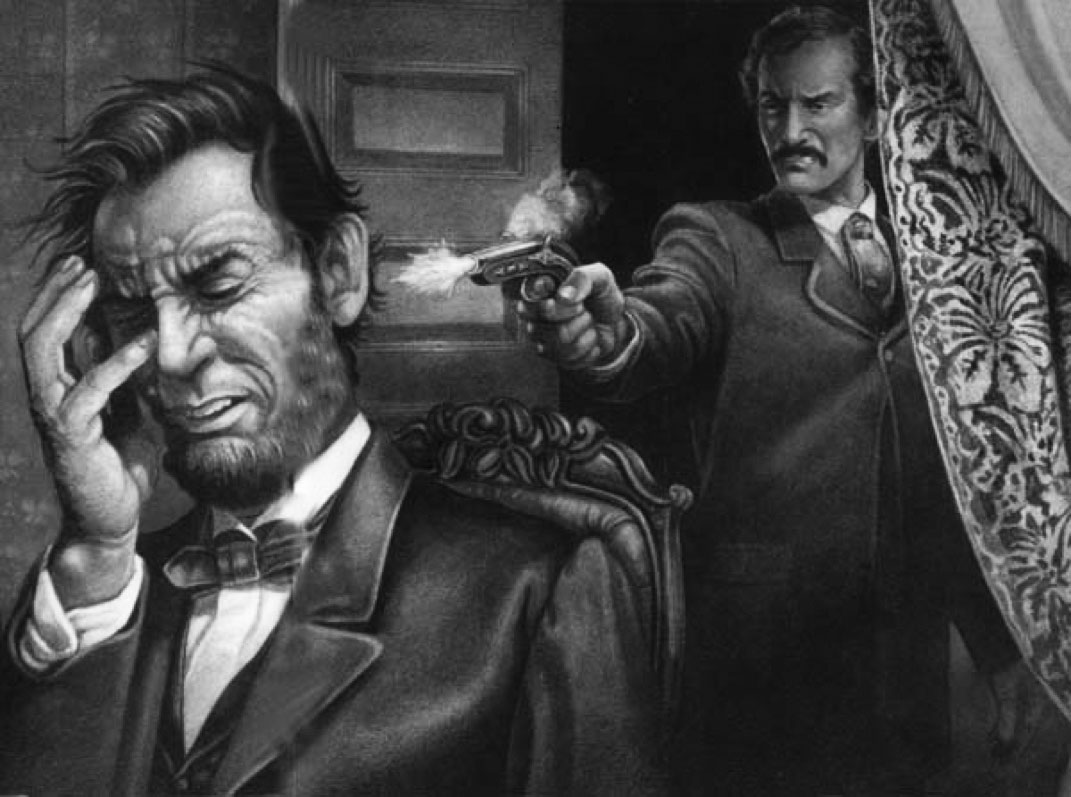
At Ford’s Theater in Washington, D.C., John Wilkes Booth, an actor and Confederate sympathizer, fatally wounds President Abraham Lincoln. The attack came only five days after Confederate General Robert E. Lee surrendered his massive army at Appomattox, effectively ending the American Civil War.

Booth, who remained in the North during the war despite his Confederate sympathies, initially plotted to capture President Lincoln and take him to Richmond, the Confederate capital. However, on March 20, 1865, the day of the planned kidnapping, the president failed to appear at the spot where Booth and his six fellow conspirators lay in wait. Two weeks later, Richmond fell to Union forces. In April, with Confederate armies near collapse across the South, Booth hatched a desperate plan to save the Confederacy.

Learning that Lincoln was to attend Laura Keene’s acclaimed performance in Our American Cousin at Ford’s Theater on April 14, Booth plotted the simultaneous assassination of Lincoln, Vice President Andrew Johnson, and Secretary of State William H. Seward. By murdering the president and two of his possible successors, Booth and his conspirators hoped to throw the U.S. government into paralyzing disarray.

On the evening of April 14, conspirator Lewis T. Powell burst into Secretary of State Seward’s home, seriously wounding him and three others, while George A. Atzerodt, assigned to Vice President Johnson, lost his nerve and fled. Meanwhile, just after 10 p.m., Booth entered Lincoln’s private theater box unnoticed, and shot the president with a single bullet in the back of his head. Slashing an army officer who rushed at him, Booth jumped to the stage and shouted “Sic semper tyrannis! [Thus always to tyrants]–the South is avenged!” Although Booth had broken his left leg jumping from Lincoln’s box, he succeeded in escaping Washington.

The president, mortally wounded, was carried to a cheap lodging house opposite Ford’s Theater. About 7:22 a.m. the next morning, he died–the first U.S. president to be assassinated. Booth, pursued by the army and secret service forces, was finally cornered in a barn near Bowling Green, Virginia, and died from a possibly self-inflicted bullet wound as the barn was burned to the ground. Of the eight other persons eventually charged with the conspiracy, four were hanged and four were jailed.


History 101

Courtesy: wikipedia

American Revolution: April 7, 1776

History.com

U.S. Navy captures first British warship

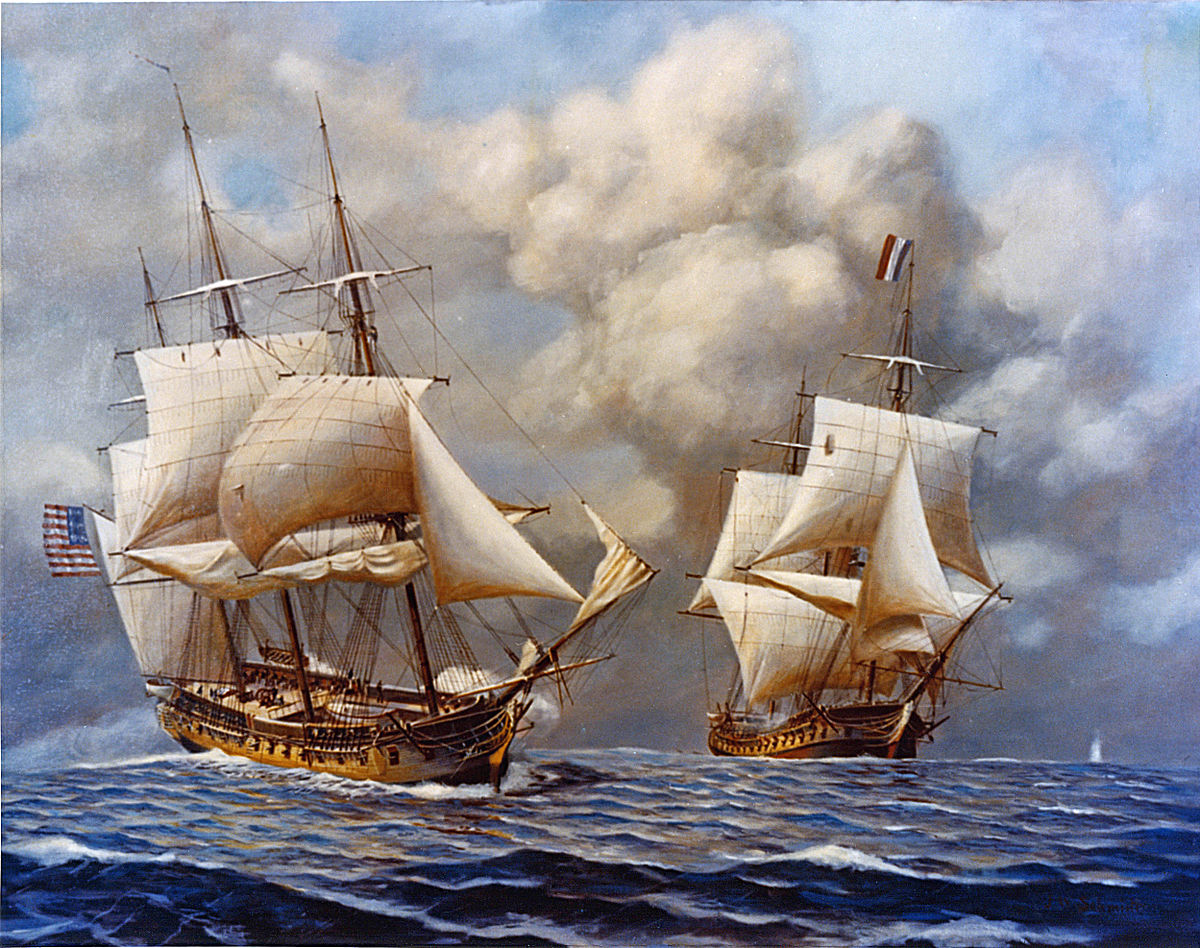
On this day in 1776, Navy Captain John Barry, commander of the American warship Lexington, makes the first American naval capture of a British vessel when he takes command of the British warship HMS Edward off the coast of Virginia. The capture of the Edward and its cargo turned Captain Barry into a national hero and boosted the morale of the Continental forces.

Barry was born in the seaboard county of Wexford, Ireland, in 1745 and offered his services to the Continental Congress upon the outbreak of the American Revolution. Congress purchased Barry’s ship, Black Prince, which it renamed Alfred and placed under the command of Commodore Esek Hopkins. It was the first ship to fly the American flag, raised by John Paul Jones.

Barry served with distinction throughout the American Revolution. At sea, he had continued success with the Lexington. On land, he raised a volunteer force to assist General Washington in the surprisingly successful Trenton, New Jersey, campaign of 1776-77. On May 29, 1781, Barry was wounded while successfully capturing the HMS Atlanta and the HMS Trepassy while in command of a new ship, Alliance. He recovered and successfully concluded the final naval battle of the Revolutionary War with a victory over the HMS Sybyllein March 1783.

Barry’s outstanding career has been memorialized on both sides of the Atlantic. A bridge bearing his name crosses the Delaware River, and Brooklyn, New York, is home to a park named for him. In addition, four U.S. Navy ships and a building at Villanova University carry his name, and statues in his honor stand in Washington, D.C., Philadelphia and his birthplace, Wexford, Ireland. On September 13, 1981, President Regan declared Commodore John Barry Day to honor a man he called one of the earliest and greatest American patriots, a man of great insight who perceived very early the need for American power on the sea.


History 101

April 4, 1968: Dr. King is Assassinated


By History.com

Just after 6 p.m. on April 4, 1968, Martin Luther King Jr. is fatally shot while standing on the balcony outside his second-story room at the Lorraine Motel in Memphis, Tennessee. The civil rights leader was in Memphis to support a sanitation workers’ strike and was on his way to dinner when a bullet struck him in the jaw and severed his spinal cord. King was pronounced dead after his arrival at a Memphis hospital. He was 39 years old.

In the months before his assassination, Martin Luther King became increasingly concerned with the problem of economic inequality in America. He organized a Poor People’s Campaign to focus on the issue, including an interracial poor people’s march on Washington, and in March 1968 traveled to Memphis in support of poorly treated African-American sanitation workers. On March 28, a workers’ protest march led by King ended in violence and the death of an African-American teenager. King left the city but vowed to return in early April to lead another demonstration.

On April 3, back in Memphis, King gave his last sermon, saying, “We’ve got some difficult days ahead. But it really doesn’t matter with me now, because I’ve been to the mountaintop…And He’s allowed me to go up to the mountain. And I’ve looked over, and I’ve seen the Promised Land. I may not get there with you. But I want you to know tonight that we, as a people, will get to the promised land.”

One day after speaking those words, Dr. King was shot and killed by a sniper. As word of the assassination spread, riots broke out in cities all across the United States and National Guard troops were deployed in Memphis and Washington, D.C. On April 9, King was laid to rest in his hometown of Atlanta, Georgia. Tens of thousands of people lined the streets to pay tribute to King’s casket as it passed by in a wooden farm cart drawn by two mules.

The evening of King’s murder, a Remington .30-06 hunting rifle was found on the sidewalk beside a rooming house one block from the Lorraine Motel. During the next several weeks, the rifle, eyewitness reports, and fingerprints on the weapon all implicated a single suspect: escaped convict James Earl Ray. A two-bit criminal, Ray escaped a Missouri prison in April 1967 while serving a sentence for a holdup. In May 1968, a massive manhunt for Ray began. The FBI eventually determined that he had obtained a Canadian passport under a false identity, which at the time was relatively easy.

On June 8, Scotland Yard investigators arrested Ray at a London airport. He was trying to fly to Belgium, with the eventual goal, he later admitted, of reaching Rhodesia. Rhodesia, now called Zimbabwe, was at the time ruled by an oppressive and internationally condemned white minority government. Extradited to the United States, Ray stood before a Memphis judge in March 1969 and pleaded guilty to King’s murder in order to avoid the electric chair. He was sentenced to 99 years in prison.

Three days later, he attempted to withdraw his guilty plea, claiming he was innocent of King’s assassination and had been set up as a patsy in a larger conspiracy. He claimed that in 1967, a mysterious man named “Raoul” had approached him and recruited him into a gunrunning enterprise. On April 4, 1968, he said, he realized that he was to be the fall guy for the King assassination and fled to Canada. Ray’s motion was denied, as were his dozens of other requests for a trial during the next 29 years.

During the 1990s, the widow and children of Martin Luther King Jr. spoke publicly in support of Ray and his claims, calling him innocent and speculating about an assassination conspiracy involving the U.S. government and military. U.S. authorities were, in conspiracists’ minds, implicated circumstantially. FBI Director J. Edgar Hoover obsessed over King, who he thought was under communist influence. For the last six years of his life, King underwent constant wiretapping and harassment by the FBI. Before his death, Dr. King was also monitored by U.S. military intelligence, which may have been asked to watch King after he publicly denounced the Vietnam War in 1967. Furthermore, by calling for radical economic reforms in 1968, including guaranteed annual incomes for all, King was making few new friends in the Cold War-era U.S. government.

Over the years, the assassination has been reexamined by the House Select Committee on Assassinations, the Shelby County, Tennessee, district attorney’s office, and three times by the U.S. Justice Department. The investigations all ended with the same conclusion: James Earl Ray killed Martin Luther King. The House committee acknowledged that a low-level conspiracy might have existed, involving one or more accomplices to Ray, but uncovered no evidence to definitively prove this theory. In addition to the mountain of evidence against him–such as his fingerprints on the murder weapon and his admitted presence at the rooming house on April 4–Ray had a definite motive in assassinating King: hatred. According to his family and friends, he was an outspoken racist who informed them of his intent to kill Dr. Martin Luther King, Jr. He died in 1998.


History 101

March 24, 1989Exxon Valdez runs aground in Alaska

History.com

On this day in 1989, the Exxon Valdez oil tanker hits a reef in Alaska’s Prince William Sound, resulting in an enormous oil spill. Though there were no human victims of the crash, hundreds of miles of pristine coastline became coated with oil and thousands of sea birds, mammals and fish perished in the disaster.

The Valdez was delivered to Exxon in 1986 and named after the Alaskan port terminal where oil was sent out to the main 48 states. It was capable of carrying 200,000 tons of crude oil and was usually manned by a 20-person crew. On the night of March 23, the ship left port in Valdez at about 9 p.m. Captain Joseph Hazelwood was in charge, but handed over the piloting of the ship to Third Mate Greg Cousins shortly into the journey. Just after midnight, there was a miscommunication on a change of course as the Valdezmaneuvered its way through a narrow shipping lane between Bligh Reef and Busby Island in Prince William Sound.

The Valdez ran aground on the reef, puncturing the ship’s hull and sending oil spilling into the sound. Unfortunately, the response to the spill was not ideal. There was a limited attempt to use dispersants by helicopter, but there was only a small supply of them available near the site. Also, some reports suggested that dispersants, chemicals applied to the oil to push it below the surface (where it causes the most damage), were ineffective. Booms and skimmers, equipment that prevents the spread of oil in water and manually removes oil from the water, were not available for use until a full day after the spill. Unfortunately, even after the booms and skimmers were finally brought into service, they often broke down and were thus also not completely effective.

Overall, the Valdez spilled close to 30 million gallons of oil into Prince William Sound over several days. Beaches in the Knight Island chain were covered in oil. The primary victims of the oil were sea birds. Some estimate that as many as 250,000 of the birds were killed, as well as several thousand sea otters and hundreds of seals and bald eagles. Salmon and herring egg losses were also extensive. In total, about 800 miles of coastline were damaged by the oil.

The Valdez accident led to a long series of lawsuits and legislative changes. Congress passed the Oil Pollution Act of 1990, which included a clause banning the Valdez from Alaska. A jury in Anchorage, Alaska, awarded millions of dollars in damages against Exxon to the affected Alaskan communities as well as a $5 billion punitive-damage award. On appeal, the 9th Circuit Court ruled that the judge had to reduce the award. When the judge reduced it only slightly, Exxon appealed again and even many years after the incident, the ultimate resolution was still in doubt. Captain Hazelwood was accused of being intoxicated at the time of the accident, but such allegations were never fully proven. He was, however, convicted of negligence, fined and ordered to perform community service.

After undergoing $30 million in repairs, the Valdez was renamed Sea River Mediterranean and returned to service, but is no longer used in Alaska.


History 101

Google Images

March 10, 1864: Lincoln signs Ulysses S. Grant’s commission to command the U.S. Army

History.com

On this day in 1864, President Abraham Lincoln signs a brief document officially promoting then-Major General Ulysses S. Grant to the rank of lieutenant general of the U.S. Army, tasking the future president with the job of leading all Union troops against the Confederate Army.

The rank of lieutenant general had not officially been used since 1798; at that time, President John Adams assigned the post to former President George Washington, in anticipation of a possible French invasion of the United States. One of Grant’s predecessors in the Civil War, Winfield Scott, had briefly earned the rank, but the appointment was only temporary—really, use of the rank had been suspended after George Washington’s death in 1799.

In 1862, Lincoln asked Congress to revive the rank of lieutenant general in order to distinguish between the general in charge of all Union forces and other generals of equal rank who served under him in the field. Congress also wanted to reinstate the rank of lieutenant general, but only if Lincoln gave the rank to Grant. Lincoln had other ideas.

Lincoln preferred to promote then-Commanding General Henry Wagner Halleck to lead the Union Army, which had been plagued by a string of ineffective leaders and terrible losses in battle. He was reluctant to promote Grant and risk boosting the general’s popularity; at the time Washington was abuzz with rumors that many northern senators were considering nominating Grant instead of Lincoln at the 1864 Republican National Convention. After Grant publicly dismissed the idea of running for the presidency, Lincoln submitted to Congress’ choice and agreed to give Grant the revived rank. As lieutenant general of the U.S. Army, Grant was answerable only to Lincoln. Well-respected by troops and civilians, Grant earned Lincoln’s trust and went on to force the South’s surrender in 1865.

Although Grant enjoyed a distinguished career in the military, he later wrote that he never consciously chose the life of a soldier. As a student at West Point, he never expected to graduate, let alone lead the entire U.S. Army in a desperate but ultimately successful struggle to preserve the Union.

In 1869, Grant became the 18th president of the United States.

History 101

Photo courtesy: Google

Sit-down strike begins in Flint

History.com

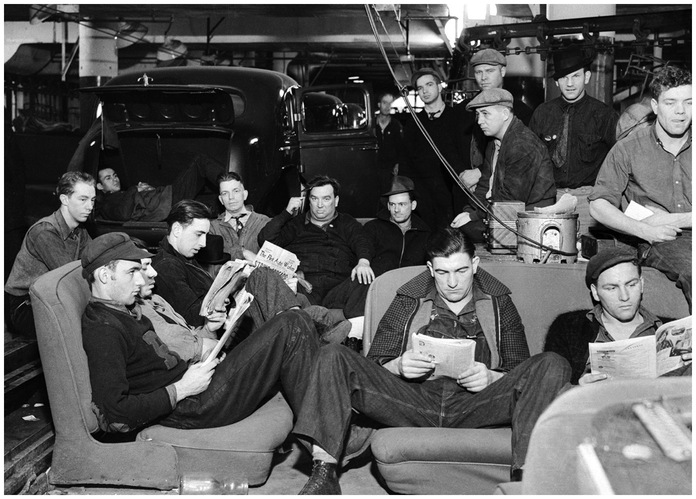
At 8 p.m. on December 30, 1936, in one of the first sit-down strikes in the United States, autoworkers occupy the General Motors Fisher Body Plant Number One in Flint, Michigan. The autoworkers were striking to win recognition of the United Auto Workers (UAW) as the only bargaining agent for GM’s workers; they also wanted to make the company stop sending work to non-union plants and to establish a fair minimum wage scale, a grievance system and a set of procedures that would help protect assembly-line workers from injury. In all, the strike lasted 44 days.

The Flint sit-down strike was not spontaneous; UAW leaders, inspired by similar strikes across Europe, had been planning it for months. The strike actually began at smaller plants: Fisher Body in Atlanta on November 16, GM in Kansas City on December 16 and a Fisher stamping plant in Cleveland on December 28. The Flint plant was the biggest coup, however: it contained one of just two sets of body dies that GM used to stamp out almost every one of its 1937 cars. By seizing control of the Flint plant, autoworkers could shut down the company almost entirely.

So, on the evening of December 30, the Flint Plant’s night shift simply stopped working. They locked themselves in and sat down. “She’s ours!” one worker shouted.

GM argued that the strikers were trespassing and got a court order demanding their evacuation; still, the union men stayed put. GM turned off the heat in the buildings, but the strikers wrapped themselves in coats and blankets and hunkered down. On January 11, police tried to cut off the strikers’ food supply; in the resulting riot, known as the “Battle of the Running Bulls,” 16 workers and 11 policemen were injured and the UAW took over the adjacent Fisher Two plant. On February 1, the UAW won control of the enormous Chevrolet No. 4 engine factory. GM’s output went from a robust 50,000 cars in December to just 125 in February.

Despite GM’s enormous political clout, Michigan Governor Frank Murphy refused to use force to break the strike. Though the sit-ins were illegal, he believed, he also believed that authorizing the National Guard to break the strike would be an enormous mistake. “If I send those soldiers right in on the men,” he said, “there’d be no telling how many would be killed.” As a result, he declared, “The state authorities will not take sides. They are here only to protect the public peace.”

Meanwhile, President Roosevelt urged GM to recognize the union so that the plants could reopen. In mid-February, the automaker signed an agreement with the UAW. Among other things, the workers were given a 5 percent raise and permission to speak in the lunchroom.

History 101

December 9 1992: U.S Marines storm Mogadishu, Somalia

History.com

In 1992, 1,800 United States Marines arrive in Mogadishu, Somalia, to spearhead a multinational force aimed at restoring order in the conflict-ridden country.

Following centuries of colonial rule by countries including Portugal, Britain and Italy, Mogadishu became the capital of an independent Somalia in 1960. Less than 10 years later, a military group led by Major General Muhammad Siad Barre seized power and declared Somalia a socialist state. A drought in the mid-1970s combined with an unsuccessful rebellion by ethnic Somalis in a neighboring province of Ethiopia to deprive many of food and shelter. By 1981, close to 2 million of the country’s inhabitants were homeless. Though a peace accord was signed with Ethiopia in 1988, fighting increased between rival clans within Somalia, and in January 1991 Barre was forced to flee the capital. Over the next 23 months, Somalia’s civil war killed some 50,000 people; another 300,000 died of starvation as United Nations peacekeeping forces struggled in vain to restore order and provide relief amid the chaos of war.

In early December 1992, outgoing U.S. President George H.W. Bush sent the contingent of Marines to Mogadishu as part of a mission dubbed Operation Restore Hope. Backed by the U.S. troops, international aid workers were soon able to restore food distribution and other humanitarian aid operations. Sporadic violence continued, including the murder of 24 U.N. soldiers from Pakistan in 1993. As a result, the U.N. authorized the arrest of General Mohammed Farah Aidid, leader of one of the rebel clans. On October 3, 1993, during an attempt to make the arrest, rebels shot down two of the U.S. Army’s Black Hawk helicopters and killed 18 American soldiers.

As horrified TV viewers watched images of the bloodshed—-including footage of Aidid’s supporters dragging the body of one dead soldier through the streets of Mogadishu, cheering—-President immediately gave the order for all American soldiers to withdraw from Somalia by March 31, 1994. Other Western nations followed suit. When the last U.N. peacekeepers left in 1995, ending a mission that had cost more than $2 billion, Mogadishu still lacked a functioning government. A ceasefire accord signed in Kenya in 2002 failed to put a stop to the violence, and though a new parliament was convened in 2004, rival factions in various regions of Somalia continue to struggle for control of the troubled nation.

History 101

Photo courtesy: Google Images

December 2 1954: McCarthy condemned by Senate

History.com

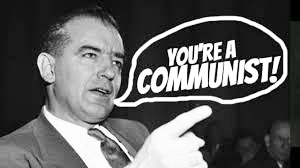
The U.S. Senate votes 65 to 22 to condemn Senator Joseph R. McCarthy for conduct unbecoming of a senator. The condemnation, which was equivalent to a censure, related to McCarthy’s controversial investigation of suspected communists in the U.S. government, military, and civilian society.

What is known as “McCarthyism” began on February 9, 1950, when McCarthy, a relatively obscure Republican senator from Wisconsin, announced during a speech in Wheeling, West Virginia, that he had in his possession a list of 205 communists who had infiltrated the U.S. State Department. The unsubstantiated declaration, which was little more than a publicity stunt, thrust Senator McCarthy into the national spotlight.  When asked to reveal the names on the list, the opportunistic senator named just one official who he determined guilty by association: Owen Lattimore, an expert on Chinese culture and affairs who had advised the State Department. McCarthy described Lattimore as the “top Russian spy” in America.

These and other equally shocking accusations prompted the Senate to form a special committee, headed by Senator Millard Tydings of Maryland, to investigate the matter. The committee found little to substantiate McCarthy’s charges, but McCarthy nevertheless touched a nerve in the American public, and during the next two years he made increasingly sensational charges, even attacking President Harry S. Truman’s respected former secretary of state, George C. Marshall.

In 1953, a newly Republican Congress appointed McCarthy chairman of the Committee on Government Operations and its Subcommittee on Investigations, and McCarthyism reached a fever pitch. In widely publicized hearings, McCarthy bullied defendants under cross-examination with unlawful and damaging accusations, destroying the reputations of hundreds of innocent officials and citizens.

In the early months of 1954, McCarthy, who had already lost the support of much of his party because of his controversial tactics, finally overreached himself when he accused several U.S. Army officers of communist subversion. Republican President Dwight D. Eisenhower pushed for an investigation of McCarthy’s charges, and the televised hearings exposed the senator as a reckless and excessive tyrant who never produced proper documentation for any of his claims.

A climax of the hearings came on June 9, when Joseph N. Welch, special attorney for the army, responded to a McCarthy attack on a member of his law firm by facing the senator and tearfully declaring, “Until this moment, senator, I think I never really gauged your cruelty or your recklessness. Let us not assassinate this lad further, senator. You have done enough. Have you no sense of decency, sir? At long last, have you no sense of decency?” The crowded hearing room burst into spontaneous applause.

On December 2, after a heated debate, the Senate voted to condemn McCarthy for conduct “contrary to senatorial traditions.” By the time of his death from alcoholism in 1957, the influence of Senator Joseph McCarthy in Congress was negligible.


History 101

Courtesy: Google Images

Kennedy laid to rest at Arlington

History.com

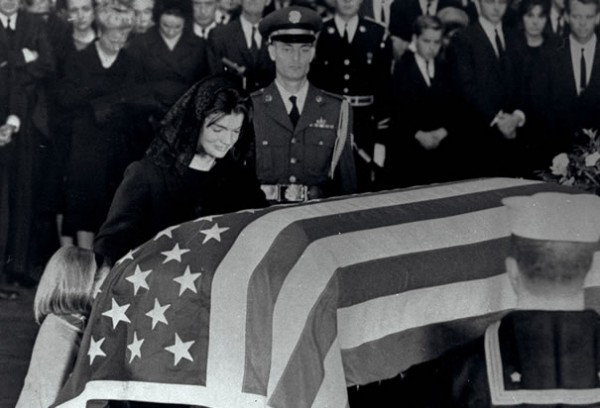
On this day in 1963, President John F. Kennedy, who was assassinated three days earlier, is buried at Arlington National Cemetery. It was his son’s third birthday.

Kennedy’s coffin had lain in state in the rotunda of the Capitol building the previous day. Approximately 250,000 people streamed by the closed flag-draped coffin in a massive outpouring of respect. The next day, television and movie cameras rolled while Kennedy’s wife Jackie, his brothers Robert and Ted, political leaders and foreign dignitaries formed a solemn funeral procession behind Kennedy’s coffin as it was transferred atop a horse-drawn caisson to St. Matthew’s Cathedral. Observers noted the only sounds that could be heard were the cadence of drum beats and horses’ hooves and muffled sobs from the approximately 1 million people who lined the route between the Capitol and the cathedral. At one point, Kennedy’s son, John Jr., who turned three that day, was filmed saluting his father’s coffin.

After the state funeral at St. Matthew’s–the family had held a private mass at the White House on November 23–the mourners proceeded to Arlington National Cemetery by car where Kennedy, a decorated World War II hero, was buried with military honors. Kennedy was the second president to be buried at Arlington; President William Howard Taft had been interred there in 1930.

Although Kennedy had not specified where he wanted to be buried, most assumed his gravesite would be in his home state of Massachusetts. In March 1963, though, President Kennedy had made an unscheduled tour of Arlington and had reportedly remarked to a friend on the view of the Potomac River from the cemetery’s Custis-Lee Mansion, saying it was “so magnificent I could stay forever.” After the assassination, Kennedy’s brother-in-law, Sargent Shriver, suggested Arlington be Kennedy’s final resting place. Jackie toured the site on November 24 and made the final decision, saying “he belongs to the people.”


History 101

Photo courtesy: Google Images

By History.com

Some 100 people, many of them seeking religious freedom in the New World, set sail from England on the Mayflower in September 1620. That November, the ship landed on the shores of Cape Cod, in present-day Massachusetts. A scouting party was sent out, and in late December the group landed at Plymouth Harbor, where they would form the first permanent settlement of Europeans in New England. These original settlers of Plymouth Colony are known as the Pilgrim Fathers, or simply as the Pilgrims.

THE MAYFLOWER VOYAGE

The group that set out from Plymouth, in southwestern England, in September 1620 included 35 members of a radical Puritan faction known as the English Separatist Church. In 1607, after illegally breaking from the Church of England, the Separatists settled in the Netherlands, first in Amsterdam and later in the town of Leiden, where they remained for the next decade under the relatively lenient Dutch laws. Due to economic difficulties, as well as fears that they would lose their English language and heritage, they began to make plans to settle in the New World. Their intended destination was a region near the Hudson River, which at the time was thought to be part of the already established colony of Virginia. In 1620, the would-be settlers joined a London stock company that would finance their trip aboard the Mayflower, a three-masted merchant ship, in 1620. A smaller vessel, the Speedwell, had initially accompanied the Mayflower and carried some of the travelers, but it proved unseaworthy and was forced to return to port by September.

Some of the most notable passengers on the Mayflower included Myles Standish, a professional soldier who would become the military leader of the new colony; and William Bradford, a leader of the Separatist congregation who wrote the still-classic account of the Mayflower voyage and the founding of Plymouth Colony. While still on board the ship, a group of 41 men signed the so-called Mayflower Compact, in which they agreed to join together in a “civil body politic.” This document would become the foundation of the new colony’s government.

SETTLING AT PLYMOUTH

Rough seas and storms prevented the Mayflower from reaching their initial destination, and after a voyage of 65 days the ship reached the shores of Cape Cod, anchoring on the site of Provincetown Harbor in mid-November. After sending an exploring party ashore, the Mayflower landed at what they would call Plymouth Harbor, on the western side of Cape Cod Bay, in mid-December. During the next several months, the settlers lived mostly on the Mayflower and ferried back and forth from shore to build their new storage and living quarters. The settlement’s first fort and watchtower was built on what is now known as Burial Hill (the area contains the graves of Bradford and other original settlers).

More than half of the English settlers died during that first winter, as a result of poor nutrition and housing that proved inadequate in the harsh weather. Leaders such as Bradford, Standish, John Carver, William Brewster and Edward Winslow played important roles in keeping the remaining settlers together. In April 1621, after the death of the settlement’s first governor, John Carver, Bradford was unanimously chosen to hold that position; he would be reelected 30 times and served as governor of Plymouth for all but five years until 1656.

RELATIONS WITH NATIVE AMERICANS

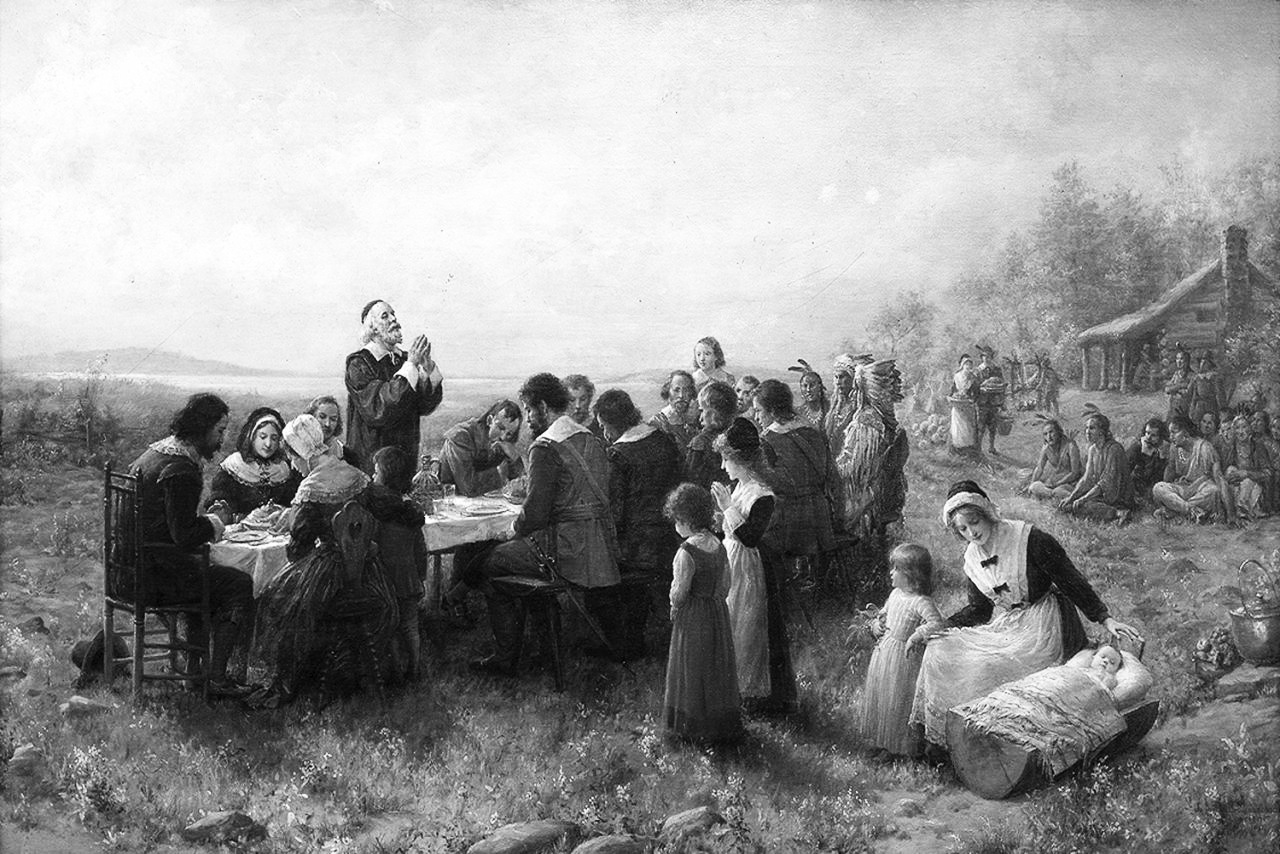
The native inhabitants of the region around Plymouth Colony were the various tribes of the Wampanoag people, who had lived there for some 10,000 years before the Europeans arrived. Soon after the Pilgrims built their settlement, they came into contact with Tisquantum, or Squanto, an English-speaking Native American. Squanto was a member of the Pawtuxet tribe (from present-day Massachusetts and Rhode Island) who had been seized by the explorer John Smith’s men in 1614-15. Meant for slavery, he somehow managed to escape to England, and returned to his native land to find most of his tribe had died of plague. In addition to interpreting and mediating between the colonial leaders and Native American chiefs (including Massasoit, chief of the Pokanoket), Squanto taught the Pilgrims how to plant corn, which became an important crop, as well as where to fish and hunt beaver. In the fall of 1621, the Pilgrims famously shared a harvest feast with the Pokanokets; the meal is now considered the basis for the Thanksgiving holiday. After attempts to increase his own power by turning the Pilgrims against Massasoit, Squanto died in 1622, while serving as Bradford’s guide on an expedition around Cape Cod.

Other tribes, such as the Massachusetts and Narragansetts, were not so well disposed towards European settlers, and Massasoit’s alliance with the Pilgrims disrupted relations among Native American peoples in the region. Over the next decades, relations between settlers and Native Americans deteriorated as the former group occupied more and more land. By the time William Bradford died in 1657, he had already expressed anxiety that New England would soon be torn apart by violence. In 1675, Bradford’s predictions came true, in the form of King Philip’s War. (Philip was the English name of Metacomet, the son of Massasoit and leader of the Pokanokets since the early 1660s.) That conflict left some 5,000 inhabitants of New England dead, three quarters of those Native Americans. In terms of percentage of population killed, King Philip’s War was more than twice as costly as the American Civil War and seven times more so than the American Revolution.

THE PILGRIM LEGACY IN NEW ENGLAND

Repressive policies toward religious nonconformists in England under King James I and his successor, Charles I, had driven many men and women to follow the Pilgrims’ path to the New World. Three more ships traveled to Plymouth after the Mayflower, including the Fortune (1621), the Anne and the Little James (both 1623). In 1630, a group of some 1,000 Puritan refugees under Governor John Winthrop settled in Massachusetts according to a charter obtained from King Charles I by the Massachusetts Bay Company. Winthrop soon established Boston as the capital of Massachusetts Bay Colony, which would become the most populous and prosperous colony in the region.

Compared with later groups who founded colonies in New England, such as the Puritans, the Pilgrims of Plymouth failed to achieve lasting economic success. After the early 1630s, some prominent members of the original group, including Brewster, Winslow and Standish, left the colony to found their own communities. The cost of fighting King Philip’s War further damaged the colony’s struggling economy. Less than a decade after the war King James II appointed a colonial governor to rule over New England, and in 1692, Plymouth was absorbed into the larger entity of Massachusetts.

Bradford and the other Plymouth settlers were not originally known as Pilgrims, but as “Old Comers.” This changed after the discovery of a manuscript by Bradford in which he called the settlers who left Holland “saints” and “pilgrimes.” In 1820, at a bicentennial celebration of the colony’s founding, the orator Daniel Webster referred to “Pilgrim Fathers,” and the term stuck.


History 101

By History.com


NOVEMBER 11, 1918 : WORLD WAR I ENDS

At the 11th hour on the 11th day of the 11th month of 1918, the Great War ends. At 5 a.m. that morning, Germany, bereft of manpower and supplies and faced with imminent invasion, signed an armistice agreement with the Allies in a railroad car outside Compiégne, France. The First World War left nine million soldiers dead and 21 million wounded, with Germany, Russia, Austria-Hungary, France, and Great Britain each losing nearly a million or more lives. In addition, at least five million civilians died from disease, starvation, or exposure.

On June 28, 1914, in an event that is widely regarded as sparking the outbreak of World War I, Archduke Franz Ferdinand, heir to the Austro-Hungarian empire, was shot to death with his wife by Bosnian Serb Gavrilo Princip in Sarajevo, Bosnia. Ferdinand had been inspecting his uncle’s imperial armed forces in Bosnia and Herzegovina, despite the threat of Serbian nationalists who wanted these Austro-Hungarian possessions to join newly independent Serbia. Austria-Hungary blamed the Serbian government for the attack and hoped to use the incident as justification for settling the problem of Slavic nationalism once and for all. However, as Russia supported Serbia, an Austro-Hungarian declaration of war was delayed until its leaders received assurances from German leader Kaiser Wilhelm II that Germany would support their cause in the event of a Russian intervention.

On July 28, Austria-Hungary declared war on Serbia, and the tenuous peace between Europe’s great powers collapsed. On July 29, Austro-Hungarian forces began to shell the Serbian capital, Belgrade, and Russia, Serbia’s ally, ordered a troop mobilization against Austria-Hungary. France, allied with Russia, began to mobilize on August 1. France and Germany declared war against each other on August 3. After crossing through neutral Luxembourg, the German army invaded Belgium on the night of August 3-4, prompting Great Britain, Belgium’s ally, to declare war against Germany.

For the most part, the people of Europe greeted the outbreak of war with jubilation. Most patriotically assumed that their country would be victorious within months. Of the initial belligerents, Germany was most prepared for the outbreak of hostilities, and its military leaders had formatted a sophisticated military strategy known as the “Schlieffen Plan,” which envisioned the conquest of France through a great arcing offensive through Belgium and into northern France. Russia, slow to mobilize, was to be kept occupied by Austro-Hungarian forces while Germany attacked France.

The Schlieffen Plan was nearly successful, but in early September the French rallied and halted the German advance at the bloody Battle of the Marne near Paris. By the end of 1914, well over a million soldiers of various nationalities had been killed on the battlefields of Europe, and neither for the Allies nor the Central Powers was a final victory in sight. On the western front—the battle line that stretched across northern France and Belgium—the combatants settled down in the trenches for a terrible war of attrition.

In 1915, the Allies attempted to break the stalemate with an amphibious invasion of Turkey, which had joined the Central Powers in October 1914, but after heavy bloodshed the Allies were forced to retreat in early 1916. The year 1916 saw great offensives by Germany and Britain along the western front, but neither side accomplished a decisive victory. In the east, Germany was more successful, and the disorganized Russian army suffered terrible losses, spurring the outbreak of the Russian Revolution in 1917. By the end of 1917, the Bolsheviks had seized power in Russia and immediately set about negotiating peace with Germany. In 1918, the infusion of American troops and resources into the western front finally tipped the scale in the Allies’ favor. Germany signed an armistice agreement with the Allies on November 11, 1918.

World War I was known as the “war to end all wars” because of the great slaughter and destruction it caused. Unfortunately, the peace treaty that officially ended the conflict—the Treaty of Versailles of 1919—forced punitive terms on Germany that destabilized Europe and laid the groundwork for World War II.


History 101

courtesy: Google Images

By History.com


NOVEMBER 04, 2008 : BARACK OBAMA ELECTED AS AMERICA’S FIRST BLACK PRESIDENT


On this day in 2008, Senator Barack Obama of Illinois defeats Senator John McCain of Arizona to become the 44th U.S. president, and the first African American elected to the White House. The 47-year-old Democrat garnered 365 electoral votes and nearly 53 percent of the popular vote, while his 72-year-old Republican challenger captured 173 electoral votes and more than 45 percent of the popular vote. Obama’s vice-presidential running mate was Senator Joe Biden of Delaware, while McCain’s running mate was Governor Sarah Palin of Alaska, the first female Republican ever nominated for the vice presidency.

Obama, who was born in 1961 in Hawaii to a white woman from Kansas and a black man from Kenya, graduated from Harvard Law School and was a law professor at the University of Chicago before launching his political career in 1996, when he was elected to the Illinois State Senate. He was re-elected to that post in 1998 and 2000. In March 2004, he shot to national prominence by winning the U.S. Senate Democratic primary in Illinois, and that July he gained further exposure when he delivered the keynote address at the Democratic National Convention in Boston, which included his eloquent call for unity among “red” (Republican) and “blue” (Democratic) states. That November, Obama was elected to the U.S. Senate in a landslide.

On February 10, 2007, in Springfield, Illinois, Obama officially announced his candidacy for president. A victory in the Iowa caucuses in January 2008 made him a viable challenger to the early frontrunner, Senator Hillary Clinton of New York, whom he outlasted in a grueling primary campaign to claim the Democratic nomination in early June 2008.

During the general-election campaign, as in the primaries, Obama’s team worked to build a following at the grassroots level and used what his supporters viewed as the candidate’s natural charisma, unique life story and inspiring message of hope and change to draw large crowds to his public appearances, both in the United States and on a campaign trip abroad. His team also worked to bring new voters–many of them young or black, both demographics they believed favored Obama–to become involved in the election. Additionally, the campaign was notable for its unprecedented use of the Internet for organizing constituents and fundraising. According to The Washington Post: “3 million donors made a total of 6.5 million donations online adding up to more than $500 million. Of those 6.5 million donations, 6 million were in increments of $100 or less.”

In terms of campaign issues, Obama pledged to get the United States out of the war in Iraq and expand health care, among other promises. A crushing national financial crisis in the months leading up to the election shifted the country’s focus to the economy, and Obama and McCain each attempted to show he had the best plan for economic improvement.

On November 4, more than 69.4 million Americans cast their vote for Obama, while some 59.9 million voters chose McCain. (Obama was the first sitting U.S. senator to win the White House since John Kennedy in 1960.) Obama captured some traditional Republican strongholds (Virginia, Indiana) and key battleground states (Florida, Ohio) that had been won by Republicans in recent elections. Late that night, the president-elect appeared before a huge crowd of supporters in Chicago’s Grant Park and delivered a speech in he which acknowledged the historic nature of his victory (which came 143 years after the end of the American Civil War and the abolition of slavery): “If there is anyone out there who still doubts that America is a place where all things are possible, who still wonders if the dream of our founders is alive in our time, who still questions the power of our democracy, tonight is your answer… It’s been a long time coming, but tonight, because of what we did on this date in this election at this defining moment, change has come to America.”

Obama was inaugurated on January 20, 2009. On November 6, 2012, he defeated Republican challenger Mitt Romney to win a second term in the White House.

History 101

Photo courtesy: Freepik.com

By History.com

Halloween is an annual holiday, celebrated each year on October 31, that has roots in age-old European traditions. It originated with the ancient Celtic festival of Samhain, when people would light bonfires and wear costumes to ward off ghosts. In the eighth century, Pope Gregory III designated November 1 as a time to honor all saints; soon, All Saints Day incorporated some of the traditions of Samhain. The evening before was known as All Hallows Eve, and later Halloween. Over time, Halloween evolved into a day of activities like trick-or-treating and carving jack-o-lanterns. Around the world, as days grow shorter and nights get colder, people continue to usher in the season with gatherings, costumes and sweet treats.

ANCIENT ORIGINS OF HALLOWEEN

Halloween’s origins date back to the ancient Celtic festival of Samhain (pronounced sow-in). The Celts, who lived 2,000 years ago in the area that is now Ireland, the United Kingdom and northern France, celebrated their new year on November 1.

This day marked the end of summer and the harvest and the beginning of the dark, cold winter, a time of year that was often associated with human death. Celts believed that on the night before the new year, the boundary between the worlds of the living and the dead became blurred. On the night of October 31 they celebrated Samhain, when it was believed that the ghosts of the dead returned to earth.

In addition to causing trouble and damaging crops, Celts thought that the presence of the otherworldly spirits made it easier for the Druids, or Celtic priests, to make predictions about the future. For a people entirely dependent on the volatile natural world, these prophecies were an important source of comfort and direction during the long, dark winter.

To commemorate the event, Druids built huge sacred bonfires, where the people gathered to burn crops and animals as sacrifices to the Celtic deities. During the celebration, the Celts wore costumes, typically consisting of animal heads and skins, and attempted to tell each other’s fortunes.

When the celebration was over, they re-lit their hearth fires, which they had extinguished earlier that evening, from the sacred bonfire to help protect them during the coming winter.

Did You Know?

One quarter of all the candy sold annually in the U.S. is purchased for Halloween.

By 43 A.D., the Roman Empire had conquered the majority of Celtic territory. In the course of the four hundred years that they ruled the Celtic lands, two festivals of Roman origin were combined with the traditional Celtic celebration of Samhain.

The first was Feralia, a day in late October when the Romans traditionally commemorated the passing of the dead. The second was a day to honor Pomona, the Roman goddess of fruit and trees. The symbol of Pomona is the apple, and the incorporation of this celebration into Samhain probably explains the tradition of “bobbing” for apples that is practiced today on Halloween.

ALL SAINTS DAY

On May 13, 609 A.D., Pope Boniface IV dedicated the Pantheon in Rome in honor of all Christian martyrs, and the Catholic feast of All Martyrs Day was established in the Western church. Pope Gregory III later expanded the festival to include all saints as well as all martyrs, and moved the observance from May 13 to November 1.

By the 9th century the influence of Christianity had spread into Celtic lands, where it gradually blended with and supplanted the older Celtic rites. In 1000 A.D., the church would make November 2 All Souls’ Day, a day to honor the dead. It’s widely believed today that the church was attempting to replace the Celtic festival of the dead with a related church-sanctioned holiday.

All Souls Day was celebrated similarly to Samhain, with big bonfires, parades, and dressing up in costumes as saints, angels and devils. The All Saints Day celebration was also called All-hallows or All-hallowmas (from Middle English Alholowmesse meaning All Saints’ Day) and the night before it, the traditional night of Samhain in the Celtic religion, began to be called All-Hallows Eve and, eventually, Halloween.

HALLOWEEN COMES TO AMERICA

Celebration of Halloween was extremely limited in colonial New England because of the rigid Protestant belief systems there. Halloween was much more common in Maryland and the southern colonies.

As the beliefs and customs of different European ethnic groups as well as the American Indians meshed, a distinctly American version of Halloween began to emerge. The first celebrations included “play parties,” public events held to celebrate the harvest, where neighbors would share stories of the dead, tell each other’s fortunes, dance and sing.

Colonial Halloween festivities also featured the telling of ghost stories and mischief-making of all kinds. By the middle of the nineteenth century, annual autumn festivities were common, but Halloween was not yet celebrated everywhere in the country.

In the second half of the nineteenth century, America was flooded with new immigrants. These new immigrants, especially the millions of Irish fleeing the Irish Potato Famine, helped to popularize the celebration of Halloween nationally.

TRICK-OR-TREAT

Borrowing from Irish and English traditions, Americans began to dress up in costumes and go house to house asking for food or money, a practice that eventually became today’s “trick-or-treat” tradition. Young women believed that on Halloween they could divine the name or appearance of their future husband by doing tricks with yarn, apple parings or mirrors.

In the late 1800s, there was a move in America to mold Halloween into a holiday more about community and neighborly get-togethers than about ghosts, pranks and witchcraft. At the turn of the century, Halloween parties for both children and adults became the most common way to celebrate the day. Parties focused on games, foods of the season and festive costumes.

Parents were encouraged by newspapers and community leaders to take anything “frightening” or “grotesque” out of Halloween celebrations. Because of these efforts, Halloween lost most of its superstitious and religious overtones by the beginning of the twentieth century.

.

 

History 101

Twenty-three diners were massacred at a Texas restaurant

History.com

In 1991, George Jo Hennard drives his truck through a window in Luby’s Cafeteria in Kileen, Texas, and then opens fire on a lunch crowd of over 100 people, killing 23 and injuring 20 more. Hennard then turned the gun on himself and committed suicide. The incident was one of the deadliest shootings in U.S. history.

The rampage at the Central Texas restaurant began at approximately 12:45 p.m. and lasted about 15 minutes. Witnesses reported that the 35-year-old gunman moved methodically through the large crowd, shooting people randomly and reloading his weapon several times. Hennard, of nearby Belton, Texas, was shot several times by police before he committed suicide. No clear motive for his actions was ever determined.

In the aftermath of the Luby’s massacre, Killeen residents urged officials at Luby’s corporate headquarters to let the restaurant re-open so people wouldn’t lose their jobs. Five months after the shootings, the cafeteria was back in business and stayed open for nine more years before permanently shutting its doors in September 2000. Another outcome of the Luby’s massacre was that in 1995 the Texas legislature passed a law allowing residents with gun permits to carry concealed weapons. Suzanna Gratia Hupp, who was at Luby’s with her parents on the day of the massacre and watched as they were murdered, was instrumental in getting the law passed. Hupp had a handgun with her that day, but left it in her car to comply with the law that forbid people from carrying concealed firearms.

History 101

Photo courtesy: Google

October 17, 1931: Al Capone Goes to Prison

By History.com


On this day in 1931, gangster Al Capone is sentenced to 11 years in prison for tax evasion and fined $80,000, signaling the downfall of one of the most notorious criminals of the 1920s and 1930s.

Alphonse Gabriel Capone was born in Brooklyn, New York, in 1899 to Italian immigrants. He was expelled from school at 14, joined a gang and earned his nickname “Scarface” after being sliced across the cheek during a fight. By 1920, Capone had moved to Chicago, where he was soon helping to run crime boss Johnny Torrio’s illegal enterprises, which included alcohol-smuggling, gambling and prostitution. Torrio retired in 1925 after an attempt on his life and Capone, known for his cunning and brutality, was put in charge of the organization.

Prohibition, which outlawed the brewing and distribution of alcohol and lasted from 1920 to 1933, proved extremely lucrative for bootleggers and gangsters like Capone, who raked in millions from his underworld activities. Capone was at the top of the F.B.I.’s “Most Wanted” list by 1930, but he avoided long stints in jail until 1931 by bribing city officials, intimidating witnesses and maintaining various hideouts. He became Chicago’s crime kingpin by wiping out his competitors through a series of gangland battles and slayings, including the infamous St. Valentine’s Day Massacre in 1929, when Capone’s men gunned down seven rivals. This event helped raise Capone’s notoriety to a national level.

Among Capone’s enemies was federal agent Elliot Ness, who led a team of officers known as “The Untouchables” because they couldn’t be corrupted. Ness and his men routinely broke up Capone’s bootlegging businesses, but it was tax-evasion charges that finally stuck and landed Capone in prison in 1931. Capone began serving his time at the U.S. Penitentiary in Atlanta, but amid accusations that he was manipulating the system and receiving cushy treatment, he was transferred to the maximum-security lockup at Alcatraz Island, in California’s San Francisco Bay. He got out early in 1939 for good behavior, after spending his final year in prison in a hospital, suffering from syphilis.

Plagued by health problems for the rest of his life, Capone died in 1947 at age 48 at his home in Palm Island, Florida.

History 101

Courtesy: Google Images

OCTOBER 09, 1967 : CHE GUEVARA IS EXECUTED

History.com

On this day in 1967, socialist revolutionary and guerilla leader Che Guevara, age 39, is killed by the Bolivian army. The U.S.-military-backed Bolivian forces captured Guevara on October 8 while battling his band of guerillas in Bolivia and assassinated him the following day. His hands were cut off as proof of death and his body was buried in an unmarked grave. In 1997, Guevara’s remains were found and sent back to Cuba, where they were reburied in a ceremony attended by President Fidel Castro and thousands of Cubans.

Ernesto Rafael Guevara de la Serna was born to a well-off family in Argentina in 1928. While studying medicine at the University of Buenos Aires, he took time off to travel around South America on a motorcycle; during this time, he witnessed the poverty and oppression of the lower classes. He received a medical degree in 1953 and continued his travels around Latin America, becoming involved with left-wing organizations. In the mid 1950s, Guevara met up with Fidel Castro and his group of exiled revolutionaries in Mexico. Guevara played a key role in Castro’s seizure of power from Cuban dictator Fulgencio Batista in 1959 and later served as Castro’s right-hand man and minister of industry. Guevara strongly opposed U.S. domination in Latin America and advocated peasant-based revolutions to combat social injustice in Third World countries. Castro later described him as “an artist of revolutionary warfare.”

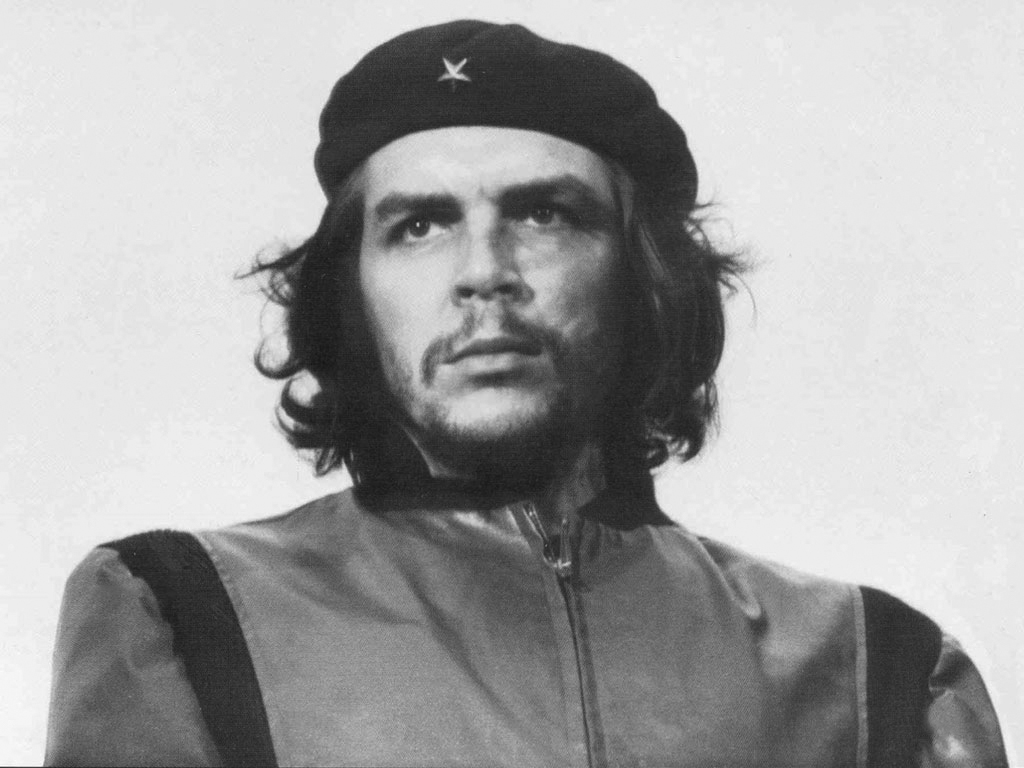
Guevara resigned—some say he was dismissed—from his Cuban government post in April 1965, possibly over differences with Castro about the nation’s economic and foreign policies. Guevara then disappeared from Cuba, traveled to Africa and eventually resurfaced in Bolivia, where he was killed. Following his death, Guevara achieved hero status among people around the world as a symbol of anti-imperialism and revolution. A 1960 photo taken by Alberto Korda of Guevara in a beret became iconic and has since appeared on countless posters and T-shirts. However, not everyone considers Guevara a hero: He is accused, among other things, of ordering the deaths of hundreds of people in Cuban prisons during the revolution.


History 101

Photo courtesy: google images

SEPTEMBER 27, 1779 : JOHN ADAMS APPOINTED TO NEGOTIATE PEACE TERMS WITH BRITISH

By History.com

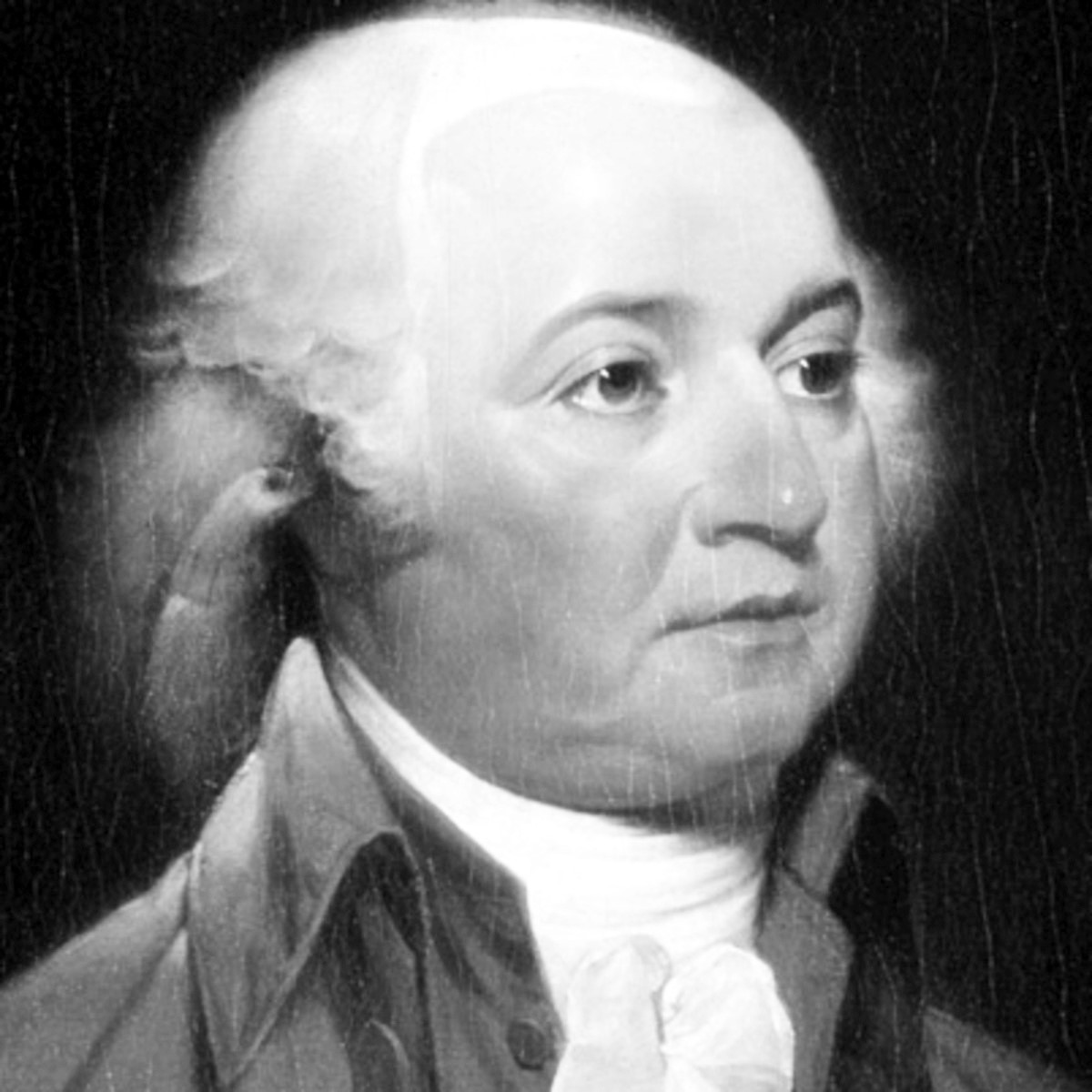
On this day in 1779, the Continental Congress appoints John Adams to travel to France as minister plenipotentiary in charge of negotiating treaties of peace and commerce with Great Britain during the Revolutionary War.

Adams had traveled to Paris in 1778 to negotiate an alliance with France, but had been unceremoniously dismissed when Congress chose Benjamin Franklin as sole commissioner. Soon after returning to Massachusetts in mid-1779, Adams was elected as a delegate to the state convention to draw up a new constitution; he was involved in these duties when he learned of his new diplomatic commission. Accompanied by his young sons John Quincy and Charles, Adams sailed for Europe that November aboard the French ship Sensible, which sprang a leak early in the voyage and missed its original destination (Brest), instead landing at El Ferrol, in northwestern Spain. After an arduous journey by mule train across the Pyrenees and into France, Adams and his group reached Paris in early February 1780.

While in Paris, Adams wrote to Congress almost daily (sometimes several letters a day) sharing news about British politics, British and French naval activities and his general perspective on European affairs. Conditions were unfavorable for peace at the time, as the war was going badly for the Continental Army, and the blunt and sometimes confrontational Adams clashed with the French government, especially the powerful Foreign Minister Charles Gravier, Comte de Vergennes. In mid-June, Adams began a correspondence with Vergennes in which he pushed for French naval assistance, antagonizing both Vergennes and Franklin, who brought the matter to the attention of Congress.

By that time, Adams had departed France for Holland, where he was attempting to negotiate a loan from the Dutch. Before the end of the year, he was named American minister to the Netherlands, replacing Henry Laurens, who was captured at sea by the British. In June 1781, capitulating to pressure from Vergennes and other French diplomats, Congress acted to revoke Adams’ sole powers as peacemaker with Britain, appointing Franklin, Thomas Jefferson, John Jay and Laurens to negotiate alongside him.

The tide of the war was turning in America’s favor, and Adams returned to Paris in October 1782 to take up his part in the peace negotiations. As Jefferson didn’t travel to Europe and Laurens was in failing health after his release from the Tower of London, it was left to Adams, Jay and Franklin to represent American interests. Adams and Jay both distrusted the French government (in contrast with Franklin), but their differences of opinion and diplomatic styles allowed the team to negotiate favorable terms in the Peace of Paris (1783). The following year, Jefferson arrived to take Adams’ place as American minister to France, forming a lifelong bond with Adams and his family before the latter left to take up his new post as American ambassador to London and continue his distinguished record of foreign service on behalf of the new nation.