Tag Archives: History 101

The Brady Bunch premieres

By History.com brady-bunch-d

On this day in 1969, American television audiences hear the soon-to-be-famous opening lyrics “Here’s the story of a lovely lady who was living with three very lovely girls…” as The Brady Bunch, a sitcom that will become an icon of American pop culture, airs for the first time. The show was panned by critics and, according to the Museum of Broadcast Communications, during “its entire network run, the series never reached the top ten ranks of the Nielsen ratings. Yet, the program stands as one of the most important sitcoms of American 1970s television programming, spawning numerous other series on all three major networks, as well as records, lunch boxes, a cookbook, and even a stage show and feature film.”

Created by Sherwood Schwartz (whose previous hit sitcom was Gilligan’s Island), The Brady Bunch followed the story of Carol (Florence Henderson), a widowed mother of three blonde daughters, who marries architect Mike Brady (Robert Reed), a widower and the father of three brown-haired boys. The blended family lives together in a suburban Los Angeles home with their cheerful housekeeper, Alice (Ann B. Davis). The show focused primarily on issues related to the Brady kids–Greg (Barry Williams), Marcia (Maureen McCormick), Peter (Christopher Knight), Jan (Eve Plumb), Bobby (Mike Lookinland) and Cindy (Susan Olsen)–who ranged from grade-school age to teenage. Although set in the late 1960s and early 1970s, a time of political and social upheaval in the United States, The Brady Bunch generally avoided controversial topics and instead presented a wholesome view of family life, tackled subjects such as sibling rivalry (including Jan’s now-famous complaint about the focus on her sister: “Marcia, Marcia, Marcia”), braces and dating.

After 177 episodes, ABC cancelled The Brady Bunch and the last original episode aired on August 30, 1974. However, the show soon became a massive hit in rerun syndication. The show’s various spin-offs have included a 1977 variety program, The Brady Bunch Hour; a 1988 TV movie A Very Brady Christmas; the 1995 big-screen parody The Brady Bunch Movie (with Shelley Long and Gary Cole as Carol and Mike) and its follow-up A Very Brady Sequel (1996); and the 2002 TV movie The Brady Bunch in the White House. In 1992, Barry Williams published a best-selling memoir titled Growing Up Brady: I Was a Teenage Greg, which provided a behind-the-scenes look at the show and revealed that life behind the Brady Bunch cameras was less wholesome than it seemed on TV.

History 101

Olympic Games

By History.com 

The Olympic Games, which originated in ancient Greece as many as 3,000 years ago, were revived in the late 19th century and have become the world’s preeminent sporting competition. From the 8th century B.C. to the 4th century A.D., the Games were held every four years in Olympia, located in the western Peloponnese peninsula, in honor of the god Zeus. The first modern Olympics took place in 1896 in Athens, and featured 280 participants from 13 nations, competing in 43 events. Since 1994, the Summer and Winter Olympic Games have been held separately and have alternated every two years.

THE OLYMPICS IN ANCIENT GREECE

The first written records of the ancient Olympic Games date to 776 B.C., when a cook named Coroebus won the only event–a 192-meter footrace called the stade (the origin of the modern “stadium”)–to become the first Olympic champion. However, it is generally believed that the Games had been going on for many years by that time. Legend has it that Heracles (the Roman Hercules), son of Zeus and the mortal woman Alcmene, founded the Games, which by the end of the 6th century B.C had become the most famous of all Greek sporting festivals. The ancient Olympics were held every four years between August 6 and September 19 during a religious festival honoring Zeus. The Games were named for their location at Olympia, a sacred site located near the western coast of the Peloponnese peninsula in southern Greece. Their influence was so great that ancient historians began to measure time by the four-year increments in between Olympic Games, which were known as Olympiads.

After 13 Olympiads, two more races joined the stade as Olympic events: the diaulos (roughly equal to today’s 400-meter race), and the dolichos (a longer-distance race, possibly comparable to the 1,500-meter or 5,000-meter event). The pentathlon (consisting of five events: a foot race, a long jump, discus and javelin throws and a wrestling match) was introduced in 708 B.C., boxing in 688 B.C. and chariot racing in 680 B.C. In 648 B.C., pankration, a combination of boxing and wrestling with virtually no rules, debuted as an Olympic event. Participation in the ancient Olympic Games was initially limited to freeborn male citizens of Greece; there were no women’s events, and married women were prohibited from attending the competition.

DECLINE AND REVIVAL OF THE OLYMPIC TRADITION

After the Roman Empire conquered Greece in the mid-2nd century B.C., the Games continued, but their standards and quality declined. In one notorious example from A.D. 67, the decadent Emperor Nero entered an Olympic chariot race, only to disgrace himself by declaring himself the winner even after he fell off his chariot during the event. In A.D. 393, Emperor Theodosius I, a Christian, called for a ban on all “pagan” festivals, ending the ancient Olympic tradition after nearly 12 centuries.

It would be another 1,500 years before the Games would rise again, largely thanks to the efforts of Baron Pierre de Coubertin (1863-1937) of France. Dedicated to the promotion of physical education, the young baron became inspired by the idea of creating a modern Olympic Games after visiting the ancient Olympic site. In November 1892, at a meeting of the Union des Sports Athlétiques in Paris, Coubertin proposed the idea of reviving the Olympics as an international athletic competition held every four years. Two years later, he got the approval he needed to found the International Olympic Committee (IOC), which would become the governing body of the modern Olympic Games.

THE OLYMPICS THROUGH THE YEARS

The first modern Olympics were held in Athens, Greece, in 1896. In the opening ceremony, King Georgios I and a crowd of 60,000 spectators welcomed 280 participants from 13 nations (all male), who would compete in 43 events, including track and field, gymnastics, swimming, wrestling, cycling, tennis, weightlifting, shooting and fencing. All subsequent Olympiads have been numbered even when no Games take place (as in 1916, during World War I, and in 1940 and 1944, during World War II). The official symbol of the modern Games is five interlocking colored rings, representing the continents of North and South America, Asia, Africa, Europe and Australia. The Olympic flag, featuring this symbol on a white background, flew for the first time at the Antwerp Games in 1920.

The Olympics truly took off as an international sporting event after 1924, when the VIII Games were held in Paris. Some 3,000 athletes (with more than 100 women among them) from 44 nations competed that year, and for the first time the Games featured a closing ceremony. The Winter Olympics debuted that year, including such events as figure skating, ice hockey, bobsledding and the biathlon. Eighty years later, when the 2004 Summer Olympics returned to Athens for the first time in more than a century, nearly 11,000 athletes from a record 201 countries competed. In a gesture that joined both ancient and modern Olympic traditions, the shot-put competition that year was held at the site of the classical Games in Olympia.

History 101

Death of country-rock pioneer leads inspires car crime

By History.com  history-101-web

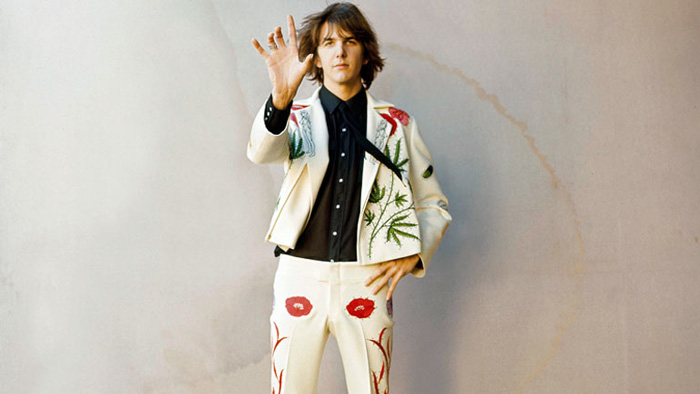
This day, September 19 in 1973, 26-year-old musician Gram Parsons dies of “multiple drug use” (morphine and tequila) in a California motel room. His death inspired one of the more bizarre automobile-related crimes on record: Two of his friends stashed his body in a borrowed hearse and drove it into the middle of the Joshua Tree National Park, where they doused it with gasoline and set it on fire.

Parsons’ music helped define the country-rock sound, and his records have influenced everyone from the Rolling Stones to Wilco. But like many musicians of his generation, Parsons struggled with drugs and alcohol. His childhood was unhappy: His father committed suicide when he was 12, and his mother died of alcohol poisoning on the day he graduated from high school. He dropped out of Harvard and moved to California, where he played with bands like the Byrds (on their seminal album Sweetheart of the Rodeo) and the Flying Burrito Brothers and released two celebrated solo albums with the then-unknown Emmylou Harris singing backup.

At a friend’s funeral a few months before he died, Parsons made a drunken pact with his road manager Phil Kaufman: If anything should happen to one of them, the other would take his body to Joshua Tree and cremate it. And so, after Parsons’ overdose, Kaufman and a roadie named Michael Martin met his coffin at the Los Angeles airport (for complicated reasons involving a disputed inheritance, his stepfather had arranged for it to be flown to Louisiana for a private funeral) in a borrowed hearse with broken windows and no license plates. (The hearse belonged to Martin’s girlfriend, who used it to carry tents and other gear on camping trips.) They convinced the airport staff that the Parsons family had changed its mind about the flight, loaded the coffin into the car, and drove 200 miles to the Mojave Desert, stopping along the way to fill a five-gallon tin can with gasoline. They drove into Joshua Tree and dragged the coffin to the foot of the majestic Cap Rock, where they doused it with the gas and tossed on a match.

Kaufman and Martin were arrested, but since stealing bodies was not actually a crime in California, they were fined $300 each, plus $750 for the ruined coffin. (They raised the money by holding a “Kaper Koncert” starring Bobby Pickett & the Cryptkeepers, who played their hit “Monster Mash” over and over.) Parsons’ remains are buried in New Orleans

History 101

Key pens Star-Spangled Banner

By History.com  history-101-web12

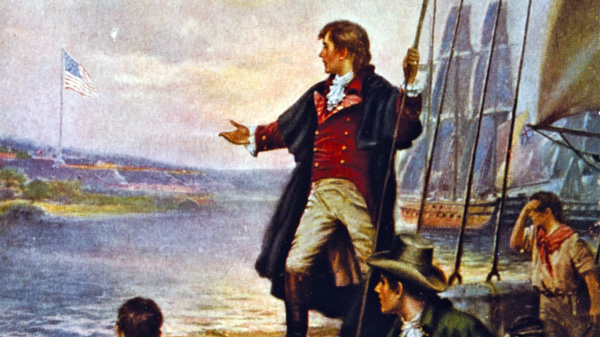
On this day in 1814, Francis Scott Key pens a poem which is later set to music and in 1931 becomes America’s national anthem, “The Star-Spangled Banner.” The poem, originally titled “The Defence of Fort McHenry,” was written after Key witnessed the Maryland fort being bombarded by the British during the War of 1812. Key was inspired by the sight of a lone U.S. flag still flying over Fort McHenry at daybreak, as reflected in the now-famous words of the “Star-Spangled Banner”: “And the rocket’s red glare, the bombs bursting in air, Gave proof through the night that our flag was still there.”

Francis Scott Key was born on August 1, 1779, at Terra Rubra, his family’s estate in Frederick County (now Carroll County), Maryland. He became a successful lawyer in Maryland and Washington, D.C., and was later appointed U.S. attorney for the District of Columbia.

On June 18, 1812, America declared war on Great Britain after a series of trade disagreements. In August 1814, British troops invaded Washington, D.C., and burned the White House, Capitol Building and Library of Congress. Their next target was Baltimore.

After one of Key’s friends, Dr. William Beanes, was taken prisoner by the British, Key went to Baltimore, located the ship where Beanes was being held and negotiated his release. However, Key and Beanes weren’t allowed to leave until after the British bombardment of Fort McHenry. Key watched the bombing campaign unfold from aboard a ship located about eight miles away. After a day, the British were unable to destroy the fort and gave up. Key was relieved to see the American flag still flying over Fort McHenry and quickly penned a few lines in tribute to what he had witnessed.

The poem was printed in newspapers and eventually set to the music of a popular English drinking tune called “To Anacreon in Heaven” by composer John Stafford Smith. People began referring to the song as “The Star-Spangled Banner” and in 1916 President Woodrow Wilson announced that it should be played at all official events. It was adopted as the national anthem on March 3, 1931.

Francis Scott Key died of pleurisy on January 11, 1843. Today, the flag that flew over Fort McHenry in 1914 is housed at the Smithsonian Institution’s Mu

History 101

Outlaw Jesse James is born in Missouri

By History.com   Jesse-James-WEB

Seen by some as a vicious murderer and by others as a gallant Robin Hood, the famous outlaw Jesse Woodson James is born on this day, September 5 in 1847, in Clay County, Missouri.

Jesse and his older brother Franklin lost their father in 1849, when the Reverend Robert James abandoned his young family and disappeared forever into the California gold fields. Their mother, Zerelda, quickly remarried, but rumor had it that their new stepfather treated Jesse and Frank poorly, and a third husband soon followed. Perhaps it was a violent and unstable family life that led the young Jesse and Frank into lives of crime. Regardless, it is certain that the brothers first learned to kill during the Civil War. As Confederate sympathizers, both Jesse and Frank joined William Quantrill’s vicious Missouri guerilla force, and Jesse participated in the cold-blooded murder of 25 unarmed Union soldiers in August 1863.

When the war ended, neither man felt any enthusiasm for the drab life of a Missouri farmer-earning a living with their guns seemed easier and more exciting. Joining a motley band of ex-soldiers and common thieves, Jesse and Frank staged the first daylight bank robbery in U.S. history on Valentine’s Day in 1866, making off with $57,000 of the hard-earned cash of the citizens of Liberty, Missouri. For the next decade the James Gang would steal many thousands more from banks, stores, stagecoaches, and trains.

The boldness of their crimes and the growing resentment among westerners of big railroads and robber barons led some to romanticize Jesse and Frank, a process that was encouraged by the authors of popular dime novels who created largely fictional versions of the James brothers as modern-day Robin Hoods who stole from the rich to give to the poor. In reality, the James brothers’ crimes preyed as much on the common folks as on the very rich, and they did little to spare the lives of innocents caught in the crossfire. The Robin Hood myth conveniently ignores the little girl shot in the leg during a botched robbery at the Kansas City Fair, the train engineer killed when the James Gang derailed his locomotive, or the dozens of other innocent bystanders murdered or maimed by Jesse, Frank, or their gang. Nonetheless, the myth that Jesse James was a good-hearted hero of the common folk remains popular to this day. Robert Ford shot James in the back of the head– killing him on April

History 101

Hurricane Katrina slams into Gulf Coast

By History.com  History-101-WEB

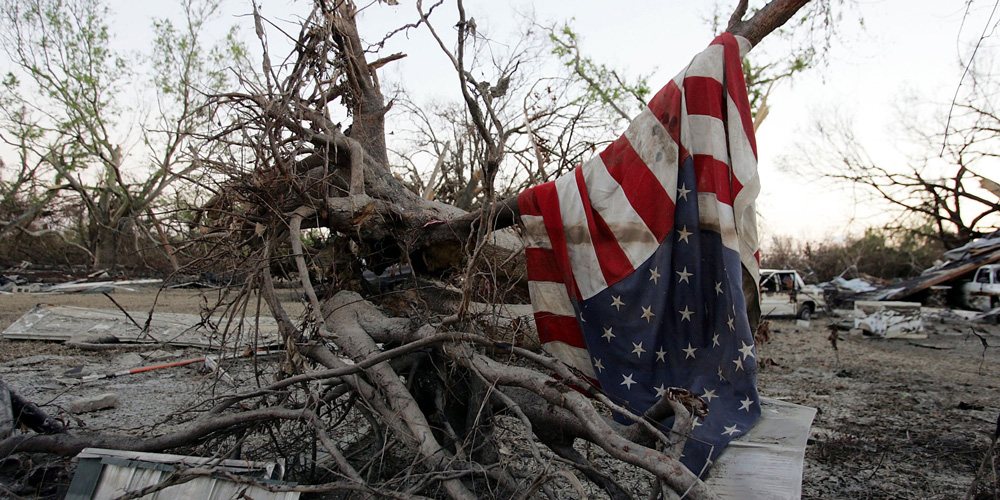
On this day in 2005, Hurricane Katrina makes landfall near New Orleans, Louisiana, as a Category 4 hurricane. Despite being only the third most powerful storm of the 2005 hurricane season, Katrina was the worst natural disaster in the history of the United States. After briefly coming ashore in southern Florida on August 25 as a Category 1 hurricane, Katrina gained strength before slamming into the Gulf Coast on August 29. In addition to bringing devastation to the New Orleans area, the hurricane caused damage along the coasts of Mississippi and Alabama, as well as other parts of Louisiana.

New Orleans Mayor Ray Nagin ordered a mandatory evacuation of the city on August 28, when Katrina briefly achieved Category 5 status and the National Weather Service predicted “devastating” damage to the area. But an estimated 150,000 people, who either did not want to or did not have the resources to leave, ignored the order and stayed behind. The storm brought sustained winds of 145 miles per hour, which cut power lines and destroyed homes, even turning cars into projectile missiles. Katrina caused record storm surges all along the Mississippi Gulf Coast. The surges overwhelmed the levees that protected New Orleans, located at six feet below sea level, from Lake Pontchartrain and the Mississippi River. Soon, 80 percent of the city was flooded up to the rooftops of many homes and small buildings.

Tens of thousands of people sought shelter in the New Orleans Convention Center and the Louisiana Superdome. The situation in both places quickly deteriorated, as food and water ran low and conditions became unsanitary. Frustration mounted as it took up to two days for a full-scale relief effort to begin. In the meantime, the stranded residents suffered from heat, hunger, and a lack of medical care. Reports of looting, rape, and even murder began to surface. As news networks broadcast scenes from the devastated city to the world, it became obvious that a vast majority of the victims were African-American and poor, leading to difficult questions among the public about the state of racial equality in the United States. The federal government and President George W. Bush were roundly criticized for what was perceived as their slow response to the disaster. The head of the Federal Emergency Management Agency (FEMA), Michael Brown, resigned amid the ensuing controversy.

Finally, on September 1, the tens of thousands of people staying in the damaged Superdome and Convention Center begin to be moved to the Astrodome in Houston, Texas, and another mandatory evacuation order was issued for the city. The next day, military convoys arrived with supplies and the National Guard was brought in to bring a halt to lawlessness. Efforts began to collect and identify corpses. On September 6, eight days after the hurricane, the Army Corps of Engineers finally completed temporary repairs to the three major holes in New Orleans’ levee system and were able to begin pumping water out of the city.

In all, it is believed that the hurricane caused more than 1,300 deaths and up to $150 billion in damages to both private property and public infrastructure. It is estimated that only about $40 billion of that number will be covered by insurance. One million people were displaced by the disaster, a phenomenon unseen in the United States since the Great Depression. Four hundred thousand people lost their jobs as a result of the disaster. Offers of international aid poured in from around the world, even from poor countries like Bangladesh and Sri Lanka. Private donations from U.S. citizens alone approached $600 million.

The storm also set off 36 tornadoes in Mississippi, Alabama, Georgia, Pennsylvania, and Virginia, resulting in one death.

President Bush declared September 16 a national day of remembrance for the victims of Hurricane Katrina.


History 101

When was the first U.S. driver’s license issued?

By Elizabeth Nix on History.com

In 1886, German inventor Karl Benz patented what is generally regarded as the first modern car. Less than two decades later, in 1903, Massachusetts and Missouri became the first states to require a driver’s license, although it wasn’t necessary to pass a test to obtain one. In 1908, Henry Ford launched the Model T, the first affordable automobile for many middle-class Americans (1919 is when Ford’s native state of Michigan started issuing driver’s licenses and got his first one at age 56). The same year the Model T debuted, Rhode Island became the first state to require both a license and a driver’s exam (Massachusetts instituted a chauffeur exam in 1907 and started requiring tests for all other drivers in 1920).

California, now known for its car culture, started requiring licenses in 1913 and exams in 1927. However, it took several decades for licenses and tests to be adopted by all states. In 1930, only 24 states required a license to drive a car and just 15 states had mandatory driver’s exams. South Dakota was the last state to begin issuing licenses (without exams), in 1954. Additionally, a handful of states didn’t impose driver’s tests until the 1950s, including Alaska (1956), Arizona (1951), Idaho (1951), Illinois (1953), Missouri (1952) and Wisconsin (1956). In 1959, South Dakota became the final state to institute a driver’s exam requirement.

Getting a license was long considered a rite of passage for many American teenagers; however, in recent years the number of young people who are legal to drive has declined. Around 77 percent of Americans between the ages of 20 and 24 had driver’s licenses in 2014, compared with almost 92 percent in 1983, according to a 2016 report by the University of Michigan Transportation Research Institute. Among 16 year olds, less than 25 percent had licenses in 2014, down from about 46 percent in 1983. Although the study didn’t cite specific reasons for the drop, other research has suggested that contributing factors include new transportation options as well as the Internet, which has made it possible for people to socialize and shop online instead of getting in a car to do so.

History 101

Althea Gibson becomes first African-American on U.S. tennis tour

By History.comHistory-101-WEB

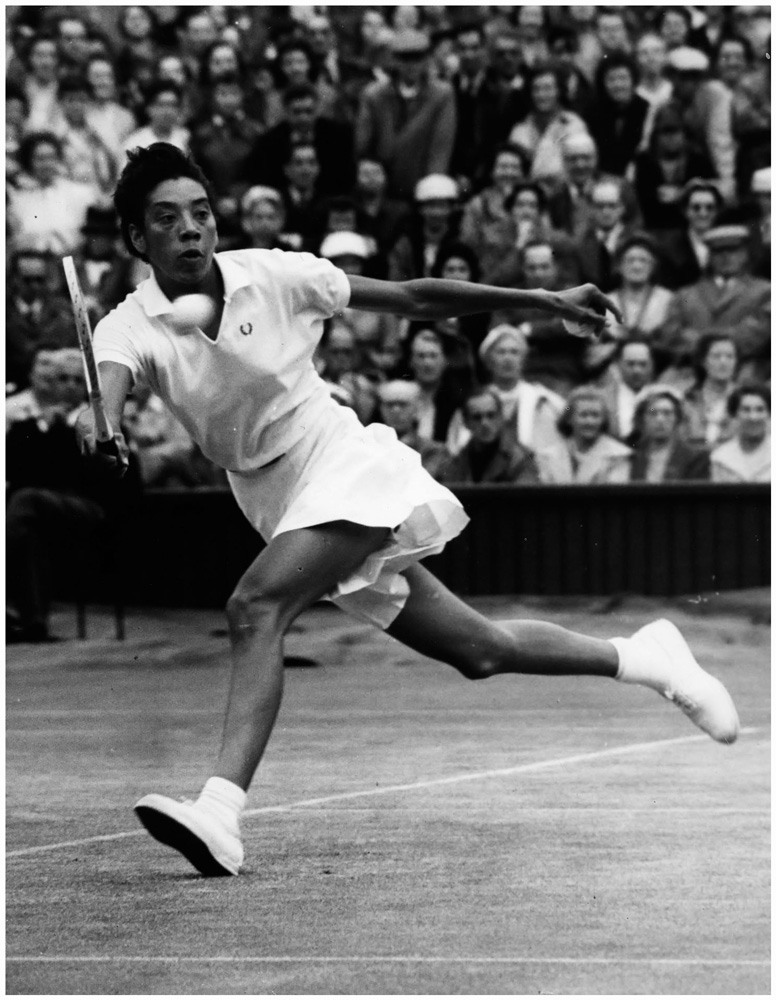
On August 22 in 1950, officials of the United States Lawn Tennis Association (USLTA) accept Althea Gibson into their annual championship at Forest Hills, New York, making her the first African-American player to compete in a U.S. national tennis competition.

Growing up in Harlem, the young Gibson was a natural athlete. She started playing tennis at the age of 14 and the very next year won her first tournament: the New York State girls’ championship, sponsored by the American Tennis Association (ATA), which was organized in 1916 by black players as an alternative to the exclusively white USLTA. After prominent doctors and tennis enthusiasts Hubert Eaton and R. Walter Johnson took Gibson under their wing, she won her first of what would be 10 straight ATA championships in 1947.

In 1949, Gibson attempted to gain entry into the USLTA’s National Grass Court Championships at Forest Hills, the precursor of the U.S. Open. When the USLTA failed to invite her to any qualifying tournaments, Alice Marble, a four-time winner at Forest Hills, wrote a letter on Gibson’s behalf to the editor of American Lawn Tennis magazine. Marble criticized the “bigotry” of her fellow USLTA members, suggesting that if Gibson posed a challenge to current tour players, “it’s only fair that they meet this challenge on the courts.” Gibson was subsequently invited to participate in a New Jersey qualifying event, where she earned a berth at Forest Hills.

On August 28, 1950, Gibson beat Barbara Knapp 6-2, in her first USLTA tournament match. She lost a tight match in the second round to Louise Brough, three-time defending Wimbledon champion. Gibson struggled over her first several years on tour but finally won her first major victory in 1956, at the French Open in Paris. She came into her own the following year, winning Wimbledon and the U.S. Open at the relatively advanced age of 30.

Gibson repeated at Wimbledon and the U.S. Open the next year but soon decided to retire from the amateur ranks and go pro. At the time, the pro tennis league was poorly developed, and Gibson at one point went on tour with the Harlem Globetrotters, playing tennis during halftime of their basketball games. In the early 1960s, Gibson became the first black player to compete on the women’s golf tour, though she never won a tournament. She was elected to the International Tennis Hall of Fame in 1971.

Though she once brushed off comparisons to Jackie Robinson, Gibson has been credited with paving the way for African-American tennis champions such as Arthur Ashe and, more recently, Venus and Serena Williams.


History 101

By History.com  

Photo courtesy: history.com

Photo courtesy: history.com

On August 15 in 1969, the Woodstock Music Festival opens on a patch of farmland in White Lake, a hamlet in the upstate New York town of Bethel.

Promoters John Roberts, Joel Rosenman, Artie Kornfield and Michael Lang originally envisioned the festival as a way to raise funds to build a recording studio and rock-and-roll retreat near the town of Woodstock, New York. The longtime artists’ colony was already a home base for Bob Dylan and other musicians. Despite their relative inexperience, the young promoters managed to sign a roster of top acts, including the Jefferson Airplane, the Who, the Grateful Dead, Sly and the Family Stone, Janis Joplin, Jimi Hendrix, Creedence Clearwater Revival and many more. Plans for the festival were on the verge of foundering, however, after both Woodstock and the nearby town of Wallkill denied permission to hold the event. Dairy farmer Max Yasgur came to the rescue at the last minute, giving the promoters access to his 600 acres of land in Bethel, some 50 miles from Woodstock.

Early estimates of attendance increased from 50,000 to around 200,000, but by the time the gates opened on Friday, August 15, more than 400,000 people were clamoring to get in. Those without tickets simply walked through gaps in the fences, and the organizers were eventually forced to make the event free of charge. Folk singer and guitarist Richie Havens kicked off the event with a long set, and Joan Baez and Arlo Guthrie also performed on Friday night.

Somewhat improbably, the chaotic gathering of half a million young “hippies” lived up to its billing of “Three Days of Peace and Music.” There were surprisingly few incidents of violence on the overcrowded grounds, and a number of musicians performed songs expressing their opposition to the Vietnam War. Among the many great moments at the Woodstock Music Festival were career-making performances by up-and-coming acts like Santana, Joe Cocker and Crosby, Stills, Nash & Young; the Who’s early-morning set featuring songs from their classic rock opera “Tommy”; and the closing set by Hendrix, which climaxed with an improvised solo guitar performance of “The Star Spangled Banner.”

Though Woodstock had left its promoters nearly bankrupt, their ownership of the film and recording rights more than compensated for the losses after the release of a hit documentary film in 1970. Later music festivals inspired by Woodstock’s success failed to live up to its standard, and the festival still stands for many as a example of America’s 1960s youth counterculture at its best.


History 101

Land Rovers Used In Famous Great Train Robbery

By History.com   history-pic-WEB

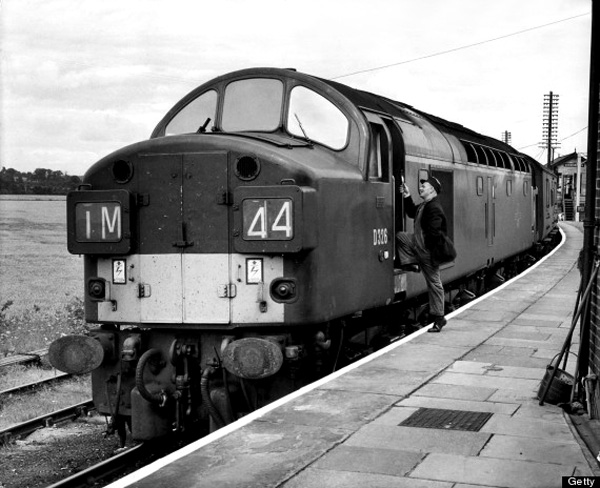
On August 1 in 1963, the 15 thieves involved in the Great Train Robbery, one of the most famous heists of all time, escape in an ex-British Army truck and two stolen Land Rover four-wheel drive all-terrain vehicles, making off with some $7 million in stolen loot.

The mastermind of the Great Train Robbery was Bruce Reynolds, a known burglar and armed robber. Inspired by the railroad heists of the Wild West in America, Reynolds and 14 other men wearing ski masks and helmets held up the Royal Mail train heading between Glasgow, Scotland, and London, England. They used a false red signal to get the train to stop, then hit the driver with an iron bar, seriously injuring him, in order to gain control of the train. The thieves loaded 120 mailbags filled with the equivalent of $7 million in used bank notes into their Land Rovers and sped off. The vehicles had been stolen in central London and marked with identical license plates in order to confuse the police.

In their hideout at Leatherslade Farm in Buckinghamshire, England, the robbers divided their loot. Viewed as folk heroes by the public for the audacious scale of their crime and their flight from justice, 12 of the 15 robbers nevertheless were eventually captured. In all, the gang of thieves received a total sentence of some 300 years. One of them, a small-time hood named Ronnie Biggs, escaped from prison after just 15 months and underwent plastic surgery to change his appearance. He fled the country and eluded capture for years, finally giving himself up in 2001 when he returned from Brazil voluntarily to serve the 28 years remaining in his sentence.

The two Land Rovers used in the robbery were discovered at the thieves’ hideout; a car enthusiast still owns one of them today. Produced by the British-based Rover Company, the Land Rover made its debut at the Amsterdam Motor Show in 1948. It was modeled after the four-wheel drive American-made Jeeps used by the British War Department during World War II and was made of cheaper, readily available aluminum alloy due to the postwar shortage of steel. By 1960, Land Rover production had reached 500,000 vehicles per year, and the all-terrain vehicle had become popular in all types of climates–desert, jungle and city–around the world. Rover later introduced an upscale version called the Range Rover, which become another bestseller for the company. The German automaker BMW purchased Rover in 1994, but split the brand six years later, selling the Land Rover name to Ford Motor Company. In 2008, Ford sold Land Rover, along with Jaguar, to Tata Motors Ltd., Ind

History 101

Texans Head For The Thrills At Six Flags

History-101-WEB

By History.com  

On August 1 in 1961, amusement park lovers “head for the thrills” as Six Flags Over Texas, the first park in the Six Flags chain, opens. Located on 212 acres in Arlington, Texas, the park was the first to feature log flume and mine train rides and later, the first 360-degree looping roller coaster, modern parachute drop and man-made river rapids ride. The park also pioneered the concept of all-inclusive admission price; until then, separate entrance fees and individual ride tickets were the standard. During its opening year, a day at Six Flags cost $2.75 for an adult and $2.25 for a child. A hamburger was sold for 50 cents and a soda set the buyer back a dime.

The park, which took a year and $10 million to build, was the brainchild of Texas real estate developer and oilman Angus Wynne Jr., who viewed it as a short-term way to make a buck from some vacant land before turning it into an industrial complex. Wynne reportedly recouped his personal investment of $3.5 million within 18 months and changed his mind about the park’s temporary status. With 17.5 million visitors in its first 10 years, the park became the Lone Star State’s top for-profit tourist attraction. Today, average annual attendance at the park is over 3 million.

One of Six Flags’ unique aspects was that it wasn’t just a random collection of rides; it was developed around a theme: the history of Texas. The park’s name was a nod to the six flags that had flown over the state at various times–France, Spain, Mexico, the Confederacy, Texas and the United States. The park’s rides and attractions were grouped into six themed sections that represented the cultures of these governments and enabled visitors to experience everything from cowboy culture to Southern belles and pirates. Originally, the park was to be called Texas Under Six Flags, before it was decided that Texas should never be under anything.

Angus Wynne sold Six Flags in 1969 and in the coming years, the company expanded and was resold. Today, Six Flags, Inc. is the world’s largest regional theme park company and owns and operates 30 theme, water and zoological parks in North America. In 2005, almost 34 million people spent a combined 250 million hours at Six Flags parks.

History 101

Puerto Rico Invaded

By History.com  History-WEB

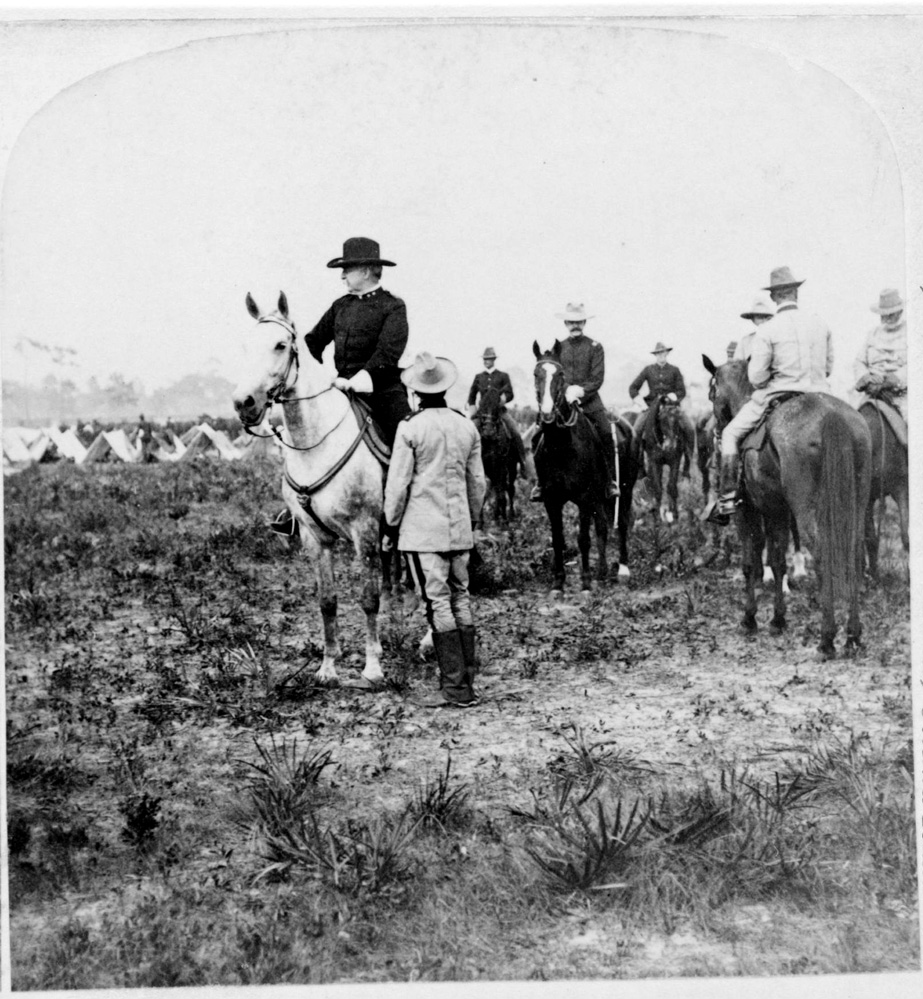
During the Spanish-American War, U.S. forces launch their invasion of Puerto Rico, the 108-mile-long, 40-mile-wide Island that was one of Spain’s two principal possessions in the Caribbean. With little resistance and only seven deaths, U.S. troops under General Nelson A. Miles were able to secure the island by mid-August. After the signing of an armistice with Spain, American troops raised the U.S. flag over the island, formalizing U.S. authority over its one million inhabitants. In December, the Treaty of Paris was signed, ending the Spanish-American War and officially approving the cession of Puerto Rico to the United States.

In the first three decades of its rule, the U.S. government made efforts to Americanize its new possession, including granting full U.S. citizenship to Puerto Ricans in 1917 and considering a measure that would make English the island’s official language. However, during the 1930s, a nationalist movement led by the Popular Democratic Party won wide support across the island, and further U.S. assimilation was successfully opposed. Beginning in 1948, Puerto Ricans could elect their own governor, and in 1952 the U.S. Congress approved a new Puerto Rican constitution that made the island an autonomous U.S. commonwealth, with its citizens retaining American citizenship. The constitution was formally adopted by Puerto Rico on July 25, 1952, the 54th anniversary of the U.S. invasion.

Movements for Puerto Rican statehood, along with lesser movements for Puerto Rican independence, have won supporters on the island, but popular referendums in 1967 and 1993 demonstrated that the majority of Puerto Ricans still supported their special status as a U.S. commonwealth.


FDR Nominated For Unprecedented Third Term

By History.com

On July 18 in 1940, Franklin Delano Roosevelt, who first took office in 1933 as America’s 32nd president, is nominated for an unprecedented third term. Roosevelt, a Democrat, would eventually be elected to a record four terms in office, the only U.S. president to serve more than two terms.

Roosevelt was born on January 30, 1882, in Hyde Park, New York, and went on to serve as a New York state senator from 1911 to 1913, assistant secretary of the Navy from 1913 to 1920 and governor of New York from 1929 to 1932. In 1932, he defeated incumbent Herbert Hoover to be elected president for the first time. During his first term, Roosevelt enacted his New Deal social programs, which were aimed at lifting America out of the Great Depression. In 1936, he won his second term in office by defeating Kansas governor Alf Landon in a landslide.

On July 18, 1940, Roosevelt was nominated for a third presidential term at the Democratic Party convention in Chicago. The president received some criticism for running again because there was an unwritten rule in American politics that no U.S. president should serve more than two terms. The custom dated back to the country’s first president, George Washington, who in 1796 declined to run for a third term in office. Nevertheless, Roosevelt believed it was his duty to continue serving and lead his country through the mounting crisis in Europe, where Hitler’s Nazi Germany was on the rise. The president went on to defeat Republican Wendell Wilkie in the general election, and his third term in office was dominated by America’s involvement in World War II.

In 1944, with the war still in progress, Roosevelt defeated New York governor Thomas Dewey for a fourth term in office. However, the president was unable to complete the full term. On April 12, 1945, Roosevelt, who had suffered from various health problems for years, died at age 63 in Warm Springs, Georgia. He was succeeded by Vice President Harry S. Truman. On March 21, 1947, Congress passed the 22nd Amendment to the U.S. Constitution, which stated that no person could be elected to the office of president more than twice. The amendment was ratified by the requir

Babe Ruth Makes MLB Debut

By History.com 

Photo courtesy: PBS.org

Photo courtesy: PBS.org

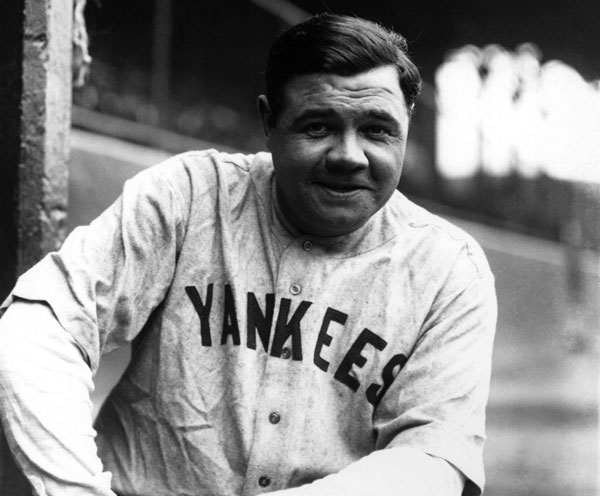
On July 11, 1914, in his major league debut, George Herman “Babe” Ruth pitches seven strong innings to lead the Boston Red Sox over the Cleveland Indians, 4-3.

George Herman Ruth was born February 6, 1895, in Baltimore, Maryland, where his father worked as a saloon keeper on the waterfront. He was the first of eight children, but only he and a sister survived infancy. The young George, known as “Gig” (pronounced jij) to his family, was a magnet for trouble from an early age. At seven, his truancy from school led his parents to declare him incorrigible, and he was sent to an orphanage, St. Mary’s Industrial School for Boys. Ruth lived there until he was 19 in 1914, when he was signed as a pitcher by the Baltimore Orioles.

That same summer, Ruth was sold to the Boston Red Sox. His teammates called him “Babe” for his naiveté, but his talent was already maturing. In his debut game against the Indians, the 19-year-old Ruth gave up just five hits over the first six innings. In the seventh, the Indians managed two runs on three singles and a sacrifice and Ruth was relieved. His hitting prowess, however, was not on display that first night–he went 0 for 2 at the plate.

Ruth developed quickly as a pitcher and as a hitter. When the Red Sox made the World Series in 1916 and 1918, Ruth starred, setting a record with 29 2/3 consecutive scoreless innings in World Series play. His career record as a pitcher for the Red Sox was 89-46.

To the great dismay of Boston fans, Ruth’s contract was sold to the New York Yankees before the 1920 season by Red Sox owner Harry Frazee, so that Frazee could finance the musical No, No, Nanette. Ruth switched to the outfield with the Yankees, and hit more home runs than the entire Red Sox team in 10 of the next 12 seasons. “The Sultan of Swat” or “The Bambino,” as he was alternately known, was the greatest gate attraction in baseball until his retirement as a player in 1935. During his career with the New York Yankees, the team won four World Series and seven American League pennants. After getting rid of Ruth, the Red Sox did not win a World Series until 2004, an 85-year drought known to Red Sox fans as “the Curse of the Bambino.”

History 101

U.S. declares independence  IST-IS162RM-00000177-001

History.com

In Philadelphia, Pennsylvania, the Continental Congress adopts the Declaration of Independence, which proclaims the independence of the United States of America from Great Britain and its king. The declaration came 442 days after the first volleys of the American Revolution were fired at Lexington and Concord in Massachusetts and marked an ideological expansion of the conflict that would eventually encourage France’s intervention on behalf of the Patriots.

The first major American opposition to British policy came in 1765 after Parliament passed the Stamp Act, a taxation measure to raise revenues for a standing British army in America. Under the banner of “no taxation without representation,” colonists convened the Stamp Act Congress in October 1765 to vocalize their opposition to the tax. With its enactment in November, most colonists called for a boycott of British goods, and some organized attacks on the customhouses and homes of tax collectors. After months of protest in the colonies, Parliament voted to repeal the Stamp Act in March 1766.

Most colonists continued to quietly accept British rule until Parliament’s enactment of the Tea Act in 1773, a bill designed to save the faltering East India Company by greatly lowering its tea tax and granting it a monopoly on the American tea trade. The low tax allowed the East India Company to undercut even tea smuggled into America by Dutch traders, and many colonists viewed the act as another example of taxation tyranny. In response, militant Patriots in Massachusetts organized the “Boston Tea Party,” which saw British tea valued at some 18,000 pounds dumped into Boston Harbor.

Parliament, outraged by the Boston Tea Party and other blatant acts of destruction of British property, enacted the Coercive Acts, also known as the Intolerable Acts, in 1774. The Coercive Acts closed Boston to merchant shipping, established formal British military rule in Massachusetts, made British officials immune to criminal prosecution in America, and required colonists to quarter British troops. The colonists subsequently called the first Continental Congress to consider a united American resistance to the British.

With the other colonies watching intently, Massachusetts led the resistance to the British, forming a shadow revolutionary government and establishing militias to resist the increasing British military presence across the colony. In April 1775, Thomas Gage, the British governor of Massachusetts, ordered British troops to march to Concord, Massachusetts, where a Patriot arsenal was known to be located. On April 19, 1775, the British regulars encountered a group of American militiamen at Lexington, and the first shots of the American Revolution were fired.

Initially, both the Americans and the British saw the conflict as a kind of civil war within the British Empire: To King George III it was a colonial rebellion, and to the Americans it was a struggle for their rights as British citizens. However, Parliament remained unwilling to negotiate with the American rebels and instead purchased German mercenaries to help the British army crush the rebellion. In response to Britain’s continued opposition to reform, the Continental Congress began to pass measures abolishing British authority in the colonies.

In January 1776, Thomas Paine published Common Sense, an influential political pamphlet that convincingly argued for American independence and sold more than 500,000 copies in a few months. In the spring of 1776, support for independence swept the colonies, the Continental Congress called for states to form their own governments, and a five-man committee was assigned to draft a declaration.

The Declaration of Independence was largely the work of Virginian Thomas Jefferson. In justifying American independence, Jefferson drew generously from the political philosophy of John Locke, an advocate of natural rights, and from the work of other English theorists. The first section features the famous lines, “We hold these truths to be self-evident, that all men are created equal, that they are endowed by their Creator with certain unalienable Rights, that among these are Life, Liberty and the pursuit of Happiness.” The second part presents a long list of grievances that provided the rationale for rebellion.

On July 2, 1776, the Continental Congress voted to approve a Virginia motion calling for separation from Britain. The dramatic words of this resolution were added to the closing of the Declaration of Independence. Two days later, on July 4, the declaration was formally adopted by 12 colonies after minor revision. New York approved it on July 19. On August 2, the declaration was signed.

The American War for Independence would last for five more years. Yet to come were the Patriot triumphs at Saratoga, the bitter winter at Valley Forge, the intervention of the French, and the final victory at Yorktown in 1781. In 1783, with the signing of the Treaty of Paris with Britain, the United States formally became a free and independent nation.


History 101

How did the tradition of kissing babies begin?   

Photo Courtesy: History.com

Photo Courtesy: History.com

History.com

Baby-kissing may be a campaign trail cliché—and a germaphobe’s nightmare—but it’s also a time-honored American political tradition. According to George W. Bush Presidential Library and Museum Director Alan Lowe, who researched the subject for the institution’s new “Path to the Presidency” exhibit, the earliest recorded instance of a politician puckering up dates to 1833 when President Andrew Jackson toured New Jersey. As Jackson stopped to greet a mother and baby, the woman thrust her little boy into his arms. “Ah! There is a fine specimen of American childhood!” declared the president, who then passed the dirty-faced infant over to Secretary of War John Eaton for him to kiss.

While “Old Hickory” outsourced the job, his successor, Martin Van Buren, reportedly kissed quite a few babies, and the tradition took off. Not all politicians, however, embraced baby-smooching. President Grover Cleveland, perhaps not wanting to remind voters of reports that he had sired an illegitimate child, flatly refused. In 1968, Richard Nixon declared, “I won’t wear a silly hat, or kiss a lady or a baby.” He told Life Magazine that he feared such “stunting” would make him “look like a jerk.”

Lowe says that candidates engage in baby-kissing because it can help them connect with voters. “The campaign trail can be a rough-and-tumble place, and this shows a softer, gentler side of candidates,” he says. “Voters want to elect someone who is a decent person, and this makes them more relatable.”

That means engaging in an activity that’s not the most hygienic. “As a mother,” said 1984 vice presidential candidate Geraldine Ferraro, “my instinctive reaction is how do you give your baby to someone who’s a total stranger to kiss, especially with so many colds going around?” Ferraro may not have understood the strange campaign ritual, but she kissed the babies nonetheless.

History 101

“Frankly, My Dear…”

History.com

On June 27 in 1939, one of the most famous scenes in movie history is filmed–Rhett Butler and Scarlett O’Hara parting in Gone with the Wind. Director Victor Fleming also shot the scene using the alternate line, “Frankly, my dear, I just don’t care,” in case the film censors objected to the word “damn.” The censors approved the movie but fined producer David O. Selznick $5,000 for including the curse.

The filming of the famous film was itself an epic, with two and half years elapsing between Selznick’s purchase of the rights to Margaret Mitchell’s novel and the movie’s debut in Atlanta in December 1939. Selznick had balked at paying an unprecedented $50,000 for the rights to a first novel, but Mitchell stuck to her asking price and Selznick agreed in July 1937. He hired director George Cukor immediately, and casting began in the fall. Selznick launched a nationwide talent search, hoping to find a new actress to play Scarlett. Meanwhile, he set writers to work on the script.

A year later, Selznick still hadn’t found an actress or received a satisfactory script. In May 1938, running low on funds, Selznick struck a deal with MGM. He sold the worldwide distribution rights for the film to the studio for $1.5 million, and MGM agreed to lend Clark Gable to Selznick.

Filming finally began on December 10, 1938, with the burning of Atlanta scene, although Scarlett still hadn’t been cast. British actress Vivien Leigh, newly arrived from London, dropped by the set to visit her agent, Myron Selznick, brother of the producer. David O. Selznick asked her to test for Scarlett. In January, Leigh signed on as Scarlett and Leslie Howard as Ashley Wilkes, and at last, principal filming began. By February, however, there was trouble on the set. Gable clashed with the director, and by February 14, Victor Fleming replaced George Cukor. Principal filming ended on June 27, 1939.

The film debuted in Atlanta on December 15, 1939, and became an instant hit, breaking all box office records. The film was nominated for more than a dozen Oscars, and won nine, including Best Picture, Best Screenplay, Best Actress, and Best Supporting Actress (which went to Hattie McDaniel, the first African American actress to win the award). The movie was digitally restored and the sound re-mastered for its 1998 re-release by New Line Pictures.

History 101

Jaws Released

History.com  

Photo courtesy: Google Images

Photo courtesy: Google Images

On June 20 in 1975, Jaws, a film directed by Steven Spielberg that made countless viewers afraid to go into the water, opens in theaters. The story of a great white shark that terrorizes a New England resort town became an instant blockbuster and the highest-grossing film in movie history until it was bested by 1977’s Star Wars.

Jaws was nominated for an Academy Award in the Best Picture category and took home three Oscars, for Best Film Editing, Best Original Score and Best Sound. The film, a breakthrough for director Spielberg, then 27-years-old, spawned three sequels.

The film starred Roy Scheider as principled police chief Martin Brody, Richard Dreyfuss as a marine biologist named Matt Hooper, and Robert Shaw as a grizzled fisherman called Quint. It was set in the fictional beach town of Amity, and based on a best-selling novel, released in 1973, by Peter Benchley. Subsequent water-themed Benchley bestsellers also made it to the big screen, including The Deep(1977).

With a budget of $12 million, Jaws was produced by the team of Richard Zanuck and David Brown, whose later credits include The Verdict (1982), Cocoon (1985) and Driving Miss Daisy (1989). Filming, which took place on Martha’s Vineyard, Massachusetts, was plagued by delays and technical difficulties, including malfunctioning mechanical sharks.

Jaws put now-famed director Steven Spielberg on the Hollywood map. Spielberg, largely self-taught in filmmaking, made his feature-length directorial debut with The Sugarland Express in 1974. The film was critically well-received but a box-office flop. Following the success of Jaws, Spielberg went on to become one of the most influential, iconic people in the film world, with such epics as Close Encounters of the Third Kind (1977), Raiders of the Lost Ark (1981), ET: the Extra-Terrestrial (1982), Jurassic Park (1993), Schindler’s List (1993) and Saving Private Ryan (1998). E.T.Jaws and Jurassic Park rank among the 10 highest-grossing movies of all time. In 1994, Spielberg formed DreamWorks SKG, with Jeffrey Katzenberg and David Geffen. The company has produced such hits as American Beauty (1999), Gladiator (2001) and Shrek (2001).


History 101

The Miranda rights are established

History.com

On June 13 in 1966, the Supreme Court hands down its decision in Miranda v. Arizona, establishing the principle that all criminal suspects must be advised of their rights before interrogation. Now considered standard police procedure, “You have the right to remain silent. Anything you say can, and will be used against you in court of law. You have the right to an attorney. If you cannot afford one, one will be appointed to you,” has been heard so many times in television and film dramas that it has become almost cliche.

The roots of the Miranda decision go back to March 2, 1963, when an 18-year-old Phoenix woman told police that she had been abducted, driven to the desert and raped. Detectives questioning her story gave her a polygraph test, but the results were inconclusive. However, tracking the license plate number of a car that resembled that of her attacker’s brought police to Ernesto Miranda, who had a prior record as a peeping tom. Although the victim did not identify Miranda in a line-up, he was brought into police custody and interrogated. What happened next is disputed, but officers left the interrogation with a confession that Miranda later recanted, unaware that he didn’t have to say anything at all.

The confession was extremely brief and differed in certain respects from the victim’s account of the crime. However, Miranda’s appointed defense attorney (who was paid a grand total of $100) didn’t call any witnesses at the ensuing trial, and Miranda was convicted. While Miranda was in Arizona state prison, the American Civil Liberties Union took up his appeal, claiming that the confession was false and coerced.

The Supreme Court overturned his conviction, but Miranda was retried and convicted in October 1966 anyway, despite the relative lack of evidence against him. Remaining in prison until 1972, Ernesto Miranda was later stabbed to death in the men’s room of a bar after a poker game in January 1976.

As a result of the case against Miranda, each and every person must now be informed of his or her rights

History 101

Photo courtesy: NJ.com

Photo courtesy: NJ.com

First Drive-In Movie Theater Opens

Courtesy of History.com

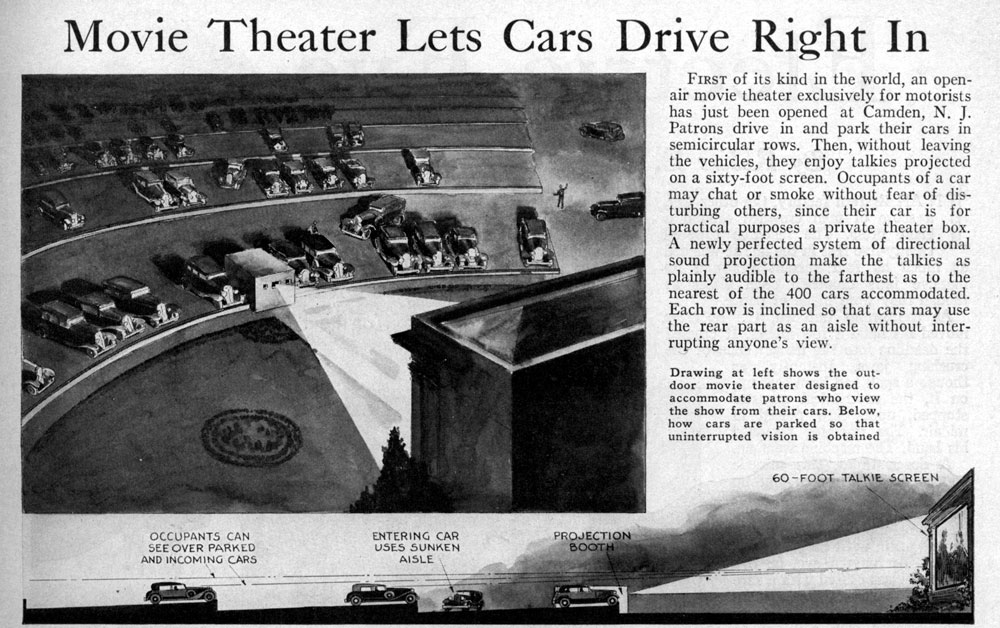
On June 4 in 1933, eager motorists park their automobiles on the grounds of Park-In Theaters, the first-ever drive-in movie theater, located on Crescent Boulevard in Camden, New Jersey.

Park-In Theaters–the term “drive-in” came to be widely used only later–was the brainchild of Richard Hollingshead, a movie fan and a sales manager at his father’s company, Whiz Auto Products, in Camden. Reportedly inspired by his mother’s struggle to sit comfortably in traditional movie theater seats, Hollingshead came up with the idea of an open-air theater where patrons watched movies in the comfort of their own automobiles. He then experimented in the driveway of his own house with different projection and sound techniques, mounting a 1928 Kodak projector on the hood of his car, pinning a screen to some trees, and placing a radio behind the screen for sound. He also tested ways to guard against rain and other inclement weather, and devised the ideal spacing arrangement for a number of cars so that all would have a view of the screen.

The young entrepreneur received a patent for the concept in May of 1933 and opened Park-In Theaters, Inc. less than a month later, with an initial investment of $30,000. Advertising it as entertainment for the whole family, Hollingshead charged 25 cents per car and 25 cents per person, with no group paying more than one dollar. The idea caught on, and after Hollingshead’s patent was overturned in 1949, drive-in theaters began popping up all over the country. One of the largest was the All-Weather Drive-In of Copiague, New York, which featured parking space for 2,500 cars, a kid’s playground and a full service restaurant, all on a 28-acre lot.

Drive-in theaters showed mostly B-movies–that is, not Hollywood’s finest fare–but some theaters featured the same movies that played in regular theaters. The initially poor sound quality–Hollingshead had mounted three speakers manufactured by RCA Victor near the screen–improved, and later technology made it possible for each car’s to play the movie’s soundtrack through its FM radio. The popularity of the drive-in spiked after World War II and reached its heyday in the late 1950s to mid-60s, with some 5,000 theaters across the country. Drive-ins became an icon of American culture, and a typical weekend destination not just for parents and children but also for teenage couples seeking some privacy. Since then, however, the rising price of real estate, especially in suburban areas, combined with the growing numbers of walk-in theaters and the rise of video rentals to curb the growth of the drive-in industry. Today, fewer than 500 drive-in theaters survive in the United States.