Tag Archives: History 101

Andrew Jackson Kills Charles Dickinson In Duel

History.com

Photo courtesy: Google Images

Photo courtesy: Google Images

On May 30, 1806, future President Andrew Jackson kills a man who accused him of cheating on a horse race bet and then insulted his wife, Rachel.

Contemporaries described Jackson, who had already served in Tennessee’s Senate and was practicing law at the time of the duel, as argumentative, physically violent and fond of dueling to solve conflicts. Estimates of the number of duels in which Jackson participated ranged from five to 100.

Jackson and Dickinson were rival horse breeders and southern plantation owners with a long-standing hatred of each other. Dickinson accused Jackson of reneging on a horse bet, calling Jackson a coward and an equivocator. Dickinson also called Rachel Jackson a bigamist (Rachel had married Jackson not knowing her first husband had failed to finalize their divorce). After the insult to Rachel and a statement published in the National Review in which Dickinson called Jackson a worthless scoundrel and, again, a coward, Jackson challenged Dickinson to a duel.

On May 30, 1806, Jackson and Dickinson met at Harrison’s Mills on the Red River in Logan, Kentucky. At the first signal from their seconds, Dickinson fired. Jackson received Dickinson’s first bullet in the chest next to his heart. Jackson put his hand over the wound to staunch the flow of blood and stayed standing long enough to fire his gun. Dickinson’s seconds claimed Jackson’s first shot misfired, which would have meant the duel was over, but, in a breach of etiquette, Jackson re-cocked the gun and shot again, this time killing his opponent. Although Jackson recovered, he suffered chronic pain from the wound for the remainder of his life.

Jackson was not prosecuted for murder, and the duel had very little effect on his successful campaign for the presidency in 1829. Many American men in the early 1800s, particularly in the South, viewed dueling as a time-honored tradition. In 1804, Thomas Jefferson’s vice president Aaron Burr had also avoided murder charges after killing former Treasury secretary and founding father Alexander Hamilton in a duel. In fact, Rachel’s divorce raised more of a scandal in the press and in parlors than the killing of Dickinson.

History 101

Police Kill Famous Outlaws Bonnie And Clyde

History.com

Famous outlaws, Bonnie and Clyde, were shot and killed in 1934.

Photo courtesy: Google Images
Famous outlaws, Bonnie and Clyde, were shot and killed in 1934.

On May 23, 1934, notorious criminals Bonnie Parker and Clyde Barrow are shot to death by Texas and Louisiana state police while driving a stolen car near Sailes, Louisiana.

Bonnie Parker met the charismatic Clyde Barrow in Texas when she was 19-years-old and her husband (she married when she was 16) was serving time in jail for murder. Shortly after they met, Barrow was imprisoned for robbery. Parker visited him every day, and smuggled a gun into prison to help him escape. But he was soon caught in Ohio and sent back to jail. When Barrow was paroled in 1932, he immediately hooked up with Parker, and the couple began a life of crime together.

After they stole a car and committed several robberies, Parker was caught by police and sent to jail for two months. Released in mid-1932, she rejoined Barrow. Over the next two years, the couple teamed with various accomplices to rob a string of banks and stores across five states–Texas, Oklahoma, Missouri, New Mexico and Louisiana. To law enforcement agents, the Barrow Gang–including Barrow’s childhood friend, Raymond Hamilton, W.D. Jones, Henry Methvin, Barrow’s brother Buck and his wife Blanche, among others–were cold-blooded criminals who didn’t hesitate to kill anyone who got in their way, especially Police or Sheriff’s deputies. Among the public, however, Parker and Barrow’s reputation as dangerous outlaws was mixed with a romantic view of the couple as “Robin Hood”-like folk heroes.

Their fame was increased by the fact that Bonnie was a woman–an unlikely criminal–and by the fact that the couple posed for playful photographs together, which were later found by police and released to the media. Police almost captured the famous duo twice in the spring of 1933, with surprise raids on their hideouts in Joplin and Platte City, Missouri. Buck Barrow was killed in the second raid, and Blanche was arrested, but Bonnie and Clyde escaped once again. In January 1934, they attacked the Eastham Prison Farm in Texas to help Hamilton break out of jail, shooting several guards with machine guns and killing one.

Texan prison officials hired a retired Texas Police Officer, Captain Frank Hamer, as a special investigator to track down Parker and Barrow. After a three-month search, Hamer traced the couple to Louisiana, where Henry Methvin’s family lived. Before dawn on May 23, Hamer and a group of Louisiana and Texas lawmen hid in the bushes along a country road outside Sailes. When Parker and Barrow appeared, the officers opened fire, killing the couple instantly in a hail of bullets.

All told, the Barrow Gang was believed responsible for the deaths of 13 people, including nine Police Officers. Parker and Barrow are still seen by many as romantic figures; especially after the success of the 1967 film Bonnie and Clyde, starring Faye Dunaway and Warren Beatty.


History 101

First Academy Awards ceremony

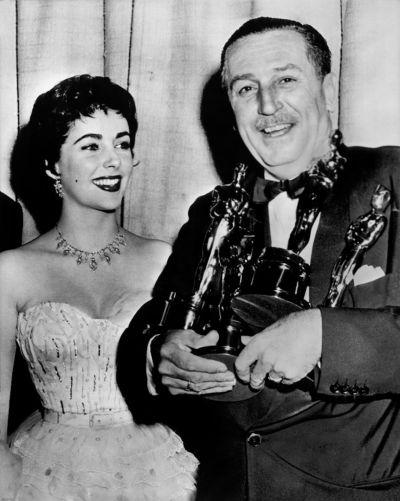
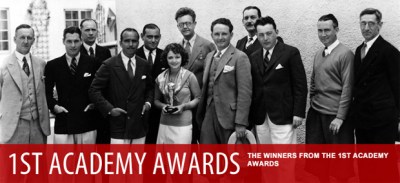
Shown above are the winners at the first Academy Awards ceremony.

Photo courtesy: Google Images
Shown above are the winners at the first Academy Awards ceremony.

Courtesy of History.com


On May 16, 1929, the Academy of Motion Picture Arts and Sciences hands out its first awards at a dinner party for around 250 people, held in the Blossom Room of the Roosevelt Hotel in Hollywood, California.

The brainchild of Louis B. Mayer, head of the powerful MGM film studio, the Academy was organized in May 1927 as a non-profit organization dedicated to the advancement and improvement of the film industry. Its first president and the host of the May 1929 ceremony was the actor Douglas Fairbanks, Sr. Unlike today, the winners of the first Oscars–as the coveted gold-plated statuettes later became known–were announced before the awards ceremony itself.

At the time of the first Oscar ceremony, sound had just been introduced into film. The Warner Bros. movie The Jazz Singer–one of the first “talkies”–was not allowed to compete for Best Picture because the Academy decided it was unfair to let movies with sound compete with silent films. The first official Best Picture winner (and the only silent film to win Best Picture) was Wings, directed by William Wellman. The most expensive movie of its time, with a budget of $2 million, the movie told the story of two World War I pilots who fall for the same woman. Another film, F.W. Murnau’s epic Sunrise, was considered a dual winner for the best film of the year. German actor Emil Jannings won the Best Actor honor for his roles in The Last Command and The Way of All Flesh, while 22-year-old Janet Gaynor was the only female winner. After receiving three out of the five Best Actress nods, she won for all three roles, in Seventh HeavenStreet Angel and Sunrise.

A special honorary award was presented to Charlie Chaplin. Originally a nominee for Best Actor, Best Writer and Best Comedy Director for The Circus, Chaplin was removed from these categories so he could receive the special award, a change that some attributed to his unpopularity in Hollywood. It was the last Oscar the Hollywood maverick would receive until another honorary award in 1971.

The Academy officially began using the nickname Oscar for its awards in 1939; a popular but unconfirmed story about the source of the name holds that Academy executive director Margaret Herrick remarked that the statuette looked like her Uncle Oscar. Since 1942, the results of the secret ballot voting have been announced during the live-broadcast Academy Awards ceremony using the sealed-envelope system. The suspense–not to mention the red-carpet arrival of nominees and other stars wearing their most beautiful or outrageous evening wear–continues to draw international attention to the film industry’s biggest night of the year.


History 101

Photo courtesy: Google Images

Photo courtesy: Google Images

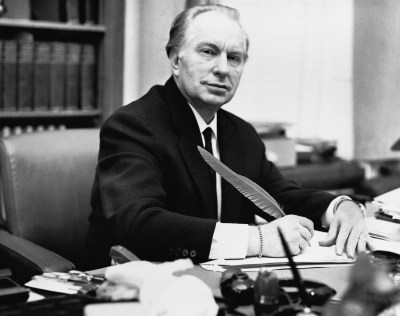
Ron Hubbard publishes Dianetics

Courtesy of History.com

On this day in 1950, Lafayette Ronald Hubbard (1911-1986) publishes Dianetics: The Modern Science of Mental Health. With this book, Hubbard introduced a branch of self-help psychology called Dianetics, which quickly caught fire and, over time, morphed into a belief system boasting millions of subscribers: Scientology.

Hubbard was already a prolific and frequently published writer by the time he penned the book that would change his life. Under several pseudonyms in the 1930s, he published a great amount of pulp fiction, particularly in the science fiction and fantasy genres. In late 1949, having returned from serving in the Navy in World War II, Hubbard began publishing articles in the pages of Astounding Science Fiction, a magazine that published works by the likes of Isaac Asimov and Jack Williamson. Out of these grew the elephantine text known as Dianetics: The Modern Science of Mental Health.

In Dianetics, Hubbard explained that phenomena known as “engrams” (i.e. memories) were the cause of all psychological pain, which in turn harmed mental and physical health. He went on to claim that people could become “clear,” achieving an exquisite state of clarity and mental liberation, by exorcising their engrams to an “auditor,” or a listener acting as therapist.

Though discredited by the medical and scientific establishment, over 100,000 copies of Dianetics were sold in the first two years of publication, and Hubbard soon found himself lecturing across the country. He went on to write six more books in 1951, developing a significant fan base, and establishing the Hubbard Dianetics Research Foundation in Elizabeth, New Jersey.

Despite his fast-growing popularity from books and touring, strife within his organization and Hubbard’s own personal troubles nearly crippled his success. Several of his research foundations had to be abandoned due to financial troubles and he went through a divorce from his second wife.

By 1953, however, Hubbard was able to rebound from the widespread condemnation beginning to be heaped upon him, and introduced Scientology. Scientology expanded on Dianetics by bringing Hubbard’s popular version of psychotherapy into the realm of philosophy, and ultimately, religion. In only a few years, Hubbard found himself at the helm of a movement that captured the popular imagination. As Scientology grew in the 1960s, several national governments became suspicious of Hubbard, accusing him of quackery and brainwashing his followers. Nonetheless, Hubbard built his religion into a multi-million dollar movement that continues to have a considerable presence in the public eye, due in part to its high profile in Hollywood.

Photo courtesy: Google Images

Photo courtesy: Google Images

History 101

Photo courtesy: Google Images

Photo courtesy: Google Images

George Washington Gives First Presidential Inaugural Address
Courtesy of History.com
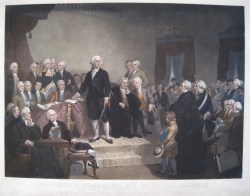
On April 30, 1789, George Washington is sworn in as the first American president and delivers the first inaugural speech at Federal Hall in New York City. Elements of the ceremony set tradition; presidential inaugurations have deviated little in the two centuries since Washington’s inauguration.
In front of 10,000 spectators, Washington appeared in a plain brown broadcloth suit holding a ceremonial army sword. At 6′3, Washington presented an impressive and solemn figure as he took the oath of office standing on the second balcony of Federal Hall. With Vice President John Adams standing beside him, Washington repeated the words prompted by Chancellor Robert R. Livingston, kissed the bible and then went to the Senate chamber to deliver his inaugural address.
Observers noted that Washington appeared as if he would have preferred facing cannon and musket fire to taking the political helm of the country. He fidgeted, with his hand in one pocket, and spoke in a low, sometimes inaudible voice while he reiterated the mixed emotions of anxiety and honor he felt in assuming the role of president. For the most part, his address consisted of generalities, but he directly addressed the need for a strong Constitution and Bill of Rights and frequently emphasized the public good. He told the House of Representatives that he declined to be paid beyond such actual expenditures as the public good may be thought to require. In deference to the power of Congress, Washington promised to give way to my entire confidence in your discernment and pursuit of the public good.
After delivering his address, Washington walked up Broadway with a group of legislators and local political leaders to pray at St. Paul’s Chapel. Later, he made the humble and astute observation that his presidency, and the nation itself, was an experiment.

History 101

Photo courtesy: Biography.com

Photo courtesy: Biography.com

William Shakespeare Born

Courtesy of History.com

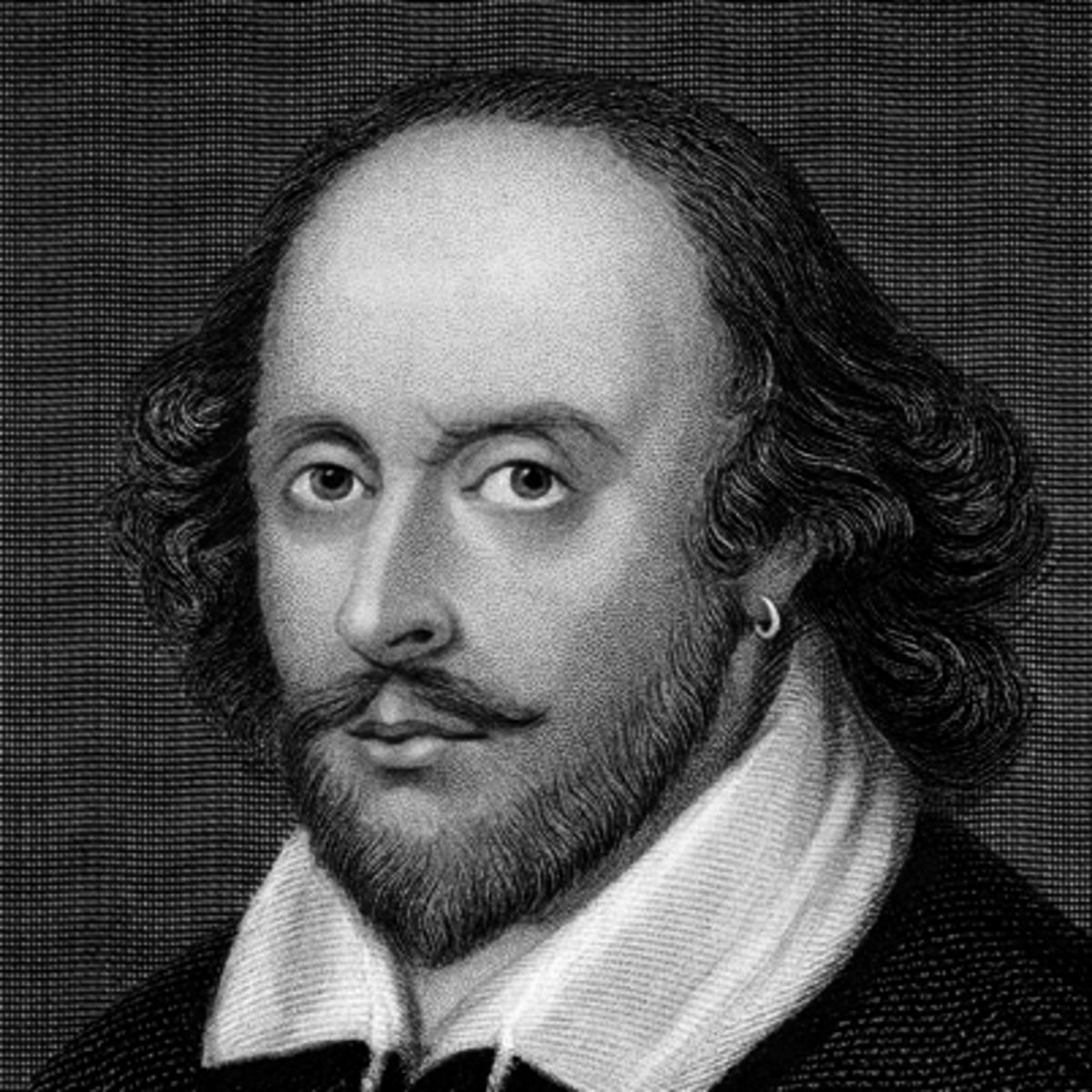
According to tradition, the great English dramatist and poet William Shakespeare is born in Stratford-on-Avon on April 23, 1564. Shakespeare’s date of death is conclusively known, however: it was April 23, 1616. He was 52 years old and had retired to Stratford three years before.

He probably attended the grammar school in Stratford, where he would have studied Latin and read classical literature. He did not go to university but at age 18 married Anne Hathaway, who was eight years his senior and pregnant at the time of the marriage. Their first daughter, Susanna, was born six months later, and in 1585 William and Anne had twins, Hamnet and Judith. Hamnet, Shakespeare’s only son, died 11 years later, and Anne Shakespeare outlived her husband, dying in 1623. Nothing is known of the period between the birth of the twins and Shakespeare’s emergence as a playwright in London in the early 1590s, but unfounded stories have him stealing deer, joining a group of traveling players, becoming a schoolteacher, or serving as a soldier in the Low Countries.

The first reference to Shakespeare as a London playwright came in 1592, when a fellow dramatist, Robert Greene, wrote derogatorily of him on his deathbed. It is believed that Shakespeare had written the three parts of Henry VI by that point. In 1593, Venus and Adonis was Shakespeare’s first published poem, and he dedicated it to the young Henry Wriothesley, the 3rd earl of Southampton. In 1594, having probably composed, among other plays, Richard III, The Comedy of Errors, and The Taming of the Shrew, he became an actor and playwright for the Lord Chamberlain’s Men, which became the King’s Men after James I’s ascension in 1603. The company grew into England’s finest, in no small part because of Shakespeare, who was its principal dramatist. It also had the finest actor of the day, Richard Burbage, and the best theater, the Globe, which was located on the Thames’ south bank. Shakespeare stayed with the King’s Men until his retirement and often acted in small parts.

By 1596, the company had performed the classic Shakespeare plays Romeo and Juliet, Richard II, and A Midsummer Night’s Dream. That year, John Shakespeare was granted a coat of arms, a testament to his son’s growing wealth and fame. In 1597, William Shakespeare bought a large house in Stratford. In 1599, after producing his great historical series, the first and second part of Henry IV and Henry V, he became a partner in the ownership of the Globe Theatre.

Shakespeare died in Stratford-on-Avon on April 23, 1616. Today, nearly 400 years later, his plays are performed and read more often and in more nations than ever before. In a million words written over 20 years, he captured the full range of human emotions and conflicts with a precision that remains sharp today. As his great contemporary the poet and dramatist Ben Jonson said, “He was not of an age, but for all time.”

History 101

Photo courtesy:  Mt Vernon   President George Washington

Photo courtesy: Mt Vernon
President George Washington

Washington leaves Mt. Vernon for his inauguration

Courtesy of History.com

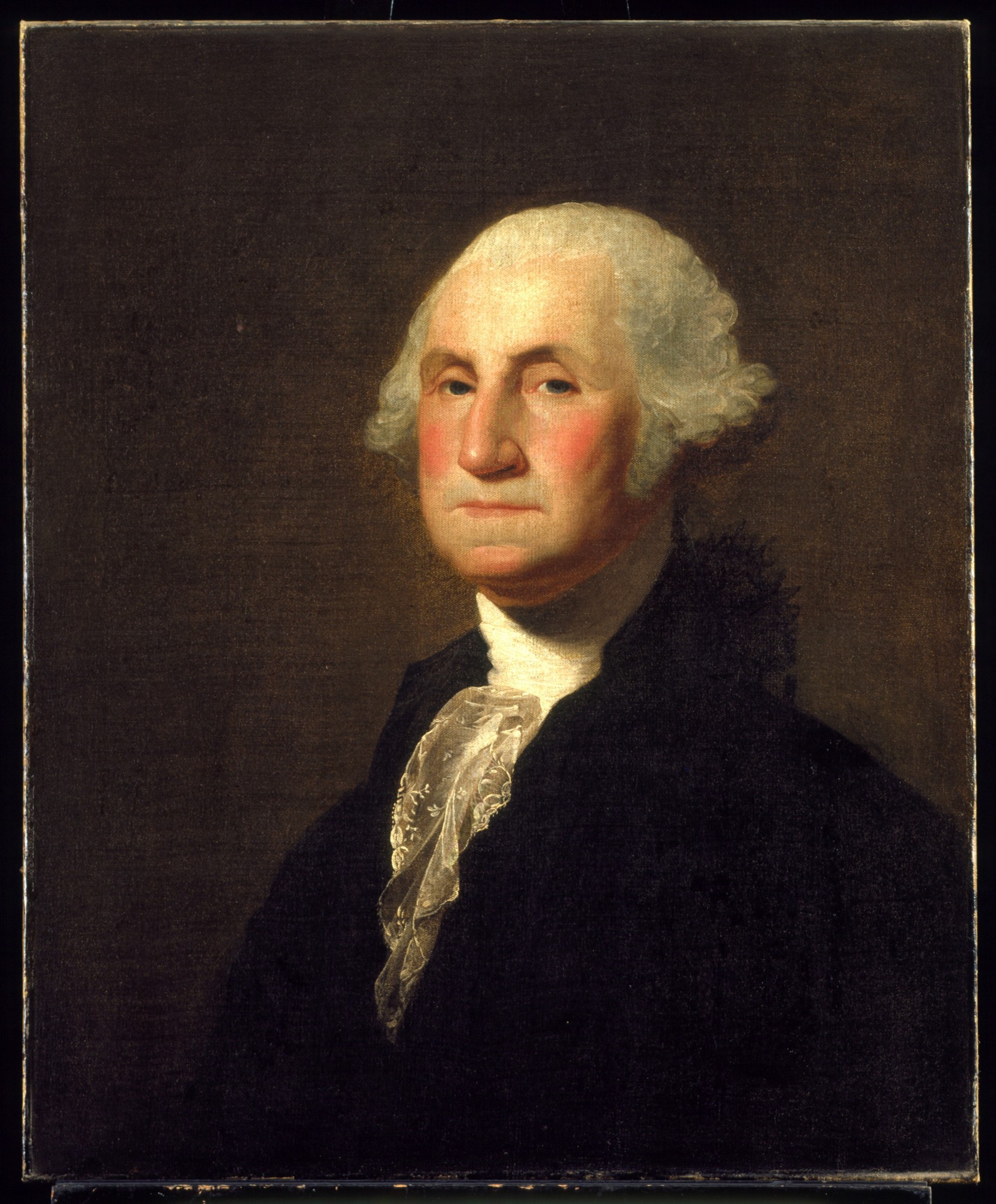
On April 16, 1789, newly elected President George Washington leaves his Mount Vernon, Virginia, home and heads for New York, where he is sworn in as the first American president.

Before leaving, Washington addressed a group of citizens in nearby Alexandria, Virginia, to whom he expressed his inner conflict at assuming the role of president. He admitted that he would have preferred to stay in retirement and wondered aloud, “at my age what possible advantages [could I gain] from public life?” However, disturbed by growing antagonism between the fledgling nation’s political factions, Washington felt duty-bound to help resolve what he feared was an impending crisis. He recounted the day in his diary: “I bade adieu to Mount Vernon, to private life, and to domestic felicity; and with a mind oppressed with more anxious and painful sensations than I have words to express.”

Washington was 57 years old when he took leave of his family, friends and staff at the Mount Vernon estate, to which he had retired after leading the Continental Army to victory in the Revolutionary War. On his way to New York, citizens flocked to see Washington as he rode through petal-strewn streets, under decorative triumphal arches and to the accompaniment of church bells. In Trenton, New Jersey, girls in white robes sang an honorary tribute to “The Defender of the Mothers, The Protector of the Daughters.” In his diary, Washington recorded a resplendent display of decorated ships and boats that joined the procession as it sailed across the Hudson River. “The roar of cannon, and the loud acclamations of the people which rent the skies, as I passed along the wharves, filled my mind with sensations as painful as they are pleasing.”

The pomp and splendor of the procession did not distract Washington from his anxiety about ruling the country, nor the disappointment of traveling without his beloved wife and closest confidante, Martha, who planned to meet him in New York after the festivities ended. In addition, his oldest and most trusted personal servant, Billy Lee, had to abandon Washington s entourage in Philadelphia due to painful arthritis in his knees. Eight days after leaving Mt. Vernon, Washington arrived in New York, where he gamely set out to “render service to my country with less hope of answering its expectations.”  Official inaugural ceremonies commenced on April 30.

History 101

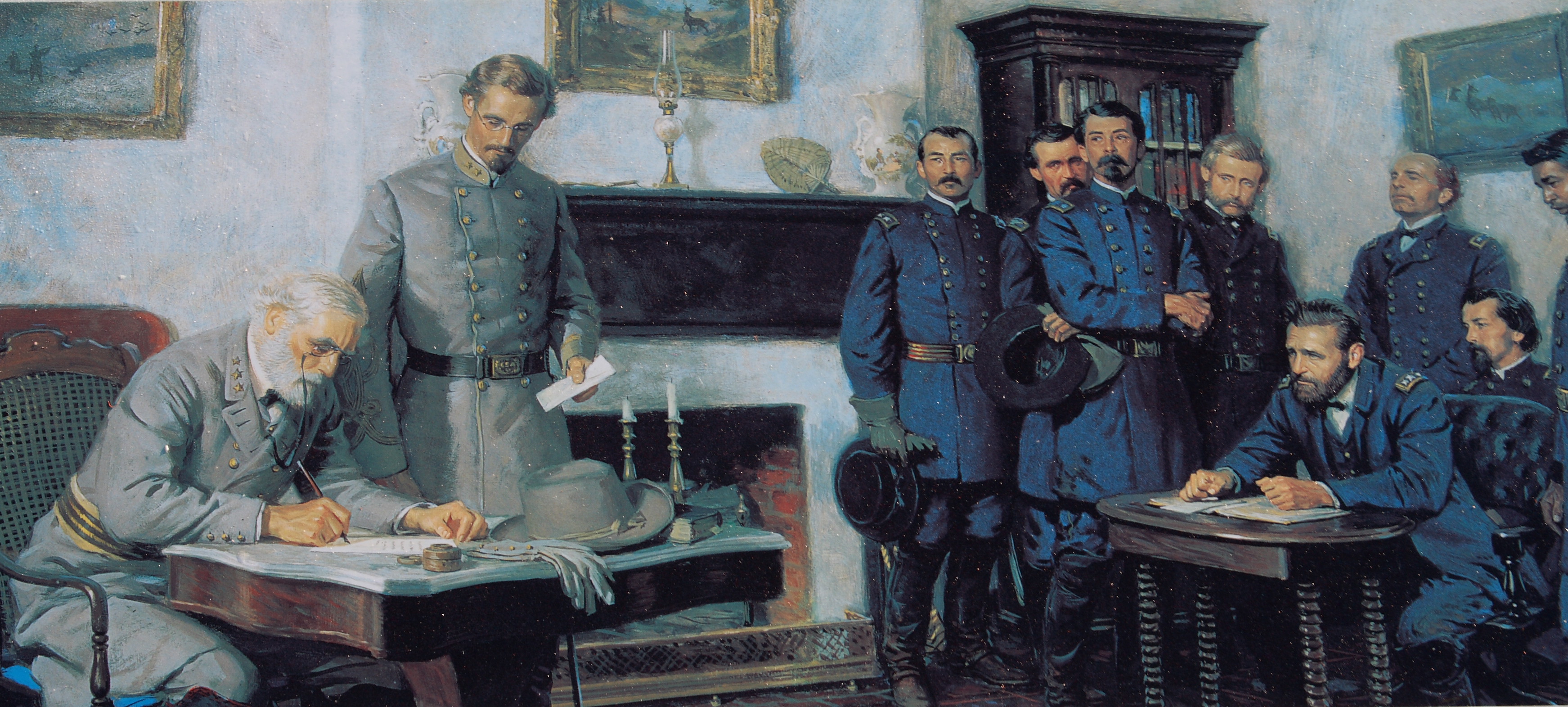
Photo courtesy: civilwar.com Robert E. Lee surrendering at Appamattox Court House

Photo courtesy: civilwar.com
Robert E. Lee surrendering at Appamattox Court House

Robert E. Lee Surrenders

Courtesy of History.com

On April 9, 1865, at Appomattox, Virginia, Confederate General Robert E. Lee surrenders his 28,000 troops to Union General Ulysses S. Grant, effectively ending the American Civil War. Forced to abandon the Confederate capital of Richmond, blocked from joining the surviving Confederate force in North Carolina, and harassed constantly by Union cavalry, Lee had no other option.

In retreating from the Union army’s Appomattox Campaign, the Army of Northern Virginia had stumbled through the Virginia countryside stripped of food and supplies. At one point, Union cavalry forces under General Philip Sheridan had actually outrun Lee’s army, blocking their retreat and taking 6,000 prisoners at Sayler’s Creek. Desertions were mounting daily, and by April 8, the Confederates were surrounded with no possibility of escape. On April 9, Lee sent a message to Grant announcing his willingness to surrender. The two generals met in the parlor of the Wilmer McLean home at one o’clock in the afternoon.

Lee and Grant, both holding the highest rank in their respective armies, had known each other slightly during the Mexican War and exchanged awkward personal inquiries. Characteristically, Grant arrived in his muddy field uniform while Lee had turned out in full dress attire, complete with sash and sword. Lee asked for the terms, and Grant hurriedly wrote them out. All officers and men were to be pardoned, and they would be sent home with their private property–most importantly, the horses, which could be used for a late spring planting. Officers would keep their side arms, and Lee’s starving men would be given Union rations.

Shushing a band that had begun to play in celebration, General Grant told his officers, “The war is over. The Rebels are our countrymen again.” Although scattered resistance continued for several weeks, for all practical purposes the Civil War had come to an end.

History 101

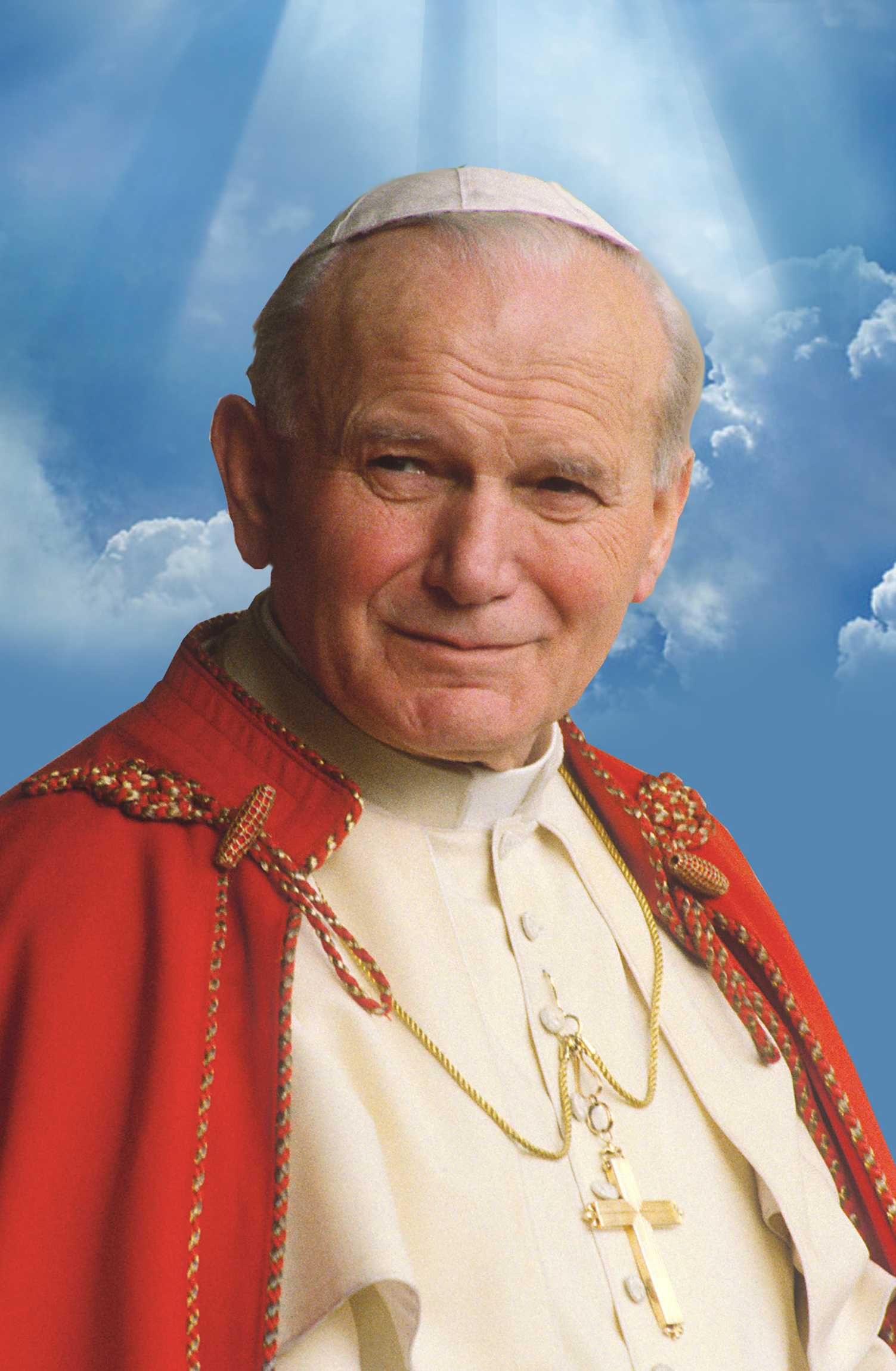
Photo courtesy:  Google Pope John Paul II

Photo courtesy: Google
Pope John Paul II

Pope John Paul II Dies

Courtesy of History.com

On April 2, 2005, John Paul II, history’s most well-traveled pope and the first non-Italian to hold the position since the 16th century, died at his home in the Vatican. Six days later, two million people packed Vatican City for his funeral, said to be the biggest funeral in history.

John Paul II was born Karol Jozef Wojtyla in Wadowice, Poland, 35 miles southwest of Krakow, in 1920. After high school, the future pope enrolled at Krakow’s Jagiellonian University, where he studied philosophy and literature and performed in a theater group. During World War II, Nazis occupied Krakow and closed the university, forcing Wojtyla to seek work in a quarry and, later, a chemical factory. By 1941, his mother, father, and only brother had all died, leaving him the sole surviving member of his family.

Although Wojtyla had been involved in the church his whole life, it was not until 1942 that he began seminary training. When the war ended, he returned to school at Jagiellonian to study theology, becoming an ordained priest in 1946. He went on to complete two doctorates and became a professor of moral theology and social ethics. On July 4, 1958, at the age of 38, he was appointed auxiliary bishop of Krakow by Pope Pius XII. He later became the city’s archbishop, where he spoke out for religious freedom while the church began the Second Vatican Council, which would revolutionize Catholicism. He was made a cardinal in 1967, taking on the challenges of living and working as a Catholic priest in communist Eastern Europe. Once asked if he feared retribution from communist leaders, he replied, “I m not afraid of them. They are afraid of me.”

Wojtyla was quietly and slowly building a reputation as a powerful preacher and a man of both great intellect and charisma. When Pope John Paul I died in 1978 after only a 34-day reign, few suspected Wojtyla would be chosen to replace him. After seven rounds of balloting, the Sacred College of Cardinals chose the 58-year-old, and he became the first-ever Slavic pope and the youngest to be chosen in 132 years.

A conservative pontiff, John Paul II’s papacy was marked by his firm and unwavering opposition to communism and war, as well as abortion, contraception, capital punishment, and homosexual sex. He later came out against euthanasia, human cloning, and stem cell research. He traveled widely as pope, using the eight languages he spoke (Polish, Italian, French, German, English, Spanish, Portuguese, and Latin) and his well-known personal charm, to connect with the Catholic faithful, as well as many outside the fold.

On May 13, 1981, Pope John Paul II was shot in St. Peter s Square by a Turkish political extremist, Mehmet Ali Agca. After his release from the hospital, the pope famously visited his would-be assassin in prison, where he had begun serving a life sentence, and personally forgave him for his actions. The next year, another unsuccessful attempt was made on the pope’s life, this time by a fanatical priest who opposed the reforms of Vatican II.

Although it was not confirmed by the Vatican until 2003, many believe Pope John Paul II began suffering from Parkinson s disease in the early 1990’s. He began to develop slurred speech and had difficulty walking, though he continued to keep up a physically demanding travel schedule. In his final years, he was forced to delegate many of his official duties, but still found the strength to speak to the faithful from a window at the Vatican. In February 2005, the pope was hospitalized with complications from the flu. He died two months later.

Pope John Paul II is remembered for his successful efforts to end communism, as well as for building bridges with peoples of other faiths, and issuing the Catholic Church’s first apology for its actions during World War II. He was succeeded by Joseph Cardinal Ratzinger, who became Pope Benedict XVI. Benedict XVI began the process to beatify John Paul II in May 2005.

History 101

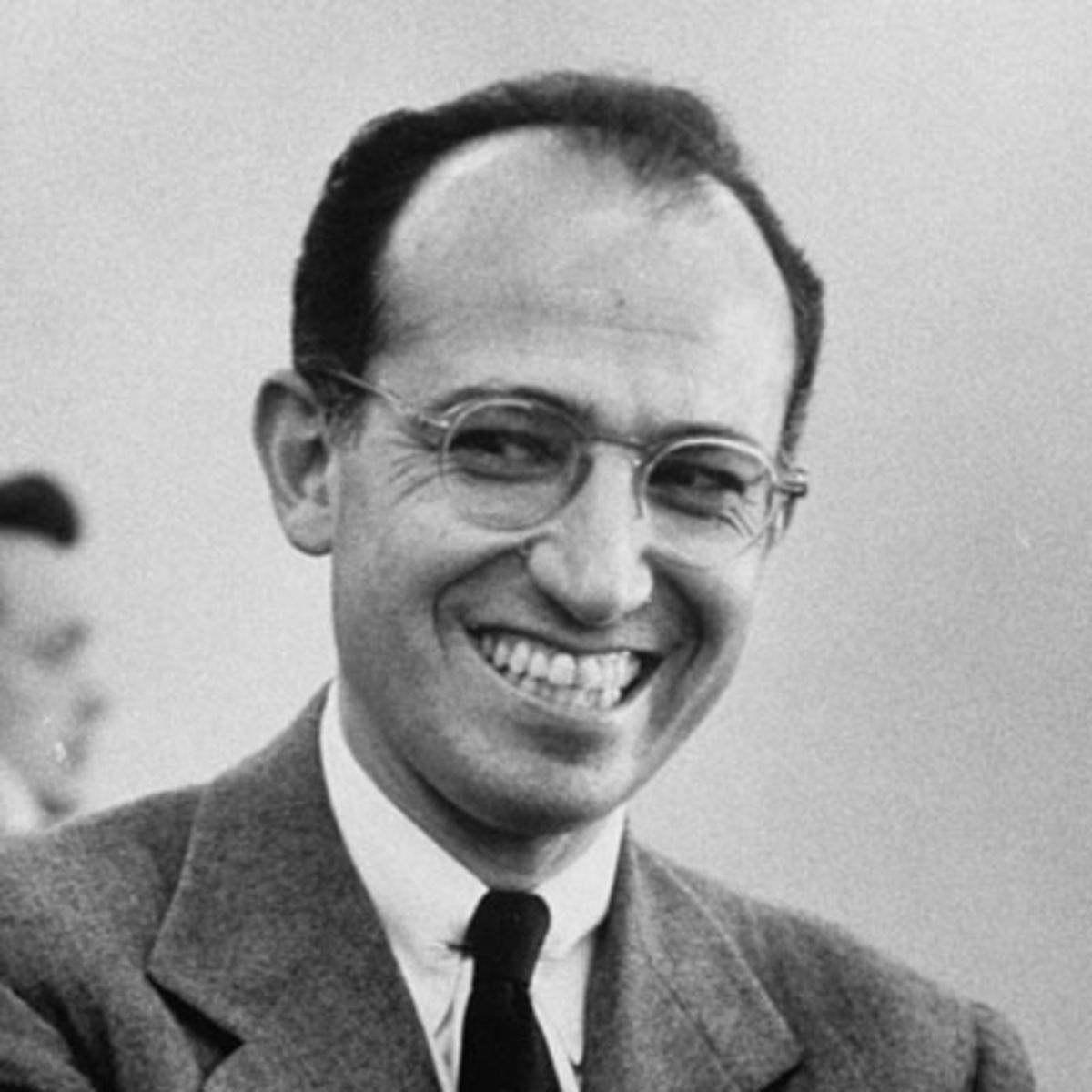
Photo courtesy of Biography.com Jonas Salk

Photo courtesy of Biography.com
Jonas Salk

Salk announces polio vaccine

Courtesy of History.com

On March 26, 1953, American medical researcher Dr. Jonas Salk announced on a national radio show that he has successfully tested a vaccine against poliomyelitis, the virus that causes the crippling disease of polio. In 1952–an epidemic year for polio–there were 58,000 new cases reported in the United States, and more than 3,000 died from the disease. For promising eventually to eradicate the disease, which is known as “infant paralysis” because it mainly affects children, Dr. Salk was celebrated as the great doctor-benefactor of his time.

Polio, a disease that has affected humanity throughout recorded history, attacks the nervous system and can cause varying degrees of paralysis. Since the virus is easily transmitted, epidemics were commonplace in the first decades of the 20th century. The first major polio epidemic in the United States occurred in Vermont in the summer of 1894, and by the 20th century thousands were affected every year. In the first decades of the 20th century, treatments were limited to quarantines and the infamous “iron lung,” a metal coffin-like contraption that aided respiration. Although children, and especially infants, were among the worst affected, adults were also often afflicted, including future president Franklin D. Roosevelt, who in 1921 was stricken with polio at the age of 39 and was left partially paralyzed. Roosevelt later transformed his estate in Warm Springs, Georgia, into a recovery retreat for polio victims and was instrumental in raising funds for polio-related research and the treatment of polio patients.

Salk’s procedure, first attempted unsuccessfully by American Maurice Brodie in the 1930s, was to kill several strains of the virus and then inject the benign viruses into a healthy person’s bloodstream. The person’s immune system would then create antibodies designed to resist future exposure to poliomyelitis. Salk conducted the first human trials on former polio patients and on himself and his family, and by 1953 was ready to announce his findings. This occurred on the CBS national radio network on the evening of March 25 and two days later in an article published in the Journal of the American Medical Association. Dr. Salk became an immediate celebrity.

In 1954, clinical trials using the Salk vaccine and a placebo began on nearly two million American schoolchildren. In April 1955, it was announced that the vaccine was effective and safe, and a nationwide inoculation campaign began. New polio cases dropped to under 6,000 in 1957, the first year after the vaccine was widely available. In 1962, an oral vaccine developed by Polish-American researcher Albert Sabin became available, greatly facilitating distribution of the polio vaccine. Today, there are just a handful of polio cases in the United States every year, and most of these are “imported” from developing nations where polio is still a problem. Among other honors, Jonas Salk was awarded the Presidential Medal of Freedom in 1977. He died in La Jolla, California, in 1995

History 101

History 101- 1953 OscarsFirst Academy Awards Telecast

Courtesy of History.com

Thursday, March 19, 1953, proved to be a historic date, because for the first time, audiences were able to sit in their living rooms and watch as the movie world’s most prestigious honors, the Academy Awards, are given out at the RKO Pantages Theatre in Hollywood, California.

Organized in May 1927, the Academy of Motion Picture Arts and Sciences was envisioned as a non-profit organization dedicated to the advancement of the film industry. The first Academy Awards were handed out in May 1929, in a ceremony and banquet held in the Blossom Room of the Hollywood Roosevelt Hotel. The level of suspense was nonexistent, however, as the winners had already been announced several months earlier. For the next 10 years, the Academy gave the names of the winners to the newspapers for publication at 11 p.m. on the night of the awards ceremony; this changed after one paper broke the tacit agreement and published the results in the evening edition, available before the ceremony began. A sealed envelope system began the next year, and endures to this day, making Oscar night Hollywood’s most anticipated event of the year.

Public interest in the Oscars was high from the beginning, and from the second year on the ceremony was covered in a live radio broadcast. The year 1953 marked the first time that the Academy Awards were broadcast on the fledgling medium of television. The National Broadcasting Company (NBC) TV network carried the 25th annual awards ceremony live from Hollywood’s RKO Pantages Theatre. Bob Hope was the master of ceremonies, while Fredric March, a two-time Academy Award winner for Best Actor (for 1932’s Dr. Jekyll and Mr. Hyde and 1946’s The Best Years of Our Lives), presented the awards. The statuette for Best Picture went to Cecil B. DeMille’s The Greatest Show on Earth, while John Ford won Best Director for The Quiet Man. Winners in the top two acting categories were Gary Cooper (High Noon) and Shirley Booth (Come Back, Little Sheba).

Hope, a star of stage and screen who tirelessly performed in United Service Organization (USO) shows for American troops during World War II, would become a mainstay of the new TV medium. He was also the most venerated Academy Awards host, playing MC no fewer than 18 times between 1939 and 1977. NBC broadcast the Oscars until 1961, when the American Broadcasting Company (ABC) took over for the next decade, including the first awards broadcast in color in 1966. Although NBC briefly regained the show in the early 1970s, ABC came out on top again in 1976 and has broadcast every Academy Awards show since. The network is under contract to continue showing the Oscars until 2014.


History 101

Photo courtesy of History.com  FDR gives one of his historic fireside chats

Photo courtesy of History.com
FDR gives one of his historic fireside chats

FDR gives first fireside chat

Courtesy of History.com

On March 12, 1933, eight days after his inauguration, President Franklin D. Roosevelt gave his first national radio address or “fireside chat,” broadcast directly from the White House.

Roosevelt began that first address simply: “I want to talk for a few minutes with the people of the United States about banking.” He went on to explain his recent decision to close the nation’s banks in order to stop a surge in mass withdrawals by panicked investors worried about possible bank failures. The banks would be reopening the next day, Roosevelt said, and he thanked the public for their “fortitude and good temper” during the “banking holiday.”

At the time, the U.S. was at the lowest point of the Great Depression, with between 25 and 33 percent of the work force unemployed. The nation was worried, and Roosevelt’s address was designed to ease fears and to inspire confidence in his leadership. Roosevelt went on to deliver 30 more of these broadcasts between March 1933 and June 1944. They reached an astonishing number of American households, with 90 percent of owning radios on which they were able to listen.

Journalist Robert Trout coined the phrase “fireside chat” to describe Roosevelt’s radio addresses, invoking an image of the president sitting by a fire in a living room, speaking earnestly to the American people about his hopes and dreams for the nation. In fact, Roosevelt took great care to make sure each address was accessible and understandable to ordinary Americans, regardless of their level of education. He used simple vocabulary and relied on folksy anecdotes or analogies to explain the often complex issues facing the country.

Over the course of his historic 12-year presidency, Roosevelt used the chats to build popular support for his groundbreaking New Deal policies. After World War II began, he used them to explain his administration’s wartime policies to the American people.

The success of Roosevelt’s chats was evident not only in his three re-elections, but also in the millions of letters that flooded the White House. Farmers, business owners, men, women, rich, poor–most of them expressed the feeling that the president had entered their home and spoken directly to them. In an era when presidents had previously communicated with their citizens almost exclusively through spokespeople and journalists, it was an unprecedented step.

History 101

Photo courtesy: Google Images Alexander Graham Bell makes telephone call

Photo courtesy: Google Images
Alexander Graham Bell makes telephone call

Alexander Graham Bell patents the telephone

Courtesy of History.com

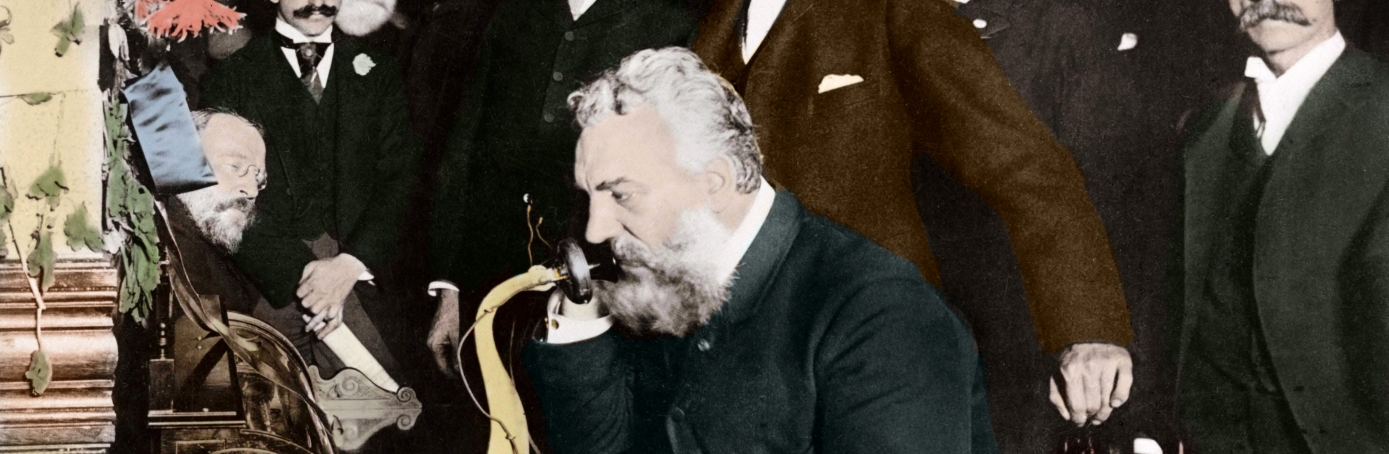
On March 7, 1876, 29-year-old Alexander Graham Bell received a patent for his revolutionary new invention–the telephone.

The Scottish-born Bell worked in London with his father, Melville Bell, who developed Visible Speech, a written system used to teach speaking to the deaf. In the 1870s, the Bells moved to Boston, Massachusetts, where the younger Bell found work as a teacher at the Pemberton Avenue School for the Deaf. He later married one of his students, Mabel Hubbard.

While in Boston, Bell became very interested in the possibility of transmitting speech over wires. Samuel F.B. Morse’s invention of the telegraph in 1843 had made nearly instantaneous communication possible between two distant points. The drawback of the telegraph, however, was that it still required hand-delivery of messages between telegraph stations and recipients, and only one message could be transmitted at a time. Bell wanted to improve on this by creating a “harmonic telegraph,” a device that combined aspects of the telegraph and record player to allow individuals to speak to each other from a distance.

With the help of Thomas A. Watson, a Boston machine shop employee, Bell developed a prototype. In this first telephone, sound waves caused an electric current to vary in intensity and frequency, causing a thin, soft iron plate–called the diaphragm–to vibrate. These vibrations were transferred magnetically to another wire connected to a diaphragm in another, distant instrument. When that diaphragm vibrated, the original sound would be replicated in the ear of the receiving instrument. Three days after filing the patent, the telephone carried its first intelligible message–the famous “Mr. Watson, come here, I need you”–from Bell to his assistant.

Bell’s patent filing beat a similar claim by Elisha Gray by only two hours. Not wanting to be shut out of the communications market, Western Union Telegraph Company employed Gray and fellow inventor Thomas A. Edison to develop their own telephone technology. Bell sued, and the case went all the way to the U.S. Supreme Court, which upheld Bell’s patent rights. In the years to come, the Bell Company withstood repeated legal challenges to emerge as the massive American Telephone and Telegraph Company (AT&T) and form the foundation of the modern telecommunications industry.


History 101

Photo courtesy of PBS.org

Photo courtesy of PBS.org
Dred Scott

Dred Scott decision

Courtesy of History.com

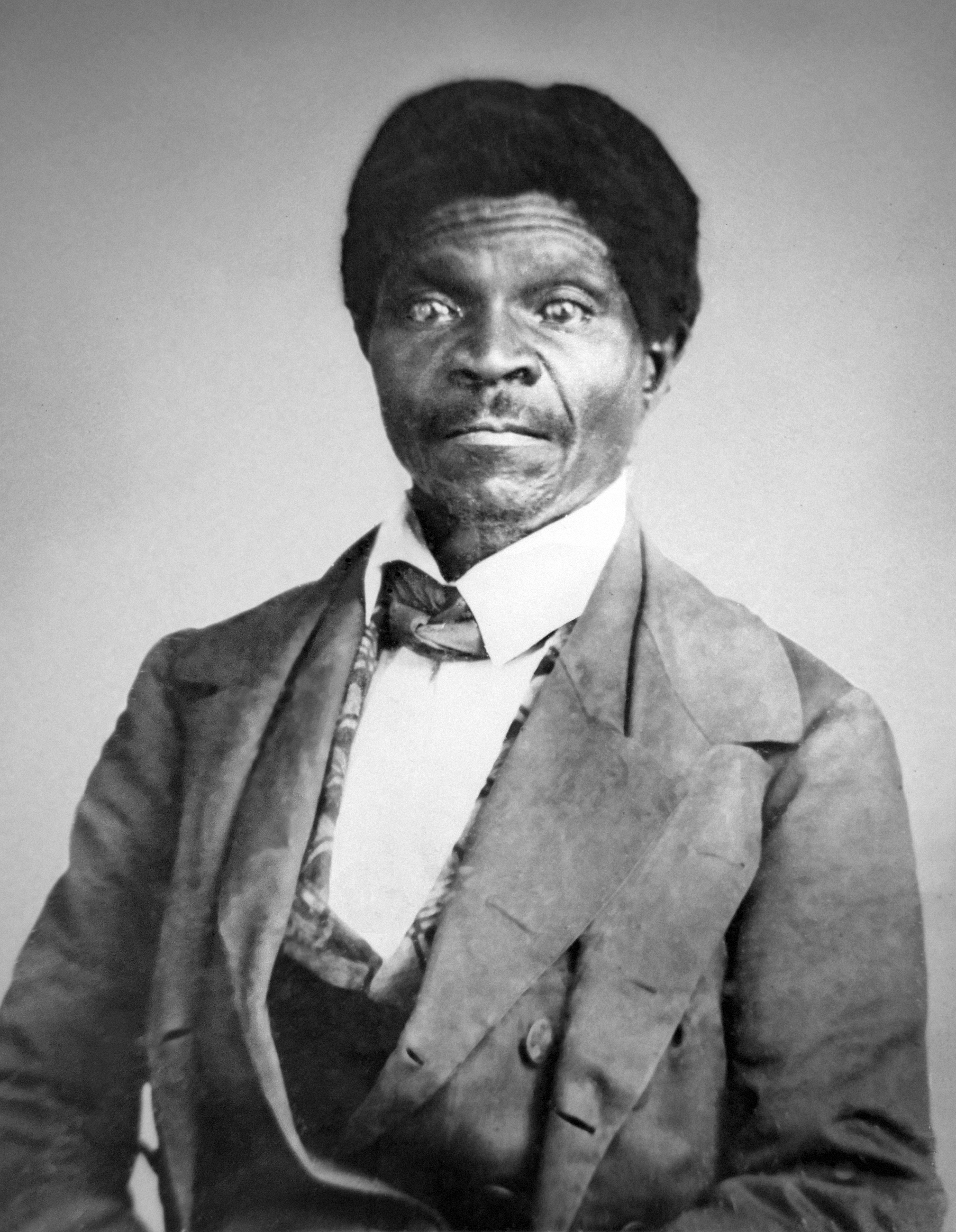
On March 6, 1857, the United States Supreme Court issued a decision in the Dred Scott case, affirming the right of slave owners to take their slaves into the Western territories, thereby negating the doctrine of popular sovereignty.

At the heart of the case was the most important question of the 1850s: Should slavery be allowed in the West? As part of the Compromise of 1850, residents of newly created territories could decide the issue of slavery by vote, a process known as popular sovereignty. When popular sovereignty was applied in Kansas in 1854, however, violence erupted. Americans hoped that the Supreme Court could settle the issue that had eluded a congressional solution.

Dred Scott was a slave whose owner, an army doctor, had spent time in Illinois, a free state, and Wisconsin, also a free territory at the time of Scott’s residence. The United States Supreme Court was stacked in favor of the slave states. Five of the nine justices were from the South while another, Robert Grier of Pennsylvania, was staunchly pro-slavery. Chief Justice Roger B. Taney wrote the majority decision, which was issued on March 6, 1857. The court held that Scott was not free based on his residence in either Illinois or Wisconsin because he was not considered a person under the U.S. Constitution–in the opinion of the justices, black people were not considered citizens when the Constitution was drafted in 1787. According to Taney, Dred Scott was the property of his owner, and property could not be taken from a person without due process of law.

In fact, there were free black citizens of the United States in 1787, but Taney and the other justices were attempting to halt further debate on the issue of slavery in the territories. The decision inflamed regional tensions, which burned for another four years before exploding into the Civil War.

History 101

Photo courtesy of Google Images

Photo courtesy of Google Images

The First Mardi Gras Celebration

Courtesy of History.com


On February 27, 1827, a group of masked and costumed students danced through the streets of New Orleans, Louisiana, marking the beginning of the city’s famous Mardi Gras celebrations.

The celebration of Carnival–or the weeks between Twelfth Night on January 6 and Ash Wednesday, the beginning of the Christian period of Lent–spread from Rome across Europe and later to the Americas. Nowhere in the United States is Carnival celebrated as grandly as in New Orleans, famous for its over-the-top parades and parties for Mardi Gras (or Fat Tuesday), the last day of the Carnival season.

Though early French settlers brought the tradition of Mardi Gras to Louisiana at the end of the 17th century, Spanish governors of the province later banned the celebrations. After Louisiana became part of the United States in 1803, New Orleanians managed to convince the city council to lift the ban on wearing masks and partying in the streets. The city’s new Mardi Gras tradition began in 1827 when the group of students, inspired by their experiences studying in Paris, donned masks and jester costumes and staged their own Fat Tuesday festivities.

The parties grew more and more popular, and in 1833 a rich plantation owner named Bernard Xavier de Marigny de Mandeville raised money to fund an official Mardi Gras celebration. After rowdy revelers began to get violent during the 1850s, a secret society called the Mistick Krewe of Comus staged the first large-scale, well-organized Mardi Gras parade in 1857.

Over time, hundreds of krewes formed, building elaborate and colorful floats for parades held over the two weeks leading up to Fat Tuesday. Riders on the floats are usually local citizens who toss “throws” at passersby, including metal coins, stuffed toys or those now-infamous strands of beads. Though many tourists mistakenly believe Bourbon Street and the historic French Quarter are the heart of Mardi Gras festivities, none of the major parades have been allowed to enter the area since 1979 because of its narrow streets.


History 101

Courtesy of NBC

Courtesy of NBC

U.S. Hockey Team Creates “Miracle” on Ice

Courtesy of History.com

On February 22, 1980, in one of the most dramatic upsets in Olympic history, the underdog U.S. hockey team, made up of college players, defeated the four-time defending gold-medal winning Soviet team at the XIII Olympic Winter Games in Lake Placid, New York. The Soviet squad, previously regarded as the finest in the world, fell to the youthful American team 4-3 before a frenzied crowd of 10,000 spectators. Two days later, the Americans defeated Finland 4-2 to clinch the hockey gold medal.

The Soviet team had captured the previous four Olympic hockey golds, going back to 1964, and had not lost an Olympic hockey game since 1968. Three days before the Lake Placid Games began, the Soviets routed the U.S. team 10-3 in an exhibition game at Madison Square Garden in New York City. The Americans looked scrappy, but few blamed them for it–their average age, after all, was only 22, and their team captain, Mike Eruzione, was recruited from the obscurity of the Toledo Blades of the International League.

Few had high hopes for the seventh-seeded U.S. team entering the Olympic tournament, but the team soon silenced its detractors, making it through the opening round of play undefeated, with four victories and one tie, thus advancing to the four-team medal round. The Soviets, however, were seeded No. 1 and as expected went undefeated, with five victories in the first round.

On Friday afternoon, February 22, the American amateurs and the Soviet dream team met before a sold-out crowd at Lake Placid.

Nearly nine minutes into the third period, American Mark Johnson took advantage of a Soviet penalty and knocked home a wild shot by David Silk to tie the contest at 3-3. About a minute and a half later, Mike Eruzione, whose last name means “eruption” in Italian, picked up a loose puck in the Soviet zone and slammed it past Russia’s Vladimir Myshkin with a 25-foot wrist shot. For the first time in the game, the Americans had the lead, and the crowd erupted in celebration.

There were still 10 minutes of play to go, but the Americans held on, with Craig making a few more fabulous saves. With five seconds remaining, the Americans finally managed to get the puck out of their zone, and the crowd began counting down the final seconds. When the final horn sounded, the players, coaches, and team officials poured onto the ice in raucous celebration. The Soviet players, as awestruck as everyone else, waited patiently to shake their opponents’ hands.

The so-called “Miracle on Ice” was more than just an Olympic upset; to many Americans, it was an ideological victory in the Cold War, as meaningful as the Berlin Airlift or the Apollo moon landing. The upset came at an auspicious time: President Jimmy Carter had just announced that the United States was going to boycott the 1980 Summer Games in Moscow because of the Soviet invasion of Afghanistan, and Americans, faced with a major recession and the Iran hostage crisis, were in dire need of something to celebrate. After the game, President Carter called the players to congratulate them, and millions of Americans spent that Friday night in revelry over the triumph of “our boys” over the Russian pros.

This improbable victory was later memorialized in a 2004 film, Miracle, starring Kurt Russell.

History 101

Photo courtesy of NPR

Photo courtesy of NPR

Archaeologist opens tomb of King Tut

Courtesy of History.com

On February 16, 1923, in Thebes, Egypt, English archaeologist Howard Carter entered the sealed burial chamber of the ancient Egyptian ruler King Tutankhamen.

Because the ancient Egyptians saw their pharaohs as gods, they carefully preserved their bodies after death, burying them in elaborate tombs containing rich treasures to accompany the rulers into the afterlife. In the 19th century, archeologists from all over the world flocked to Egypt, where they uncovered a number of these tombs. Many had long ago been broken into by robbers and stripped of their riches.

When Carter arrived in Egypt in 1891, he became convinced there was at least one undiscovered tomb–that of the little known Tutankhamen, or King Tut, who lived around 1400 B.C. and died when he was still a teenager. Backed by a rich Brit, Lord Carnarvon, Carter searched for five years without success. In early 1922, Lord Carnarvon wanted to call off the search, but Carter convinced him to hold on one more year.

In November 1922, the wait paid off, when Carter’s team found steps hidden in the debris near the entrance of another tomb. The steps led to an ancient sealed doorway bearing the name Tutankhamen. When Carter and Lord Carnarvon entered the tomb’s interior chambers on November 26, they were thrilled to find it virtually intact, with its treasures untouched after more than 3,000 years. The men began exploring the four rooms of the tomb, and on February 16, 1923, under the watchful eyes of a number of important officials, Carter opened the door to the last chamber.

Inside lay a sarcophagus with three coffins nested inside one another. The last coffin, made of solid gold, contained the mummified body of King Tut. Among the riches found in the tomb–golden shrines, jewelry, statues, a chariot, weapons, clothing–the perfectly preserved mummy was the most valuable, as it was the first one ever to be discovered. Despite rumors that a curse would befall anyone who disturbed the tomb, its treasures were carefully catalogued, removed and included in a famous traveling exhibition called the “Treasures of Tutankhamen.” The exhibition’s permanent home is the Egyptian Museum in Cairo.


History 101

Photo courtesy of the University of Tennessee

Photo courtesy of the University of Tennessee

Staff Reports

Shots were fired in the United States House of Representatives’ chambers in Washington D.C. on January 30, 1835.  President Andrew Jackson, the seventh president of the United States, survived the first assassination attempt against the life of a U.S. president.

Jackson, nicknamed “Old Hickory” for his determination and drive, was one of the leading generals of the War of 1812.  Although the Treaty of Ghent had called a formal end to the war in December of 1814, neither General Jackson nor British forces had heard the news.  The British launched an attack against New Orleans on January 8, 1815.  General Andrew Jackson and his troops delivered a crushing defeat to the British and Jackson became a war hero.

After serving as a United States Senator, Jackson was elected to the presidency in November of 1828, winning in a landslide against John Quincy Adams.  According to biography.com, Jackson had become the first frontier president and the first chief executive who resided outside of either Massachusetts or Virginia

During a funeral service honoring the late Representative Warren R. Davis of South Carolina, a man identified as Richard Lawrence discharged two separate pistols in the direction of President Jackson. Both weapons misfired, and the infuriated Jackson charged the shooter and hammered him with his cane while bystanders subdued the attempted assassin. During the subsequent criminal investigation, the suspect was found to be insane and was sent to a mental prison.

Three decades later, on April 14, 1865, President Abraham Lincoln would become the first president to be assassinated.