Tag Archives: K.P. Sander

Did You Know?

By K.P. Sander

Did-You-KnowHappy New Year! Did you know that the very first time the New Year was celebrated on January 1st, was in Rome in 153 B.C. The month of January did not even exist until around 700 B.C., when the second king of Rome, Numa Pontilius, added the months of January and February to the annual calendar.

Around the world, different countries celebrate New Year’s Eve in their own particular manner, with social gatherings, eating, drinking alcoholic beverages, some sort of fireworks display…and the “countdown”. In some U.S. cities, you can still hear firecrackers popping and the banging of pots and pans – a celebration of the 50s and 60s – in nostalgic fashion.

Perhaps the most popular celebration comes from New York City; it is watched via television the world over. The very first New Year’s Eve celebration in Times Square was in 1903. According to Wikipedia, Adolph Ochs, the owner of the New York Times, decided to celebrate the opening of his new headquarters, located at One Times Square, with a fireworks show displayed from the roof of the building.   Nearly 200,000 people attended the event.

Wanting to improve upon the spectacle each year, Ochs had one of his electricians design an electrically lit time ball to draw more attention. The ball was made of wood and iron and weighed 700 pounds. Approximately 5 feet in diameter, the ball was lit with one hundred incandescent bulbs and hoisted on the building’s flagpole by a team of six men. As the ball dropped, it completed an electrical circuit to a large sign indicating the New Year. That first “ball drop” occurred on Dec. 31, 1907 – welcoming in 1908 – and it has been a tradition ever since.

The New Year is a brand new beginning, a fresh start; a time for resolutions – often overstatements of intent – to change behaviors and start anew. What did you resolve to change on New Year’s Eve? Some say the very best resolution – and the one most frequently found successful – is the resolve to implement no more New Year’s Resolutions. Whatever your traditions, here’s hoping that your New Year is full of blessings and joy.



Did You Know?

BY K.P. SANDER

bloodyskeletonHalloween, or All Hallows Eve, is a day of celebration for many countries, held on October 31 each year and dedicated to remembering the dearly departed. While many honor it at face value, it is more commonly known as an opportunity for children to don costumes and collect candy.

Interestingly enough, trick-or-treating has an origin that dates far back into history.

William Shakespeare spoke of it in The Two Gentlemen of Verona in 1593, in a passage that mentions ‘whimpering like a beggar at Hallowmas’. Great Britain records the custom of poor people going door to door to receive food in exchange for saying prayers for the dead, called “Souling”. “Guising,” or visiting homes masquerading in disguise to be rewarded with cakes, fruit or money, was a Scottish tradition as far back as 1895. Similar guising in North America is first noted in 1911, when Ontario, Canada reported children masquerading throughout neighborhoods.

Nowadays, typical activities include the popular trick-or-treating, carving pumpkins into jack-o’-lanterns, visiting haunted house attractions, attending parties, and watching scary movies. In many parts of the world, Christian religious observances still include attending church service and lighting candles on the graves of the dead.

Whatever your tradition, enjoy a Happy Halloween!

Did You Know?

BY K.P. SANDER

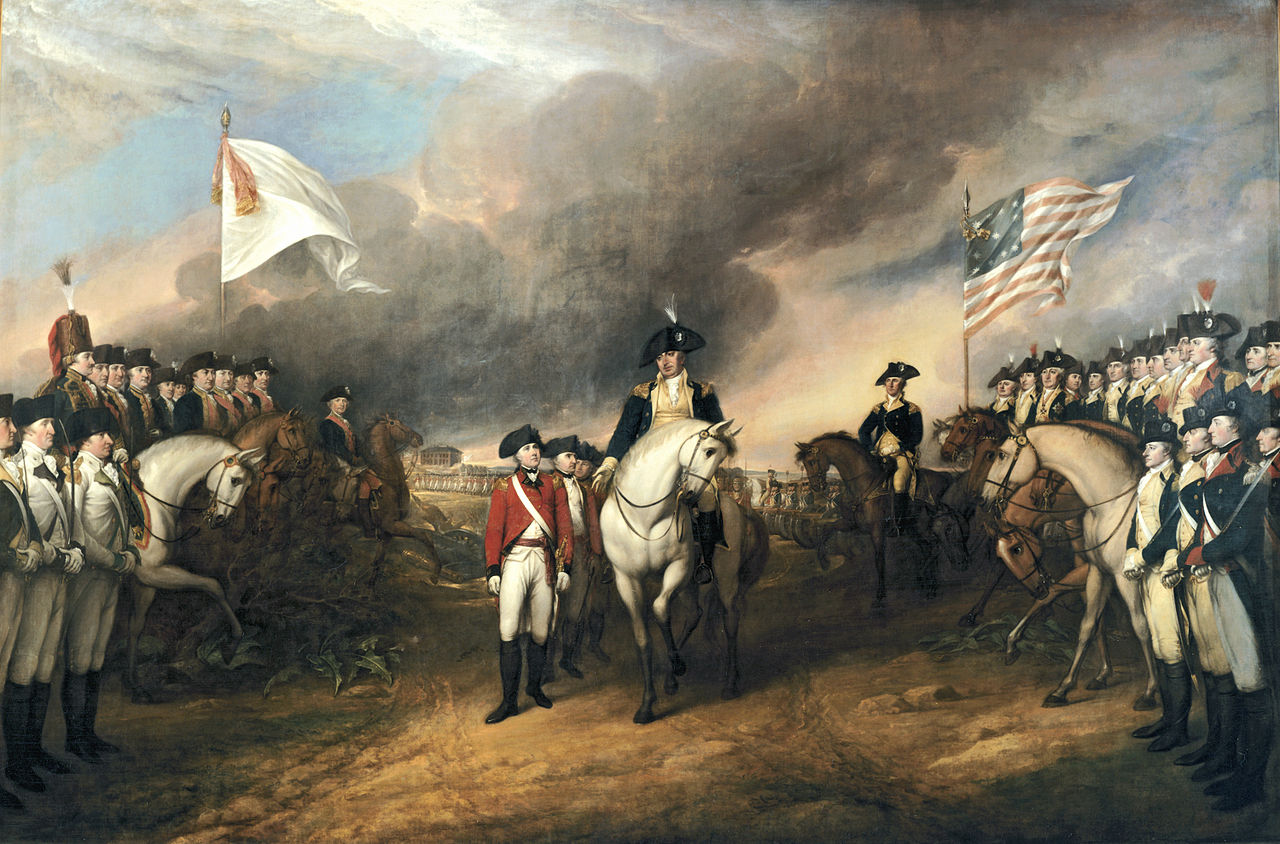
the-surrender-of-cornwallis

The Surrender of Cornwallis (Photo Courtesy: Wikipedia)

Although the Revolutionary War officially ended in 1782, the last battle came to pass with surrender on Oct. 19, 1781, 233 years ago.

The Battle of Yorktown, which began on Oct. 6 of that year, when British General, Charles Cornwallis, moved his troops to Virginia to take over the command from loyalist, General Benedict Arnold. He found the troops low on reinforcements and supplies.

At the same time, General George Washington was moving to attack New York with the help of the French – who were convinced to help by Benjamin Franklin. Cornwallis was ordered to bring all 7,500 of his troops to New York, but he did not obey, staying in Yorktown (now Williamsburg, VA).

On Oct. 6, General Washington’s Continental Army attacked Cornwallis with over 16,000 men, including the French, and the American colonists and militia. The Continental Army persevered, and then on Oct. 17, the British sent a fleet from New York to assist Cornwallis, but it was too late. The British were outnumbered and out of supplies and food.

A letter was delivered to Cornwallis from General Washington, stating that he wanted to stop the “useless effusion of blood.” Realizing there was no hope for his troops, Cornwallis replied with this letter:

York in Virginia, 17th October 1781, 1/2 Past 4 P.M. 

Sir,

I have this moment been honoured with your Excellency’s letter dated this day.

The time limited for sending my answer will not admit of entering into the detail of Articles, but the basis of my proposals will be that the Garrisons of York and Gloucester shall be prisoners of War with the customary honours, and for the convenience of the individuals which I have the honour to command, that the British shall be sent to Britain and the Germans to Germany, under engagement not to serve against France, America or their Allies untill released or regularly exchanged, that all Arms and publick stores shall be delivered up to you, but that the usual indulgence of side arms to Officers and of retaining private property shall be granted to Officers & Soldiers, and that the interests of several individuals in Civil Capacities & connected with us, shall be attended to. If Your Excellency thinks that a continuance of the suspension of hostilities will be necessary to transmit your answer I shall have no objection to the hour that you propose. I have the honor to be,

Your most obedient & most humble servant,

Cornwallis


Did You Know?

BY K.P. SANDER


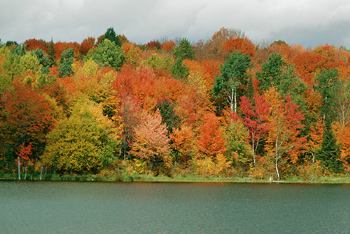
autumn_leaves_scene

(Photo Courtesy: ScienceMadeSimple.com)

Ah, glorious fall! That time of year when nature just bursts in amazing Technicolor and dazzles us with the beauty of the season and cooler temperatures. Okay, maybe more so east coast than here locally, but one can dream.

Technically speaking, the Autumnal Equinox will happen specifically on Tues., Sept. 23 this year. ‘Equinox’ generally refers to the point in time when day and night are of nearly equal duration. In the fall, the days thereafter grow shorter; in the spring (Vernal Equinox) the days begin to grow longer.

Wikipedia says that an equinox occurs when the plane of the Earth’s equator passes the center of the sun, and the tilt of the Earth inclines neither away nor toward the sun – let’s just say that the sun is directly overhead. The Earth is really smart; it knows what to do.

And so does nature. The trees in particular understand that the days will be shorter and they undergo a vibrant metamorphosis. But how, exactly, do leaves change color?

ScienceMadeSimple.com continues our autumnal science lesson. Trees actually store “food” during the summer months. In winter, when there is less light and water, the trees stop making food and start to rest. The chlorophyll – or what makes the leaves green – begins to disappear, fading leaves to yellow and orange. In some trees, like maples, glucose gets trapped in the leaves and the cooler nights turn foliage into reds and purples.

Whatever the science, it is nature’s masterpiece, and it is beautiful to behold. Enjoy autumn!