
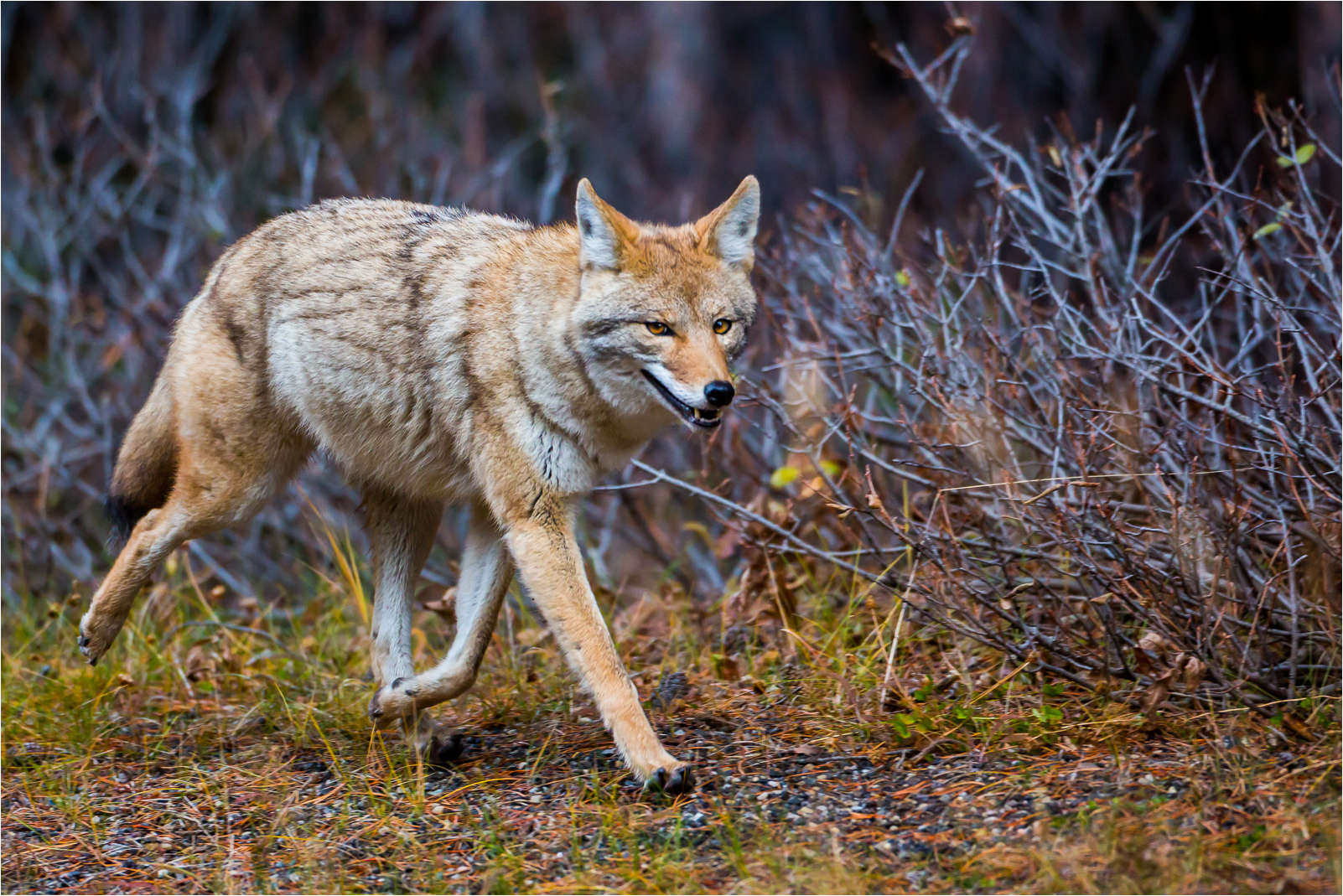
Photo courtesy of Christopher Martin Photography
By Carol Heyen
EASTVALE-Coyote spotting has become commonplace in Eastvale and the Inland Empire. Coyotes primarily hunt rodents and wild rabbits for food, but they have seemed to acquire a taste for our pets the last few years.
As wild spaces are developed, coyotes are being pushed out of their wild habitats and into our backyards. Attacks that have resulted in severe injury or death to pet cats and dogs have occurred all around Eastvale in the last few months -near the River Trail, close to Harada, Vandermolen and Ronald Reagan Elementary schools, and in the Avonlea neighborhood.
Coyotes are opportunists by nature, and they will take advantage of every possibility for food that is presented. Coyotes are attracted to garbage cans, fruit trees (and the rodents who feed on the fallen fruit) and of course, our pets. What can you do to keep your beloved Fido and Fluffy safe?
Neighboring cities and the Inland Valley Humane Society have released a list of strategies to help:
- Securing garbage in tightly-closed containers
- Removing sources of water
- Locking pets inside at night
- Trimming shrubbery, as to not give the coyotes any hiding places
- Never let your dog off-leash in wild areas – Coyotes sometimes hunt in packs and have been known to lure dogs into ambushes
Other common-sense measures include not trying to tame the coyotes (or any other wild animal), and keeping your dog on a short leash while walking. Never leave small children or pets alone in your yard- coyotes can easily jump a 6-foot wall or fence, and there have been many dogs and cats in Eastvale and the surrounding areas that have been attacked while in their own backyard.
Coyotes are most active at dawn and dusk. They will be even more active in the next few months as they will need to find food and water for the pups that will be born this spring. If you come in contact with a coyote, raise your hands above your head, making yourself seem as large as possible, and shout loudly or throw something, like a rock, to scare it off. Garden hoses, air horns, pepper spray and whistles are also good deterrents, according to the Indefinitely Wild website.
If coyotes are afraid of human contact, and they don’t have any readily-available food or water sources, they may stay away from our neighborhoods. Until then, be vigilant to keep your pets and families safe.
 ABC PR -Community News, Public Relations and Advertising Services