Tag Archives: Did You Know

Did You Know?

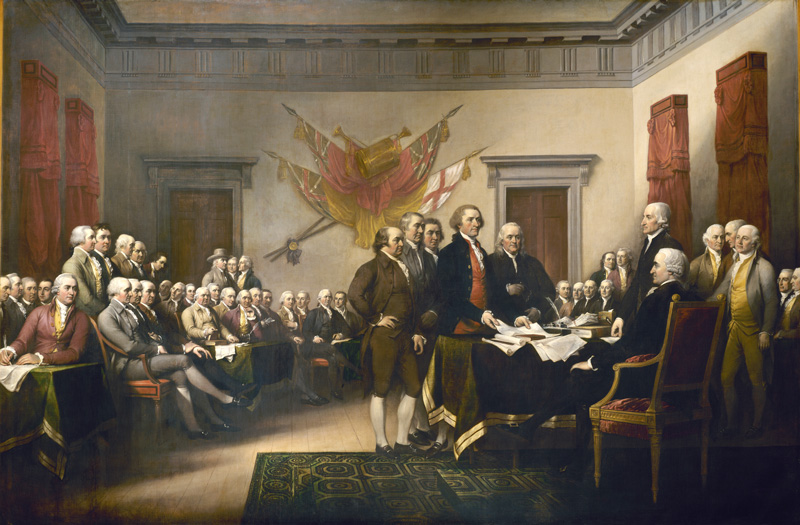
DeclarationofIndependence-WEBBy K.P. Sander


Fourth of July – fireworks, picnic, barbeques, parades, vacations…baseball, hot dogs and apple pie!  Our nation’s birthday is cause for celebration and remembering that our freedom was hard won and is much cherished.

Imagine the celebration commemorating the adoption of the Declaration of Independence back on July 4, 1776.  The legal separation of the original Thirteen Colonies from Great Britain happened just two days earlier, and the American Revolution finally had its reward.

According to Wikipedia, the Second Continental Congress voted to approve a resolution of independence, and a poignant statement – penned principally by Thomas Jefferson – was brought forth to forever capture the decision:

“We hold these truths to be self-event, that all men are created equal, that they are endowed by their Creator with certain unalienable rights that among these are Life, Liberty and the Pursuit of Happiness.”

These words contained in the Declaration are so powerful that they have been called “one of the best-known sentences in the English language [containing] the most potent and consequential words in American History.”  Abraham Lincoln made this view of human rights the foundation of his political philosophy.

Interestingly enough, three of our nation’s founding fathers – who became U.S. Presidents – died on July 4: good friends John Adams and Thomas Jefferson died within five hours of each other in 1826 (on the 50th Anniversary of Independence Day); and James Monroe in 1831.

The Declaration of Independence became the cornerstone of building this great nation, and the political upheaval rejecting the authority of the British monarchy became victorious in the founding of the United States of America.

This Fourth of July, remember our history and those that gave all for our freedom and independence.

Did You Know?

Photo courtesy: Google Images

Photo courtesy: Google Images

By K.P. Sander

Fire up the barbeques, Father’s Day is coming!  Celebrated on the third Sunday in June, the annual remembrance honors fathers, fatherhood, and the influence of fathers in society.

Wikipedia says the day was inaugurated in the U.S. in the early 20th century to complement Mother’s Day, and the first observance was probably held on July 5, 1908 in Fairmont, West Virginia.

A woman named Grace Golden Clayton was mourning the loss of her own father in December of 1907, when a mining disaster in nearby Monongah killed 361 men (250 of whom were fathers) leaving nearly 1,000 children fatherless.  Clayton asked her pastor to help honor those fathers, but the event – held that next July in the Williams Memorial Methodist Episcopal Church South – was overshadowed in Fairmont by Independence Day, and was not celebrated again for many years. The original sermon had been lost.

Another celebration cropped up in 1910, when Sonora Smart Dodd wanted to honor her father – Civil War veteran William Jackson Smart – who raised six children in Spokane, Washington as a single parent.  Several local clergymen accepted the idea and on June 19 sermons honoring fathers were presented throughout the city.

In 1913, a bill introducing national recognition of the holiday was submitted in Congress.  President Woodrow Wilson wanted to make it official, especially since he was speaking at a Father’s Day celebration in Spokane, but Congress resisted, trying to avoid commercialization.  They continued to be successful in avoiding the topic, and in 1957, Maine Senator, Margaret Chase Smith, accused Congress of ignoring fathers for 40 years (in a discriminatory proposal she wrote wondering why mothers were the only ones celebrated).

Finally, in 1966, President Lyndon B. Johnson issued the first presidential proclamation.  President Richard Nixon signed it into law six years later, and in 1972, dads finally got their day.

So, dads, sorry it took so long, but Happy Father’s Day…you’re the greatest!


“My father used to play with my brother and me in the yard.  Mother would come out and say, “You’re tearing up the grass.”  “We’re not raising grass,” Dad would reply.  “We’re raising boys.”

                                                -Harmon Killebrew, American Professional Baseball Player

Did You Know?

Photo Courtesy:  Healthyfoodhouse.com

Photo Courtesy: Healthyfoodhouse.com

By K.P. Sander

Summer Shape Up Series #2:  Let’s say that you take care of yourself.  You do all the necessary things to eat right every day, exercise regularly, and work hard to have a great balance of work/play/family/personal time.  Life is good, and you’re feeling healthy.

But despite all your efforts, things are not so healthy.  Dangers lurk all about your home in every day products that seem so innocent.

Just as important as what you put in your body, is what you put on your body and what you are exposed to.  According to realfarmacy.com, the Cancer Prevention Coalition (CPC) has put together the top 12 most common products manufactured by “big business” that need to be avoided and kept out of your homes and away from your body.

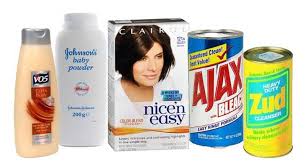
  • Johnson & Johnson Baby (Talcum) Powder: Talc is a carcinogenic and a risk factor for ovarian cancer, not to mention a lung irritant.
  • Procter & Gamble Cover Girl Replenishing Natural Finish Foundation: Not so “natural,” this make-up contains parabens, untested fragrances, lanolin, talc, and BHA – just to mention a few – all known to cause or be associated with cancer and dermatitis.
  • Procter & Gamble Crest Tartar Control Toothpaste: Would you switch to a natural toothpaste if you knew you were brushing twice a day with carcinogenics FD&C #1 and Saccharin?  Time to switch.
  • Alberto VO5 Conditioner (Essence of Neutral Henna): Essence of cancer, with formaldehyde, polysorbate 80, FD&C Red #4 and other undisclosed ingredients hidden in fragrance.
  • Clairol Nice ‘n Easy (Permanent Hair Color): There is nothing nice and easy about carcinogenics, neurotoxins, and dermatitis, but you can find these things hidden in quaternium-15, diethanolamine and phenylene-diamines. The article also notes a “causal relation to non-Hodgkin’s lymphoma, multiple myeloma and other cancers.
  • Colgate-Palmolive Ajax Cleanser and Reckitt & Colman Zud Heavy Duty Cleanser: Both contain the unlabeled toxic ingredient of crystalline silica, a carcinogenic and eye, skin and lung irritant.
  • Reckitt & Colman Lysol Disinfectant Spray: Although the carcinogenicity is denied in their Material Safety and Data Sheet, the carcinogenic and irritant, orthophenylphenol is an ingredient.
  • Sandoz Agro Zodiac Cat & Dog Flea Collar: With carcinogenic and neurotoxin, propoxur, around your pet’s neck, the fleas aren’t the only ones in jeopardy.
  • Monsanto Ortho Weed-B-Gon Lawn Weed Killer: “Weed Killer” labels don’t leave much to the imagination – something is going to die.  Just make sure you wear gloves and masks when using these types of products so you aren’t exposed to carcinogens and neurotoxins.
  • Oscar Mayer Beef Frankfurters: Don’t you just love throwing some benzene hexachloride, dacthal, dieldrin, DDT, lindane, nitrates, hormones and antibiotics on your summertime grill? In the case of a hot dog, if it isn’t chemical and nitrate-free, and made up of pure, normal parts – don’t go there.
  • Borden or Lucerne Whole Milk: Milk does not do a body good in this particular case, with DDT, growth hormones, antibiotics and other carcinogenics mixed in.  Find another option to dunk your cookies in.
  • Most Brand-Name Laundry Detergents: Clemson University conducted a study which found that 2% of a fabric’s weight comes from laundry detergent. The skin absorbs 75% of any fat soluble substance it comes into contact with within 26 seconds, and laundry detergents include anionic surfactants, petroleum distillates, phenols (and more) that are toxic, carcinogenic and can cause organ damage.

The realfarmacy.com article states that current product labeling provides no warnings for cancer and other chronic health risks.  Food is labeled for cholesterol, but not for carcinogens.  Frankly, high cholesterol is the least of your worries in these instances.

In the “Top 10 Most Unhealthy, Cancer Causing Foods,” American political activist, Ralph Nader, says, “What is particularly galling about the ‘Dirty Dozen,’ is that these toxic chemicals don’t have to be there.  Yet these corporations continue to expose people to health hazards unnecessarily.”

Do yourself and your family a favor, and read labels, educate yourself on chemical that you use on a regular basis, and begin to eliminate them all from your house and your life.

Did You Know?

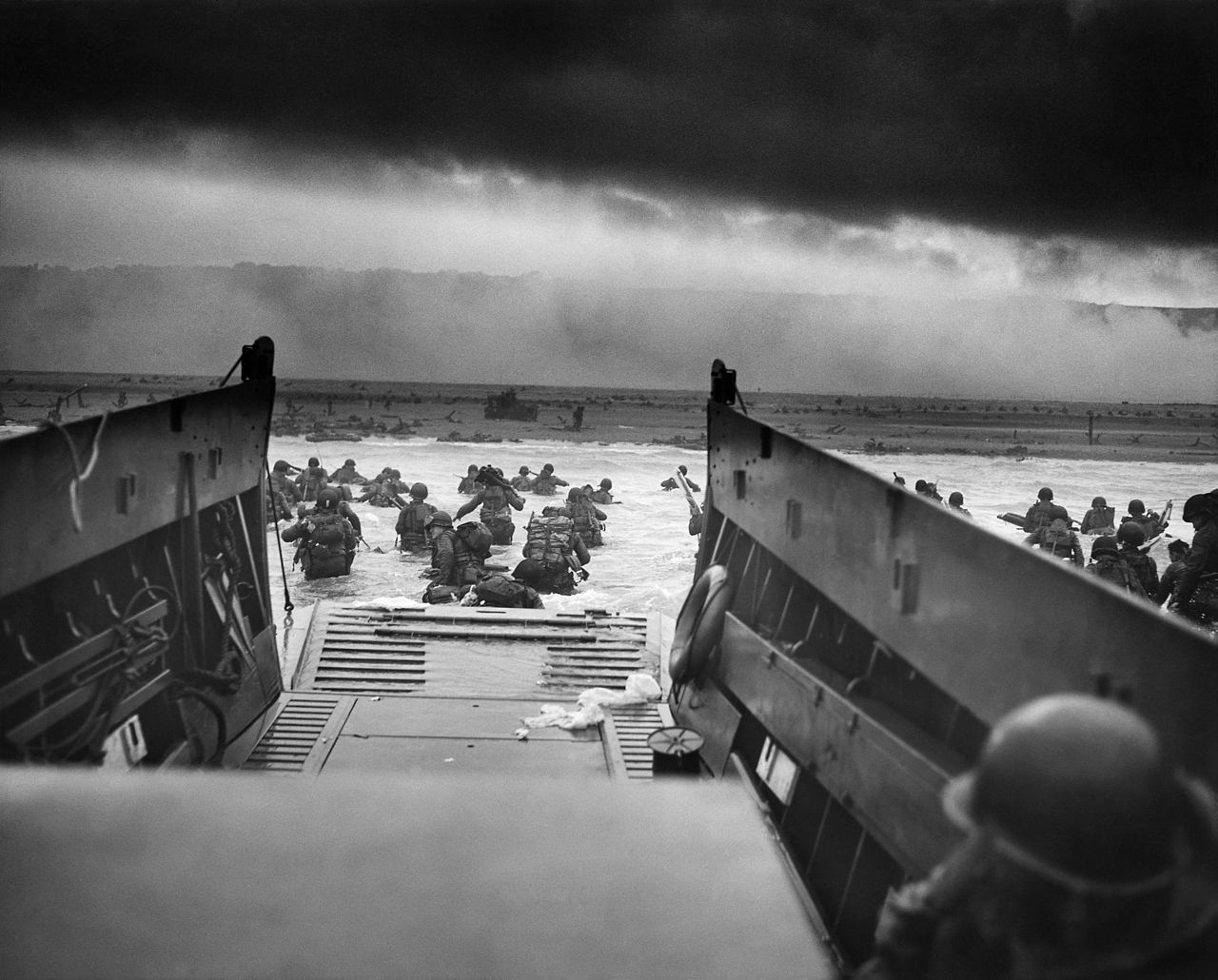
Photo Courtesy:  Wikipedia  U.S. Army troops wade ashore on Omaha Beach, on the morning of June 6, 1944

Photo Courtesy: Wikipedia
U.S. Army troops wade ashore on Omaha Beach, on the morning of June 6, 1944

By K. P. Sander

On Sat., June 6, we remembered that it had been 71 years since World War II Allied Forces invaded the beaches of Normandy, in northern France.

In the largest seaborne invasion in history, the attack landed 5,000 assault craft, 289 escort vessels and 277 minesweepers.  According to Wikipedia, nearly 160,000 troops crossed the English Channel on “D-Day,” with 875,000 men ashore by the end of June 1944.

German preparations to secure the beaches all along the Atlantic Wall of France were only partially completed, allowing the Allies to take advantage of large, undefended stretches of coastline.

The planning attack for Normandy was nearly a year in the making, and the weather on the target date was dismal, but postponement would have delayed the attack for weeks. Strong winds blew the water crafts east of their intentions – particularly at Omaha and Utah beaches – and they were met with heavy gunfire where casualties were ultimately the heaviest.

Allied casualties on D-Day were estimated at more than 10,000, with 4,400 confirmed dead.  Although the Germans had ordered all non-essential French civilians to evacuate the coastline combat zones, casualties came to 3,000 by D+1.  Germany ultimately had between 4,000 and 9,000 casualties.

Allied air attack preceded the amphibious landings on D-Day, severely impacting transportation.  This made it very difficult for Germany to bring supplies and reinforcements to the front. While the Allies did not achieve all of their objectives on D-Day, they ultimately gained control toward victory over the next several weeks and months.

The Allied victory in Normandy led to the liberation of France from Nazi control and contributed to the ending of German-occupied Western Europe, and ultimately the end of World War II.  Less than one year after D-Day, Germany surrendered.


Operation Overlord Allies of the Normandy Invasion: United States, United Kingdom, Canada, Australia, Belgium, Czechoslovakia, Denmark, Free France, Greece, Netherlands, New Zealand, Norway and Poland.

D-Day is military terminology for a particular day in which any combat attack or operation is to be initiated; H-Hour is used for the particular time.  The terms are used in conjunction with numbers for specifics that all units understand, yet secrecy is protected.  For example, D+3 means three days after D-Day; D-1 was the day before D-Day; H-3 means three hours before H-Hour. 

Did You Know?

Did You Know-WEB

Summer Shape Up Series – #1

It’s that time of year.  The sun is shining, the weather is warmer, and the school year is wrapping up:  summer is upon us.  A mad dash to whip yourself into shape so you feel confident in your bathing suits, shorts and sleeveless shirts is at hand, but don’t panic.  There are a few easy things you can do to improve your health and your confidence.

Simplicity and consistency is key in not only achieving results, but maintaining what you’ve worked for.  Walking briskly for 30 minutes four to five times each week is good for your heart, and will tone your muscles.  Throw in a routine of push-ups, squats and lunges a few times each week and you’ll be pleasantly surprised at the results.

Limiting your trips through the fast-food drive-thru to just once per week (or better yet, once per month or not at all) is one of the healthiest things you can do for yourself.  Along with that, incorporate healthy choices into your everyday diet.

According to Fitness Magazine, the following is a list of some of the healthiest foods on the planet:

  • Lemons: Just one lemon has more than 100% of your daily intake of vitamin C, which may help increase HDL (the good guys) cholesterol levels and strengthen bones.  Citrus also acts as an anti-inflammatory and may inhibit the growth of cancer cells.
  • Broccoli: One medium stalk contains more than 100% of your daily intake of vitamin K and 200% of vitamin C, which can help stave off numerous cancers.
  • Dark Chocolate: Just a quarter ounce daily can help reduce blood pressure in otherwise healthy individuals. Cocoa powder is rich in antioxidants.
  • Potatoes: One red potato contains as much cell-building folate as a cup of spinach.  One sweet potato has eight times the amount of cancer-fighting vitamin A you need each day.
  • Salmon: Wild caught, cold water salmon is a great source of omega-3 fatty acids, which can help reduce depression, heart disease and cancer – and help protect against Alzheimer’s disease.
  • Walnuts: These delicious power-houses contain the most omega-3 fatty acids of all nuts, and help to reduce cholesterol, improve moods and fight cancer.  The fact that they look like a little brain is no coincidence.
  • Avocados: One of the healthiest fats around, avocados can help to lower cholesterol, provide fiber and folate, and may reduce the risk of heart disease.
  • Garlic: This powerful disease fighter can help inhibit the growth of bacteria (even E. coli).  Garlic is also a potent anti-inflammatory and can help lower cholesterol and blood pressure.
  • Spinach: This cancer-fighter also contains lutein and other antioxidants important for eye health.
  • Beans: Eating four servings of legumes each week can help lower your risk of heart disease by as much as 22%; Beans may also reduce your risk of breast cancer.

It makes perfect sense to incorporate these foods into your daily – you’ll be glad you did.  How about a spinach salad with grilled salmon, avocado slices, broccoli florets, kidney beans, grilled potatoes – topped with lemon/garlic vinaigrette?  Follow this mega-healthy salad with a square of dark chocolate, and a delicious, summer meal to help you shape up is complete.


Did You Know?

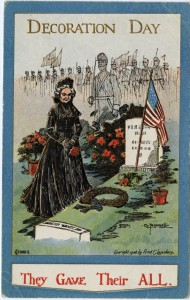
Photo Courtesy:  MemorialDay.org

Photo Courtesy: MemorialDay.org

By K.P. Sander

On Mon., May 25, we celebrate Memorial Day – the federal holiday dedicated to the memory of those individuals who died while serving in the U.S. armed forces.

Observed annually on the last Monday in May, the holiday originated after the Civil War in an effort to commemorate all the soldiers – Union and Confederate (over 600,000 in all) – who gave their lives for a better country.  It was originally called Decoration Day, bestowing military graves with flowers and flags

Now, of course, Memorial Day honors all of those who have given their all in military service.  It is a day of visiting cemeteries and memorials, displaying American flags, and giving thanks for the strength and courage of those who died for our freedom.

According to Wikipedia, historians in Boalsburg, Pennsylvania claim that local women decorated soldiers’ graves on July 4, 1864, and they promote themselves as the birthplace of Memorial Day.  Many other cities have done the same.  On May 26, 1966, President Lyndon B. Johnson signed a proclamation naming Waterloo, New York, as the originator.  Where the holiday began is not as important as never forgetting who it is for.

This Monday, take a moment to remember all those who paid the ultimate price for America and the freedom we hold so dear.

Did You Know?

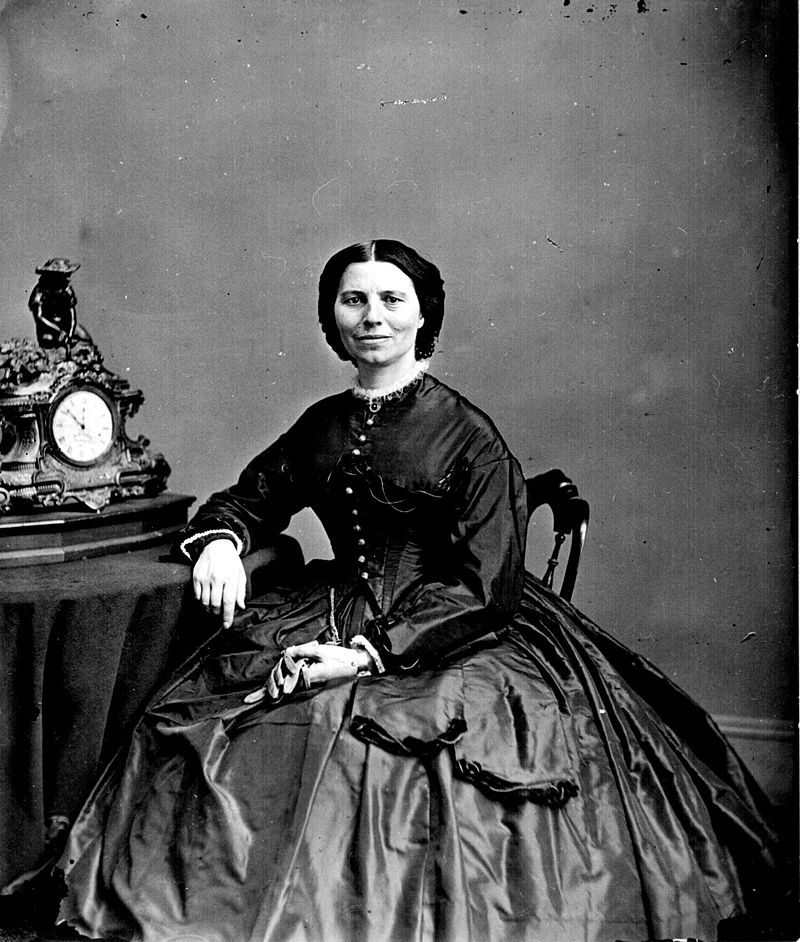
Photo Courtesy:  Wikipedia  American Red Cross founder, Clara Barton

Photo Courtesy: Wikipedia
American Red Cross founder, Clara Barton

By K.P. Sander

Every time there is a disaster of any magnitude, you can count on the American Red Cross to be on site, lending substantial support in an effort to provide relief.

Founded on May 21, 1881, by Clara Barton in Washington D.C., the humanitarian organization is in the business of providing emergency assistance, disaster relief and education to Americans in every corner of the U.S.  As it has evolved over the years, the American Red Cross continues to provide relief as well as community services for the needy, including military members and their families.  They also serve in the collection, processing and distribution of blood and blood products, as well as provide educational programs on disaster preparedness, health and safety (including international relief and development).  The American Red Cross is an affiliate of the International Federation of Red Cross and Red Crescent Societies.

According to Wikipedia, the Red Cross was established in Washington D.C., and the national headquarters itself is a National Historic Landmark.

Founder Barton learned of the Red Cross in Geneva, Switzerland, becoming so impassioned with the concept that she went to Europe in 1869 and became involved in their work. She was determined to bring the organization home.

Barton first organized a meeting on May 12, 1881, at the home of Senator Omar Conger (R-MI) with 15 people present.  She became the first president, and Representative William Lawrence (R-OH) became the first vice-president.  Funding came from John D. Rockefeller, the federal government, and four other individuals for the headquarters, and chapters soon began opening up.

Today, the American Red Cross is a network of more than 650 chapters dedicated to saving lives.  With 30,000 employees and 500,000 volunteers, they mobilize relief to those affected by over 70,000 disasters each year – including fires, floods, hurricanes, tornadoes, earthquakes, transportation accidents, explosions, and much more.

The American Red Cross is not only the largest supplier of blood and blood products, each year they train millions upon millions of individuals in life-saving medical skills, and exchange more than a million emergency messages for U.S. military service personnel and their families.

Did You Know?

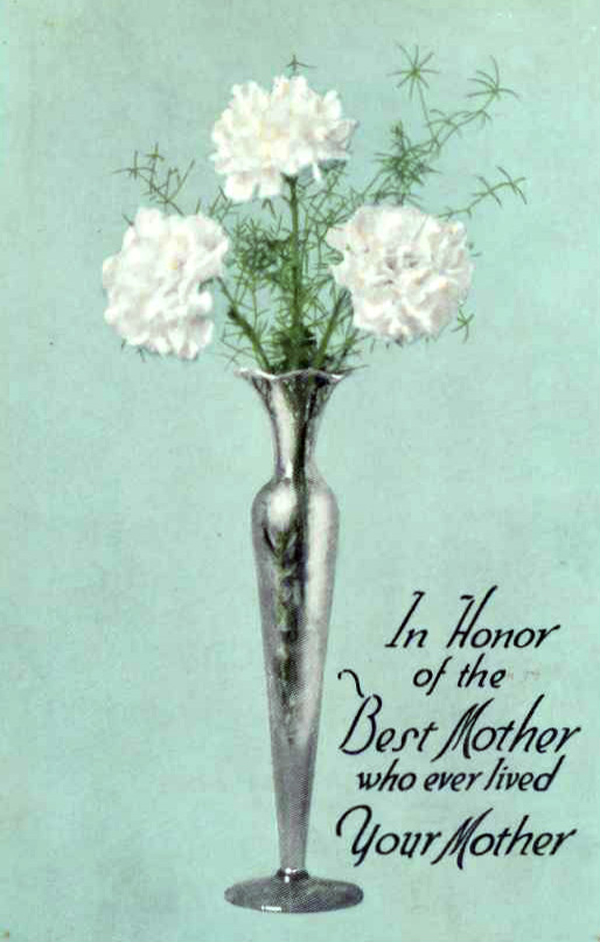
Image Courtesy:  Wikipedia Northern Pacific Railway postcard for Mother's Day 1916.

Image Courtesy: Wikipedia
Northern Pacific Railway postcard for Mother’s Day 1916.

By K.P. Sander

On Sun., May 10, we celebrate Mother’s Day. Literally speaking, we would not be here without our moms, but there is so much more to our love for them.
Perhaps no one will love you as unconditionally as dear, old mom. Through nursing and diapers, all of the schooling and nurturing, to watching you turn into an adult, mothers see it all and adore you through it all. Even after you are grown with children of your own, your mother never stops loving, hoping, worrying and giving.
Mothers have a wide variety of ways to show their love, but much of what they do goes without thanks, without complaint, and perhaps without notice. The dinners made, the laundry done, the money spent, the sick-bed vigils, the lack of sleep, and so much more, happen because of love. It’s no wonder we set aside a day to honor, thank and remember them for all they do and all they have done.
According to Wikipedia, the formal celebration of Mother’s Day began in America in 1908. A woman named Anna Jarvis from West Virginia held a memorial for her beloved mother, Ann, who had died. Jarvis – who began campaigning in 1905 to make Mother’s Day a nationally recognized holiday – wanted to honor her mother by continuing the work she started as a peace activist who cared for wounded soldiers in the Civil War.
Due to Jarvis’ efforts, President Woodrow Wilson signed the Mother’s Day proclamation in 1914, naming the second Sunday in May as a national holiday to honor mothers. The idea was adopted by other counties and it is now celebrated around the world.
This coming second Sunday in May, remember your mother and all she did to make your world a little bit better.
Happy Mother’s Day to moms everywhere…with love!

Did You Know?

(Photo Courtesy:  Wikipedia) An April Fool’s prank in Denmark, regarding Copenhagen's new subway. It looks as if one of its cars had an accident, and had broken through and surfaced on the square in front of the town hall. In reality, it was a retired subway car, specially cut and placed on loose tiles.  The sign reads, “Unexpected Guests?”

(Photo Courtesy: Wikipedia)
An April Fool’s prank in Denmark, regarding Copenhagen’s new subway. It looks as if one of its cars had an accident, and had broken through and surfaced on the square in front of the town hall. In reality, it was a retired subway car, specially cut and placed on loose tiles. The sign reads, “Unexpected Guests?”

By K.P. Sander

Have you ever had an April Fools’ Day prank played on you?  Celebrated on the first of April each year, this day of tom-foolery is popular in many countries around the world.

This official day of Monkey Business has encouraged everything from a simple joke to an elaborate hoax reported by the media (to be recanted at some point in the immediate future).

April Fool’s Day goes back to the Middle Ages, and according to Wikipedia, may have originated in France as part of their New Year’s celebration.  Even the Roman Festival of Hilaria records incidents of harmless pranks being played on unsuspecting victims.  On Apr. 1, 1698, there are tales of people being tricked into visiting the Tower of London to “see the Lions washed.”

A more recent prank occurred on Apr. 1, 1996, when Virgin Cola placed an advertisement in British newspapers announcing that “in the interest of consumer safety it had integrated a new technology into its cans.”  When the cola passed its sell-by date, the liquid would react with the metal in the can, turning it a bright blue.  Virgin warned consumers to avoid the purchase of any and all blue cans.  Coincidentally – or not – Pepsi had just unveiled the redesign of its product – with bright blue cans.

Here’s hoping that on Wed., Apr. 1, 2015, you are able to enjoy a few April Fool’s Day jokes, without being the subject thereof.

Did You Know?

By K.P. Sander

Punxsutawney Phil (and his recent prediction of six more weeks of winter) has nothing on astronomical events – such as when the sun is at its zenith over the Equator – and all things celestial.

On Fri., Mar. 20, the Vernal Equinox will take place, so get out your white shoes because spring will officially have sprung.

According to Wikipedia, an “equinox” happens twice each year:  at some point near March 20, and again around September 22.  Generally speaking, an equinox is when the length of day and night is of approximately equal duration.  Quite literally, “equinox” is a Latin derivative meaning, “equal night.”  At these specific times, as the Earth resolves around the Sun, the Sun is exactly above the equator.

In spring, the Northern Hemisphere begins to tilt toward the sun, resulting in warmer, sunnier days.  As the warmth begins to dissipate the frost and cooler temperatures, the Earth begins to bring forth new signs of life with trees becoming verdant, and plant life beginning to germinate.  Ancient cultures knew that their food supplies would soon be returning and there was great cause for celebration.

Legendarily speaking, there are supposed mystical properties of the vernal equinox that make it possible to balance an egg on its end. Scientifically speaking, this is a bunch of hooey (you can make it happen on any day of the year, if you are determined enough), but how many of you will try this out of curiosity?

On the other hand, and something much more truthful, you can amaze your friends by plotting out the Easter calendar from this point forward, because in Christianity, Easter always falls on the first Sunday after the first full moon after the vernal equinox.

Despite the fascination with hemispherical science, the coming of spring changes the perspective of all life forms.  In the words of Alfred Lord Tennyson, “In the spring, a young man’s fancy lightly turns to thoughts of love.”

Indeed.  Happy Vernal Equinox!


Did You Know?

By Melissa Aguilera and K.P. Sander

Photo Courtesy:  Google

Photo Courtesy: Google

Eastvale On March 17, you can be sure that many throughout the world will be celebrating Saint Patrick, the patron saint of Ireland.

Maewyn Succat – the man who would become canonized by the Catholic Church as Saint Patrick – was born in Kilpatrick, Scotland in 387 AD.  He was famous for his extensive missionary work in Ireland, and it is reported that he converted more than 135,000 people to Christianity, established 300 churches, and consecrated 350 bishops.

Succat died on March 17, 461, and while that date is celebrated in reverence for all that Saint Patrick accomplished in his lifetime, it is very often associated with “the drink.”   So much so, that it has become one of the deadliest days of the year due to drunk driving.

According to Trafficsafetymarketing.gov, St. Patrick’s Day has ended in tragedy for too many Americans.  From 2009 to 2013, 276 lives were lost in drunk-driving crashes.  Most importantly, nearly three-quarters of those fatalities involved drivers who were at twice the legal limit of alcohol. That is way too much celebrating.

The National Highway Traffic Safety Administration (NHTSA) states that 32% of all fatalities from motor vehicle crashes on St. Patrick’s Day are connected to drunk driving.  They are reminding drivers not to get behind the wheel if they’ve had too much to drink.  Whether you are gathering with friends at a local pub, or attending or hosting a party, adhere to these NHTSA sobriety tips to keep yourself and others safe.


  • Avoid drinking too much alcohol too fast. Pace yourself by eating enough food, taking breaks, and alternating drinks with non-alcoholic beverages.
  • If you don’t have a designated driver, ask a sober friend for a ride home; call a cab, friend, or family member to come and get you; or just stay where you are and sleep it off until you are sober.
  • Use your community’s sober ride program.
  • Never let a friend leave your sight if you think they are about to drive and have had too much to drink.
  • Always buckle up – it’s still your best defense against other drunk drivers.
  • Remember, you can be held liable and prosecuted if someone you served ends up in a drunk-driving crash.
  • Serve lots of food and include non-alcoholic beverages at your party.
  • Stop serving alcohol before the end of your party and begin serving coffee and dessert.


Lt. Scott Forbes from the Eastvale Police Department says, “The Eastvale Police Department is always concerned for our residents’ driving safety, particularly during holidays and Saint Patrick’s Day.  We want everyone to enjoy their night and encourage them to plan ahead if people in their group will be drinking.  Designate a sober driver before you arrive.  If no one in your party is sober, call a cab or a sober friend for a ride.  If all else fails and you see someone who you believe is driving while impaired, call 911 immediately.  We’d rather respond to a false alarm than a fatality.”

St. Patrick’s Day brings to mind shamrocks, leprechauns, pots of gold and the luck o’ the Irish. But no amount of luck can save you from a drunk-driving crash. Be Safe.  Be Smart.  Be Sober.


Did You Know?

(Photo Courtesy:  Wikipedia) Juliette Gordon Low (C) with two Girl Scouts.

(Photo Courtesy: Wikipedia)
Juliette Gordon Low (C) with two Girl Scouts.

By K.P. Sander

The Girl Scouts of the United States of America (GSUSA) was founded on March 12, 1912 by Juliette Gordon Low.  Low, who was inspired after a meeting with Robert Baden-Power – the founder of Scouting – reportedly telephoned a cousin, saying, “I’ve got something for the girls of Savannah [Georgia], and all of America, and all the world, and we’re going to start it tonight!”

Low was correct in her projections, and the youth organization was born.  GSUSA – just like the Boy Scouts of America – strives to empower girls with the values of honesty, fairness, courage, compassion, character, sisterhood, confidence, and citizenship through activities such as camping, community service, and earning badges through the acquisition of various skills.

Wikipedia states that Low held the first official Girl Scout troop meeting in her hometown of Savannah, Georgia, and 18 girls were present.  Low had always envisioned an opportunity for girls to get out and serve their communities, and learn life skills that would help sustain them by way of self-reliance and resourcefulness.

In 1915, the organization was officially incorporated and National Headquarters were moved to New York City.  By 1920, there were nearly 70,000 members, and by 1923, there were branches in every state of the union.  Overall, more than 50 million American women have participated in the GSUSA.

Girl Scout Promise:  “On my honor, I will try to serve God and my country, to help people at all times, and to live by the Girl Scout Law.”

Girl Scout Law:  “I will do my best to be Honest and Fair, Friendly and Helpful, Considerate and Caring, Courageous and Strong, and Responsible for what I say and do, and to respect myself and others, respect authority, use resources wisely, make the world a better place, and be a sister to every Girl Scout.”

While the Girl Scouts are known far and wide for their cookie sales, their promises are filled with sage advice for everyone to live by.

Did You Know?

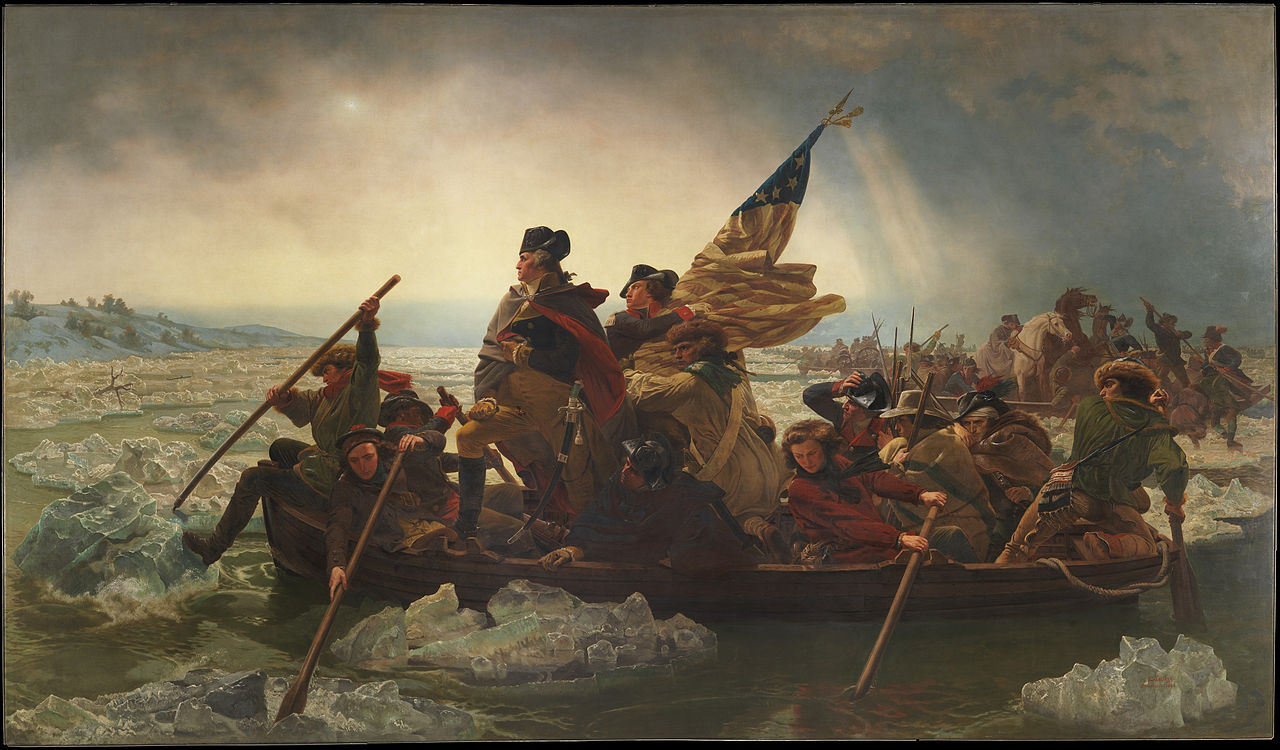
(Image Courtesy:  Wikipedia) Washington Crossing the Delaware (December 25, 1776), by Emanuel Leutze, 1851

(Image Courtesy: Wikipedia)
Washington Crossing the Delaware (December 25, 1776), by Emanuel Leutze, 1851

By K.P. Sander

George Washington was the very first President of the United States, but that was just one of his many accomplishments in a long list of devotions to serving this country.

On Feb. 22, 1732, Washington was born to a wealthy plantation family in Westmoreland, Virginia.  Of course he grew to greatness and was not only our first President, but also the Commander-in-Chief of the Continental Army during the Revolutionary War, a founding father of the United States, a governor of the convention that drafted the U.S. Constitution (and a signer thereof), and a Delegate from Virginia to the First and Second  Continental Congresses. We remember him on the one dollar bill and the quarter, and know he did great things, but here are some interesting – albeit lesser-known facts – about the amazing George Washington (thanks, Wikipedia).

  • Washington’s father died when he was 11-years old, and his half brother, Lawrence, became a surrogate father and mentor.
  • In 1751, Washington escorted Lawrence to Barbados for tuberculosis treatment, and contracted smallpox during the trip. The disease left his face a bit scarred, but immunized him against future exposure.
  • The mercury used to treat his smallpox ultimately led to the loss of all of Washington’s teeth. He had three pair made:  two from elephant/hippo ivory, and one from human teeth (none from wood).  All were a source of constant pain, though he never complained.
  • Smallpox reportedly left Washington sterile, and he had no children of his own.
  • Washington married the wealthy widow, Martha Custis in 1759. She had two children, and he loved them as his own.
  • At exactly six feet tall, Washington towered over most of his contemporaries
  • He owned tobacco plantations, but gave up smoking.
  • He owned (inherited) slaves, but desired to free them and abolish slavery.
  • Washington was one of the wealthiest land owners in Virginia, and owned thousands of acres of land.
  • Washington lived an aristocratic lifestyle, with fox hunting, dancing, theater, and racing some of his favorite activities.
  • He was unanimously elected as President by the electors in both the 1788 and 1792 elections.
  • Historian John Shy said that in 1783, Washington was “a mediocre military strategist but had become a master political tactician with an almost perfect sense of timing and a developed capacity to exploit his charismatic reputation, using people who thought they were using him.”
  • Washington was pulled out of retirement in 1787 to oversee the Constitutional Convention in Philadelphia.
  • He was not a member of any political party and hoped that they would not be formed, fearing that they would undermine republicanism.
  • Washington’s death was perhaps the result of malpractice. He became ill with a severe sore throat in Dec. 1799, with severe difficulty breathing and inability to swallow.  Bloodletting was a standard medical practice of the time, and Washington authorized the removal of a pint.  Three different physicians intervened for a myriad of symptoms, and half or more of his blood was ultimately removed.  Washington died in his bed around 10 p.m. on Sat., Dec. 14, 1799, at the age of 67.  His last words were recorded as, “’Tis well.”
  • Napoleon Bonaparte ordered ten days of mourning in France at Washington’s passing.
  • Washington was interred in the family tomb at his home in Mt. Vernon. A new tomb was constructed at Mt. Vernon in 1837.  His remains were moved there on Oct. 7 of that year, and after the ceremony the inner vault’s door was locked and the key was thrown into the Potomac River.
  • Washington was well-loved throughout his life. Congressman Henry Lee eulogized him, saying, “First in war, first in peace, and first in the hearts of his countrymen, he was second to none in the humble and enduring scenes of private life; pious, just, humane, temperate, and sincere; uniform, dignified, and commanding, his example was as edifying to all around him as were the effects of that example lasting…such was the man America has lost – such was the man for whom our nation mourns.”

Did You Know?

By K.P. Sander

“You have only one way to convince others; listen to them.”  –George Washington


Image Courtesy:  Omnitrans.org

Image Courtesy: Omnitrans.org

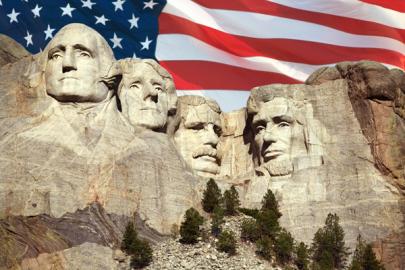
On Mon., Feb. 16, we celebrated the legacy of all United States Presidents, from the original, George Washington, to the present, Barack Obama.

According to Wikipedia, there have been have been 44 presidencies, but 43 men sworn into office (Grover Cleveland served two non-consecutive terms as 22nd and 24th presidents).

The youngest president to serve was Theodore Roosevelt, who was sworn in at 42; the oldest was Ronald Regan, who was 69.  The average age of our presidents on inauguration day is 55.

Four of our nation’s presidents died of natural causes while in office (Harrison, Taylor, Harding and F.D. Roosevelt).  William Henry Harrison spent just 32 days in office in 1841, and Franklin D. Roosevelt was not only the longest-serving president at over 12 years, but he was the only president to have served more than two terms.  He died shortly into his fourth term in 1945. A constitutional amendment limited the number of terms to two after Harry Truman in 1953.

17 U.S. presidents have been reelected to a second term in office; three of those men were unable to complete those terms – two due to assassination, and one due to resignation.  Richard Nixon is the only president to have resigned from office.  Overall, four of our nation’s presidents were assassinated:  Lincoln, Garfield, McKinley and Kennedy.

The celebration honoring our U.S. Presidents was originally established to honor George Washington, who at the time was venerated as the most important figure in American history, according to History.com.   In 1879, President Hayes signed the date into law, and it was traditionally celebrated on Feb. 22, Washington’s actual birthday.

The shift from Washington’s Birthday to Presidents Day began in the late 1960s, and it officially became known as President’s Day as part of the Uniform Monday Holiday Act – celebrated on the third Monday each February – passed by Congress in 1971.


Melissa Aguilera contributed to this story.

Did You Know?

By K.P. Sander

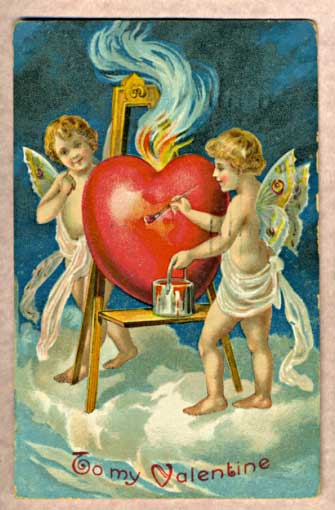
 Antique Valentine’s Day Card (Photo Courtesy:  Wikipedia)

Antique Valentine’s Day Card (Photo Courtesy: Wikipedia)

Ah, l’amour!  It’s the stuff that makes the world go ‘round, vous ne trouvez pas?  St. Valentine might have a thing or two to say about that.

This Sat., Feb. 14, millions of people around the world will celebrate Valentine’s Day with their sweetheart by way of candy, flowers, cards, dinner out – or with extravagant gifts of jewelry and marriage proposals.  Elementary school children still pass out cards to their classrooms, making little girls think of a secret admirer (and little boys think, “Ew!”).

More factually speaking, it all began as a church celebration centered on early Christian saints named Valentinus, and was often associated with martyrdom.  Wikipedia states an account of Saint Valentine of Rome, who was imprisoned by Roman Emperor, Claudius II, for Christianity.  This particular St. Valentine healed Julia, the blind daughter of his jailer – according to legend – and in a farewell letter sent to her before his execution, he signed, “Your Valentine.”  The jailer, Asterius, and his household of 44 family members and servants came to believe in Jesus because of this miracle and were baptized.

Before the greeting card industry embellished it to what it is today, St. Valentine’s Day was first linked to romantic love in 18th century England, when courtly love flourished.  Lovers often expressed their love through the presentation of flowers, sweets and special cards called, valentines – traditions that are common today.

However you spend your Valentine’s Day, remember to tell someone that you love them, in remembrance of St. Valentine, who lost his life for the love of Jesus.

Did You Know?

By K.P. Sander

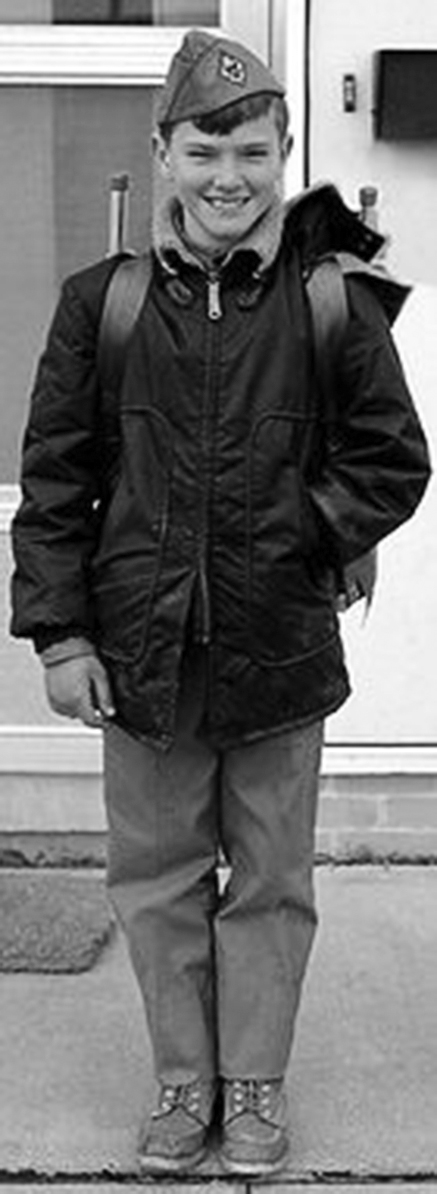
A Boy Scout in 1969 (Photo Courtesy:  Wikipedia)

A Boy Scout in 1969 (Photo Courtesy: Wikipedia)

On Sun., Feb. 8, the Boy Scouts of America (BSA) will celebrate their 105th anniversary as one of the largest youth organizations in the United States.

With membership nearing 2.7 million youth and more than one million adult volunteers, the BSA was previously ranked the twelfth-largest non-profit group in the country, with total revenues of $665.9 million.

According to Wikipedia, the goals driving the BSA revolve around training youth to be responsible citizens, of good character, who are self-reliant. These young men – aged anywhere from 7 to 21 – participate in diverse educational programs, outdoor activities, and much more.

Headquartered in Irving, Texas, the BSA has more than 105,000 units throughout the U.S.  You probably know some cub or boy scouts in your own city. The units are led by volunteers that are appointed by the BSA chartering organization, or local organizations such as churches, clubs, civic associations and educational programs implementing the scouting program within communities.

While the BSA’s influence has been both lauded and criticized for unfair practices – at times resulting in litigation – their objectives (known as “Aims of Scouting”) are touted as pure:  moral character development; citizenship training; and the development of physical, mental, and emotional fitness.  These Aims are defined through informal education and activities at regular meetings and members are identified within their own dens, packs and communities under the mentorship of adult leaders.

“Scouting” is characterized through specific codes, and perhaps at some point in your life you have held up three fingers and promised, “Scout’s Honor.”

Scout Oath:  “On my honor, I will do my best, to do my duty, to God and my country, and to obey the Scout Law, to help other people at all times, to keep myself physically strong, mentally awake, and morally straight.”

Scout Law:  “A scout is trustworthy, loyal, helpful, friendly, courteous, kind, obedient, cheerful, thrifty, brave, clean, and reverent.”

Outdoor Code:  “As an American, I will do my best to be clean in my outdoor manner, to be careful with fire, to be considerate in the outdoors, and to be conservation minded.”

Did You Know?


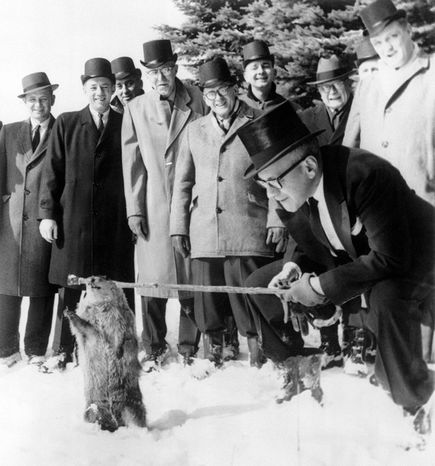
Punxsutawney Phil forecasting more winter weather on Groundhogs Day in 1963. (Photo Courtesy:  Nationalgeographic.com)

Punxsutawney Phil forecasting more winter weather on Groundhogs Day in 1963. (Photo Courtesy: Nationalgeographic.com)

By K.P. Sander

On Mon., Feb. 2, Groundhogs Day will cast its shadow in America, and we shall see if an early spring is in our forecast.

According to folklore – and Wikipedia – on this particular winter day, if a groundhog emerges from its warm and cozy burrow to find a cloudy sky, then spring will quickly be on its way.  Conversely, if the sun is shining and the groundhog sees its shadow, it will retreat back underground to hunker down for another six weeks of winter weather.

One of the most prominent celebrations in the U.S. happens each year in Gobbler’s Knob, the home of celebrity groundhog, Phil, in Punxsutawney, Pennsylvania, where crowds as large as 40,000 have gathered for the celebration since 1886.  Made famous in the 1993 film, Groundhogs Day, Punxsutawney Phil keeps folks from near and far on tenterhooks as he emerges to tell the weather’s fortune early in the morning on Feb. 2 (this year’s forecast is a high of 21° – a low of 2° – with snow showers).  Most Punxsutawnians are probably hoping for no shadow.

Punxsutawney Phil – a whopping 129 years old – is taken care of year-round by a very select group called the “Inner Circle.”  They are widely recognized by their top hats and tuxedos, and they make sure that Phil has everything he needs to thrive happily.  From his allegedly heated, synthetic tree staged for the annual celebration, to the magical elixir (providing another seven years of life) he drinks each summer at the Groundhog Picnic – never mind that the average groundhog lives about seven years – the Inner Circle takes very good care of its charge.

Interestingly enough, the fuzzy prognosticator has an astonishingly high rate of accuracy in his meteorological forecasts – so say Groundhog’s Day organizers.  Weather Almanacs are not as flattering, stating that Phil’s predictions since 1887 are more around the 39% mark.  Still respectable…for a rodent.

Did You Know?

Staff Reports

Did you know that the Los Angeles County Sheriff’s Department (LASD) now offers the public an Online Report Tracking System (SORTS) for the acceptance of certain types of reports?

Just last month, the Department proudly launched the first ever, web-based software system accessible by citizens and law enforcement administrators on any Internet-enabled PC or mobile device.  SORTS allows members of the public to report property-related crimes that occurred in the LASD jurisdiction online.

The following types of incidents can be reported in SORTS:

  • Lost or stolen cell phones, valued $950 or less;
  • Lost or stolen property, valued $950 or less;
  • Vandalism, excluding graffiti, where damage is valued under $400;
  • Theft from an unlocked vehicle, valued $950 or less;
  • Theft from an open or unsecured area, valued $950 or less;
  • Supplemental Loss Form (must already have an LASD report number).

Once the report is reviewed, a copy of the approved report is emailed to the reporting party free of charge.  According to LASD, the application is user-friendly and easy to navigate.

Sheriff Jim McDonnell stated, “One of the many benefits of this system is that deputies who were previously dispatched to take reports with no suspect information or leads that are primarily filed for insurance purposes can now be reallocated. They will now proactively focus on crime trends, and it will also decrease our response time to priority calls.”

Technology and Support Division Director, Dean Gialamas, said, “Giving members of the communities we serve the ability to file certain categories of reports online enhances our commitment to outstanding public service.  It provides residents a system that is available 24 hours a day, 7 days a week, via computer or mobile device – without waiting for a deputy to respond.”

For more information, log into:  http://shq.lasdnews.net/shq/SORTS/sorts_intro.aspx.

Did You Know?

Martin Luther King, Jr. in 1964. (Photo Courtesy:  Wikipedia)

Martin Luther King, Jr. in 1964. (Photo Courtesy: Wikipedia)

By K.P. Sander


Martin Luther King, Jr. had a dream.

 “I have a dream that one day this nation will rise up and live out the true meaning of its creed: ‘We hold these truths to be self-evident – that all men are created equal…”

Departing from prepared text, King delivered his 17-minute – most famous – speech in front of the Lincoln Memorial on Aug. 28, 1963, during the March on Washington for Jobs and Freedom.

According to Wikipedia, Martin Luther King, Jr. was an American pastor, activist, humanitarian, and leader in the African-American Civil Rights Movement.  He was born Michael King on Jan. 15, 1929, in Atlanta, Georgia.  His father changed his name to honor the German reformer Martin Luther.

King attended Morehouse College, Crozer Theological Seminary, and then Boston University, obtaining a Ph.D. in 1955.  Dr. King became a Baptist minister and civil rights activist early in his career.  He helped found the Southern Christian Leadership Conference in 1957, and served as its first president.

King spent his adult lifetime struggling against segregation, poverty and racial inequality – always striving to keep his Christian beliefs in the forefront – and helped organize peaceful, but profound, marches in Washington and Alabama.

King had the opportunity to visit Gandhi in India and study his stance on peace.  He mentioned his example in his address when receiving the Nobel Peace Prize in 1964, hailing the “successful precedent” of using non-violence “in a magnificent way by Mohandas K. Gandhi to challenge the might of the British Empire… He struggled only with the weapons of truth, soul force, non-injury and courage.”

As the victim of violence, it makes his assassination all the more poignant that his promotion of non-violence as the best way to challenge might did not carry him past 39 years.

In late March 1968, King went to Memphis, Tennessee in support of the black sanitary public works employees who had been on strike for weeks looking for better treatment and wages.  His flight out of Memphis was delayed because of a bomb threat, and in response he had some prophetic words to say as he addressed a rally at the Mason Temple and delivered his “I’ve Been to the Mountaintop” speech.

“…Longevity has its place. But I’m not concerned about that now. I just want to do God’s will. And He’s allowed me to go up to the mountain. And I’ve looked over. And I’ve seen the Promised Land. I may not get there with you. But I want you to know tonight, that we, as a people, will get to the Promised Land. So I’m happy, tonight. I’m not worried about anything. I’m not fearing any man. Mine eyes have seen the glory of the coming of the Lord.”    

He was booked into the Lorraine Motel in Memphis, room 306.  On April 4, 1968, at 6:01 p.m., Dr. Martin Luther King, Jr. was standing on the motel’s second-floor balcony when he was shot.  The bullet entered his cheek, smashed his jaw, and went through his spinal cord before resting in his shoulder.  He was rushed to St. Joseph’s Hospital, and after emergency chest surgery he was pronounced dead just an hour after the shooting, at 7:05 p.m.

On Nov. 2, 1983, from the White House Rose Garden, President Ronald Reagan signed a bill creating a federal holiday to honor King.  It was first observed on Jan. 20, 1986, and on Jan. 17, 2000, Martin Luther King, Jr. Day was officially observed in all 50 states.

King was known as one of the greatest orators in American history.

Did You Know?

By K.P. Sander


January 17 will mark the birth date of a man who some say was “the very first American.”  Benjamin Franklin was born in Boston, Massachusetts in 1706.  He was one of ten children born to Josiah Franklin – an English-born businessman – and his second wife, Abiah Folger.

According to Wikipedia, Franklin was a “leading author, printer, political theorist, politician, postmaster, scientist, inventor, civic activist, statesman and diplomat.”  He was quite the Renaissance man, and certainly one of the most influential and gifted men of his time.

While this Champion of American Independence’s accomplishments are too numerous to list, Franklin is most widely known as being one of five men to draft the Constitution of the United States.  He is famously quoted as saying to John Hancock at the signing of the document, “Yes, we must, indeed, all hang together, or most assuredly we shall all hang separately.”

Most of us can remember our elementary schooling lessons about Franklin with a key on a kite string in a lightning storm, but in fact, he conducted many electrical experiments.  He was the first to label electricity under different pressures as positive and negative. He also used a kite to collect some electric charge from a storm cloud, which led to the understanding that lightning was electrical. His experiments led to the invention of the lightning rod, helping to prevent buildings from lightning strikes.  In 1753, Franklin received the Royal Society’s (a scientific advisor to the British government) Copley Medal in recognition of his work with electricity.  He was later elected as a Fellow of the Society – one of very few invited.

In his lifetime, Franklin held many positions, including:  6th President of Pennsylvania; United States Minister to France; United States Minister to Sweden; 1st United States Postmaster General; Speaker of the Pennsylvania Assembly; and Member of the Pennsylvania Assembly.

Franklin died at the age of 84 on April 17, 1790 at his home in Philadelphia, Pennsylvania.  It is said that approximately 20,000 people attended his funeral.  Franklin left behind two children, William Franklin, and Sarah Franklin Bache (his first son with common-law wife Deborah Reed – Francis Folger Franklin – died in 1734 of smallpox at the age of 4).  Deborah Reed Franklin died of a stroke in 1774 while Franklin was away in England.

Interestingly enough, Franklin – always clever – bequeathed £1,000 (around $4,400 at the time) to his beloved cities, Boston and Philadelphia.  The money was to be held in trust gathering interest for 200 years.  By 1990, Philadelphia had accumulated more than $2 million – some was used between 1940 and 1990 for mortgage loans – which was ultimately spent on scholarships for local high school students.  The Boston trust fund had amassed almost $5 million, which funded the Franklin Institute of Boston (a trade school).

Happy Birthday, Benjamin Franklin.  Thank you for a lifetime of contributions for our betterment.