
Courtesy of UCR
Earthquake Preparedness
By Carol Heyen
According to the Riverside County Fire Department, a damaging earthquake strikes somewhere in California approximately every two years. Many large quakes have hit Southern California, including the Northridge earthquake in 1994, the Big Bear and Landers earthquakes in 1992 and the Sylmar earthquake in 1971.
Scientists agree that another big quake is on the horizon for Southern California. It is just a matter of time until a large quake hits either the San Andreas Fault or one of the numerous faults that crisscross the Southland.
What can you do to keep your family safe?
- First, identify places in your home and office that are likely to be safe havens in a quake. Find strong furniture under which you can be protected while riding out the shaking. Identify items that are not strongly secured and are likely to fall or fly if strong shaking starts, and make sure to secure them. These can include electronics, small kitchen appliances, mirrors and picture frames, and objects on open shelves, including bookcases.
- Make sure to keep a flashlight and shoes next to your bed. Buy fire extinguishers for each level of your home. Secure your water heater, know where your utility shut-offs are and make sure you have the proper tools to shut off your gas and/or water in an emergency. Connect with your neighbors and see who may have special skills and resources to help out if a large quake hits.
- Keep an emergency kit and extra food and water in your home and in your cars. Make sure you have enough food and water for you and your pets for a minimum of three days; ideally, this stockpile will be enough for two weeks. Portable radios, sleeping bags, tents, camping-type cookstoves and utensils, tarps, protective goggles, extra flashlights, extra toiletries and emergency cash (in small bills) is all good to add to your kits.
- Set up a post-disaster meeting spot for yourself and your family. It is imperative that your family members know how to contact each other after a large quake. Figure out a plan that will help your family get a hold of each other should cell phones and landlines not work. For help on this, visit ready.gov/make-a-plan.
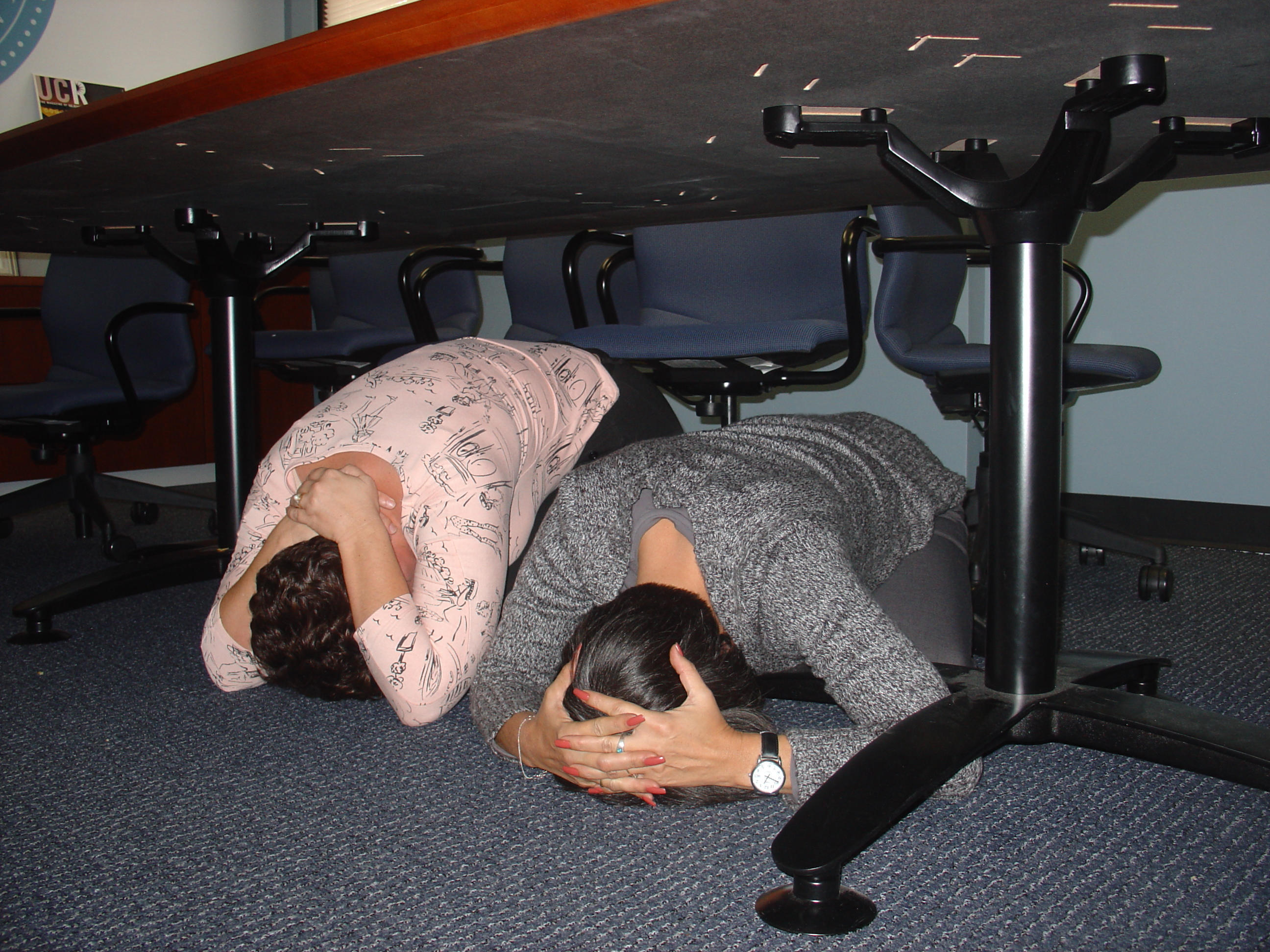
- Practice Drop, Cover and Hold On. Drop to your knees before you are knocked down by the force of the quake. Cover your head and neck to protect yourself from falling debris. Hold on to whatever sturdy covering you have found to hide under. Stay away from windows and glass objects that can shatter. Research shows that the doorways of modern homes are no safer than the rest of the house, so make sure to find shelter under a table or against a wall.
After the quake is over, make sure to be alert for aftershocks, which can be as strong as the main quake. Listen for news reports via radio, TV, social media, or smart phone. If you are trapped, do not kick up dust so you can keep your air pocket clean. Use a whistle or tap a pipe or wall so that rescuers can locate you. Get to your pre-determined family meeting spot.
Although we cannot stop an oncoming earthquake, we can do our best to keep ourselves and our families safe. If you would like more information on how to survive an earthquake, visit www.redcross.org/prepare/disaster/earthquake, www.ready.gov/earthquakes, or earthquake.usgs.gov/learn/preparedness.php.

