Tag Archives: Did You Know

Did You Know?

Photo courtesy: Google Images

Photo courtesy: Google Images

New Study Reveals Abnormally Low Blood Flow To NFL Players’ Brains

By Brittany Thomas

With concern growing in recent years about the long-term impact of head trauma in the NFL, a new study has revealed abnormal areas of low blood flow in the brains of current and retired professional football players.

Researchers made their discovery using sophisticated neuroimaging and analytics, according to the study, published in the Journal of Alzheimer’s Disease.

“Our findings raise the potential for better diagnosis and treatment for people with football-related head trauma,” says lead author Daniel G. Amen, MD, founder and head of Amen Clinics (www.amenclinics.com) in Costa Mesa, Calif.

The study examined the brains of 161 retired and current NFL players, the largest group of players investigated to date. Their average age was 52.

The researchers looked at every region of the brain and were able to identify areas of abnormally low blood flow. They did this using cerebral-perfusion imaging with SPECT (single-photon emission computed tomography.)

Combining this information with a leading-edge quantitative approach called machine learning, the researchers were able to distinguish NFL players with abnormal brain patterns compared to a healthy control group with 92 to 94 percent accuracy.

 “Without functional imaging studies like SPECT, it is very difficult to know if brain trauma is present and which areas are affected,” Amen says.

“Structural studies often appear normal, but what we can do better with functional neuroimaging with SPECT is not only pinpoint specific areas of the brain that are unhealthy with low blood flow, but also demonstrate their improvement with successful brain-rehabilitation treatments in persons like football players.”

Concern about head trauma in professional football players has risen in recent years, and was the subject of the 2015 feature film “Concussion” starring Will Smith. Dr. Bennet Omalu, whom Smith portrayed in the movie, was one of the co-authors of this study.

“What our current work is doing in addition to other imaging modalities builds the foundation between identifying the negative effects of head trauma on the brain while the patient is still alive so that we can intervene with better treatments,” Omalu says.

Investigators determined that on average the NFL players had lower blood flow in 36 areas of the brain. The decreased blood flow in six regions of the brain was the most important in determining who had football-related health trauma. Those brain regions were: anterior superior temporal lobes, rolandic operculum, insula, superior temporal poles, precuneus and cerebellar vermis.

These same regions function in memory, mood, and learning. When damaged, they can produce cognitive and psychiatric problems as evidenced by the fact that 83 percent of players in this study had memory problems and 29 percent had a history of depression.

Previous studies in which the brains of deceased players were studied revealed high incidents of CTE (chronic traumatic encephalopathy), a progressive degenerative disease that afflicts people who have suffered repeated concussions and traumatic brain injuries.


Did You Know?

Courtesy of Google Images

Courtesy of Google Images

Not So Fast, Not So Furious 


Courtesy of the California Highway Patrol
From Greased Lighting to Eleanor, street racing has been woven into the fabric of Southern California both in real life and the movies. What is the allure of street racing?

Those involved have said it’s an adrenaline rush similar to being on a roller coaster. The only difference is you are safely strapped into a roller coaster that has a beginning and an end. When you mix thousands of pounds of a vehicle with speed, it only takes a second for tragedy to occur. What is the draw for young people to street race even though many admit to the dangers and consequences? For many young people, it’s the sense of belonging to a select group, for some it’s a way to find some semblance of an identity they long for, and for others it’s the thrill of doing something that’s on the verge of recklessness.
Street racing is always illegal and extremely dangerous to both participants and onlookers. The California Highway Patrol actively investigates street racing and takes enforcement action whenever possible. The CHP has partnered with several allied agencies to combat the issue of illegal street racing. This partnership has led to arrests, vehicle impounds and citations.
Here are just a few hazards associated with street racing:

  • Some people think a vehicle is a toy and when used in this manner it becomes a deadly weapon.
  • Street racers often don’t wear safety belts and sometimes have been drinking or using illegal drugs.
  • Racing should only be done on a dedicated track, not on public roads were accidents can occur.

If you engage in street racing, remember these possible consequences:

  • Jail or prison time
  • Injury resulting in death
  • Injury to yourself or others
  • Damage to property

The community’s concern makes a big difference. Anyone who hears about a street race, planned or already taking place should advise the CHP promptly. We’ll take it from there.
The CHP wants to remind you-don’t live your life a quarter mile at a time, you might not ever get a chance to cross the finish line. For more information, visit http://www.chp.ca.gov.

Did You Know?

Photo courtesy: Google Images

Photo courtesy: Google Images

Ways to stay sane caring for an elderly relative

By John Shore, MadDad

One of the most emotionally complex and difficult things a person can experience is taking care of an elderly parent. I recently spent time tending to my aging, widowed father, and thought I’d pass along these 8 points, each of which I found to be significantly helpful during this phase of my own life.

  • Accept that things have changed– When a parent starts in any way depending upon their child, the world has turned upside down. Be prepared for that radically new paradigm. Old roles may not apply; old methodologies may not apply; old emotions may not apply. Be prepared to work from – and write- a whole new script.
  • Take it slowly– Taking care of an elderly parent is generally a marathon, not a sprint. Don’t rush it. You and they both are in uncharted territory. Let the process reveal itself to you; to the degree that you can, let whatever happens unfold organically. As much as you lead what’s happening, follow it.
  • Expect nothing emotionally– At the end phase of their life, your parent might open up to you emotionally and spiritually; they might express for you the love that, for whatever reason, they haven’t before. But they also might not do that; your parent might even more tenaciously cling to their crazy. If as you care for your aging parent you bond with them in a new and deeper way, of course that’s fantastic. But if you’re expecting or even hoping for that to happen when you go into caring for them, you will wade into dangerous waters. Better to have no expectations and be surprised, than to have your hopes dashed.
  • Expect their anger– When you start taking care of your parent, they lose the one thing they’ve always had in relationship to you: authority. That’s not going to be easy for them to give up. Expect them, in one way or another, to lash out about that loss.
  • Give them their autonomy– Insofar as you can, offer your parent options instead of orders. It’s important for them to continue to feel as if they, and not you, are running their lives. Let them decide everything they can about their own care and situation.
  • Ask their advice– A great way to show your parent love and respect — and, especially, to affirm for them that they are still of true value to you — is to sincerely ask them for advice about something going on in your life.
  • Separate their emotional dysfunction from their cognitive dysfunction– Insofar as you can, through your conversations and interactions with your parent, learn to distinguish between their emotional and cognitive dysfunction. The patterns of your parent’s emotional dysfunctions will probably be familiar to you; those, you’ll know how to deal with. But their cognitive dysfunction will probably be new to you. Track it; react to it gingerly; discuss it with your parent’s health care providers. Mostly, just be aware that it’s new, and so demands a new kind of response.
  • Pray or meditate– Life doesn’t offer a lot more emotionally salient or complex than caring for an aging parent. Accordingly, then, open yourself up to God, whatever that might mean to you. Be sure to get down on your knees regularly, or sit comfortably in a quiet place; close your eyes; breathe deeply and slowly; and wait to come over you the peace that surpasses understanding. What you’re undergoing with your parent right now is bigger than you, your parent, or anyone else involved. Do not fail to avail yourself of the great and mighty source from whose perspective it has all, already, been resolved.

Did You Know?

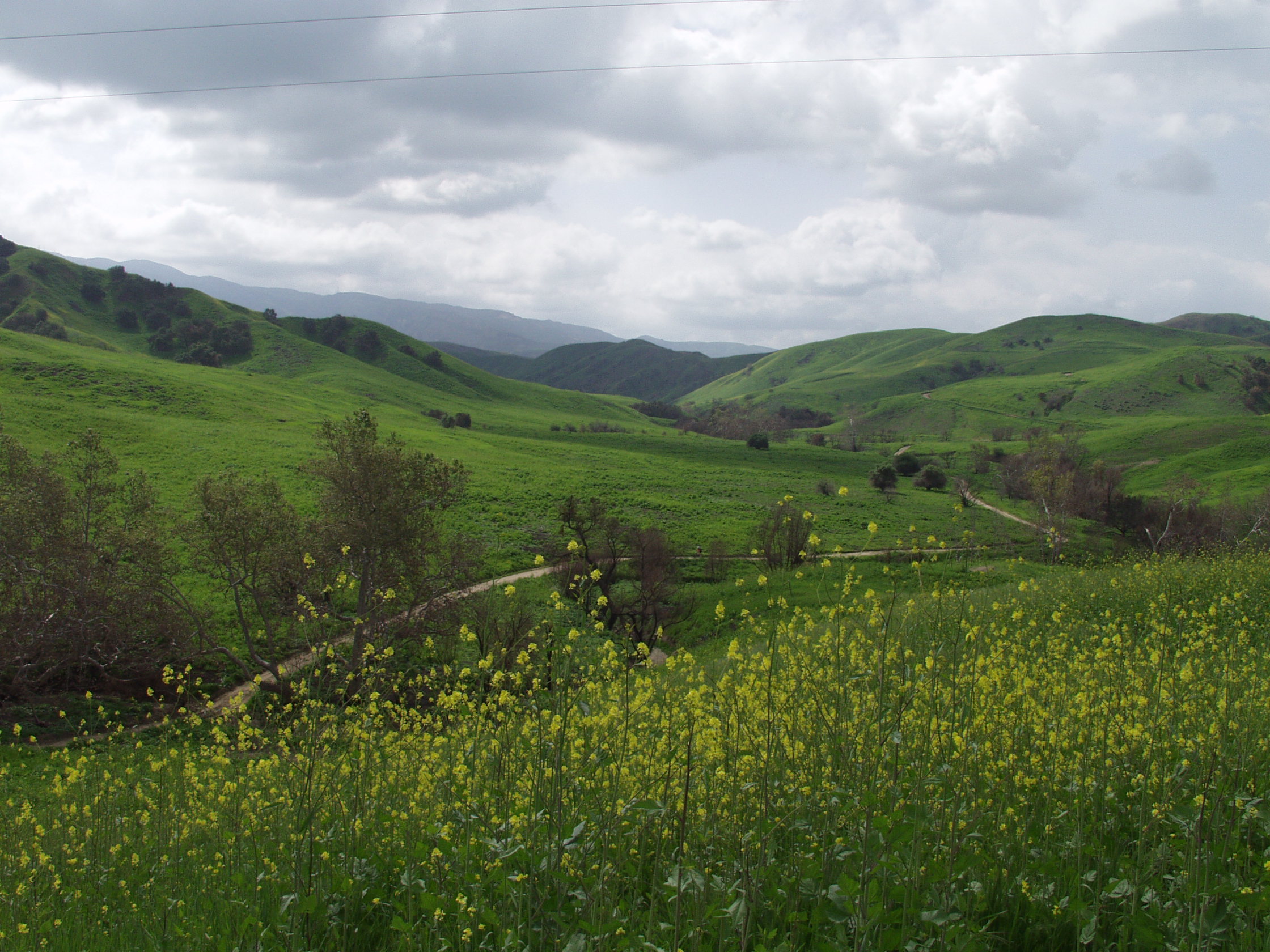
Photo courtesy of chinohillsstatepark.org

Photo courtesy of chinohillsstatepark.org

Earth Day Volunteers Wanted

Staff Reports


Volunteers are needed at select California state parks on Saturday, April 16, 2016 for the 18th Annual California State Parks Foundation’s (CSPF) Earth Day Restoration and Cleanup.

Since its inception in 1998, CSPF’s Earth Day Restoration and Cleanup program has resulted in 81,670 participants contributing more than 334,000 volunteer hours to park maintenance and improvements.

State parks continue to suffer from chronic underfunding, and that has resulted in overdue maintenance projects and the elimination of many education programs for kids, reduced staffing and curtailed operating hours.

Businesses and individuals are sought to help restore the beauty and glory of California’s state parks.  Trail and campground improvements, trash cleanup, tree planting and restoring wildlife habitats are just some of the projects planned for Earth Day.

Volunteers are needed at the following parks across Southern California:

  • Bolsa Chica State Beach
  • Carpinteria State Beach
  • Chino Hills State Park
  • Crystal Cove State Park
  • Doheny State Beach
  • San Onofre State Beach
  • Santa Susana Pass State Historic Park
  • Silverwood Lake State Recreation Area

If you enjoy volunteering outdoors and want to make a difference in our state parks, visit http://www.calparks.org/help/earth-day/ or call 1-888-98-PARKS.


Did You Know?

Photo courtesy: Google Images

Photo courtesy: Google Images

Can you drive blindfolded?
Staff Reports
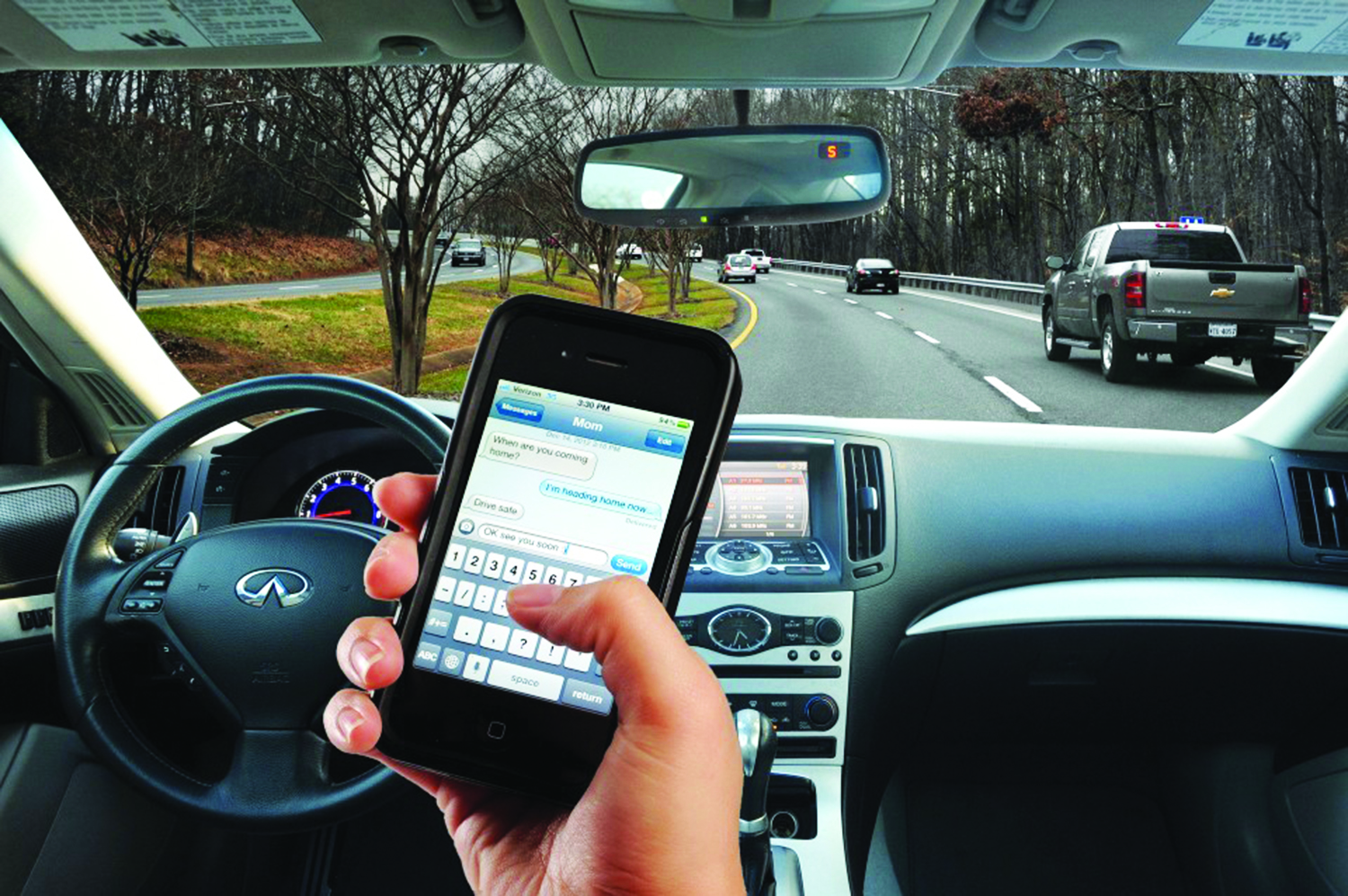
Is distracted driving really a problem? YES! 80 percent of vehicle crashes involve some sort of driver inattention. Up to 3000 people nationwide are killed in crashes where driver distractions are involved, and thousands more are injured.

Distraction occurs any time you take your eyes off the road, your hands off the wheel, and your mind off your primary task: driving safely. Any non-driving activity you engage in is a potential distraction and increases your risk of crashing.

According to the CHP, sending or reading a text takes your eyes off the road for 5 seconds. At 55 mph, that’s like driving the length of an entire football field, blindfolded. Texting is the most alarming distraction because it involves manual, visual, and cognitive distraction simultaneously.

Some people still don’t know how dangerous distracted driving is. Others know about the risks of texting and talking while driving, but still choose to do so anyway. They make the mistake of thinking the statistics don’t apply to them, that they can defy the odds. Still others simply lead busy, stressful lives and use cell phones and smartphones to stay connected with their families, friends, and workplaces. They forget or choose not to shut these devices off when they get behind the wheel.

In 2008, California motorists were prohibited from talking on hand-held cellular phones while driving. A ban on texting while driving followed in 2009.  According to the California Department of Motor Vehicles, all text-based communication, including e-mail and instant messaging, reading, writing or sending a text message are prohibited.  Both offenses carry $20 fines for first offenses and subsequent infractions are $50.  Be aware that additional fees and additional penalties can end up tripling the total fee amount. The convictions will appear on your driving record.  The law pertains to all drivers, regardless of age or state of residence.

There are special rules for young drivers, under the age of 18.  These new drivers are not allowed to use a wireless telephone, pager, laptop or any other electronic mobile device to speak or text while driving; this applies even if they intend on using a hands-free headset. The only exception to this new rule is in emergency situations to call police, fire or medical authorities.

The California Highway Patrol wants to remind you don’t become a statistic. Distracted driving is 100% preventable.

Did You Know?

Photo courtesy: Google

Photo courtesy: Google

All about Easter

Courtesy of Wilstar


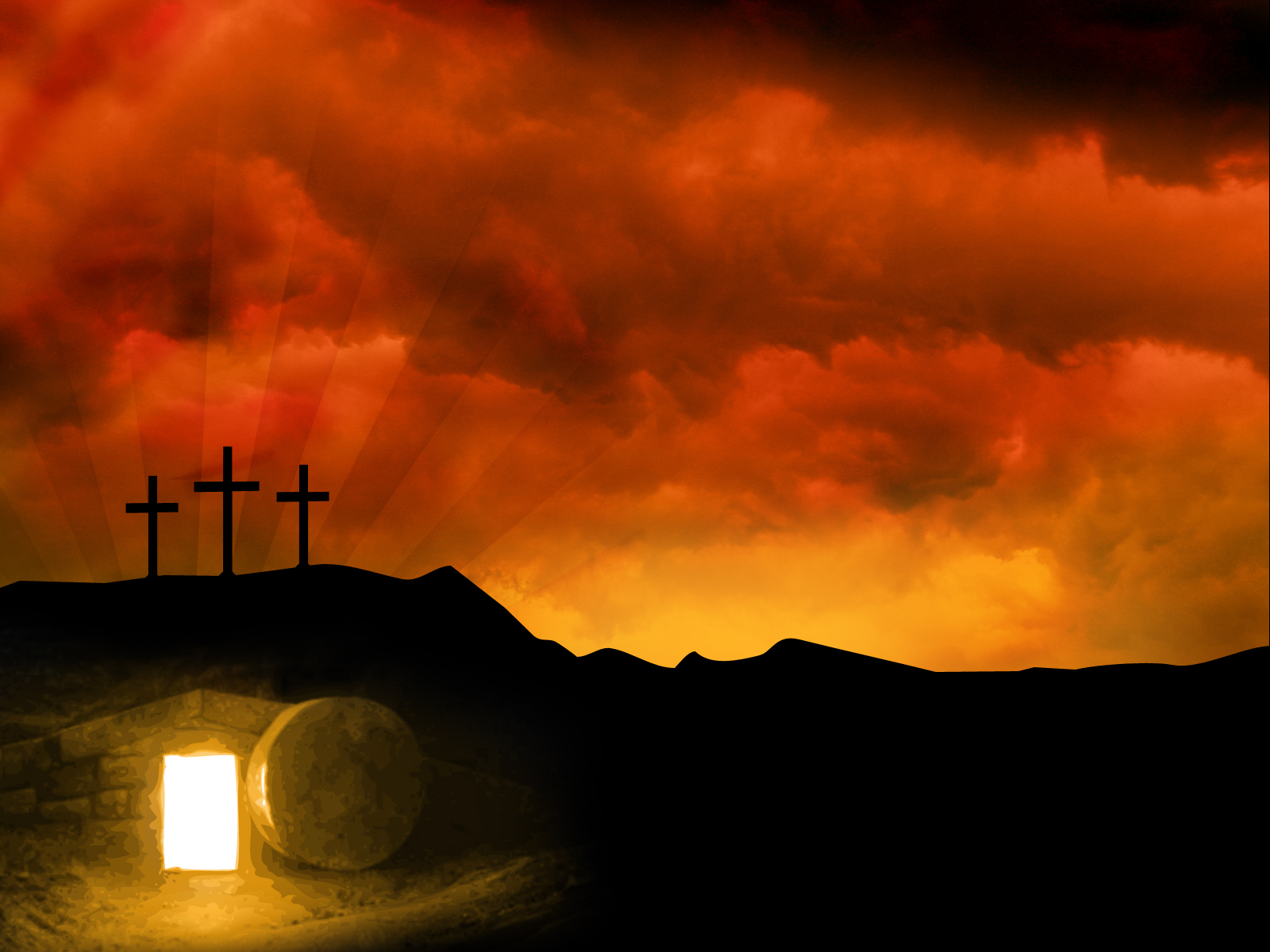
This Christian holiday of Easter celebrates the resurrection of Jesus Christ. The date of celebration varies from March to April, and depends on the date of the March equinox. Christians worldwide gather for this major holiday for the religion to feast, attend church services, and hunt Easter eggs. Easter Sunday marks the end of Lent, which is a 40-day period of fasting and reflection. It follows Maundy Thursday and Good Friday.

The story of Easter makes up a fundamental aspect of Christian theology. While Good Friday marks Jesus’ crucifixion, Easter Sunday is a day for Christians to celebrate his resurrection. Following Jesus’ arrest and crucifixion, he was buried in a tomb. While the next part of the story varies according to different accounts, most follow the theme of female followers of Jesus going to visit the tomb and finding the stone rolled away from the opening with Jesus’s body missing. Jesus went on to appear to his followers several times before his ascension into heaven. The resurrection of Christ is an important part of Christian belief because of its association with salvation.

Christians started celebrating the tradition of Easter with a feast soon after the time period of the resurrection, which is believed to have occurred around 33 AD. The time of year was chosen for the celebration since Jesus celebrated the Passover shortly before his crucifixion and so the time is believed to be around the time of Jesus’ actual crucifixion. In medieval celebrations, congregations would walk in a procession after mass, following a priest holding a crucifix or candle.

Many Christians begin the celebration with an Easter Vigil the night before, sometimes called Easter Eve or Holy Saturday. Church services on Sunday typically follow regular church service tradition with a sermon or songs concerning the Easter story. Some churches hold mass or other services at sunrise. Other common Easter traditions include the Easter Egg Hunt and floral decorations.

The Easter egg hunt is a tradition that originated with pagan spring festivals that celebrated fertility. Like many pagan traditions, Christians intertwined the practice with religious significance. Easter egg hunts feature eggs hidden by the mythical Easter bunny, which may contain candy or other prizes. Hard-boiled eggs may also be used. The children will go looking for eggs to put in their Easter egg basket. On the day before Easter, many families decorate hard-boiled eggs with paint to use for the hunt. Eggs are also part of the tradition because of the ban on eggs during Lent in Medieval Europe, meaning they were often included in the Sunday feast.

Churches are often decorated with flowers. A significant theme for Easter is rebirth, which flowers can emulate and symbolize. Traditional Easter flowers include Easter Lilies, which are believed to have grown in the Garden of Gethsemane, the site of Jesus’ arrest. Other Easter flowers include daffodils, narcissuses, and red tulips, which symbolize Jesus’ shed blood.

In pagan celebrations, Easter was typically a celebration of fertility, and many cultures associated the celebration with the Germanic goddess of fertility, Eostre, which is where the holiday’s name came from. Some cultures called the holiday Ishtar, which celebrates the resurrection of the Tammuz, another pagan god.

The Easter Bunny is a result of folkloric tradition. Their association with the holiday comes from their ability to procreate, making them symbols of fertility. German settlers brought the Easter Bunny tradition to America in the 1700s.


Great Places to See Southern California in Bloom this Spring

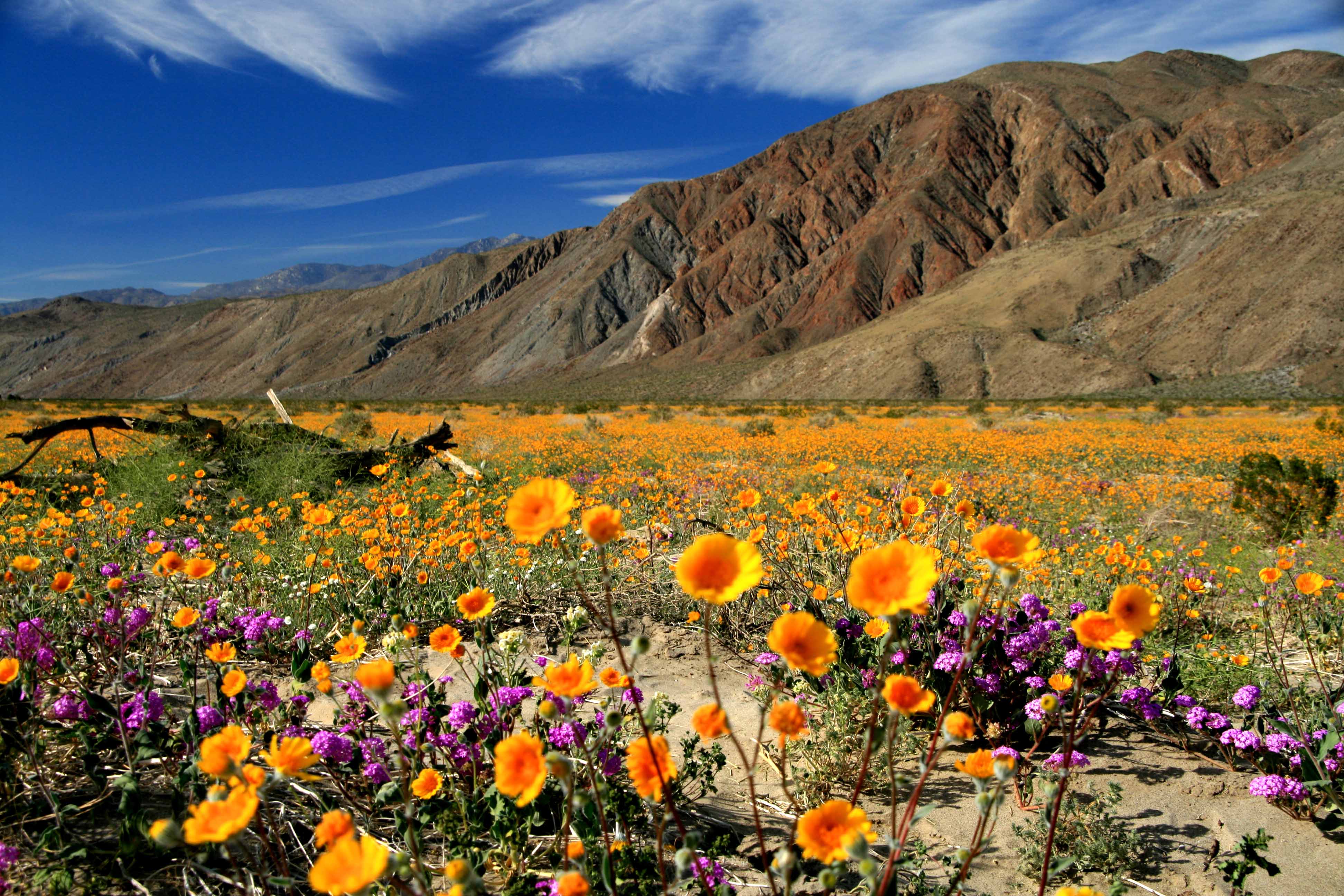
Photo courtesy:  sandiego.org Anza-Borrego State Park

Photo courtesy: sandiego.org
Anza-Borrego State Park

Courtesy of the State of California


This spring bloom promises to be one of the best in years. After weeks of drinking in fresh rainwater, California’s sunny landscapes are beginning to burst with colorful wildflowers.

Here are just six of the many places in California that will inspire you to get outdoors and smell the roses – not to mention the poppies, daffodils, tulips and more.

  1. Antelope Valley California Poppy Reserve

The Antelope Valley is the ultimate place to spot the state flower, the California Poppy, in the wild. Located just 75 miles north of Los Angeles, this state-protected reserve boasts a carpet of bright orange blooms each spring, as well as owl’s clover, lupine, goldfields, cream cups and coreopsis. Visitors can typically enjoy the visual bounty from mid- February through late May along eight miles of trails overlooking rolling hills. Trail benches make great vantage points to spot other wildlife, such as singing meadowlarks, lizards zipping across the trail, gophers and maybe even a coyote.

  1. Anza-Borrego Desert State Park

Some of Mother Nature’s most spectacular floral shows in the West take place each spring at the Anza-Borrego Desert State Park – California’s largest state park, encompassing over 600,000 acres in San Diego’s East County. Following winter rains, the dry and rugged landscape is magically transformed into a kaleidoscope of wildflowers, from tiny bursts of color no larger than the head of a pin to towering ocotillos with fiery spines of scarlet blossoms. The displays promise to be especially vibrant sometime during March and April after Southern California’s recent winter rains. Visitors will also enjoy seeing the multitude of butterflies that are drawn to this spectacular floral pageant. Guests can call the Park’s 24-hour “Wildflower Hotline” for updates.

  1. Channel Islands National Park

This isolated national park off the coast of Ventura and Santa Barbara counties is known as the “Galapagos Islands of North America,” featuring unique animals, plants and archeological resources found nowhere else on Earth. The islands are home to an astonishing 775 species of plants, many of which blanket the fields with colors each spring. To help visitors make sense of the abundant blooms, the park publishes flower guide each year. One of the most popular, the brilliant yellow coreopsis flowers, usually peak between late January through March and are best seen on Santa Barbara, Anacapa and San Miguel Islands. Sometimes the colors are so vivid they can be seen from the shore! San Miguel also boasts lupine and poppies, while Anacapa features vibrant red paintbrush and island morning glory. Santa Barbara Island, home to a colony of elephant seals, also blossoms with lavender chicory and pale yellow cream cups. While taking in Mother Nature’s rainbow of flowers in the spring, park visitors can also enjoy spotting western gulls and other seabirds begin nesting on the islands, as well as newborn California sea lions and northern fur seals.

  1. Death Valley National Park

If you’re visiting Southern California soon, don’t miss a rare and epic “super bloom” of abundant wildflowers at Death Valley National Park. Only under perfect conditions do wildflowers paint the desert with hues of gold, purple, pink and white. Thanks to heavy rains this fall and early winter, the park’s stark and arid landscapes are giving birth to Desert Gold, Golden Evening Primrose, Gravel Ghost, Bigelow Monkeyflower and Desert Five-Spot along the lower elevations and foothills, and are likely to hang around until late March or early April.

  1. Figueroa Mountain Recreation Area

Nothing says “spring” like a field of wild sunflowers, and one of the best places to enjoy them and other fantastic flower displays is Figueroa Mountain in Santa Barbara County. Late March brings forth early blooming specimens such as purple shooting stars. Later arrivals on the mountain include chocolate lilies and the scarlet Indian paintbrush. The open grassland areas support a profusion of species, including goldfields, sky lupine, California poppies and more.

  1. Laguna Coast Wilderness Park

After the winter rains, flowers spring up in this beautiful coastal park in Orange County. The park features 40 miles of trails that wind through oak and sycamore woodlands and lead hikers up and down hills and canyons – some of which offer great views of the Pacific Ocean. At each elevation, visitors have the opportunity to view different varieties of native plants and flowers such as wild hyacinth, morning glories, popcorn flowers and southern sun cups. Coastal sage scrub provides a year-round home for the endangered California gnatcatcher.

Change Your Clock, Change Your Batteries

Staff Reports


One of the best ways to ensure your family’s safety year-round is to always have working smoke detectors in your home.

According to the National Fire Protection Association, an estimated two-thirds of home fire deaths occur in homes with no smoke alarms or in homes with smoke alarms that failed to operate properly.  The NFPA reported that dead or missing batteries are the most common reasons for smoke alarms to fail.

Half of fire-related deaths occur in the hours between 11 p.m. and 7 a.m., when most people are likely to be asleep.  Having a working smoke detector can save your life.  There should be alarms in every bedroom, outside every separate sleeping area and on each level of the home.  Larger homes may need more alarms.  For the greatest protection, interconnected alarms are best.  When one sounds, they all sound.

A smoke detector is useless without fresh batteries to ensure that it works properly in the event of a fire. An easy way to remember to change your smoke detector’s batteries is to replace them twice a year, when you change your clocks.  You may also want to consider installing 10-year lithium battery-operated smoke alarms.  These smoke alarms are powered for 10 years by sealed, long-life lithium batteries. After 10 years of use, residents can simply discard the smoke alarm and replace it with a new one.

The Chino Valley Fire District offers residents the following tips to help keep smoke alarms in good working order:

  • Test smoke alarms once a month by pushing the test button;
  • Replace batteries in smoke alarms at least twice a year;
  • Replace your smoke alarms every 10 years or in accordance with manufacturer guidelines;
  • Do not disable smoke alarms, even temporarily;
  • Vacuum regularly or dust your smoke alarms to keep them working properly;
  • Develop and practice a family escape plan so that everyone in your home knows what to do if the smoke alarm rings.

To learn more about fire and life safety, visit www.chinovalleyfire.org or follow the Chino Valley Fire District on social media @cvifd.


Spring Cleaning Checklist

Courtesy of HGTV

You do a heavy spring cleaning on the inside of your home, but have you thought about your outdoor spaces?  Use this handy checklist to help make sure the outside of  your home is as beautiful as the inside.


  • Inspect the exterior walls of your entire home. Look for signs of winter damage such as splitting wood, peeling paint, mold, etc.
  • Got brick? It should be cleaned and checked for water damage once a year. Aside from cleaning the surface by use your hose with a spray nozzle to wash off dirt, you need to be on the lookout for mold. If there is mold, mildew, or moss, wash with a solution of 1 cup of bleach mixed with 4 L of water. Use a natural or synthetic bristle brush. Wire brushes leave traces of steel behind that will rust and discolor the bricks.
  • Clean the windows.
  • Use screens? Make sure they are dust-free and sparkling clean before putting them up.
  • Check the driveway for cracks or winter damage.
  • Clean the steps and the driveway with a spray nozzle hose. If moss is visible, pour vinegar on it and scrub.
  • Inspect the gutters around the house. Remove debris.
  • Inspect the roof, looking for damage and missing or loose shingles. Contact a roofing professional if you need a few replacements.
  • Get your deck ready for use. Clean it with oxalic acid, which will penetrate the wood and kill microorganisms. Once dry (24 hours), treat the deck with a sealant.
  • If boards on your deck are splintered or worn beyond repair, replace them before you seal and stain.
  • Prepare outdoor furniture for use. If you kept the furniture out during the winter months, you need to scrub the surfaces clean. If you stored your furniture, bring it outside and make sure it’s clean.
  • Put on those gardening gloves, it’s time to weed! The first step to a beautiful, clean garden is to remove weeds. It is important to leave a few, however, as they do have a purpose; they are food for insects and create a covered landscape for little critters.
  • Give your garden it a filled-in appearance until it grows in. Sprinkle mulch around shrubs, trees, and flowerbeds.

Did You Know?

Courtesy of UCR

Courtesy of UCR

Earthquake Preparedness

By Carol Heyen

According to the Riverside County Fire Department, a damaging earthquake strikes somewhere in California approximately every two years. Many large quakes have hit Southern California, including the Northridge earthquake in 1994, the Big Bear and Landers earthquakes in 1992 and the Sylmar earthquake in 1971.

Scientists agree that another big quake is on the horizon for Southern California.  It is just a matter of time until a large quake hits either the San Andreas Fault or one of the numerous faults that crisscross the Southland.

What can you do to keep your family safe?

  • First, identify places in your home and office that are likely to be safe havens in a quake. Find strong furniture under which you can be protected while riding out the shaking.  Identify items that are not strongly secured and are likely to fall or fly if strong shaking starts, and make sure to secure them.  These can include electronics, small kitchen appliances, mirrors and picture frames, and objects on open shelves, including bookcases.
  • Make sure to keep a flashlight and shoes next to your bed. Buy fire extinguishers for each level of your home.  Secure your water heater, know where your utility shut-offs are and make sure you have the proper tools to shut off your gas and/or water in an emergency.  Connect with your neighbors and see who may have special skills and resources to help out if a large quake hits.
  • Keep an emergency kit and extra food and water in your home and in your cars. Make sure you have enough food and water for you and your pets for a minimum of three days; ideally, this stockpile will be enough for two weeks.  Portable radios, sleeping bags, tents, camping-type cookstoves and utensils, tarps, protective goggles, extra flashlights, extra toiletries and emergency cash (in small bills) is all good to add to your kits.
  • Set up a post-disaster meeting spot for yourself and your family. It is imperative that your family members know how to contact each other after a large quake.  Figure out a plan that will help your family get a hold of each other should cell phones and landlines not work.  For help on this, visit ready.gov/make-a-plan.
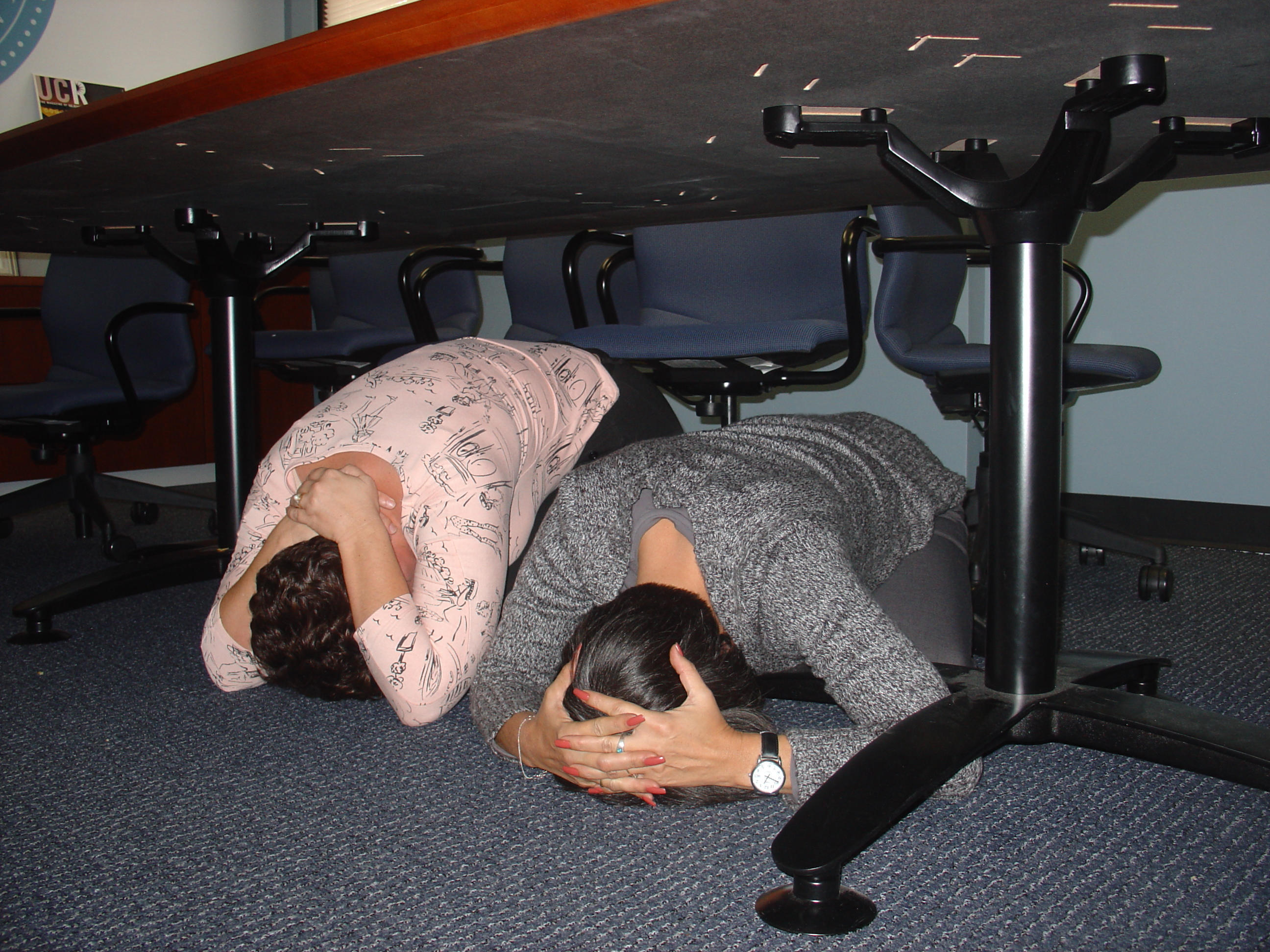
  • Practice Drop, Cover and Hold On. Drop to your knees before you are knocked down by the force of the quake.  Cover your head and neck to protect yourself from falling debris.  Hold on to whatever sturdy covering you have found to hide under.   Stay away from windows and glass objects that can shatter.  Research shows that the doorways of modern homes are no safer than the rest of the house, so make sure to find shelter under a table or against a wall.

After the quake is over, make sure to be alert for aftershocks, which can be as strong as the main quake.  Listen for news reports via radio, TV, social media, or smart phone.  If you are trapped, do not kick up dust so you can keep your air pocket clean. Use a whistle or tap a pipe or wall so that rescuers can locate you.   Get to your pre-determined family meeting spot.

Although we cannot stop an oncoming earthquake, we can do our best to keep ourselves and our families safe.  If you would like more information on how to survive an earthquake, visit www.redcross.org/prepare/disaster/earthquake, www.ready.gov/earthquakes, or earthquake.usgs.gov/learn/preparedness.php.


Job Hunting in 2016

Photo Courtesy: Google

Photo Courtesy: Google

Courtesy of Statepoint

Understanding the evolving job market can help you focus your energy productively and land a coveted new job.

The recently released 2016 Hot Jobs List, published by Randstad US, one of the largest HR services and staffing companies in the United States, sheds light on important trends and predicts the jobs in greatest demand for the coming year. Some hot areas include information technology, human resources, finance and accounting, office and administration, engineering, and manufacturing and logistics. And there’s good news — experts say that across the board, job candidates can raise their expectations.

So what are the most in-demand jobs and skills needed to secure employment in these fields? Consider the following insights and predictions from the Randstad 2016 Hot Jobs study:

  • Engineers will be highly sought after this year to support innovative technologies, especially in sectors that have not typically required engineering talent in the past, such as healthcare and entertainment.
  • Technology will continue to transform finance and accounting, presenting a tremendous opportunity to elevate these types of roles. The key will be helping to shape company strategy through a comprehensive data approach.
  • Organizations will likely gravitate toward human resource candidates with specific skills to cope with an increasingly complex workforce environment, particularly around critical matters such as talent acquisition and retention, succession and compensation planning and workforce engagement.
  • There continues to be a lack of skilled information technology talent, particularly in industries that deal with the increasingly complex issues related to cyber risk and business compliance. Companies will continue to seek those with soft skills, like strong writing and communication abilities.
  • As the economy continues to improve, manufacturing companies are expanding their businesses. This will require an increase in highly-skilled talent. With industry workforce shortages, employers will need to consider different ways to attract and retain talent.
  • The administrative role continues to evolve, particularly as new technologies are introduced into workflows. Additionally, many organizations are coping with baby boomers retiring at a rapid pace by advancing current employees into more senior roles, rather than replacing the positions outright. These trends create great opportunity for administrative talent.

For full study results, including HR insights and salary projections, visit randstadusa.com/workforce360.

With a little research and industry trend insight, you can achieve career success in 2016.

Did You Know?

groundhog-day-usaGroundhog Day

By Carol Heyen

Groundhog Day, which this year was on February 2, is a tradition in the United States and Canada, beloved by those in cold climates looking for the hope of spring.  This year was Punxsutawney Phil’s 130th prognostication, and his handlers said that the furry rodent failed to see his shadow at dawn on Tuesday, which means that he “predicted” an early spring.

“Is this current warm weather more than a trend? Per chance this winter has come to an end? There is no shadow to be cast, an early spring is my forecast!” read Jeff Lundy, vice president of the Inner Circle of The Punxsutawney Groundhog Club.

Legend has it that if the groundhog sees his shadow when he emerges from his den, he will become frightened and return to his burrow, and winter will last another six weeks. If not, spring comes early.

Records going back to 1887 show Phil has now predicted more winter 102 times while forecasting an early spring just 18 times. There are no records for the remaining years.  Since 1988, the groundhog has been “right” 13 times and “wrong” 15 times.

About 10,000 of Phil’s most faithful admirers gathered on Tuesday to wait for the forecast.   Many had been there all night.  The crowd was very happy to hear the prediction of an early spring.  “Bring on Spring!” yelled one.

Punxsutawney Phil is only one of several groundhogs relied on for weather reports.  There is also Staten Island Chuck in New York, General Beauregard Lee in Georgia, Jimmy the Groundhog in Wisconsin, Sir Wally Wally in North Carolina, Woody the Woodchuck in Michigan, and Buckeye Chuck in Ohio.

According to the Punxsutawney Groundhog Club, the average groundhog is 20 inches long and normally weighs from 12 to 15 pounds. Punxsutawney Phil weighs about 20 pounds and is 22 inches long.  A groundhog’s life span is normally 6 to 8 years, but Phil receives a drink of a magical punch every summer during the Annual Groundhog Picnic, which gives him 7 more years of life.

New U.S. Dietary Guidelines

Everything you need to know about what to eat/what not to eat

Courtesy of the Washington Post

Go ahead and have those eggs. That’s just one piece of good news from the U.S. dietary guidelines released on Thursday. Updated every five years, the government recommendations have been credited — or blamed (depending on whom you ask) — for shaping the eating habits of generations of Americans.

The 2015 revision contains a few radical changes, such as removing recommendations to limit intake of cholesterol-rich foods and adding a reference to coffee as potentially being part of a healthy diet. But the real difference, nutritionists say, is that eating well no longer just means cutting back on fat or calories — a simple idea that has been promoted for decades but has left us fatter and sicker than ever. It’s now about having a healthy pattern of eating.

U.S. Agriculture Secretary Tom Vilsack emphasized that the new guidelines show there are a variety of ways to have a nutritious diet.  “We are suggesting to American families they don’t need to make huge fundamental changes, that in fact small changes can add up to big differences,” he said.

Here are the highlights:

  • Salt: Less than 2,300 milligrams/day for everyone. That’s one teaspoon. (Previously, if you were African-American, older than 50 or had certain chronic conditions, the recommended limit would have been 1,500 mg/day.)
  • Coffee: Up to 5 cups a day.
  • Dairy: Stick to low-fat or skim milk.
  • Sugar: Keep added sugars to less than 10 percent of daily calories.
  • Cholesterol: No limit anymore, but the report still cautions not to have too much.
  • Alcohol: Up to one glass a day for women, two for men.
  • Meat: Get a variety of it, but go for lean and watch out for saturated fat (see below).
  • Saturated fat: Keep to less than 10 percent of daily calories.

While the document explaining the new guidelines does not explicitly tell Americans to cut back on processed or red meat, it does contain a chart with examples of foods high in saturated fat that should be limited, which includes a lot of meat products like hamburgers.  The U.S. panel behind the guidelines had access to the same science as the W.H.O. but appears to have come to different conclusions about the risks of processed and red meat given the absence of any strong wording against those foods.

Eat more of:

  • A variety of vegetables: dark green, red and orange, legumes (beans and peas), starchy and other vegetables. Health and Human Services Secretary Sylvia Burwell put it more simply, suggesting Americans select “a variety of colors” when eating produce.
  • Fruits, especially whole fruit
  • Grains, at least half of which are whole grain
  • Fat-free or low-fat dairy, including milk, yogurt, cheese, and/or fortified soy beverages
  • A variety of protein foods, including seafood, lean meats and poultry, eggs, legumes (beans and peas), soy products, and nuts and seeds
  • Oils, including those from plants: canola, corn, olive, peanut, safflower, soybean and sunflower. Oils also are naturally present in nuts, seeds, seafood, olives and avocados.

Eat less of:

  • Added sugars: Less than 10 percent of daily calories should come from added sugars. ChooseMyPlate.gov provides more information about added sugars, which are sugars and syrups that are added to foods or beverages when they are processed or prepared. These do not include naturally occurring sugars, such as those consumed as part of fruits.
  • Saturated and trans fats: Less than 10 percent of daily calories should come from saturated fats. Foods that are high in saturated fat include butter, whole milk, meats that are not labeled as lean and tropical oils such as coconut and palm oil. Saturated fats should be replaced with unsaturated fats, such as canola or olive oil.
  • Sodium. Adults and children 14 years and older should limit sodium to under 2,300 milligrams per day, and children younger than 14 should consume even less. Use the Nutrition Facts label to check for sodium, especially in processed foods like pizza, pasta dishes, sauces and soups.

Did You Know?

Happy-New-Year-Clock-2016-WallpapersBy K.P. Sander

Happy New Year!  Did you know that the very first time the New Year was celebrated on January 1st, was in Rome in 153 B.C.  The month of January did not even exist until around 700 B.C., when the second king of Rome, Numo Pontilius, added the months of January and February to the annual calendar.

Around the world, different countries celebrate New Year’s Eve in their own particular manner, with social gatherings, eating, drinking alcoholic beverages, some sort of fireworks display…and the “countdown”.  In some U.S. cities, you can still hear firecrackers popping and the banging of pots and pans- a celebration of the 50s and 60s- in nostalgic fashion.

Perhaps the most popular celebration comes from New York City; it is watched via television the world over.  The very first New Year’s Eve celebration in Times Square was in 1903.  According to Wikipedia, Adolph Ochs, the owner of the New York Times, decided to celebrate the opening of his new headquarters, located at One Times Square, with a fireworks show displayed from the roof of the building.  Nearly 200,000 people attended the event.

Wanting to improve upon the spectacle each year, Ochs had one of his electricians design an electrically lit time ball to draw more attention. The ball was made of wood and iron and weighed 700 pounds.  Approximately 5 feet in diameter, the ball was lit with one hundred incandescent bulbs and hoisted on the building’s flagpole by a team of six men.  As the ball dropped, it completed an electrical circuit to a large sign indicating the New Year.  That first “ball drop” occurred on Dec. 31, 1907-welcoming in 1908- and it has been a tradition ever since.

The New Year is a brand new beginning, a fresh start, a time for resolutions- often overstatements of intent- to change behaviors and start anew.  What did you resolve to change on New Year’s Eve?  Some say the very best resolution, and the one most frequently found successful, is the resolve the implement  no more New Year’s Resolutions.  Whatever your traditions, here’s hoping that your New Year is full of blessings and joy.

Did You Know? Charity Checklist

Courtesy of the Federal Trade Commission

With so many charities looking for donations this time of year, make sure you take the following precautions to make sure your donation benefits the people and organizations you want to help.

  • Ask for detailed information about the charity, including name, address, and telephone number.
  • Get the exact name of the organization and do some research. Searching the name of the organization online — especially with the word “complaint(s)” or “scam”— is one way to learn about its reputation.
  • Call the charity. Find out if the organization is aware of the solicitation and has authorized the use of its name. The organization’s development staff should be able to help you.
  • Find out if the charity or fundraiser must be registered in your state by contacting the National Association of State Charity Officials.
  • Check if the charity is trustworthy by contacting the Better Business Bureau’s (BBB) Wise Giving Alliance, Charity Navigator, Charity Watch, or GuideStar.
  • Keep a record of your donations.
  • Make an annual donation plan. That way, you can decide which causes to support and which reputable charities should receive your donations.
  • Visit this Internal Revenue Service (IRS) webpage to find out which organizations are eligible to receive tax deductible contributions.
  • Know the difference between “tax exempt” and “tax deductible.” Tax exempt means the organization doesn’t have to pay taxes. Tax deductible means you can deduct your contribution on your federal income tax return.
  • Never send cash donations. For security and tax purposes, it’s best to pay by check — made payable to the charity — or by credit card.
  • Never wire money to someone claiming to be a charity. Scammers often request donations to be wired because wiring money is like sending cash: once you send it, you can’t get it back.
  • Do not provide your credit or check card number, bank account number or any personal information until you’ve thoroughly researched the charity.
  • Be wary of charities that spring up too suddenly in response to current events and natural disasters. Even if they are legitimate, they probably don’t have the infrastructure to get the donations to the affected area or people.
  • If a donation request comes from a group claiming to help your local community (for example, local police or firefighters), ask the local agency if they have heard of the group and are getting financial support.
  • What about texting? If you text to donate, the charge will show up on your mobile phone bill. If you’ve asked your mobile phone provider to block premium text messages — texts that cost extra — then you won’t be able to donate this way.

Did You Know?

Courtesy of: Google Images

Courtesy of: Google Images

The Origins of Christmas
Courtesy of Allthingschristmas.com

From the Old English “Cristes Mæsse,” meaning “‘mass of Christ,” the story of Christmas begins with the birth of a babe in Bethlehem.
The exact month of Jesus’ birth is unknown. December was likely chosen so the Catholic Church could compete with rival pagan rituals held at that time of year and because of its closeness with the winter solstice in the Northern hemisphere, a traditional time of celebration among many ancient cultures.
Luke, Chapter Two: “For unto you is born this day in the city of David a Saviour, which is Christ the Lord. And this shall be a sign unto you; Ye shall find the babe wrapped in swaddling clothes, lying in a manger.” And suddenly there was with the angel a multitude of the heavenly host praising God, and saying, “Glory to God in the highest, and on earth peace, good will toward men.”
The Origins of Santa Claus
The origin of Santa Claus began in the 4th century with Saint Nicholas, the Bishop of Myra, an area in present day Turkey. By all accounts, St. Nicholas was a generous man, particularly devoted to children. After his death around 340 A.D. he was buried in Myra, but in 1087 Italian sailors purportedly stole his remains and removed them to Bari, Italy which greatly increased St. Nicholas’ popularity throughout Europe.
His kindness and reputation for generosity gave rise to claims he that he could perform miracles and devotion to him increased. St. Nicholas became the patron saint of Russia, where he was known by his red cape, flowing white beard, and bishop’s mitre.
After the Reformation, European followers of St. Nicholas dwindled, but the legend was kept alive in Holland where the Dutch spelling of his name Sint Nikolaas was eventually transformed to Sinterklaas. Dutch children would leave their wooden shoes by the fireplace, and Sinterklaas would reward good children by placing treats in their shoes. Dutch colonists brought this tradition with them to America in the 17th century and here the Anglican name of Santa Claus emerged.

Did You Know: This Day In History

Photo Courtesy:  Wikipedia Babe Ruth

Photo Courtesy: Wikipedia
Babe Ruth

By Claire Lewis

Is your birthday or anniversary on August 1?  If so, many interesting things took place on this particular day throughout history.  According to onthisday.com, the following events happened on this summer day:

30 BC – Octavian (later known as Augustus) enters Alexandria, Egypt, bringing it under the control of the Roman Republic.

30 BC – Mark Antony, Roman Politician and General, commits suicide after he is defeated by Octavian at the Battle of Actium at 53
1137 – Louis VI, King of France, dies
1177 – Peace Treaty of Venice: Emperor Frederik I & Pope Alexander III
1498 – Christopher Columbus lands on “Isla Santa” (Venezuela)

1714 – Anne Stuart, Queen of England, dies at about 49
1714 – Monarch Georg Ludwig becomes King George I of England

1770 – William Clark of the Lewis & Clark Expedition was born
1774 – Joseph Priestley, English theologian, chemist and author discovers oxygen

1779 – Francis Scott Key, American lawyer, poet and composer of the lyrics to the “Star-Spangled Banner” was born
1780 – Sweden declares neutrality

1819 – Herman Melville, author of Moby Dick, was born in New York (d. 1891)
1831 – London Bridge opens to traffic.
1834 – Slavery abolished throughout the British Empire – Slavery Abolition Act 1833 comes into effect

1843 – Robert Todd Lincoln, Captain of the Union Volunteers and son of President Abraham Lincoln was born (d. 1926)
1876 – Colorado becomes 38th state of the Union

1890 – George II, King of Greece, was born

1903 – Calamity Jane [Martha Jane Canary], American frontierswoman, dies at 51
1914 – Emperor Wilhelm II of Germany declares war on his nephew, Tsar Nicholas II of Russia (WWI)
1918 – Pittsburgh Pirates beat Boston Braves, 2-0, in 21 innings

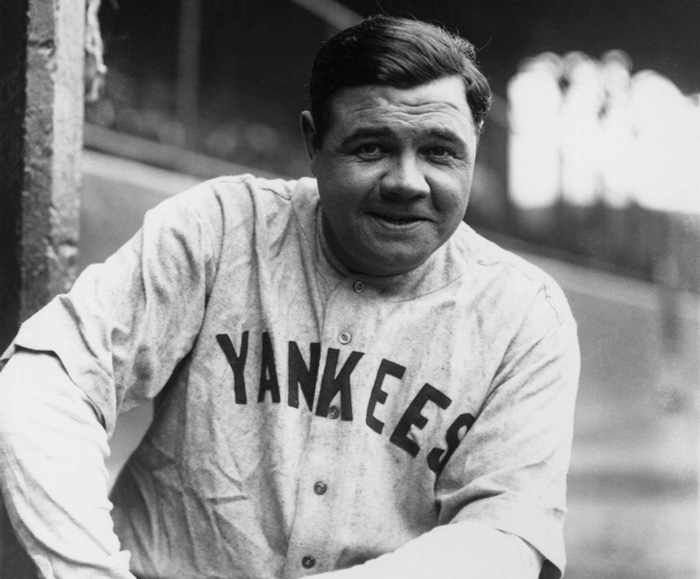
1928 – Babe Ruth hits his 42nd Home Run 

1976 – Actress Elizabeth Taylor divorces actor Richard Burton (her sixth, their second divorce together)

1986 – Tennis ace John McEnroe marries actress Tatum O’Neal

Did You Know?

Photo Courtesy:  Columbia University War Memorial  A gun crew from Regimental Headquarters, 23rd Infantry, U.S. Army

Photo Courtesy: Columbia University War Memorial
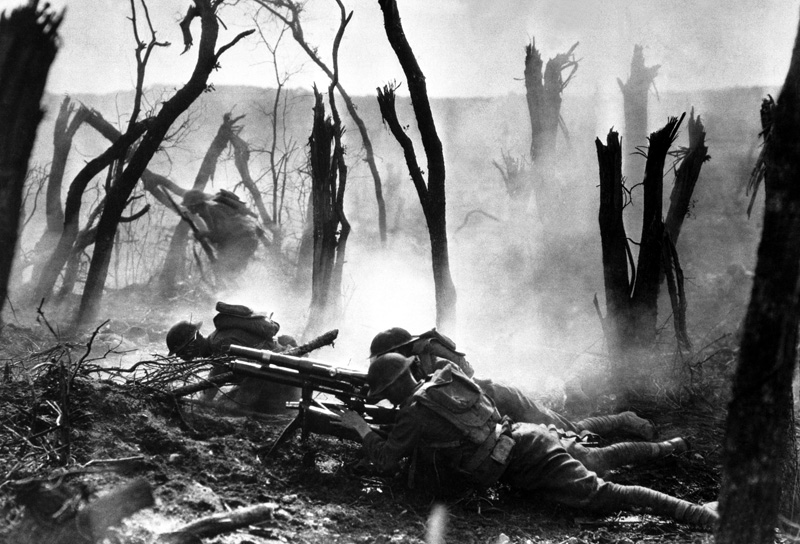
A gun crew from Regimental Headquarters, 23rd Infantry, U.S. Army

By K.P. Sander

On July 28, 1914, World War I began when the Austro-Hungarians fired the first shots in preparation for the invasion of Serbia after the assassination of heir-to-the-throne Archduke Franz Ferdinand of Austria.  More than nine million combatants were killed during the more than four years of turmoil, which ended on Nov. 11, 1918, making it one of the deadliest conflicts in history.

At the time, it was simply called the World War, or Great War, and it included all the economic powers in the world divided into two alliances.  The Allies consisted of the United Kingdom, France and Russia; and the Central Powers were Germany and Austria-Hungary.  Italy, Japan and the United States joined the Allies, and the Ottoman (Turkish) Empire and Bulgaria sided with the Central Powers.

After the Russian government collapsed in March of 1917, the war headed toward a resolution when the Austro-Hungarian Empire and Germany agreed to an armistice.  By the end of the war, the German, Russian, Austro-Hungarian and Ottoman empires ceased to exist, with the latter two becoming dismantled.  This lead to the maps of Europe and Southwest Asia being redrawn, and some independent nations being restored and even created.

As a consequence, The League of Nations was formed with the goal of preventing further global wars.  Renewed European nationalism and the humiliation of Germany contributed to a rise in fascism, and any further hopes of prevention were dashed with the culmination of World War II.

Did You Know?

Photo Courtesy:  Google

Photo Courtesy: Google

By K.P. Sander

45 years ago on July 21, 1969, spaceflight Apollo 11 landed on the Moon, with American astronauts Neil Armstrong, and Edwin “Buzz” Aldrin, being the first humans to ever step foot on the lunar surface.  They spent 21 hours on the Moon, and about two and a half hours outside the spacecraft.  The third member of the mission, Michael Collins, piloted the command spacecraft in lunar orbit, waiting for his fellow astronauts to return for the trip back to earth.

According to Wikipedia, the mission was launched on July 16 from Kennedy Space Center in Florida.  The spacecraft had three components:  the Command Module (CM), with a cabin for the astronauts (the only part coming back to earth); the Service Module, providing support to the CM with propulsion, electrical power, oxygen and water; and the Lunar Module, for the actual landing in the Sea of Tranquility on the Moon.

Armstrong became the very first to step onto the lunar surface on July 21 at approximately 02:56 UTC (Coordinated Universal Time, the primary time standard by which the world regulates clocks and time).  His famous words were transmitted via live television broadcast back to earth for all to hear, “That’s one small step for [a] man; one giant leap for mankind.”  He described the surface as very fine-grained dust, almost like powder.  When Aldrin joined him, he described the view as “magnificent desolation.”  Armstrong and Aldrin collected 47.5 pounds of lunar materials to bring back to earth for study.

The astronauts planted a U.S. flag on the surface, and received the most historic (and farthest) phone call from then-President, Richard Nixon.  The astronauts left behind scientific instruments: an Apollo 1 mission patch, a plaque with two drawings of Earth and an inscription that read, “Here men from the planet Earth first set foot upon the Moon, July 1969 A.D.  We came in peace for all mankind;” the plaque also had the signatures of all the astronauts and President Nixon.  They also left behind a memorial bag containing a gold replica of an olive branch symbolizing peace, and a silicon message disk containing goodwill statements by U.S. Presidents Eisenhower, Kennedy, Johnson and Nixon, as well as the leaders from 73 countries around the world.

In the television broadcast from July 23, the night before splashdown, Aldrin said, “When personally reflecting on the events of the past several days, a verse from Psalms comes to mind. ‘When I consider the heavens, the work of Thy fingers, the Moon and the stars, which Thou hast ordained; what is man that Thou art mindful of him?”  What those men experienced was beyond profound.

The three astronauts landed back home in the Pacific Ocean on July 24.  The mission fulfilled the goal proposed in 1961 by the late President John F. Kennedy when he spoke before congress stating, “…Before this decade is out, of landing a man on the Moon and returning him safely to the Earth.”  Mission Accomplished, Mr. President.

Did You Know?

Summer Shape Up Series #3

Did-You-Know-WEB

By K.P. Sander

Eastvale – They say, ‘You Are What You Eat’, but what if I don’t want to be Potassium Bromate?  What if Butylated Hydroxyanisol gives me the creeps (after all, “butylated” sounds like “mutilated”)?  In today’s world of high technology and instant gratification, have we microwaved ourselves into a toxic nightmare of diseases, obesity and unhappiness?

The artificial sweeteners, preservatives, dyes and flavor enhancers that have been added to our foods for decades have fattened not only corporate pocket books through prolonged shelf lives and disguised cheaper, sub-standard products, but they have fattened us up as well.  They have created maladies in our bodies including Alzheimer’s, cancers, diabetes and heart disease, and have contributed to emotional disorders in our children – even health concerns for our pets.  A hundred years ago, when you grew your own food and “fast food “ was a chicken on the run from the chopping block, these diseases were rare, and even non-existent.  But with the initiation of processed foods in the second half of the 20th Century, the health of people everywhere has taken a turn for the worse.

The frightening list of additives that infest our foods are helping to make meals to die for; literally.  BHA/BHT, artificial sweeteners, food dyes, high fructose corn syrup, monosodium glutamate, potassium bromate, sodium nitrate/nitrite sodium sulfite, surfer dioxide and trans-fats are commonly found in everything from breads to meats to yogurts – even chewing gum can be toxic.  And all of these ingredients are associated with some very unpleasant, even deadly, consequences from cancer to chromosomal damage.

And, are the poisons ingested in our bodies the only cause for concern?  Is there more social anxiety prevalent because of social media?  By involving more people in our lives via technology, are we becoming more anti-social by hiding behind it?  Look around you.  The majority of people walking around (and yes, even driving around) aren’t paying attention to where they are going because they are completely focused on their phones:  texting, Facebooking, Instagramming.

I’m guilty of all of it, but I can’t remember the last time I truly felt full of health and vitality and just plain old GOOD.  I wake up to caffeine, drive-thru when I’m rushed, crack open a can of high-fructose corn syrup for energy, and text instead of call.  But I, for one, don’t want to find myself looking a heart attack (or worse) right smack in the face, knowing I contributed directly to it.  I’m going to educate myself, read more labels, and avoid ingredients I can’t pronounce or know to be toxic.  I’m going to buy more organic foods and less processed foods.  I’m going to consider an apple and a handful of almonds “fast food”.  And I’m going to contribute to my general well-being by participating in some actual face time with those I love.  I’m guessing my fitness routines will be enhanced, my body and mind will feel better, and my relationships will benefit.

Food should be a source of joy and nourishment.  The purpose is to fuel your body, and due to the sensory components, it is an opportunity to create a connection with those you love.  Create a meal to live for.  Let “you are what you eat” mean health and vitality for you and your family.