Tag Archives: Healthy Living

February is National Heart Month

Photo courtesy of Google Images

Photo courtesy of Google Images

Staff Reports

Every 43 seconds, someone in the United States has a heart attack.  According to the American Heart Association, heart disease is the leading cause of death for men and women in the United States. Every year, 1 in 4 deaths are caused by heart disease.

The CDC says that Coronary artery disease (CAD) is the most common type of heart disease in the United States. For some people, the first sign of CAD is a heart attack. You and your health care team may be able to help you reduce your risk for CAD.

CAD is caused by plaque buildup in the walls of the arteries that supply blood to the heart (called coronary arteries) and other parts of the body. Plaque is made up of deposits of cholesterol and other substances in the artery. Plaque buildup causes the inside of the arteries to narrow over time, which could partially or totally block the blood flow. This process is called atherosclerosis.

Too much plaque buildup and narrowed artery walls can make it harder for blood to flow through your body. When your heart muscle doesn’t get enough blood, you may have chest pain or discomfort, called angina. Angina is the most common symptom of CAD.

Over time, CAD can weaken the heart muscle. This may lead to heart failure, a serious condition where the heart can’t pump blood the way that it should. An irregular heartbeat, or arrhythmia, also can develop

A heart attack, also called a myocardial infarction, occurs when a part of the heart muscle doesn’t receive enough blood flow. The more time that passes without treatment to restore blood flow, the greater the damage to the heart muscle.

Every year, about 735,000 Americans have a heart attack. Of these cases:

  • 525,000 are a first heart attack.
  • 210,000 happen to people who have already had a first heart attack.

The five major symptoms of a heart attack are:

  • Pain or discomfort in the jaw, neck, or back.
  • Feeling weak, light-headed, or faint.
  • Chest pain or discomfort.
  • Pain or discomfort in arms or shoulder.
  • Shortness of breath.

Other symptoms of a heart attack could include unusual or unexplained tiredness and nausea or vomiting. Women are more likely to have these other symptoms.

One of 5 heart attacks is silent—the damage is done, but the person is not aware of it.

Coronary artery disease (CAD) is the main cause of heart attacks. A less common cause is a severe spasm, or sudden contraction, of a coronary artery that can stop blood flow to the heart muscle. If you know the signs and symptoms of a heart attack and recognize that you or someone near you is having a heart attack, seek immediate treatment by calling 9-1-1. The longer you wait, the more damage to the heart muscle can occur.

In spite of all of this, the American Heart Association says there is good news.  Heart disease can often be prevented when people make healthy choices and manage their health conditions.

You can make healthy changes to lower your risk of developing heart disease. Controlling and preventing risk factors is also important for people who already have heart disease. To lower your risk:

  • Watch your weight. Make your calories count by eating a heart-healthy diet high in fresh fruits and vegetables and low in sodium and trans fat.
  • Quit smoking and stay away from secondhand smoke.
  • Control your cholesterol and blood pressure.
  • If you drink alcohol, drink only in moderation.
  • Get active and eat healthy
  • Know your ABCS:
  • Ask your doctor if you should take an Aspirin every day.
  • Find out if you have high Blood pressure or Cholesterol, and if you do, get effective treatment.
  • If you Smoke, get help to quit.

Take control of your heart health by following your doctor’s prescription instructions.
Stroke Awareness

Staff Reports

According to the CDC, every 40 seconds someone in the United States has a stroke.  In 2008 alone, more than 133,000 Americans died from a stroke, which equates to one person every four minutes-making it the fourth leading cause of death in the United States.  Strokes can affect people of all ages and backgrounds.

Strokes are sometimes called brain attacks.  Strokes happen when a blockage stops the flow of blood to the brain or when a blood vessel in or around the brain bursts. There are two main types of strokes: ischemic and hemorraghic.  Ischemic strokes are caused by blood clots and hemorraghic strokes are caused by bleeds.  The American Heart Association says that ischemic strokes account for 87 percent of all strokes and are usually caused by uncontrolled high blood pressure.

You can lower your risk for stroke, regardless of your background.  Family history, age, sex and ethnicity all play a role in an individual’s stroke risk, but there are still things you can do to help keep yourself healthy.  One of the best preventative measures is to not smoke cigarettes.  Cigarette smoking and exposure to second-hand smoke can thicken the blood and make it more likely to clot, according to the CDC.  Thicker blood flow can lead to increased plaque buildup in your arteries and can damage the blood vessels leading to the brain.
Controlling your blood pressure is also extremely important.  High blood pressure, also called hypertension, increases your risk of stroke and heart attack by weakening and thinning blood vessels, making them more prone to rupture.  More than half of the world’s stroke deaths are caused by elevated blood pressure levels.

Some other proactive measures that you can take to help lower your stroke risk include exercising regularly, eating a healthy diet low in sodium, maintaining a healthy weight and preventing or controlling diabetes.

Stroke.org says there are several treatment options for stroke, depending on the cause of your stroke.  If you are having an ischemic stroke or a stroke that is caused by a blood clot, your doctor may recommend drug treatment that will help dissolve the clot and improve blood flow to your brain.  Another way your doctor may treat your stroke is to use a small mechanical device that removes or breaks-up the clot.  A surgeon will insert the device into the blocked artery using a thin tube. Once inside, the tool traps the clot, and either breaks it up or the surgeon pulls it out of the brain, reopening the blocked blood vessel in the process.

A hemorrhagic stroke (sometimes called a bleed) occurs if an artery in your brain leaks blood or ruptures (breaks open). The first steps in treating a hemorrhagic stroke are to find the cause of bleeding in the brain and then control it. Some of the options for treatments include surgical clips or coils inserted in aneurisms (weaknesses in the blood vessel wall), controlling high blood pressure, and surgery to remove the bleeding vessel and blood that has spilled into the brain.

Medical advances have greatly improved survival rates and recovery from stroke during the last decade. Your chances of survival and recovery outcomes are even better if the stroke is identified and treated immediately.

If you think you are having a stroke, every minute counts. The sooner a patient receives medical treatment, the lower the risk for death or disability. If you or someone you know exhibits the following signs or symptoms, call 9-1-1 immediately:

  • Numbness or weakness of the face, arm, or leg, especially on one side of the body.
  • Confusion, trouble speaking, or difficulty understanding.
  • Trouble seeing in one or both eyes.
  • Trouble walking, dizziness, or loss of balance and coordination.
  • Severe headache with no known cause.
  • Remember, getting immediate medical attention for stroke is crucial to preventing disability and death.

January is Cervical Health Awareness Month

 What to Know about Cancer Screening


Courtesy of StatePoint.net

More than 12,000 women are diagnosed annually with cervical cancer and 4,000 women die each year from the disease. However, innovations in diagnostics and prevention could help reduce that number, while also giving women a better understanding of their health.

  • The basics: Woman 21-65 years old should have a Pap smear every three years according to new health guidelines, along with a Human Papillomavirus (HPV) test in some cases — not annually as most women were taught. The Pap smear detects changes in cervical cells caused by persistent HPV infections, and the HPV test improves detection. After an abnormal result, doctors may perform a colposcopy exam by applying a solution to the cervix and watching for areas that turn white (acetowhitening), which can indicate abnormal cells. Certain women may need more frequent screening or treatment to remove pre-cancerous areas.
  • Computer-aided detection: Historically colposcopy has been a very subjective exam, and accurately identifying biopsy sites is a challenging task. DySIS colposcopy, a clinically-proven, FDA-cleared device, adds Dynamic Spectral Imaging to objectively quantify acetowhitening, and displays the results in a color-coded map.

“Its ability to help me to select biopsy sites has resulted in me finding an increased number of significant pathologies,” says Dr. John Patterson of Wheaton Franciscan Healthcare of DySISmap.

  • Reduced anxiety: Receiving news from your doctor that your Pap smear result is abnormal is frightening for any woman. However, the new computer-enhanced imaging offers more clarity for both the clinician and the patient.

“It was really good to be able to see the screen and feel a little more in control and understand what was happening,” says Heather Holyoak, a medical student who had three colposcopy procedures and a biopsy over the past three years. “For me, it wasn’t remotely painful or uncomfortable, and it could be something that puts your mind at ease.”

  • Prevention: Two FDA-approved vaccines are highly effective in preventing infections of high-risk HPV types that cause the majority of cervical cancers. The HPV vaccine is recommended to be given to pre-teen girls and boys at 11-12 years old before they are sexually active, but can be given up to age 26 for women and 21 for men.

For more information on screening, diagnosis and prevention, visit cancer.org/cancer/cervicalcancer and http://www.DySISMedical.com.

Cervical cancer is completely preventable and the best prevention is being regularly tested to detect abnormalities early. With these new tools, cervical cancer can be eradicated in our lifetime.

Five Ways to Test Your Health at Home

Ready to jump start your health in 2016?  Local docs at American Family Care map out five ways to test your health at home.    

By Nancy Bostrom

5 Ways to Test Your Health at Home:

  • Plank it Up!  Get into push-up position on the floor.   Now, bend your elbows 90 degrees and rest your weight on your forearms. Your elbows should be directly beneath your shoulders, and your body should form a straight line from your head to your feet.  If you can’t hold this plank position for 2 minutes, AFC doctors warn it could mean you are carrying too much weight.   The physicians say improving your core is important for your overall movement stability and strength.
  • Sit, Rise, Stand: Based on Brazilian research, this test examines how well you get up from a seated position on the floor.  Sit down, try to get up without using your hands or knees. The idea is to use as few body parts, as possible, to get up, testing your strength, balance and flexibility.
  • Bad Breath Barometer:  Bad breath can turn into more than just an awkward situation; halitosis could be a sign of a serious health problem.  AFC doctors say to scrape your tongue with a spoon. Put the spoon in a plastic bag, close it and smell it.   A fruity odor can point to diabetes, a fishy smell may indicate kidney failure, and a sour mouth could be tied to sleep apnea.
  • Test of Time:  How sharp is your mind? Swedish researchers developed a clock drawing test to screen for cognitive development and dementia. Simply start with a blank piece of paper, draw a clock, put in all the numbers and set hands for 10 and 11.  This test taps into a range of cognitive abilities and can set off a signal if impairment is developed or developing.
  • Track your pulse: How strong is your heart rate? Did you know a weak pulse could not only be a sign of heart disease but a blood clot in your arm or leg?
    1. Place 2 fingers, not using your thumb, on your wrist, and press lightly until you feel a pulse.
    2. Using a watch or clock, make note of how many heartbeats you feel in 15 seconds. Your pulse = (total beats in 15 seconds) X 4 = (your heart rate).    A normal resting heart rate ranges from 60 to 100 beats a minute.
    3. Why do it?  To see how well your heart is working. In an emergency situation, a pulse rate can help determine if your heart is pumping enough blood.  Check for blood flow and get a gauge on your general health and fitness level.

Hydrogevity

Courtesy of Clark’s Nutrition

Five hundred years ago, the Spanish explorer Juan Ponce de Leon became fascinated with sailing, impressed by the circumnavigating exploits of Christopher Columbus. While Ponce de Leon established himself as an adroit farmer and landowner in the New World, he is perhaps most ubiquitously known for his quest to discover the mystical ‘Fountain of Youth’. The Fountain was believed to impart vigor and longevity to anyone who imbibed from its crystal-clear waters. In fact, the rejuvenative powers of undiscovered bodies of water date back at least an extra two millennia when Alexander the Great went in search of the mystical ‘River of Death’. Yet luckily, common sense has kicked in and the search for health and longevity has turned into an investigation into how treating our bodies better, and creating strong social structures, can produce almost magical outcomes.

Researchers from the University of California, Riverside, followed subjects for 20 years to examine life choices that might influence longevity. One of the most significant findings was that individuals who avoid stress and work tend to live shorter lives. Being productive and dealing with stress directly and determinately is the best method to increase self-worth and efficiency. The best method to support these endeavors is to remain properly hydrated. Chronic dehydration, at levels of just 1% (think four glasses behind where you should be) can lessen our abilities to perform well cognitively and socially. This could translate to lower scores on tests and performance in the workplace or to a decline in creative pursuits, or in our ability to regulate mood, memory and relationships. In addition to these task-oriented and socio-cognitive aspects regarding hydration, there are certain physiological conditions that require constant hydration. Hydrated muscles perform more work, in a shorter amount of time, in a wider variety of settings, and among a broader set of tasks. Similar to muscles, bowels must remain properly hydrated to perform their tasks, i.e., sustaining the diverse microbiome that helps us to process foods, eliminate wastes, and protect against outside threats. In fact, all body systems require proper hydration to ensure their functions are performed in a manner (and rate) that is conducive to health and resistant to disease.

If aging can be conceptually distilled into how well we replicate proteins, free from the ravages of free-radical damage and replication errors, then on some level, providing the aqueous medium sufficient to maintain a healthy and organized system is our responsibility alone. Aging is usually represented by a curvilinear (bent line) continuum wherein the relatively healthy years (represented by the straight segment) starts to curve upward around age 50 and rises precipitously thereafter. This line, and the point where life curves into declining health, is not intrinsically predetermined; rather, it relies tremendously on individual effort or lack thereof. It is possible, via concerted individual and community efforts, to remove the curve from the line and live life straight on. To do so requires vigilance and a mindful approach to healthful pursuits, primary among them being hydration.

To this end, it is imperative to drink pure water daily and include high-water-containing fruits and vegetables, and may even be necessary to avoid caffeinated and carbonated drinks in the pursuit of metabolically-advantageous hydration levels. Finally, in place of looking for bodies of water, and their illusory promise of longevity, we should look at the water in our own bodies, and their demonstrated effects on quality and quantity of life.

C Doussett MPH, RDN

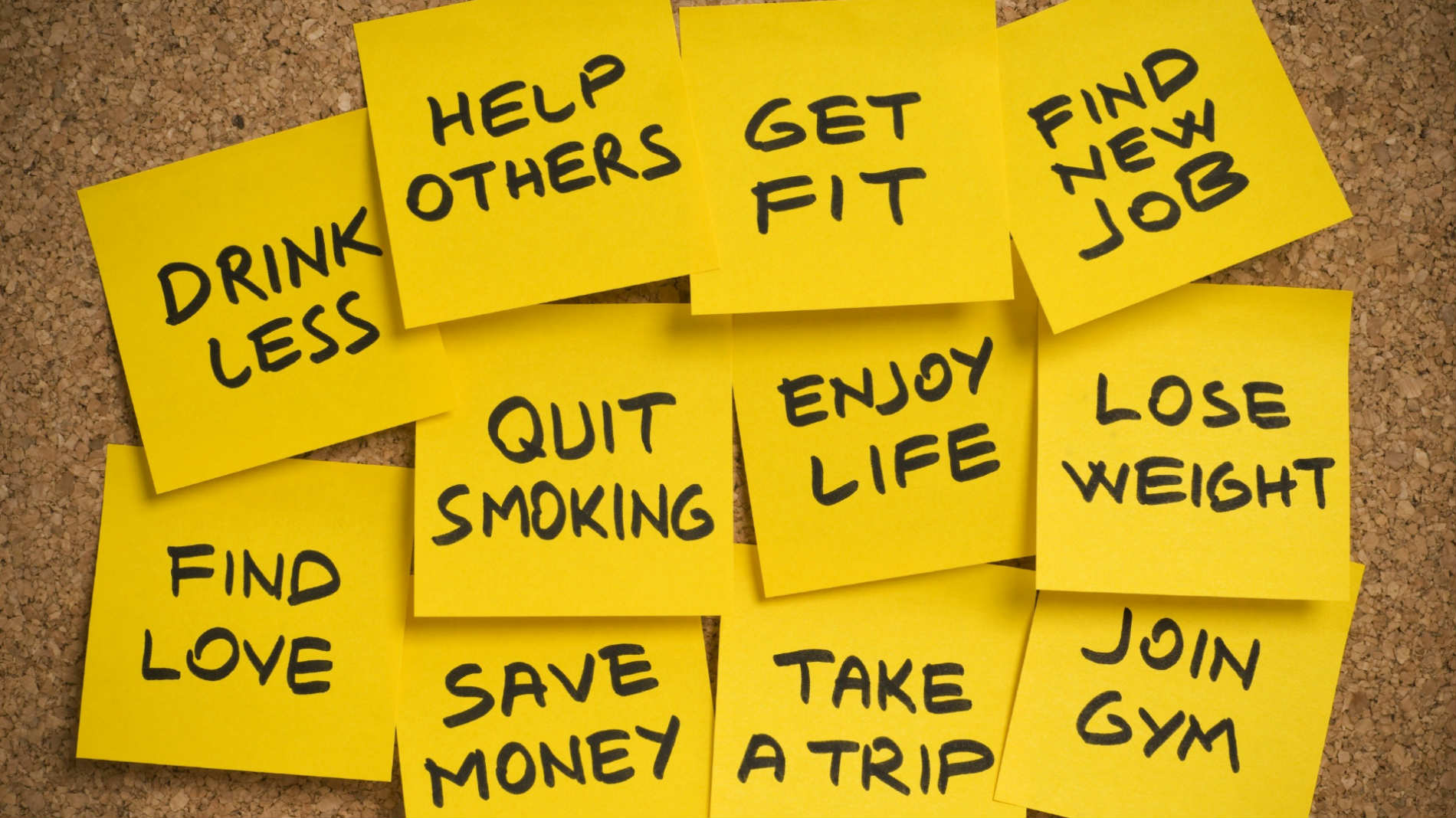
How to stay true to your New Year’s resolutions

Photo courtesy: Google Images

Photo courtesy: Google Images

Courtesy of mid-day.com

BE KIND TO YOURSELF- Set realistic goals. Understand your capabilities and don’t set goals that are unreachable. Consult your physician before starting any diet program.  Take a few days off. Breathe and eat healthy to rejuvenate your body and soul. Take at least two weeks off each year; connect with nature, read a book, or do anything that calms your mind and nerves. During your time off, make sure to take time for doctors’ appointments and other preventative health care.
FITNESS: Make separate weekend and weekday goals, since you are likely to be busy with house or office work during the week. Work out for a minimum of five hours per week, in increments that work best for you. Change your fitness routine on the weekends by trying out new sports, or by engaging in any activity that sounds fun to you. Avoid a few foods that are fattening rather than banning one type of food entirely.
FINANCES: Plan wisely. Financial planning does not begin with a new year; it needs to be a lifelong commitment. Do not keep all your eggs in one basket. Do not depend on free advice; you may have to pay for professional help but it will set you in the right direction.  Make sure you have adequate health and life insurance for each earning member of the family.
RELATIONSHIPS: Hit a positive high. Work hard on yourself and your belief system. Do away with negative thought processes and challenge yourself. Work on the art of communication, with yourself and others. Do not be defensive. Be positive about yourself and your goals. This will help bring emotional stability and affect the way you behave with everyone.
WORK: Right the wrongs. Go back in time and examine your work patterns at earlier workplaces. Determine the things that went wrong, and fix them in the future.  Don’t be negative and judgmental about your colleagues, as this will end up affecting you as well. If you have to be a leader, be confident, not a tyrant. For a good environment and results at the workplace, happy colleagues are important.

Healthy Holiday Eating

Courtesy of Clark’s Nutrition

Whether it’s Christmas, Hanukah, Winter Solstice, Kwanzaa, or New Year’s Eve, winter holidays are traditionally celebrated with food. But no matter how delicious, not every holiday morsel provides the best nourishment for your body. Nourish both your body and soul with these tips for healthy holiday eating.

Try feeding your family and friends with foods that are as close to their natural state as possible. If you eat fish, buy it fresh since it has more valuable fatty acids than smoked or canned. Studies have shown that free range foods are 40 percent more nutritious. Free range is a method of farming husbandry where the animals are permitted to roam freely instead of being contained. Fair treatment of animals is an integral part of leading a sound life as a human.

Organic foods have more nutrients and better environmental consequences than chemically-raised foods and they taste better too. Eating organic food is practically the only way to avoid genetically engineered foods. The DNA of genetically engineered foods has been altered, and may present health risks. Besides, organic farming helps to create a spiritually better animal. There is a spiritual energy that transfers into the food itself–the animals give us life.

Some traditional holiday foods are high in fat. You can substitute lower-fat foods, or serve fewer high-fat foods. Instead of frying or roasting potatoes, bake or boil them. If you make mashed potatoes, be sparing with the butter.

Avoid holiday waste with one easy method: simply cook less. Do some math before turning on the stove. Most people won’t eat more than six ounces of protein total. So calculate. Three to four ounces per person per side dish is generous, while a 9-inch pie can satisfactorily serve eight. Have a plan for what to do with leftovers; e.g., pick up the ingredients for turkey soup (celery, carrots, onion, parsley, garlic, and noodles) when you buy the bird so scraps won’t spoil before you can return to the market. Send leftover food home with guests.

Buy whole foods, which have more nutrients and have less toxicity than “junk” refined foods. Buy freshly-baked goods that only contain real ingredients you can pronounce. Many holiday goodies — cookies, cakes, tarts — are saturated with refined sugar, which can dampen your holiday spirits if you are prone to the “sugar blues” — fatigue — a few hours after eating too much sugar. Too much refined sugar can also make children over-excitable.

Instead of packaged cookies and cakes, bake from scratch and bake recipes that call for less-refined sugar. Try dried cane juice, fructose, molasses, fruit juice, or crushed fruit instead. Make goodies just sweet enough, but not too sweet.

When offered sweet goodies, eat less. Take just one or two pieces. Eating sweets with a meal can help lessen the “sugar blues.” No matter how mouth-watering, too much food overwhelms your digestion.

A Healthy New Year

Ring in the new year with a healthy attitude toward your body. If you host a New Year’s party, offer sparkling grape juice or organic, non-alcoholic punch to guests who prefer to avoid alcohol.

Make a New Year’s resolution to give yourself the gift of healthy food every day. Your body will reward you!

Busy Lifestyle? You Need Vitamin C

Courtesy of Clark’s Nutrition

Keys, wallet, phone, mints, lip balm . . . vitamin C? If you live a busy lifestyle and are always on the go (who isn’t these days?), vitamin C should be an everyday essential. We all know that modern-day life can get hectic. Vitamin C is one of the first nutrients to be depleted by stress, yet it’s one of the most critical vitamins for overall wellness.
In order to stay healthy and capable of handling everything that life throws your way, it’s critical to make vitamin C a part of your daily routine. Fortunately, vitamin C may just be the most convenient vitamin ever — since it’s available in a variety of forms, it’s easy to toss some vitamin C in your purse, laptop bag, and desk drawer.
It’s not likely that life will slow down, so here are the top reasons you need vitamin C handy wherever the day takes you.
1. You’re stressed out. Running around and juggling family, work, and life in general can make even the mellowest among us feel stressed sometimes. Stress creates an oxidative environment in the body, which can lead to DNA damage, setting the stage for disease, premature aging, and more.
Antioxidants work to mitigate this damage by stopping the disease-causing chain reaction that the free radicals started. Vitamin C, the ultimate antioxidant, stops the chain reaction before it starts. The body uses vitamin C to neutralize free radicals and restore health and balance.
2. You’re too busy to be sick. Stress has a major impact on the immune system — it not only suppresses immunity but, over time, the immune system doesn’t adapt to stress but continues to wear away. Stress weakens immunity and leaves us vulnerable to disease and infections.
A hectic lifestyle can also leave you feeling exhausted, and we’ve all had times when it’s difficult to turn our brain off at bedtime. Exhaustion and lack of sleep are also linked to depressed immunity, which can lead to colds, the flu, and other ailments.
Vitamin C is crucial for a well-functioning immune system. It is required for the production of white blood cells, T cells, and macrophages that form our defense against viruses and bacteria. When vitamin C levels become depleted, the immune system cannot mount an effective response to defend our health.
3. You need to stay on top of your game. Vitamin C is best known for its role in supporting healthy immunity, but it really supports overall wellness. Feeling your best is important whether you’re always on the go or enjoy a more laid-back lifestyle.
Vitamin C is essential in so many ways: it supports healthy skin, joints, and vision; it’s critical for maintaining heart health; it has potential to protect against cancer and Alzheimer’s disease; and it can even help relieve allergies and asthma.
The body cannot manufacture vitamin C, so it must be obtained from the diet. If you’re on the go, chances are you’re not getting enough of the fruits and vegetables that are rich in vitamin C, like spinach, citrus, peppers, and berries, making a daily supplement essential.
Vitamin C is available as capsules, tablets, chewables, liquids, and powders. All forms are equally effective, which makes supplementing with C extremely convenient. Try a variety of forms, and add vitamin C to your mental list of things you can’t leave home without. If you forget to take a capsule in the morning, be sure to have powdered vitamin C on hand to add to your water bottle during the day. If you keep vitamin C in your laptop or travel bag, you’ll be more likely to see it and then take it.
Having plenty of options available is an easy and convenient way to get your vitamin C — and there’s no excuse not to stay well when life gets hectic.

OurWeeklyNews.com Healthy Living Page 12.12.15

2015-Dec12-Weekly-HEALTHY-WEBThe newest addition to OurWeeklyNews is our Healthy Living Page. Read this page for health tips, recipes, farmer’s markets and more! Click this link to access the full Healthy Living Page in PDF format:2015-Dec12-Weekly-HEALTHY
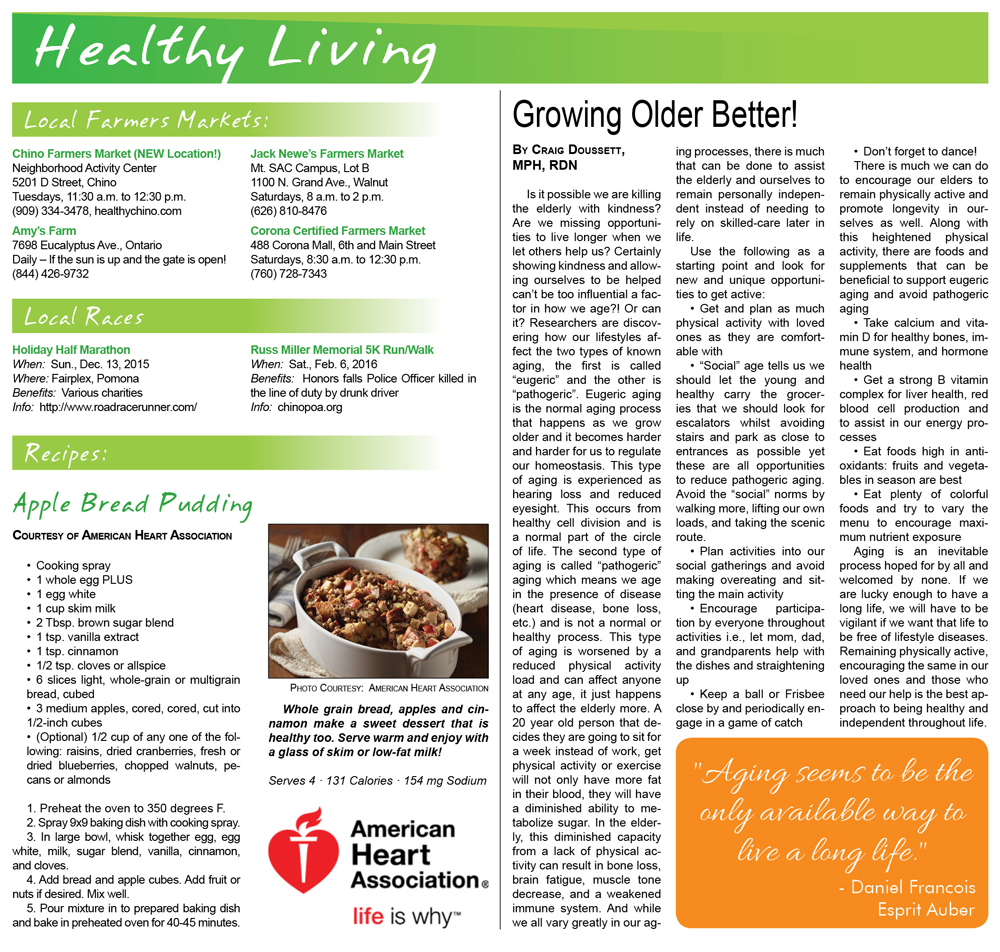
Growing Older Better!

By Craig Doussett MPH, RDN

Is it possible we are killing the elderly with kindness? Are we missing opportunities to live longer when we let others help us? Certainly showing kindness and allowing ourselves to be helped can’t be too influential a factor in how we age?! Or can it? Researchers are discovering how our lifestyles affect the two types of known aging, the first is called “eugeric” and the other is “pathogeric”. Eugeric aging is the normal aging process that happens as we grow older and it becomes harder and harder for us to regulate our homeostasis. This type of aging is experienced as hearing loss and reduced eyesight. This occurs from healthy cell division and is a normal part of the circle of life. The second type of aging is called “pathogeric” aging which means we age in the presence of disease (heart disease, bone loss, etc.) and is not a normal or healthy process. This type of aging is worsened by a reduced physical activity load and can affect anyone at any age, it just happens to affect the elderly more. A 20 year old person that decides they are going to sit for a week instead of work, get physical activity or exercise will not only have more fat in their blood, they will have a diminished ability to metabolize sugar. In the elderly, this diminished capacity from a lack of physical activity can result in bone loss, brain fatigue, muscle tone decrease, and a weakened immune system. And while we all vary greatly in our aging processes, there is much that can be done to assist the elderly and ourselves to remain personally independent instead of needing to rely on skilled-care later in life. Use the following as a starting point and look for new and unique opportunities to get active:

  • Get and plan as much physical activity with loved ones as they are comfortable with
  • “Social” age tells us we should let the young and healthy carry the groceries that we should look for escalators whilst avoiding stairs. Park as close to entrances as possible yet these are all opportunities to reduce pathogeric aging. Avoid the “social” norms by walking more, lifting our own loads, and taking the scenic route.
  • Plan activities into our social gatherings and avoid making overeating and sitting the main activity
  • Encourage participation by everyone throughout activities i.e., let mom, dad, and grandparents help with the dishes and straightening up
  • Keep a ball or Frisbee close by and periodically engage in a game of catch
  • Don’t forget to dance!

There is much we can do to encourage our elders to remain physically active and promote longevity in ourselves as well. Along with this heightened physical activity, there are foods and supplements that can be beneficial to support eugeric aging and avoid pathogeric aging.

  • Take calcium and vitamin D for healthy bones, immune system, and hormone health
  • Get a strong B vitamin complex for liver health, red blood cell production and to assist in our energy processes.
  • Eat foods high in antioxidants: fruits and vegetables in season are best
  • Eat plenty of colorful foods and try to vary the menu to encourage maximum nutrient exposure

Aging is an inevitable process hoped for by all and welcomed by none. If we are lucky enough to have a long life, we will have to be vigilant if we want that life to be free of lifestyle diseases. Remaining physically active, encouraging the same in our loved ones and those who need our help is the best approach to being healthy and independent throughout life.

Snack Attack

Courtesy of Clark’s Nutrition

What are your favorite snacks? Do you snack to stay healthy or are snacks becoming extra calories that ruin dinner and make structured eating implausible? According to scientists, the most consumed snacks are chips, chocolate, and cheese with fruit coming in a distant fifth. Snacks are comfort foods that help us to deal with stress and provide a respite from the monotony of our days and continuous pursuit of balanced meals. Yet they can also sabotage our fitness goals and create a cycle of dependency on foods that have too much sodium, sugar, and unhealthy fats.
Snacking is a tool just like all other tools, it can lead to controlling calories and help with weight loss and maintenance, or it can become an exercise in calorie overindulgence and wreak havoc on fitness goals. An hour in the gym can be overwhelmed by two minute of gorging on calorie-laden snack foods. The healthiest version of snacks should contain fruits, veggies, and nuts, and occasionally real fruit drinks. The ubiquity of juicing establishments can also be very beneficial in ensuring we get enough fruits and veggies in our diets. While it is better to eat an apple than juice an apple, it is certainly better to juice an apple than consume any other man-made snack. This goes for all fruits and veggies! Juicing bypasses chewing which may be a boon to individuals that cannot chew crunchy foods. For those that can transport fruits and vegetable and have no issue chewing, chew away! This mastication process, wherein we chew and macerate foods to enable them to pass through our digestive system, helps with providing satiety and joy in consuming foods.
While there is no perfect design for weight loss on an individual level, there are some guidelines that may be beneficial (and backed by science) in helping to meet and exceed fitness goals. If an individual is overweight, eating three to five solid meals may contribute to the thermic effect of food (the heat produced from burning calories) and assist in the reduction of bodyweight. For individuals that are at a lower bodyweight and want to put on mass, larger & less frequent meals, two to three may be more beneficial to achieve those goals, with one or two high-calorie snacks added in. While the above recommendation may be beneficial, it must always be remembered that food choice comes first, and then meal frequency can be manipulated.
It seems whether an individual eats three times a day or 10, the overall amount of food must remain the same if the goal is weight loss or weight gain. In other words, the foods (and total calories) we put in or bodies are more important than the frequency or arrangement. Do not worry about food combining or frantically scrambling to fit in a certain “macro” set; rather, ensure that the meals contain a variety of colorful foods, mostly plants, and that the meals do not cause you to become sluggish or too tired to perform the day’s activities.
What we eat is more important than how frequently we eat, and the way we go about eating healthy foods is very individualistic and subject to great variance. Clark’s Nutrition and Natural Foods Market is the perfect one-stop-snack shop. Every department has a multitude of choices to ensure snacking becomes a partner to your fitness, health, and longevity goals.

OurWeeklyNews.com Healthy Living Page 12.05.15

2015-Dec5-Weekly-HEALTHY-WEB.jpgThe newest addition to OurWeeklyNews is our Healthy Living Page. Read this page for health tips, recipes, farmer’s markets and more!
OurWeeklyNews.com Healthy Living Page 11.14.15

2015-Nov21-Weekly-HEALTHYThe newest addition to OurWeeklyNews is our Healthy Living Page. Read this page for health tips, recipes, farmer’s markets and more! Click this link to access the full Healthy Living Page in PDF format:2015-Nov21-Weekly-HEALTHY

OurWeeklyNews.com Healthy Living Page 11.14.15

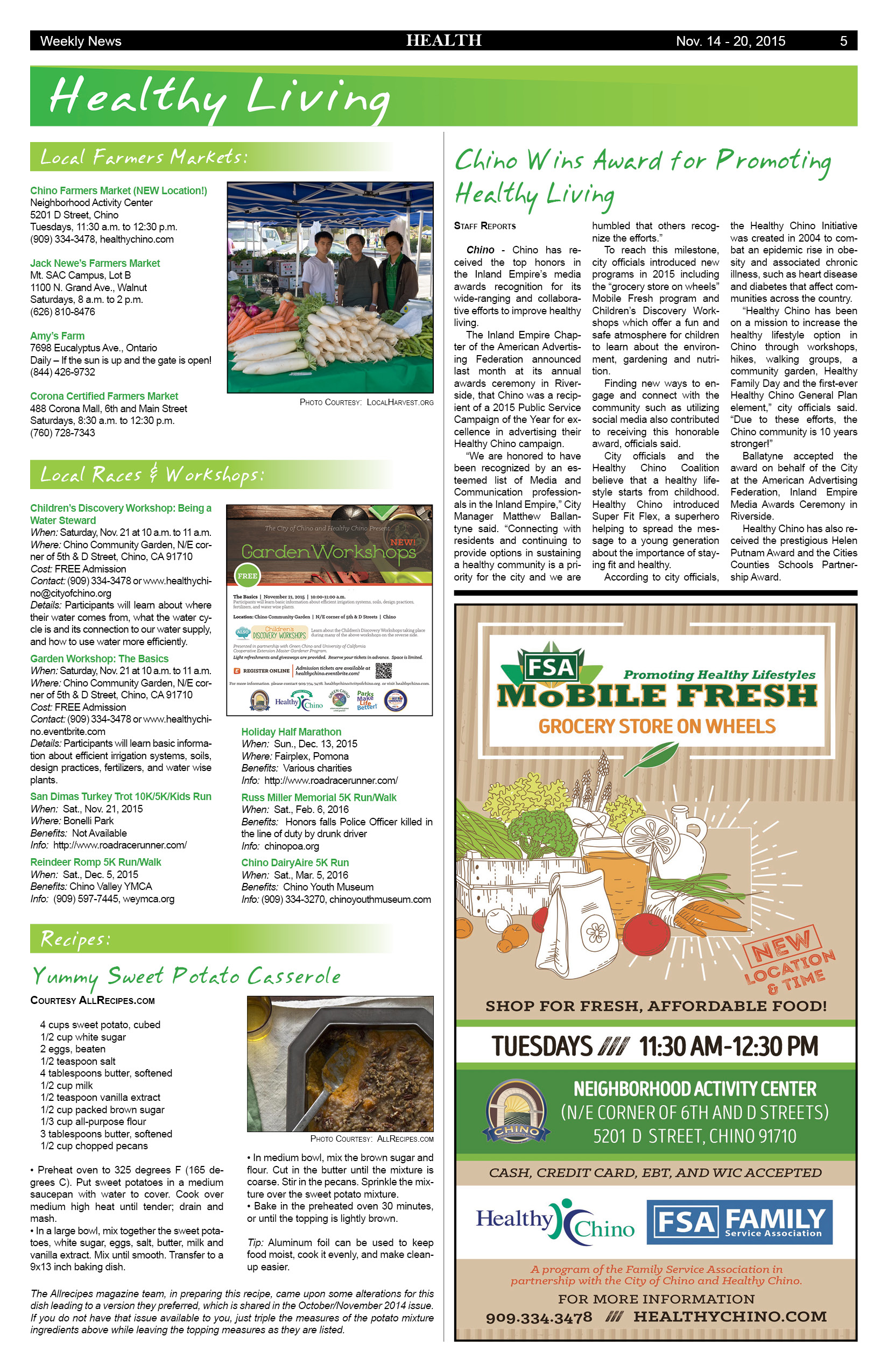
2015-Nov14-Weekly-HEALTHYThe newest addition to OurWeeklyNews is our Healthy Living Page. Read this page for health tips, recipes, farmer’s markets and more! Click this link to access the full Healthy Living Page in PDF format: 2015-Nov14-Weekly-HEALTHY

Growing Older Better!

Courtesy of Clark’s Nutrition


By Craig Doussett MPH, RDN

Is it possible we are killing the elderly with kindness? Are we missing opportunities to live longer when we let others help us? Certainly showing kindness and allowing ourselves to be helped can’t be too influential a factor in how we age?! Or can it?

Researchers are discovering how our lifestyles affect the two types of known aging.  The first is called “eugeric” and the other is “pathogeric”.

Eugeric aging is the normal aging process that happens as we grow older and it becomes harder and harder for us to regulate our homeostasis. This type of aging is experienced as hearing loss and reduced eyesight. This occurs from healthy cell division and is a normal part of the circle of life.

Pathogeric aging – which means we age in the presence of disease (heart disease, bone loss, etc.) – is not a normal or healthy process. This type of aging is worsened by a reduced physical activity load and can affect anyone at any age; it just happens to affect the elderly more.

A 20-year old person that decides they are going to sit for a week instead of work, get physical activity or exercise will not only have more fat in their blood, they will have a diminished ability to metabolize sugar. In the elderly, this diminished capacity from a lack of physical activity can result in bone loss, brain fatigue, muscle tone decrease, and a weakened immune system. And while we all vary greatly in our aging processes, there is much that can be done to assist the elderly and ourselves to remain personally independent instead of needing to rely on skilled-care later in life.

Use the following as a starting point and look for new and unique opportunities to get active:

  • Get and plan as much physical activity with loved ones as they are comfortable with.
  • “Social” age tells us we should let the young and healthy carry the groceries, that we should look for escalators whilst avoiding stairs, and park as close to entrances as possible – yet these are all opportunities to reduce pathogeric aging. Avoid the “social” norms by walking more, lifting our own loads, and taking the scenic route.
  • Plan activities into social gatherings and avoid making overeating and sitting the main activity.
  • Encourage participation by everyone throughout activities (i.e., let mom, dad, and grandparents help with the dishes and straightening up).
  • Keep a ball or Frisbee close by and periodically engage in a game of catch.
  • Don’t forget to dance!

There is much we can do to encourage our elders to remain physically active and promote longevity in ourselves as well. Along with this heightened physical activity, there are foods and supplements that can be beneficial to support eugeric aging and avoid pathogeric aging.

  • Take calcium and vitamin D for healthy bones, immune system, and hormone health.
  • Get a strong B vitamin complex for liver health, red blood cell production and to assist in our energy processes.
  • Eat foods high in antioxidants: fruits and vegetables in season are best.
  • Eat plenty of colorful foods and try to vary the menu to encourage maximum nutrient exposure.

Aging is an inevitable process hoped for by all and welcomed by none. If we are lucky enough to have a long life, we will have to be vigilant if we want that life to be free of lifestyle diseases. Remaining physically active, encouraging the same in our loved ones and those who need our help, is the best approach to being healthy and independent throughout life.