Tag Archives: Healthy Living

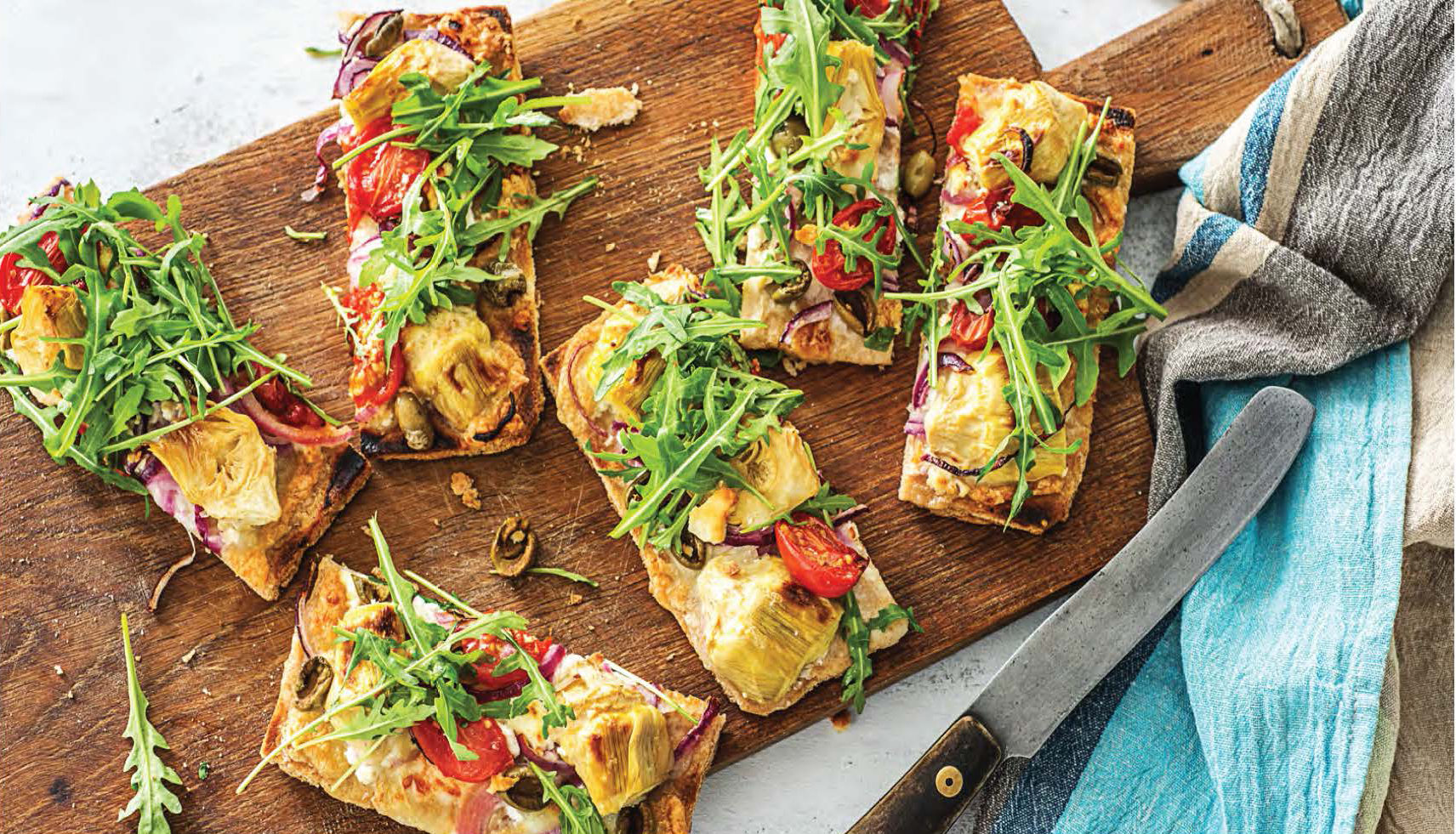
Greek Salad Flatbreads

with Artichokes, Olives and Feta


By Hello Fresh


Cooking Time: 25 mins

Servings: 4

Nutrition: 710 Calories

Ingredients:


  • Artichokes- 13 oz
  • Green Olives- 2 oz
  • Grape Tomatoes- 8 oz
  • Red Onion- 1
  • Garlic- 4 cloves
  • Fresh Mozzarella- 8 oz
  • Flatbreads- 4
  • Feta Cheese- 1/2 cup
  • Arugula- 4 oz
  • Balsamic Vinegar- 5 tsp


1  PREHEAT OVEN AND PREP VEGGIES.    Wash and dry all produce. Adjust rack to upper position and preheat oven to 425 degrees. Rinse and drain artichokes, then cut into halves through stem ends. Cut olives and tomatoes in half lengthwise. Halve, peel, and thinly slice onion. Mince or grate garlic.


PREP CHEESE.  Tear mozzarella into small piece with hands.


3 ASSEMBLE FLATBREADS.    Place flatbreads on a lightly oiled baking sheet. Spread out mozzarella in an even layer over tops of each. Scatter olives, artichokes, tomatoes, and feta cheese over tops, followed by as much onion and garlic as you like. Season with salt and pepper.


4  BAKE FLATBREADS.       Bake flatbreads in oven until crust is crisp and mozzarella is melted, 7-10 minutes.


5  DRESS ARUGULA.     Toss arugula in a medium bowl with 1 TBSP vinegar (we sent more) and a drizzle of olive oil. Season with salt and pepper.


6  FINISH AND SERVE.    Scatter arugula over flatbreads, then cut into slices and serve.

Tips to Refresh Yourself

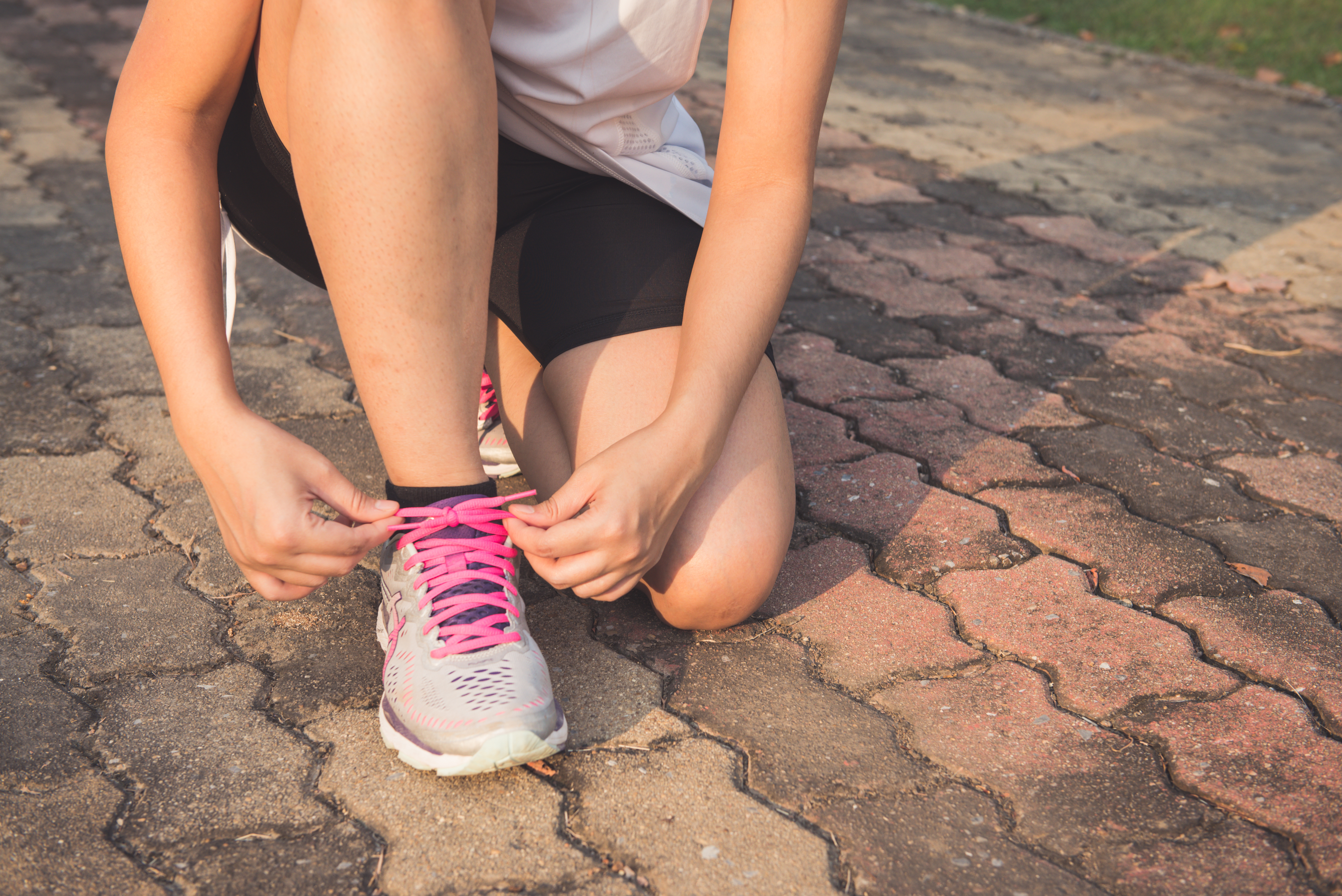
Running shoes – woman tying shoe laces. Closeup of female sport fitness runner getting ready for jogging outdoors on forest path in late summer or fall. Vintage effect style pictures.

By StatePoint

In a fitness rut? Instead of simply attempting to lose weight or drop a clothing size, consider placing a more positive spin on your objectives. Whether your stated goal is to try new sports and hobbies or to get in touch with nature, you can better refresh yourself by setting goals that help you get in shape while appreciating your surroundings and having fun.

Try Something New

Testing out new sports and hobbies doesn’t need to require a giant time or financial commitment. There are plenty of ways to dip your toe in the water. Thanks to online marketplace coupon services, it’s easy find discounted access to local experiences like orienteering and rock climbing classes, fishing excursions, white water rafting journeys and more. Consider giving your fun and fitness goals a recharge by trying out something completely different.

Make More of It

Whether you’re hiking, biking, skiing or trying any other new outdoor sport, consider making the most of your excursions with tech gear that enhances the experience. For example, the PRO TREK Smart Outdoor Watch WSD-F20 from Casio, powered by Android Wear 2.0, has GPS capabilities, a full color map display and water resistance of up to 50 meters, making it well suited for rugged adventures. Because it can be used offline in areas without cellular service, it’s can free you up to go farther off the beaten trail. Find a great fishing spot or vista on a hike? Spot some beautiful wildlife on the trail? Its Location Memory app instantly reads a user’s current location, so you can add notes to otherwise unmarked map spots. Additionally, Casio’s Moment Setter app gives users an opportunity to automatically receive important alerts, such as best fishing times, rest break intervals, and sunrise/sunset times.

Get Competitive

Having a race or competition up ahead on the calendar can be the motivating force that drives you to get off the couch, get fit and enjoy the outdoors. Whether it’s a 10k, obstacle race or a triathlon, training for such a competition can have cascading effects, leading to new healthy habits beyond more frequent workouts, such as getting more rest and hydration and eating a healthier diet. Completing your goal can be a truly rewarding experience.

When it comes to your health and wellness, think beyond the scale. Refresh your body and mind with new experiences that lead to healthy habits.

What to Ask Your Doctor About Parkinson’s Disease

By StatePoint

Talking to your doctor about any health concern can be tough, particularly when symptoms catch you by surprise or cause concern. And when it comes to Parkinson’s disease (PD), experts say there are many symptoms that often go unreported at doctor’s appointments, making them difficult to diagnose and treat.

For example, many people are aware of visible symptoms associated with PD, like resting tremors and loss of balance. However, more than half of people living with Parkinson’s also experience a lesser known aspect of the disease — hallucinations and delusions.

“Over time, these symptoms may increase in frequency or become bothersome, as a person with Parkinson’s becomes less able to distinguish between what is real and what’s not. Fortunately, these symptoms often can be addressed.” says Neal Hermanowicz, MD, director of the Parkinson’s Disease & Movement Disorders Program at the University of California, Irvine.

To help you prepare for your appointment with a PD specialist, Dr. Hermanowicz says to consider the following statements, and if they apply to you, to tell your doctor at your next appointment.

• I sometimes feel out of touch with reality.

• Others tell me that what I am hearing, seeing or sensing (e.g., people, animals or objects) are not actually there (hallucinations).

• I have beliefs or fears that a loved one (perhaps a spouse, caregiver or friend) is stealing from me or being unfaithful (delusions).

Dr. Hermanowicz also suggests that caregivers prepare for the next appointment by considering the following statements and speaking to their loved one’s PD specialist if any of them apply.

• I have observed my loved one interacting with things, seeing things or sensing things that are not there (hallucinations).

• My loved one has had false beliefs toward me or others, such as believing someone is stealing from them or being unfaithful (delusions).

• These experiences have affected our daily life.

Learn more about hallucinations and delusions associated with Parkinson’s and download resources that will help initiate these critical conversations at MoretoParkinsons.com.

If you or someone you care for is experiencing these symptoms, you are not alone and you may be able to get help. Talk to a PD specialist to learn more about available treatment options. Be prepared for your next appointment by ensuring the conversation first starts at home.

Tips for Tackling Age-Related Skin Issues

By StatePoint

Aging is a fact of life, and your skin is no exception. However, experts say that there is a lot you can do to help your skin at all stages of life.

“By spotting signs that your skin is maturing, you can take steps to intervene early, helping skin stay as healthy and youthful looking as possible,” says Dr. Roger Ceilley M.D., a nationally and internationally recognized dermatologist with over 30 years of experience.

To tackle age-related skin issues, Dr. Ceilley recommends the following tips.

• Around age 40, begin examining your skin for changes. You’ll get a better understanding of your skin’s specific needs so you can address them accordingly. Be careful not to focus only on the face, as you may wind up playing catch-up with the rest of your skin late in the maturing process.

• According to Dr. Ceilley, the levels of collagen, elastin and fatty tissue important for making skin appear plump and youthful begin to diminish as you age, causing thinner-looking skin. Help counteract this process with a moisturizing cream or lotion that contains skin-nurturing ingredients like hyaluronic acid, retinol, glycolic acid and niacinamide. These can be found in products such as DerMend Fragile Skin Moisturizing Formula from the new DerMend Mature Skin Solutions line. In addition to those ingredients, the lightweight cream also features five critical ceramides to help make skin more resilient and fresher looking.

• A well-balanced diet promotes healthy, younger-looking skin. Make sure you are eating plenty of fruits and vegetables, lean proteins, and healthy fats each day.

• Thin, fragile skin can bruise more easily. Medications such as blood thinners may leave skin especially vulnerable to bruising. To help, keep a product on-hand like DerMend Moisturizing Bruise Formula which contains a blend of ceramides, alpha hydroxy acid, arnica oil and retinol.

• Dr. Ceilley also advises using gentle, unscented products when bathing or showering. Scented soaps, cleansers and alcohol-based products can leave aging skin feeling irritated and dry. Be sure to wash gently and avoid scrubbing or over-exfoliating as this can further irritate the skin.

• Itchy skin is not only a nuisance, but it can keep you from being comfortable and prevent a good night’s sleep, which can be detrimental to one’s health at any age. Though doctors are not certain why, itchiness is a very common problem in maturing skin. To temporarily relieve discomfort, use a steroid-free, anti-itch product containing pramoxine hydrochloride 1%, which can rapidly interfere with the itch/scratch cycle, helping to calm skin and allowing you to have a better night’s sleep.

• No matter what age you are, protect your skin from the sun and use sunscreen with SPF 50 or higher. Sun exposure throughout your lifetime can cause a myriad of skin problems as you get older including skin cancer, deep wrinkles, thinning skin, dark spots and broken capillary veins.

“Your skincare should be specific to your needs,” says Dr. Ceilley. “Watch for signs of aging and then adopt a routine that addresses every inch of your skin.”

For more information, please visit http://www.Dermend.com or http://www.FerndaleHealthCare.com.

By incorporating these tips along with specially-designed mature skincare products into your daily beauty routine, you can help tackle age-related skin conditions and help maintain healthy-looking skin for life.

Is Sugar the Cause of Your Weight Gain? Tips to Cut Back

By StatePoint

February is American Heart Month and a great opportunity to focus on your cardiovascular health. According to the American Heart Association, cardiovascular disease accounts for about one of every three deaths.

Taking care of your heart starts with your diet and making healthy changes. Cutting down on sugar, which experts say most Americans consume far too much of on a daily basis, is the perfect place to start. Processed sugars add empty calories to your diet and can disrupt your metabolism, making weight loss or maintenance difficult and posing serious health risks.

Americans on average get about 16 percent of their daily calories from added sugars, according to an Food and Drug Administration report, but the USDA’s dietary guidelines recommend less than one-third of that amount. And it’s not just the usual suspects like candy, cookies and cake that can cause the sugar surplus.

“Foods like white bread and bagels break down the same as added sugar, so, it’s about the types of carbs you’re eating, too. In fact, I would say fats aren’t making us fat, sugar is.” says Dr. Arthur Agatston, founder of the South Beach Diet.

To avoid extra sugar in your diet and get on a path to greater health, consider these simple strategies.

• Shop the Perimeter. Sticking to the perimeter of the grocery store is a good rule of thumb, as this tends to be where you’ll find the least processed foods, such as vegetables, fruit, dairy, meat and seafood, most of which are free of added sugar.

• Read Food Labels. Seek out foods containing little to no sugar, being careful to read labels. You may have to look hard though, as sugar is ubiquitous in American foods. Bear in mind that ingredient listings on packaged foods are in order of volume.

• Learn Sugar’s Other Names. “Pretty much anything ending in ‘ose’ is a sugar. And whether it’s fructose, dextrose or sucrose, it will end up as a sugar in your body,” says Mandi Knowles, Registered Dietitian at South Beach Diet. Avoid them if you want to eat less sugar.

• Buy Unsweetened Foods. Look for food labels that say the food is unsweetened. Not “naturally sweetened.” Unsweetened. That means there won’t be anything lurking in there that could throw you off.

• Make Sugar Swaps. Simple swaps can help you save on sugar. Swap soda for unsweetened iced tea and save 31 grams of sugar. Swap non-fat flavored yogurt for Greek yogurt with fresh strawberries and save 19 grams of sugar. Swap your favorite vanilla latte for black coffee with a splash of cream and save 35 grams of sugar.

• Try Something New. Consider a diet plan that focuses on good carbs, good fats, healthy protein and high fiber, such as the South Beach Diet, which is proven to have a positive impact on heart health, weight loss and belly fat. Delivering on average just 1 percent of calories from added sugars, it was the first plan to propose dieters focus less on cutting out fats and carbs and focus more on considering the quality of the fats and carbs they’re eating.

A healthy diet and lifestyle are among your best defenses to help fight cardiovascular disease. This American Heart Month, you can help improve your heart health and overall health by reducing sugar in your diet.

Zucchini Noodles with Avocado Pesto & Shrimp

Recipe By: Breana Lai

“Cut some carbs and use spiralized zucchini in place of noodles in this zesty pesto pasta dish recipe. Top with Cajun-seasoned shrimp to complete this quick and easy dinner.”

Ingredients:

5-6 medium zucchini (2¼-2½ pounds total), trimmed

¾ teaspoon salt, divided

1 ripe avocado

1 cup packed fresh basil leaves

¼ cup unsalted shelled pistachios

2 tablespoons lemon juice


¼ teaspoon ground pepper

¼ cup extra-virgin olive oil plus 2 tablespoons, divided

3 cloves garlic, minced

1 pound raw shrimp (21-25 count), peeled and deveined, tails left on if desired

1-2 teaspoons Old Bay seasoning

Directions

1Using a spiral vegetable slicer or a vegetable peeler, cut zucchini lengthwise into long, thin strands or strips. Stop when you reach the seeds in the middle (seeds make the noodles fall apart). Place the zucchini “noodles” in a colander and toss with ½ teaspoon salt. Let drain for 15 to 30 minutes, then gently squeeze to remove any excess water.

2Meanwhile, combine avocado, basil, pistachios, lemon juice, pepper and the remaining ¼ teaspoon salt in a food processor. Pulse until finely chopped. Add ¼ cup oil and process until smooth.

3Heat 1 tablespoon oil in a large skillet over medium-high heat. Add garlic and cook, stirring, for 30 seconds. Add shrimp and sprinkle with Old Bay; cook, stirring occasionally, until the shrimp is almost cooked through, 3 to 4 minutes. Transfer to a large bowl.

4Add the remaining 1 tablespoon oil to the pan. Add the drained zucchini noodles and gently toss until hot, about 3 minutes. Transfer to the bowl, add the pesto and gently toss to combine.


Seitan Tacos El Diablo

with Kiwi Salsa and Lime Crema


By Hello Fresh


Cooking Time: 30 mins

Servings: 4

Nutrition: 650 Calories

Ingredients:


  • Red Onion- 2
  • Poblano Pepper- 2
  • Roma Tomato- 2
  • Kiwis- 4
  • Cilantro- 1/2 oz
  • Limes- 2
  • Chorizo Seitan- 16 oz
  • Sour Cream- 8 tbsp
  • Flour Tortillas- 12


1  PREP.    Wash and dry all produce. Halve, peel, and thinly slice onion. Mince a few slices until you have 3 TBSP minced onion. Core and seed poblano, then thinly slice. Core and seed tomato, then dice into ¼-inch cubes. Peel kiwis, then dice into ¼-inch cubes. Finely chop cilantro. Zest lime until you have a big pinch of zest, then cut into wedges.


MAKE KIWI SALSA.    Combine tomato, minced onion, kiwis, a squeeze of lime juice, and half the cilantro in a small bowl. Season with salt, pepper, and more lime juice (to taste). Set aside.


3 COOK VEGGIES.      Heat a large drizzle of oil in a large pan over medium-high heat. Add poblano and sliced onion. Season with salt and pepper. Cook, tossing, until softened and slightly charred, 3-5 minutes.


4  WARM SEITAN.      Add seitan and another drizzle of oil to pan and toss to combine. Season with salt and pepper. Cook until seitan is warmed through and starting to brown, about 5 minutes. Reduce heat to low to keep warm, stirring occasionally.


5  MAKE LIME CREMA.    In another small bowl, combine lime zest, a squeeze of lime juice, and sour cream. Season with salt, pepper, and more lime juice (to taste).


6  FINISH AND SERVE.    Wrap tortillas in a damp paper towel and microwave on high until warm, about 30 seconds. Fill tortillas with seitan mixture, then top with kiwi salsa and dollop with lime crema. Sprinkle with remaining cilantro. Serve with any remaining lime wedges on the side for squeezing over.

New Ways to Improve the Way You Feel

By StatePoint

Nearly 25 million Americans experience daily physical discomfort, according to the National Institutes of Health, which can affect mood, mobility and quality of life.

While the reasons for discomfort vary, the way it is experienced doesn’t — peripheral nerves are responsible for delivering sensory information, such as itch, temperature change and physical pressure to the brain.

With this in mind, experts are identifying new ways to promote nerve health and comfort by inhibiting inflammatory compounds in nerve cells, and at the same time, encouraging healthy neurotransmitter levels in the brain.

They have discovered that a fatty acid called palmitoylethanolamide (PEA), produced naturally by the body as part of a healthy inflammatory and immune response, inhibits the secretion of inflammatory compounds from mast cells, a type of white blood cell. As we age, our number of mast cells decreases, causing our remaining mast cells to work harder. That can make them overly sensitive, activating inflammatory processes linked to nerve discomfort.

“By inhibiting inflammatory compounds released by mast cells, PEA promotes the body’s natural response to uncomfortable nerve stimuli at the cellular level,” says Michael A. Smith, M.D., senior health scientist and spokesperson for Fort Lauderdale, Fla.-based Life Extension.

Smith points out that it is now possible to take PEA in supplement form. One option is Life Extension’s ComfortMAX, a dual-action nerve support supplement which contains both PEA as well as Honokiol, a naturally occurring lignan compound derived from magnolia that is shown to support “calming” receptors in the brain, known as GABA receptors, which affect the way the brain perceives discomfort.

These statements have not been evaluated by the Food and Drug Administration and these products are not intended to diagnose, treat, cure, or prevent any disease, however, many experts believe they can be effective in pain management. More information can be found at http://www.lecomfortmax.com.

“It’s only natural to think topically or locally when we wish to inhibit discomfort. However, taking in the bigger picture could mean more effective relief,” says Dr. Smith.

5 ‘Healthy’ New Year’s Resolutions Worth Giving Up

By StatePoint

While most New Year’s resolutions are well-intentioned, sometimes they look better on paper than in practice, actually doing more harm than good. Here are five so-called “healthy” resolutions worth giving up in 2018, as well as better solutions.

Resolution 1: I’m going to take up permanent residence in the gym. Working out is an important piece of the weight loss puzzle, but moderation is key. Studies suggest that too much exercise can lead to a number of issues like hormonal imbalance, fatigue, insomnia and even depression. Many people also report experiencing a drastic increase in appetite after extreme bouts of physical activity, which can lead to overeating and negate the weight-related benefits. Plus, if you exercise so intensely that you’re injured or sore for days, it will be difficult to sustain this otherwise healthy habit.

Resolution 2: I’m saying goodbye to fats completely. Fatty foods have gotten a bad rap. The reality is there are good fats and bad fats. In humans, fat helps support normal growth and development, provides energy, allows for proper cellular function, provides protective cushioning for organs, and helps with absorption of certain vitamins. Bad fats are found in foods like meat, butter, lard, cream and trans fats (found in baked goods, fried foods and margarine) and can increase the risk of cardiovascular disease. Aim to replace these with good fats, which are associated with a decreased risk of chronic disease. Good fats include plant-based oils like olive and canola, avocados, nuts, seeds, and dairy, since these also offer the nutrition your body needs.

Resolution 3: I’m going to skip breakfast to cut calories. According to The Academy of Nutrition and Dietetics, if you’re skipping breakfast, you’re doing something wrong. Research shows breakfast helps support brain function, energy and mood. And research suggests that people who eat breakfast consume fewer calories throughout the day, weigh less and have fewer risk factors for heart disease. Just a few reasons to load up in the a.m.

Resolution 4: I’ll just crash diet to lose the weight. Crash diets don’t work and many people who do them end up just gaining the weight back.

“Sustainable weight loss should not involve hunger or deprivation,” says Mandi Knowles, dietitian for South Beach Diet. “Your weight loss efforts should include sensible changes that are easy to follow.”

Find a weight loss plan that’s convenient and lets you know with confidence that you are losing weight the healthy way. Plans like South Beach Diet teach portion control through a low-carb, high-protein approach with meals delivered to your door.

Resolution 5: I’m going to stop snacking. Snacks can account for more than a quarter of one’s daily calories. But if you munch on nutrient-dense foods (high in vitamins, minerals and fiber and low in calories), you’re more likely to maintain a healthy weight, according to the “National Health and Nutrition Examination Survey.” So, snack wisely.

For more weight loss tips, visit palm.southbeachdiet.com.

In the new year, ditch extreme diets and exercise schemes. You’ll find more success with sustainable health and wellness habits.


Easy-Peasy Ravioli Gratin

with Spinach, Thyme, and Parmesan Breadcrumbs

Just when we thought pasta night couldn’t get any better, our chefs doubled down on the spinach. This nutritious green can be found in the ravioli AND fresh in the gratin. But this dish is more than just a veggie-lover’s delight: there’s also a thick and creamy sauce and toasted breadcrumb topping that keeps things comfy, cozy, and utterly delicious.


Preparation Time

30 minutes

Cooking difficulty

Level 1


Ingredients

½  Onion

¼ oz Thyme

Vegetable Stock Concentrate

9 ounce Spinach and Ricotta Ravioli

¼ cup Panko

¼ cup Parmesan Cheese

4 tablespoon Sour Cream

5 ounce Spinach

1 tbs Butter

1 tsp Olive Oil

Salt

Pepper


Nutrition Values

Calories 530


  1. Wash and dry all produce. Preheat broiler to high or oven to 500 degrees. Halve, peel, and thinly slice half the onion (use the other half as you like). Strip thyme leaves from stems; discard stems.


  1. Melt 1 TBSP butter in a large pan over medium heat (use an ovenproof pan if you have one). Add thyme and onion. Cook until softened, 5-6 minutes. Season with salt and pepper. Pour in stock concentrate and 1½ cups water and bring to a simmer.


  1. Once stock mixture is simmering, add ravioli to pan. Cover and cook 4 minutes. Uncover and increase heat to high. Continue cooking, spooning stock over ravioli, until ravioli are tender and stock has reduced, 5-6 minutes. Shake pan occasionally to keep ravioli from sticking.


  1. Combine panko, Parmesan, a drizzle of olive oil, and a pinch of salt and pepper in a small bowl.


  1. Remove pan from heat. Carefully stir sour cream and spinach into pan until thoroughly combined and spinach is wilted. Season with salt and pepper. (TIP: Add a splash of water if sauce seems very thick.) If your pan is not ovenproof, transfer mixture to a baking dish at this point.


  1. Sprinkle ravioli in pan (or dish) with crust mixture. Place under broiler and broil until golden brown, 1-2 minutes. Divide between plates

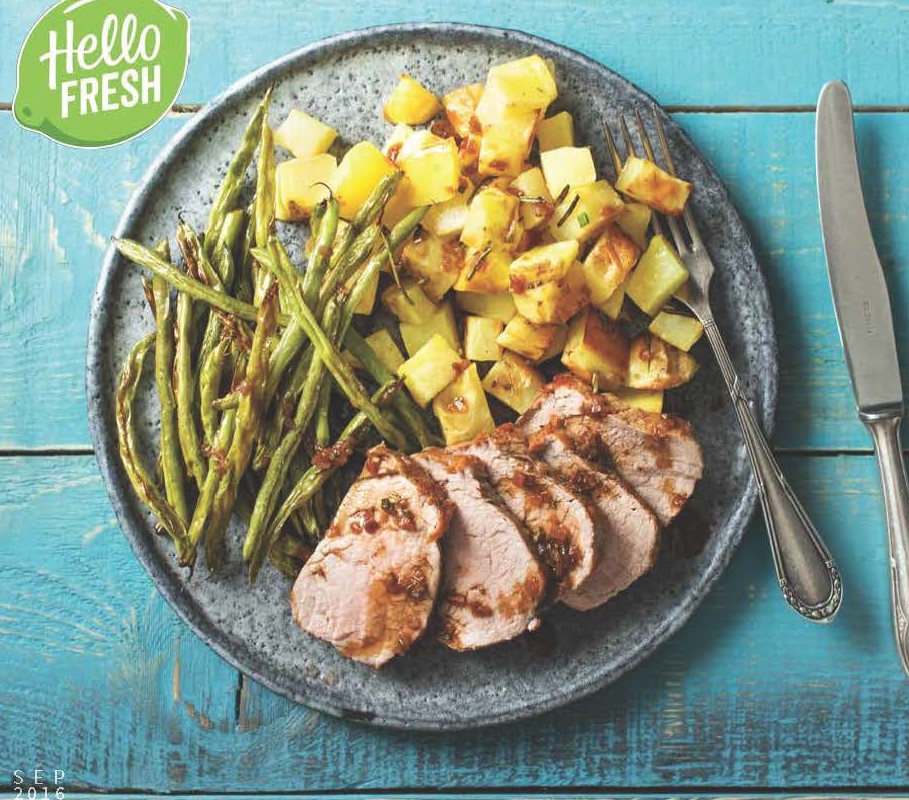
Roasted Pork

Photo courtesy: Hello Fresh

with Balsamic Fig Sauce, Green Beans & Rosemary Potatoes


By Hello Fresh


Servings: 4

Nutrition: 526 Calories

Ingredients:


  • Pork Tenderloin- 24 oz
  • Yukon Potatoes- 24 oz
  • Green Beans- 12 oz
  • Shallot- 2
  • Balsamic Vinegar- 4 tbsp
  • Chicken Stock Concentrate- 2
  • Fig Jam- 2 tbsp
  • Rosemary- 1/2 oz
  • Butter- 2 tbsp
  • Oil- 8 tsp


1  PREP.    Wash and dry all produce. Preheat the oven to 450 degrees. Halve, peel, and finely chop the shallot. Strip the rosemary from the stems and finely chop the leaves. Cut the potatoes into ½-inch cubes.


ROAST THE POTATOES. Toss the potatoes on a baking sheet with a drizzle of oil, half the rosemary, and a pinch of salt and pepper. Place in the oven for about 20 minutes, tossing halfway through, until golden brown and tender.


3 COOK THE PORK AND GREEN BEANS.       Meanwhile, heat a drizzle of oil in a large pan over medium heat. Season the pork on all sides with salt and pepper. Sear 2-3 minutes per side, until golden brown all around. Transfer to another baking sheet. Toss the green beans on the same baking sheet with a drizzle of oil and a pinch of salt and pepper. Place in the oven to finish cooking for about 10 minutes, until the pork is just barely pink in the center and the green beans are tender.


4  MAKE THE BALSAMIC FIG SAUCE.      In the same pan you cooked the pork in, heat a drizzle of oil over medium heat. Add the shallot and remaining rosemary. Cook, tossing, for 2-3 minutes, until softened. Add the fig jam, stock concentrate, ¼ cup water, and 2 Tablespoons balsamic vinegar to the pan. Stir to combine. Simmer 2-3 minutes, until thickened. Remove pan from heat and stir in 1 Tablespoon butter. Season with salt and pepper.


5  SLICE THE PORK.    Remove the pork from the oven. Let rest a few minutes before thinly slicing.


6  PLATE AND SERVE.     Serve the rosemary potatoes and green beans alongside the roasted pork. Drizzle the balsamic fig sauce over the pork and enjoy!

Simple Tips to Reduce Suffering this Flu Season

By StatePoint


U.S. health officials are predicting a harsh flu season. While there is still no cure for flu, there are steps you can take to reduce suffering while the virus takes its course. Some experts suggest starting the quest to feel better by exploring your local health food store.


Dr. Lawrence Rosen, author of several books based on 25 years of practicing pediatric integrative medicine, is offering some advice to ease flu symptoms. While none of the items mentioned in this article have been evaluated by the U.S. Food and Drug Administration, most have a long history and are relatively inexpensive.


  • Curative Foods and Beverages: The digestive tract accounts for 70 to 80 percent of the immune system. When battling a virus, foods rich in vitamin C are essential to immune function. Try drinking a cup of hot water and lemon daily. Onion tea can promote a healthy respiratory system by relieving a cough and sore throat.


Honey, which is a superfood, is a good choice, coating and soothing the throat, helping control cough, and promoting a restful night’s sleep that is necessary for healing.


  • Spiced-up Recipes: Add garlic and oregano to foods for immune support. Basil, rosemary and thyme help the respiratory tract.


Try different recipes, too. One traditional bedtime treatment in the Dominican Republic is a paste of honey, finely chopped onion and garlic, and the juice of at least half a lime. The vitamin C content found in its ingredients helps boost immunity.


  • Indispensable Oils: Add eucalyptus oil to a bath to ease body aches from flu, or inhale drops added to a steaming bowl of water for clearer nasal passages. Inhale fennel oil similarly as a cough expectorant.


  • Homeopathic Medicine: There are few conventional over-the-counter (OTC) drugs specifically for flu symptoms. Antihistamines and decongestants help with head and upper respiratory symptoms that are mostly associated with colds. Flu affects the whole body with fever, chills, aches and fatigue, and a pain reliever can address some of these symptoms.


To shorten both the duration and severity of flu-like symptoms, consider a homeopathic medicine, such as Oscillococcinum. When patients took it within 24 hours of the onset of symptoms, nearly 63 percent showed “clear improvement” or “complete resolution” within 48 hours. It’s the number one over-the-counter flu medicine in France, where it’s been on the market for more than 70 years. The key is to take quick action against early symptoms. Recommended for anyone age 2 and up, Oscillo is non-drowsy and doesn’t interact with other medications.


  • Healing Herbs and Plants: Homeopathic OTCs use microdoses of plants, animals and minerals; whereas herbal supplements are less diluted with a different therapeutic principle. Astragalus and echinacea supplements purportedly boost immunity. Try teas with eucalyptus leaves or calendula for fever. Elderberry, when taken in extract form, boosts the immune system, which helps the body respond quickly and strongly to viruses such as influenza.


For more information, check out Dr. Rosen’s book, “Treatment Alternatives for Children,” a comprehensive reference guide for nearly 100 common illnesses, offering side-by-side comparisons between conventional and alternative treatment options.


Don’t suffer more than you must this flu season. Homeopathic medications and natural homemade treatments may help reduce the severity of symptoms.


Hearty Steak and Potatoes

with Balsamic-Cranberry Pan Sauce


By Hello Fresh


Cooking Time: 40 mins

Servings: 4

Nutrition: 535 calories

Ingredients:


  • Yellow Onion- 2
  • Rosemary- 1/4 oz
  • Yukon Gold Potatoes- 32 oz
  • Red Cabbage- 8 oz
  • Mustard Seeds- 2 tsp
  • White Wine Vinegar- 4 tbsp
  • Sirloin Steak- 24 oz
  • Balsamic Vinegar- 1 tbsp
  • Soy Sauce- 3 tbsp
  • Cranberry Jam- 8 tsp


1  PREHEAT AND PREP. Wash and dry all produce. Preheat oven to 425 degrees. Halve, peel, and thinly slice onion. Strip rosemary leaves from stems and finely chop until you have 1 TBSP. Discard stems. Halve potatoes lengthwise, then cut into 1-inch-thick wedges (like steak fries).

2  ROAST POTATOES. Toss potatoes on a baking sheet with a large drizzle of olive oil and chopped rosemary. Season with salt and pepper. Roast until lightly browned and crisp, about 30-35 minutes.

3  COOK CABBAGE. Heat and drizzle oil in a medium pan on medium-high heat. Add onion and cabbage and cook until softened, about 5 minutes, tossing. Add mustard seeds and cook until they start to pop. Stir in white wine vinegar, sugar, and a pinch of salt. Reduce heat to low, cover, and cook until cabbage is tender, about 10 minutes.


4  SEAR STEAK. While cabbage cooks, heat a drizzle of oil in another medium pan over medium-high heat. Pat steak dry with a paper towel, then season all over with salt and pepper. Add to pan and sear until browned and cooked to desired doneness, 4-7 minutes per side. Remove and set aside to rest.


5   MAKE PAN SAUCE. Add 1/2 tbsp balsamic vinegar, 1½ TBSP soy sauce, cranberry jam, and 3 TBSP water to same pan over medium heat. Stir to combine. Let simmer until reduced to a syrupy consistency, about 2-3 minutes. Remove from heat.

6   FINISH AND SERVE. Thinly slice steak against the grain. Divide steak, potatoes, and cabbage between plates. Drizzle glaze over steak and serve.


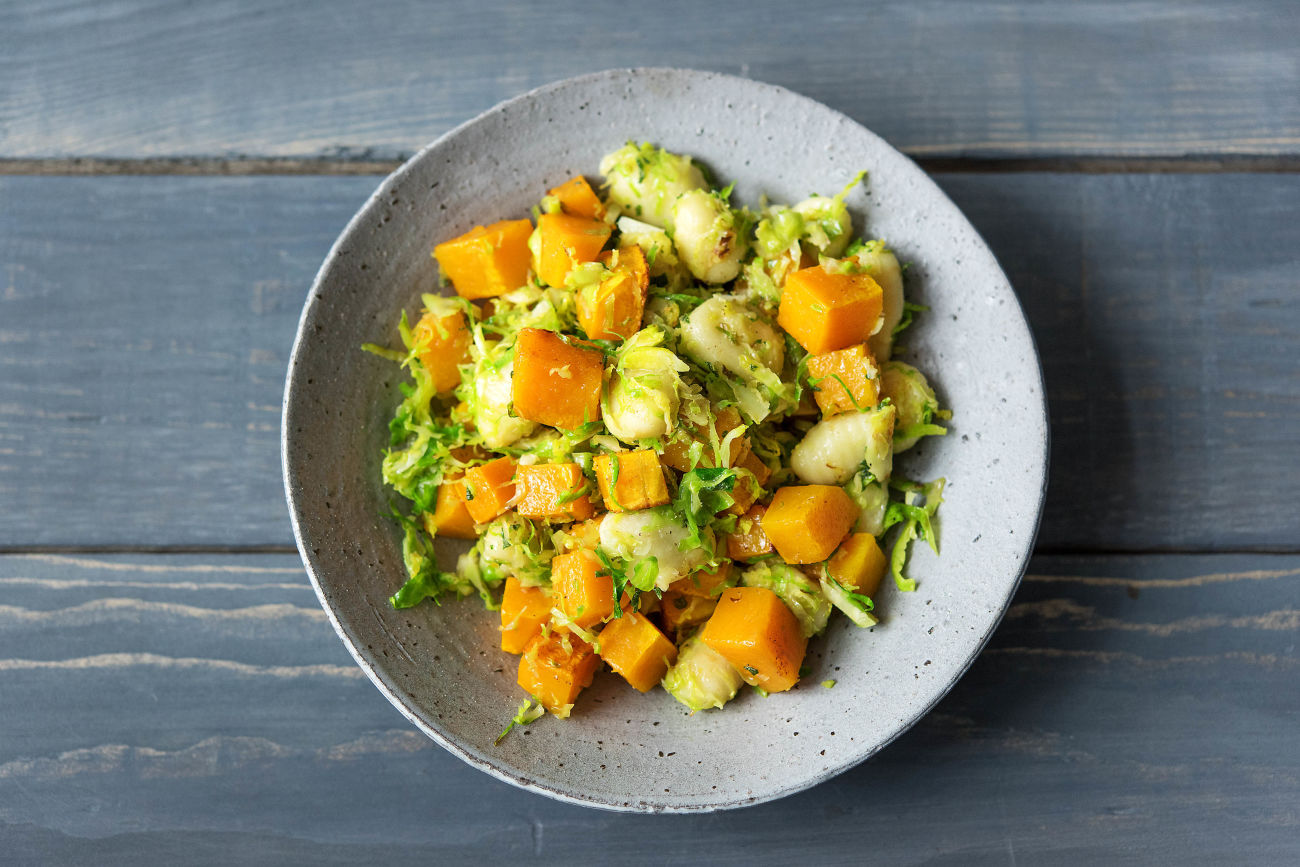
Maple and Brown Butter Gnocchi

Photo courtesy: Hello Fresh

with Butternut Squash and Sage


By Hello Fresh


Cooking Time: 30 mins

Servings: 4

Nutrition: 500

Ingredients:


  • Butternut Squash- 24 oz
  • Maple Sugar- 2 tbsp
  • Brussel Sprouts- 16 oz
  • Sage- 1/4 oz
  • Gnocchi- 18 oz
  • Olive Oil- 2 tbsp
  • Butter- 4 tbsp
  • Salt & Pepper


1  Wash and dry all produce. Adjust rack to middle position and preheat oven to 400 degrees. Bring a large pot of salted water to a boil. Toss squash on a baking sheet with a large drizzle of olive oil and ½ TBSP maple syrup (we’ll use more later). Season with salt and pepper. Roast in oven until lightly browned, 20-25 minutes.


2 Trim Brussels sprouts, then cut in half through stem ends. Slice halves crosswise into thin ribbons. Pick and thinly slice enough sage leaves from stems to give you 1 TBSP.


3 Heat a drizzle of olive oil in a large pan over medium-high heat. Add Brussels sprouts and season generously with salt and pepper. Cook, tossing occasionally, until softened and starting to brown, 3-5 minutes. Remove from pan and set aside.


4 Once water is boiling, add gnocchi to pot. Cook until tender and floating, 3-4 minutes, then drain.


5  While gnocchi cooks, add 2 TBSP butter and ½ TBSP maple syrup to pan used for Brussels sprouts over medium-high heat (you will have some syrup left over). Once butter is melted, add sliced sage and cook, stirring, until butter begins to brown and smells nutty, about 2 minutes. Season with salt and pepper, then remove from heat.


6  Toss roasted squash and Brussels sprouts into pan with sauce. Gently stir in gnocchi, then season with salt and pepper. Divide between bowls and serve.


Winter Squash At Clark’s Nutrition

By Judith Dern

Acorn, buttercup, butternut, delicata, hubbard, spaghetti, turban—a bounty of colorful winter squash and pumpkins overflow grocery produce tables every fall. A fruit (really!) native to North America, and a member of the gourd family like melons and pumpkins, squash is super-easy to stir into hearty autumn soups.

Squash is super-easy to stir into hearty autumn soups

Add squash to your diet for good health

“Winter squashes, especially pumpkin, are one of the most nutritionally valuable foods known to man,” says Steven Pratt, MD, coauthor of SuperFoods. Loaded with good-for-you nutrients, the richly colored interior flesh is the first clue to squashes’ nutritional benefits, which include:

Large amounts of carotenoids, the deep orange-, yellow-, or red-colored plant compounds that help fight a variety of diseases, including heart disease, various cancers, and eye diseases

Vitamins C and E, plus potassium, magnesium, and folic acid

High in fiber

Low in calories

Judith H. Dern, an independent writer living in Seattle, WA, loves vegetables and finds squash soup the perfect cold-weather dish

How to Build a Healthier Thanksgiving Plate

By Realsimple.com

No one ever said Thanksgiving dinner was healthy. But there are certain tricks to make it a little healthier—and to avoid riding out an uncomfortable food coma on the couch for the rest of the night. Whether you’re doling out your own portions, or you’re at the mercy of Aunt Ida passing out plates piled high with “a little bit of everything,” knowing which foods you should be eating more of—and which you should only enjoy a few bites of—will help you make the best possible choices.

Start by filling half your plate with vegetables, then pile one-quarter up with turkey breast, and leave the remaining one-quarter for starchy sides. Here, some more expert-approved guidelines for keeping portions in check this Thanksgiving Day.

Start with soup.

Pour yourself a bowl of seasonal veggie soup, suggests Katherine Tallmadge, RD, author of Diet Simple: 195 Mental Tricks, Substitutions, Habits& Inspirations. She recommends a butternut squash soup, or a broccoli and carrot soup with potatoes and thyme. Kicking off your meal with soup will help you slow down while eating, and research has shown it may even reduce the number of calories you consume at your main meal.

Go crazy with the right veggies.

Fill up 50 percent of your plate with non-starchy veggies. This may include Brussels sprouts, green beans, carrots, bell peppers, or a green salad, says Lori Zanini, RD, spokesperson for the Academy of Nutrition and Dietetics. Stick with smaller portions of starchy (read: higher-calorie) veggies, such as corn, potatoes, green peas, and winter squashes.

In charge of the prep? Put colorful vegetables together in dishes and use herbs, spices, onions and garlic to flavor them with fewer calories—try cooked carrots and cumin or Brussels sprouts with garlic. You can also add a healthy twist to classic comfort foods, like replacing green bean casserole with some grilled green beans flavored with garlic and red pepper flakes, Zanini says.

Make an array of interesting vegetable dishes, instead of lots of starchy dishes, suggests Tallmadge. “We tend to passively overeat when presented with variety, so if you want to give your guests a medley of dishes, have them be veggie-based,” she says.

Fill up on skinless turkey breast.

The turkey itself is relatively low in calories if you stick to skinless white meat, so most of our nutritionists don’t mind if you eat a little more than the recommended 3 ounces of protein (about a size of a deck of cards or an iPhone 6 Plus, which is 5.5 inches long). “I have certainly seen individuals pile their plates with more than three times the appropriate portion size on Thanksgiving Day,” says Zanini.

“I am a big fan of protein because it keeps you fuller for longer so I would serve myself the equivalent of nearly two decks of playing cards of turkey,” says Liz Ward, RD, author of MyPlate for Moms, How to Feed Yourself & Your Family Better.

Scoop sides on sparingly.

Choose your favorite “special” sides that you only see around the holidays and keep servings to a half-cup. Stuffing? Worth it.A plain-old everyday roll? Not so much. One serving of starchy sides like mashed potatoes, stuffing, yams, and cranberry sauce is equal to ½ cup, which would look like half of a baseball.

Count “casseroles” of any type as your starch. “Since I am originally from the South, I know too well that even ‘veggie’ casseroles, like broccoli casserole and green bean casserole, often call for creamy soups, sticks of butter, and large amounts of cheese in their ingredient lists,” says Zanini. “Not only do these types of dishes contribute excessive amounts of calories, but they’re also very high in sodium.” Remember sodium leads to water retention and belly bloat (a.k.a. one more reason your pants won’t button tomorrow).

Practice portion control with your favorite dessert.

Most 9-inch pies are meant to be cut into eight slices. If your pie is only sliced into six pieces, your portions are probably too large. One trick if you’re trying to cut back? Tallmadge recommends limiting variety—if there’s only one type of pie to choose from, you’ll probably stick to one slice. Don’t feel like additional ice cream or whipped topping is a requirement, but if you are going to finish a slice off with some, keep it to a golf ball-sized amount.

Beware sneaky calories.

You might be patting yourself on the back for bypassing the stuffing and gravy, but if you munched on cheese and crackers all day while cooking, know that those calories add up, as well. If you’re hungry while cooking, nosh on raw veggies and hummus or fruit, suggests Tallmadge.

Drinks count, too. Many of us have large wine goblets and beer mugs and don’t even know what a proper serving looks like in those glasses. Using a measuring cup if you need to, pour 5 ounces of wine into a glass so you know the line that marks one serving.  “And never refill your wine glass when you’ve had just a few sips,” Ward says. “Drink it to the last drop and then pour some more. That’s how you keep track.”  A serving of beer is 12 ounces, and a serving of 80-proof distilled spirits (like gin, vodka, whiskey) is 1.5 ounces. The American Heart Association recommends limiting daily intake to one drink for women and two for men.

And remember, the first couple of bites of any food are often the most enjoyable. “Don’t waste your calories, but don’t avoid your favorite foods, either,” Ward says. “Eat foods that you love and that aren’t available at other times of the year, like homemade cranberry sauce, specialty sides, and pumpkin pie, and forgo everyday foods like chips, rolls, and mashed potatoes.”

Tips to Safely Enjoy the Great Outdoors in Cooler Months

By Statepoint


It may be chilly, but that’s no reason to stay indoors. Some of the best opportunities for outdoor exploration can only take place during the coldest months of the year; it just requires special preparation.


Head-to-Toe Coverage

For maximum safety and comfort, it’s important to keep your head, fingers and toes dry and toasty. A good pair of waterproof hiking boots will help keep you warm on the trail. Be sure they are designed for the type of weather and terrain you expect to encounter. Wear a wind-proof hat and good pair of gloves that have a grip.


Mind the Sun

The sun may set sooner in winter, but it’s still a force to be reckoned with; wear sunglasses and apply sunscreen to exposed skin, as well as a lip balm containing SPF, to protect yourself from UV rays.


Get Smart

Wearable tech can put your mind at ease on outdoor excursions. Look for low-power GPS and full-color map functionality that can be used offline, as in the case of Casio’s PRO TREK WSD-F20 Smart Outdoor Watch, which features easy-to-read map data from Mapbox. This makes it easy to display your route and provide navigation guidance at a glance. Powered by Android Wear 2.0, it can be used with a range of apps to enhance your outdoor experience, and its design offers enhanced operability and toughness, making it an especially useful piece of outdoor gear.


Don’t Get Fooled

In hot weather, there’s almost never any question about whether you are thirsty during or following physical activity. It can be harder to gauge in cold weather. Remember, when you’re active, it’s always important to stay hydrated. Be sure your wattle bottle is built to withstand cold weather, and if you’re worried about it freezing, don’t fill the bottle to the top.


Communicate

With any excursion, it’s always good practice to share your itinerary with a loved one. Most importantly, let someone know exactly where you are going and when you plan to return.


With a few smart habits, and some high-quality gear designed to withstand the great outdoors, you can better enjoy nature this season, no matter where your adventures take you.

5 Tips for Healthy-Looking Skin All Winter Long

By StatePoint

The cold, dry winter months are a good time to change your daily skin care regimen. The low humidity dries out skin, and without extra care, this may contribute to premature aging.


“Winter is harsh on skin for many reasons,” says Dr. Shirley Madhère, a New York City plastic surgeon with a holistic practice. “We must contend with cold outdoor air, dry air from heaters indoors, friction from rough or irritating fabrics and windburn.”


Dr. Madhère offers these simple proactive steps to help maintain healthy, radiant skin during the chilliest months of the year.


  • Stay Hydrated. Water helps the body flush out toxins that leave skin looking dull. If you’re craving hot coffee or tea on a chilly day, be sure to consume lots of water, too, as caffeine and alcohol deplete the body of water.


Moisturize with a cream or oil and then cover up to help prevent dryness — especially feet and hands, which are prone to itching and cracking. Also try using a humidifier, but avoid hot showers that draw out moisture from the skin.


  • Eat a Balanced Diet. Maintaining healthy, radiant skin starts from within. Consume fewer fats and carbohydrates and eat more fresh fruits and vegetables, which are natural antioxidants or anti-aging agents. Foods rich in vitamin C help fight free radicals that break down collagen, a process which causes wrinkles. Foods rich in antioxidants, such as pomegranates, are vital in maintaining healthy skin. Find fun new recipes to incorporate these key foods into your diet.


Foods can also be used externally. A milk or honey and sugar scrub, for example, is an excellent gentle exfoliator to help remove dry dull skin cells.


  • Soothe Skin the Natural Way. When temperatures drop, consider switching out lighter facial lotions with a more moisturizing and therapeutic Calendula-based cream. The Calendula officinalis plant, or Garden marigold, has been used topically for generations to heal skin irritations.


“A Calendula cream can provide an all-in-one solution to soothe many everyday skin problems,” says Dr. Madhère.


She recommends a line from Boiron, an 80-year old French pharmaceutical company specializing in homeopathic medicines, which includes a cream and a heavier ointment. Calendula Ointment protects and heals rougher patches such as elbows and cracked heels, chapped lips and nasal skin irritations from colds. Both the cream and ointment are free of fragrances, dyes and parabens. To learn more, visit boironcalendula.com.


  • Stay Active. Increased blood flow during exercise helps nourish skin cells. Sweating also helps flush toxins, helping skin look more radiant. Stay motivated by joining a gym or learning a winter sport. Just be sure to change out of clothes wet from snow or sweat to avoid itching, inflammation and cracking. Although nothing can replace exercise, massages can significantly help circulation, too.


  • Don’t Sweat the Small Stuff. If you’re relaxed and happy on the inside, it will show on the outside. Manage stress this season with activities such as yoga, pilates and meditation.


For more beauty tips, visit Dr. Madhère’s website, TheNewAesthete.com.


With some extra care in winter, you can enjoy beautiful, healthy-looking skin year-round.


Sizzling Southwestern Chicken

with a Sweet Potato, Bell Pepper, and Feta Jumble

By Hello Fresh

Cooking Time: 30 mins

Servings: 4

Nutrition: 550 Calories

Ingredients:


  • Sweet Potatoes- 4
  • Red Bell Pepper- 2
  • Yellow Bell Pepper- 2
  • Scallions- 4
  • Lime- 2
  • Southwest Spice Blend- 2 tsp
  • Chicken Breasts- 24 oz
  • Feta Cheese- 1 cup

1  ROAST SWEET POTATOES.    Wash and dry all produce. Preheat oven to 450 degrees. Peel sweet potatoes, then cut into ½-inch cubes. Toss on a baking sheet with a drizzle of olive oil and a pinch of salt and pepper. Roast in oven until tender, about 25 minutes total (we’ll be adding more items to the sheet after 10 minutes).

PREP.     Core and seed red and yellow bell peppers, then cut into 1-inch squares. Trim, then thinly slice scallions, keeping greens and whites separate. Zest lime into a medium bowl, then cut into halves.

3 RUB AND COOK CHICKEN.       Add 1 tsp Southwest spice (we sent more) and a large drizzle of olive oil to bowl with lime zest and stir to combine. Season with salt and pepper. Pat chicken dry with a paper towel, then add to bowl and rub spice mixture into meat. Heat a drizzle of olive oil in a large pan over medium-high heat. Add chicken and cook until no longer pink in center, 5-6 minutes per side.

4  ROAST BELL PEPPERS.       Once sweet potatoes have roasted 10 minutes, remove sheet from oven. Give sweet potatoes a toss and push toward one side of sheet. Add bell peppers to other side of sheet. Return sheet to oven and roast until both are tender, 12-15 minutes more.

5  MAKE JUMBLE.     Once sweet potatoes and bell peppers are done, add to another medium bowl along with scallion whites, feta cheese, and a squeeze of lime. Toss to combine. Season with salt, pepper, and more lime (to taste).

6  PLATE AND SERVE.     Thinly slice chicken. Divide jumble between plates, then arrange chicken on top. Sprinkle with scallion greens and serve.

Thyme Gravy Pork Chops

with Asparagus and Mashed Potatoes

By Hello Fresh

Although we love exploring new cuisines and flavors, not every night of the week has to be an adventure. Sometimes, you just wanna kick back with the classics. This recipe was made for just that. Mashed potatoes, pork chops, and roasted asparagus with an herby gravy mean no funny business here. Just pure deliciousness that everyone in your family will love.

Cooking Time

45 minutes

Ingredients

/ serving 4 people

24 ounce

Yukon Potatoes

16 ounce

Asparagus

¼ ounce

Chives

1 unit

Lemon

24 ounce

Pork Chops

1 tablespoon

Flour

(ContainsWheat)

1 unit

Chicken Demi Glace

(ContainsMilk)

¼ ounce

Thyme

½ cup

Milk

4 teaspoon

Vegetable Oil*

2 tablespoon

Butter*

Salt*

Pepper*

Calories550 kcal


1

Wash and dry all produce. Adjust rack to middle position and preheat oven to 425 degrees. Cut potatoes into ½-inch cubes. Place in a medium pot with a pinch of salt and enough water to cover by 1 inch. Bring to a boil and cook until easily pierced by a knife, about 12 minutes. Drain, then return to pot.

2

Trim woody bottom ends from asparagus. Mince chives. Cut lemon into wedges. Pat pork dry with a paper towel. Heat a large drizzle of oil in a large pan over medium-high heat. Season pork with salt, pepper, and half the flour. Cook in pan until just browned, about 2 minutes per side. Transfer pork to a baking sheet, placing toward one side.

3

Toss asparagus with a large drizzle of oil on other side of same baking sheet. Season with salt and pepper. Bake in oven until asparagus starts to brown and pork reaches desired doneness, 7-10 minutes. (TIP: If pork is done before asparagus, remove from sheet and let asparagus finish.) Let pork rest on a plate for 5 minutes after it’s done.

4

Pour out any grease in pan used for pork. Add 1 TBSP butter and remaining flour to same pan over medium heat. Cook, stirring, until butter is melted and a pasty mixture has formed, 1-2 minutes. Stir in demi-glace, thyme sprigs, and ⅔ cup water. Simmer until thickened, about 2 minutes. Add another 1 TBSP butter, stirring to melt. Season with salt and pepper. Remove pan from heat. Stir in a squeeze of lemon.

5

After draining and returning potatoes to pot, add ½ cup milk (we sent more) and chives (add the chives to taste—you may not use all). Mash with potato masher or fork until smooth. Season with salt and pepper. TIP: Add more milk, if necessary, to give potatoes a creamy consistency.

6

Divide potatoes between plates. Stir any juices released by pork into gravy in pan. Divide pork and asparagus between plates. Remove and discard thyme sprigs from gravy, then spoon gravy over everything. Serve with lemon wedges on the side.