Category Archives: Healthy Living

Don’t Let a Vacation Derail Your Diet

By StatePoint

Vacation season is here and it’s no surprise that what you eat can have an impact on your weight. In a study from the University of Georgia, 61 percent of the participants gained weight while on vacation, with an average gain of 0.7 pounds. Some even gained up to 7 pounds.

Making healthy choices, even while on vacation, can be as easy as one, two, three when you have the right tools. Courtney McCormick, Corporate Dietitian at Nutrisystem, shares foods that should be on your watch list and go-to list, and how alcohol can fit into your vacation and weight loss plan – yes, you read that right!

Foods on the Watch List

• Reduced-Fat Peanut Butter: There’s not a big difference in calories between reduced and full-fat varieties. In fact, full-fat peanut butter is chock full of monounsaturated fats, which are good for your heart. You can also look for natural peanut butter, which usually has less salt and sugar.

• Multigrain Bread: People who eat whole grains are at lower risk of certain chronic diseases. But read labels carefully. While the term “whole grain” is regulated, “multigrain,” “7-grain,” and “ancient grains” are just marketing terms.

• Granola: Yes, granola can deliver protein and healthy fats, but eat it sparingly. One cup can have up to 600 calories which is the same as a Big Mac. And that’s without milk!

• Sports Drinks: Red-flag number one: sugar is high on the ingredients list second only to water. Red-flag number two: there are two-and-a-half servings in each bottle, meaning you could be gulping down as much as 52.5 grams of sugar.

• Fast Food Salads: Some fast food salads can have more calories, fat and sodium than burgers because of add-ons like cheese, meat and heavy dressings.

Foods on the Go-To List

• Fruits and Veggies: No surprise here! Essential to a healthy diet, pack that cooler with them for a healthful snacking alternative.

• Nuts, Seeds and Popcorn: Healthy fats like nuts and seeds make great snacks and crunchy salad toppers. Walnuts may be best when it comes to cutting inflammation and cholesterol. Just watch your portions – a little goes a long way. And, plain air-popped popcorn is a good alternative to chips, delivering fiber, vitamins and minerals. Also, one cup contains only around 30 calories.

• Protein: Think eggs, chicken, lean steak, edamame, quinoa or protein shakes. Begin your day with protein and you’ll be off to a good start.

• Healthy Sandwiches: Ditch white bread and rolls for whole grains and sandwiches with veggies and hummus instead of cheese.

Room for Alcohol?

Participants of the University of Georgia study doubled their alcohol consumption during vacations, which contributed to weight gain. However, you don’t need to say no to alcohol altogether, just keep a few things in mind. Watch the added sugar of mixers and flavored liquors and choose light beers. Also, stick to drier wines, such as Merlot and Chardonnay, and opt for liquors like gin, vodka, rum, tequila, scotch and bourbon. And finally, remember to drink in moderation. One drink per day for women and two for men is best while on vacation.

For more great tips, visit Nutrisystem’s website, The Leaf.

Remember, vacation doesn’t need to hinder your weight loss efforts. Good choices can keep you on the weight loss track – on vacation and all year round!
Making the Most of Local Produce

By StatePoint

Fresh, local produce is in its prime, making now the perfect time to take part in the farm-to-table movement. Whether you join a community supported agriculture (CSA) group or shop at your local farmers’ market, it’s easy to taste the elevated flavor profile of just-picked fruits and veggies.


Make the most of the season with these tips for storing, cooking and savoring fresh produce.


Plan, Prioritize, Prepare


Plan what produce you will purchase ahead of time. Many farmers’ markets and CSAs distribute eNewsletters or flyers that highlight what’s available. You can also search for seasonality charts in your region to get an idea of what items are at their peak, and plan accordingly.


Once you’ve shopped, prioritize your goods. Use tender greens and any ripe fruits and veggies right away. Roots, bulbs and squash tend to last longer and can be saved for later in the week.


Next, properly store produce to help to extend its life. If fridge space is limited, consider cooking down greens by either partially boiling or sautéing prior to putting them away, depending on what recipes you’ve selected for those items.


Smoothies, Sauces, Soups


Smoothies are a delicious, easy way to pack a lot of produce and nutrition into a meal. And if you’re processing the toughest whole foods, like dark, leafy greens, be sure to use a high-powered blender such as the Ascent Series A3500, which offers five program settings, including one for smoothies. A recipe for the “Everything Smoothie,” which incorporates a wide variety of produce found at your farmers’ market, is available at vitamix.com.


Take advantage of tomato season, preparing pasta sauces to enjoy now or freeze for those months when they aren’t readily available from local growers. Try adding red and green bell peppers, and even carrot shavings, to boost the nutritional value of a veggie Bolognese.


Soups make use of veggies now and later. Warm weather calls for cool concoctions like gazpacho or cucumber dill soup. A cabbage soup that combines hearty potatoes, onions and carrots can be made for cool fall nights or stored in your freezer for winter.


Use it Up


Remember that nearly all parts of produce are usable. Vegetables like beets, carrots, kohlrabi and turnips have edible greens that make an excellent addition to morning smoothies or a nutrient-rich stir-fry. Compost any remaining scraps.


Don’t be afraid of bruises or dents. Greens with slightly wilted leaves can be blended with a bit of water and frozen in ice cube trays for future use in soups or smoothies. If you see a great deal on fruit like strawberries or cherries, buy them and combine with sugar and pectin for an easy freezer jam, or dry them out for on-the-go snacks.


Shopping for whole foods at farmers’ markets or joining a CSA is an opportunity to help local farmers and explore your culinary interests. The availability of specific fruits and vegetables ebbs and flows; capture each at its peak to enjoy the bounty throughout the year.


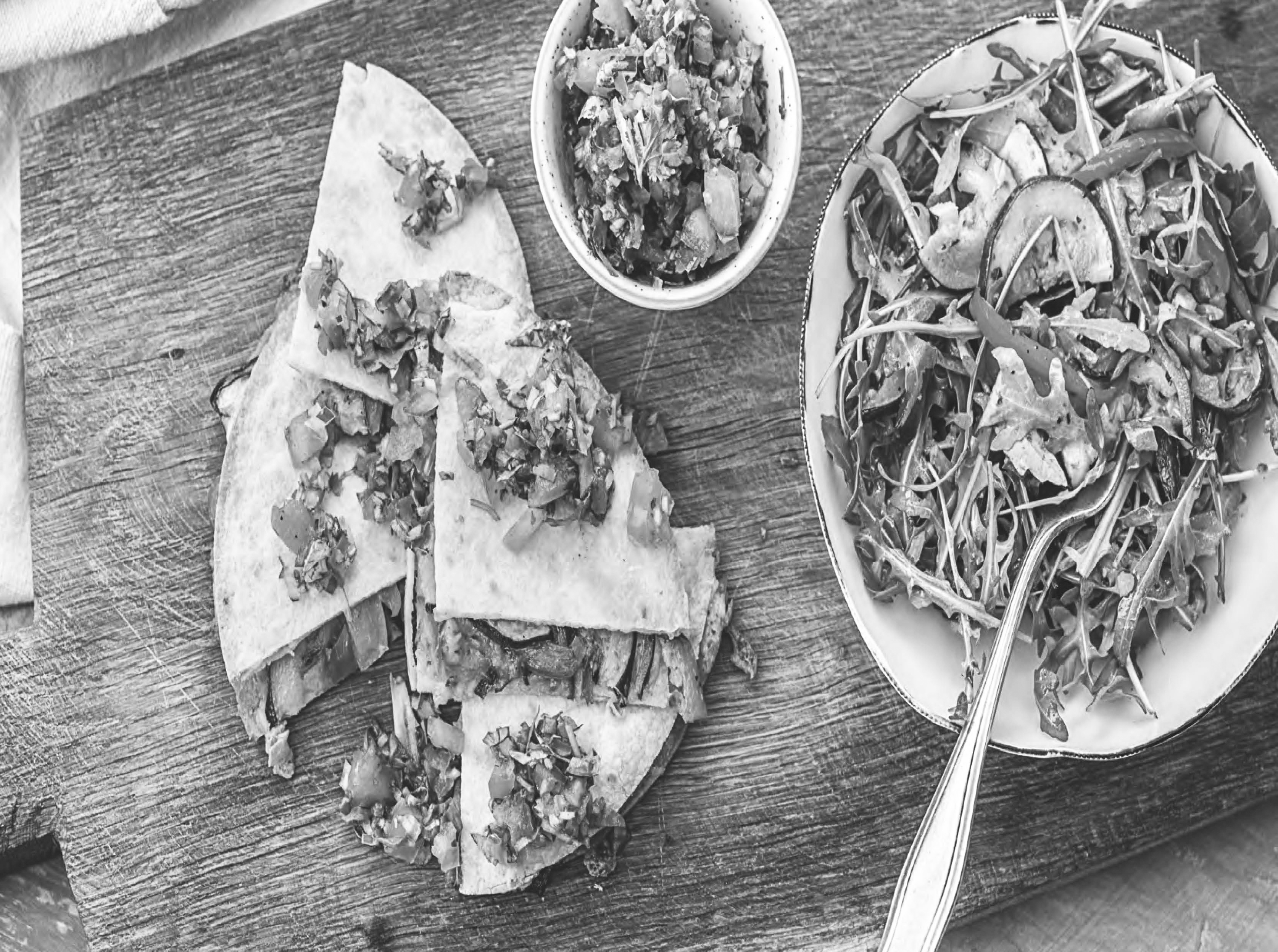
Garden Quesadillas

with Pico de Gallo and Chipotle Mayo


By Hello Fresh


Cooking Time: 30 mins

Servings: 4

Nutrition: 620 Calories

Ingredients:


  • Red Onion- 1
  • Bell Pepper- 2
  • Zucchini- 2
  • Dried Oregano- 2 tsp
  • Cilantro- 1/4 oz
  • Roma Tomato- 2
  • Lime- 1
  • Mayonnaise- 2 tbsp
  • Chipotle Powder- 1 tsp
  • Flour Tortillas- 8
  • Mozarella Cheese- 2
  • Arugula- 4 oz


1  PREHEAT AND PREP.    Wash and dry all produce. Adjust rack to middle position and preheat oven to 400 degrees. Halve, peel, and thinly slice onion. Finely chop a few slices until you have 2 TBSP; set this aside in a small bowl. Core and seed bell pepper, then thinly slice. Halve zucchini lengthwise, then slice into thin half-moons.


ROAST VEGGIES.      Toss zucchini, sliced onion, be pepper, oregano, and a drizzle of olive oil on a baking sheet. Season with salt and pepper. Roast in oven until softened and lightly browned, 12-15 minutes.


3 MAKE PICO DE GALLO   Finely chop cilantro. Core, seed and dice tomato. Halve lime. Add tomato, cilantro, and a squeeze of lime to bowl with chopped onion and toss to combine. Season with salt and pepper.


4  MAKE CHIPOTLE MAYO.        In another small bowl, combine mayonnaise and chipotle powder (to taste—start with a pinch and go up from there).


5  MAKE QUESADILLAS.      Once veggies are done, remove from oven. Increase oven temperature to 450 degrees. Brush one side of 4 tortillas (we sent more) with a drizzle of olive oil each. Place 2 of the tortillas on another baking sheet, oiled-side down. Spread a little chipotle mayo on each. Top with mozzarella and a few veggies (save some veggies for salad). Cover with remaining tortillas, oiled-side up.


6  TOSS SALAD AND SERVE.      Bake quesadillas in oven cheese melts and tortillas crisp, 6-10 minutes, flipping halfway through. Toss remaining veggies, arugula, a squeeze of lime, and a drizzle of olive oil in a large bowl. Season with salt and pepper. Cut quesadillas into wedges. Serve with pico de gallo and salad on the side.

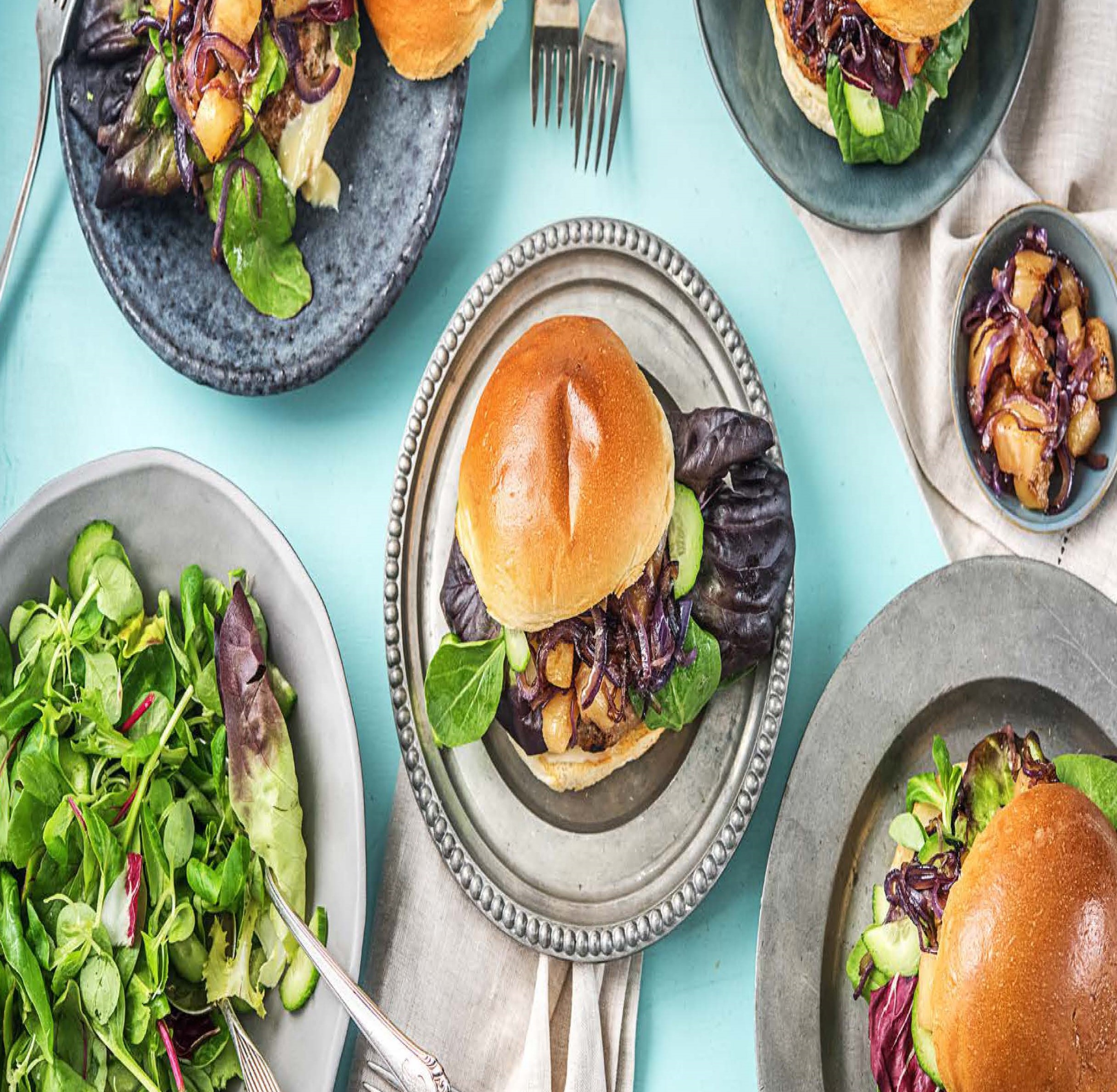
Pork Luau Burgers

with Pineapple Relish and Green Salad


By Hello Fresh


Cooking Time: 35 mins

Servings: 4

Nutrition: 740 Calories

Ingredients:


  • Garlic- 2 tsp
  • Cilantro- 1/4 oz
  • Red Onion- 1
  • Pineapple- 8 oz
  • Ground Pork- 20 oz
  • Soy Sauce- 2 tbsp
  • Honey- .32 oz
  • Persian Cucumbers- 2
  • Brioche Buns- 4
  • Spring Mix Lettuce- 4 oz
  • White Wine Vinegar- 2 tsp
  • Mayonnaise- 4 tbsp


1  PREHEAT AND PREP.    Wash and dry all produce. Preheat toaster oven or oven to 400 degrees. Mince or grate garlic until you have 2 tsp (you may not use all). Chop cilantro. Halve, peel, and thinly slice onion. Drain pineapple.


SHAPE PORK PATTIES.    In a large bowl, mix together pork, cilantro, garlic, soy sauce, and honey. Shape into four ¾-inch-thick patties. Season with salt and pepper.


3 MAKE RELISH      Heat a large drizzle of olive oil in a large pan over medium-high heat. Add onion and cook, tossing, until softened, 3-4 minutes. Toss pineapple into pan and cook until lightly browned, 2-3 minutes. Season with salt and pepper. Remove from pan and set aside.


4  COOK PATTIES       Heat a large drizzle of olive oil in same pan over medium-high heat. Add patties to pan and cook until browned on bottom, 4-5 minutes. Flip, cover pan, and cook on other side until no longer pink in center, 3-4 minutes more.


5  TOSS SALAD AND TOAST BUNS.     Meanwhile, thinly slice cucumbers. Split buns in half and toast in toaster oven or oven until golden brown, 3-5 minutes. (TIP: Place the buns on a baking sheet if toasting them in the oven.) In another large bowl, toss lettuce, cucumbers, 2 tsp vinegar (we sent more), and a large drizzle of olive oil. Season with salt and pepper.


6  ASSEMBLE AND SERVE.    Spread buns with mayonnaise, then fill with patties, relish, and a small amount of salad. Divide between plates and serve with remaining salad on the side.

Must-Know Health Tips for Summer Vacation

By StatePoint

More than half of Americans are planning to take a vacation this summer, according to a Bankrate survey. While these excursions are meant to be fun and relaxing, road trips and long flights can lead to health risks that you know about, like jet lag, and some you may not be familiar with, such as leg swelling and deep vein thrombosis (DVT). Experts advise travelers to take precautions for a healthy travel experience.

“Most people are familiar with jet lag, but even if you’re sitting in a car for a long time, you’re at risk for other conditions like edema, which can cause painful leg swelling,” says nationally renowned natural health physician and best-selling author, Dr. Fred Pescatore. “Luckily, there are simple steps you can take to avoid these issues.”

For a healthy, relaxing vacation, Dr. Pescatore is sharing his favorite travel tips.

Power Nap

Flying or driving to a new time zone can throw off your internal clock, causing jet lag and making it harder to sleep.

“Take 15 to 20-minute power naps if you’re heading to a different time zone. Quick naps when your body naturally feels tired offers you some rest, but won’t leave you wide awake at bedtime,” says Dr. Pescatore.

Take Fitness Breaks

Cramped up in a car or plane for long periods of time can cause swelling and fluid accumulation in the lower legs, known as edema, which is a major risk factor for developing a potentially life-threatening blood clot known as Deep Vein Thrombosis (DVT).

Each year, as many as 900,000 Americans are affected by DVT, according to the Centers for Disease Control and Prevention and studies published in Minerva Medica show that 10 percent of long-haul air passengers are at risk. Dr. Pescatore recommends taking frequent breaks to walk around and stretch in order to avoid these conditions. At rest stops, take a walk and when flying, stand up and stretch in the aisle when possible.

Try a Natural Supplement

A new peer-reviewed clinical study shows that supplementing with the natural super-antioxidant, Pycnogenol (pronounced pic-noj-en-all), can help reduce edema and relieve jet lag symptoms during long-haul travel.

“This research is exciting news for those looking for a safe, effective healthy travel option,” Dr. Pescatore says.

Pycnogenol is one of the most researched ingredients on the market, with decades of studies showing its benefits for a variety of health applications. It’s available in more than 700 dietary supplements, multi-vitamins and health products worldwide. For more information, visit pycnogenol.com.

As you prepare for your summer travel, remember these tips for a healthy vacation.

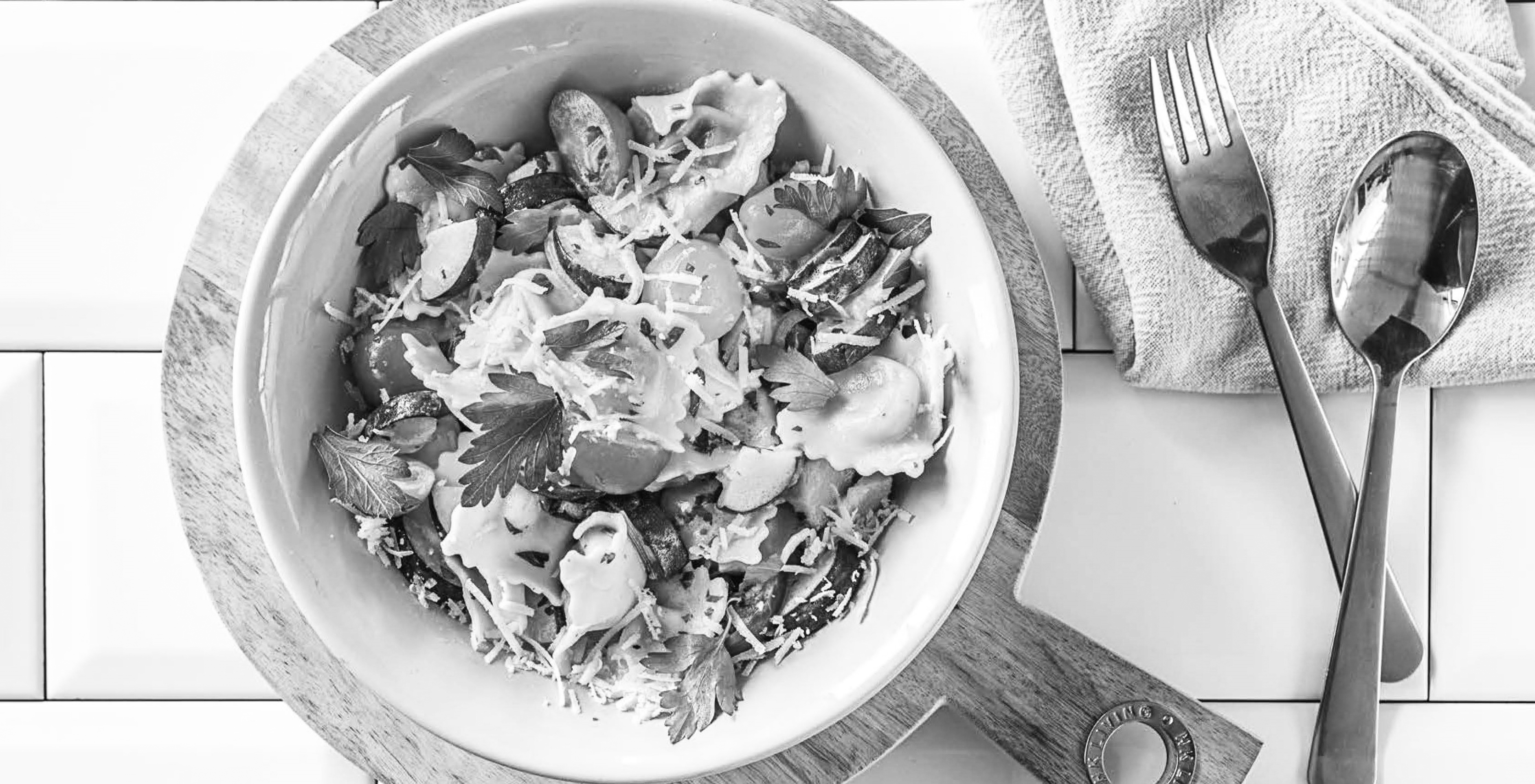
Creamiest Mushroom Ravioli

with Zucchini and Heirloom Tomatoes


By Hello Fresh


Cooking Time: 30 mins

Servings: 4

Nutrition: 510 Calories

Ingredients:


  • Zucchini- 2
  • Shallot- 2
  • Heirloom Grape Tomatoes- 8 oz
  • Parsley- 1/2 oz
  • Chili Flakes- 2 tsp
  • Mushroom Ravioli- 18 oz
  • Sour Cream- 8 tbsp
  • Parmesan Cheese- 1/2 cup
  • Veggie Stock Concentrate- 2


1  PREP    Wash and dry all produce. Bring a large pot of salted water to a boil. Quarter zucchini lengthwise, then cut crosswise into ¼-inch-thick triangles. Halve and peel shallot, then thinly slice. Halve tomatoes lengthwise. Pick a few parsley leaves from stems for garnish, then finely chop the rest of the bunch.


COOK VEGGIES.     Heat a large drizzle of olive oil in a large pan over medium-high heat.  Add zucchini and cook, tossing, until browned, 5-7 minutes. Add shallot, a pinch of chili flakes (to taste), and a drizzle of olive oil. Cook, tossing, until shallot is softened, 2-3 minutes.


3 BOIL RAVIOLI     Once water is boiling, add ravioli to pot. Cook until tender and floating to the top, about 4 minutes. Carefully scoop out and reserve ½ cup pasta cooking water, then drain.


4  MAKE SAUCE    Once shallot is softened, stir tomatoes into pan, then reduce heat to low. Stir in sour cream, half the Parmesan, stock concentrate, and ¼ cup pasta cooking water. Season with salt, pepper, chopped parsley, and more chili flakes (to taste).


5  TOSS RAVIOLI       Add ravioli to pan, increase heat to medium, and gently toss to coat ravioli in sauce. Cook until sauce thickens slightly, 1-2 minutes. TIP: Add more pasta cooking water, if needed, to give sauce a loose consistency.


6  PLATE AND SERVE.    Divide ravioli mixture between plates, then garnish with remaining Parmesan and reserved parsley leaves and serve.

4 Top Tips to Battle Summer Colds

By StatePoint

Warm, sunny weather doesn’t mean the risk for catching a cold disappears. Unfortunately, colds can happen at any time of year and can really ruin much anticipated summer plans.

To stay healthy and help beat the common cold this summer season, consider these tips from Dr. Nesochi Okeke-Igbokwe, a New York City-based physician and health and wellness expert:

• Maintain good sleep hygiene. Are these long summer evenings tempting you to burn the candle at both ends? Don’t give in! Maintaining good sleep habits can ultimately help keep your immune system in check. Adults should sleep at least seven to nine hours every night to achieve improved health outcomes. If you uphold a good sleep routine, it will enable you to sleep well throughout the night and obtain the recommended amount needed for stronger immunity. Remember that sleep deprivation weakens your immune system and increases the likelihood of picking up infections.

• Keep moving. It’s essential to integrate some form of exercise into your daily life. Beyond benefits like improved cardiovascular health and weight maintenance, those adhering to regular exercise regimens tend to be healthier overall and may potentially experience fewer colds yearly. Indeed, routine physical activity helps to boost your immune system. Luckily, the summer is the perfect time to keep moving, but remember to stay hydrated in the heat.

• Eat right. Back-to-back BBQ parties? What you eat really matters. Avoid the tempting junk food and highly processed food that can negatively impact your health. Also, never underestimate the benefits of sticking to a well-balanced nutrient- and antioxidant-rich diet in general. Your diet should include vitamin-rich cruciferous vegetables, fresh fruit, fish containing omega 3 fatty acids and other superfoods that can boost your immune system and help you recover faster in times of illness.

• Fight the cold. If you do experience a summer cold, seek out an over-the-counter solution that helps you fight through your symptoms, such as Mucinex DM, which offers the convenience of not having to retake medication every four hours. It is a bilayer tablet that has one layer that releases quickly and another layer that provides extended release that lasts for 12 hours. Stock up on it year-round to be prepared for the next time cough and chest congestion symptoms hit.

Find out more health tips on how to combat the common cold at Mucinex.com.

Don’t take summer colds lightly! A few smart strategies can help boost your wellness and allow you to enjoy a healthier season on the go.

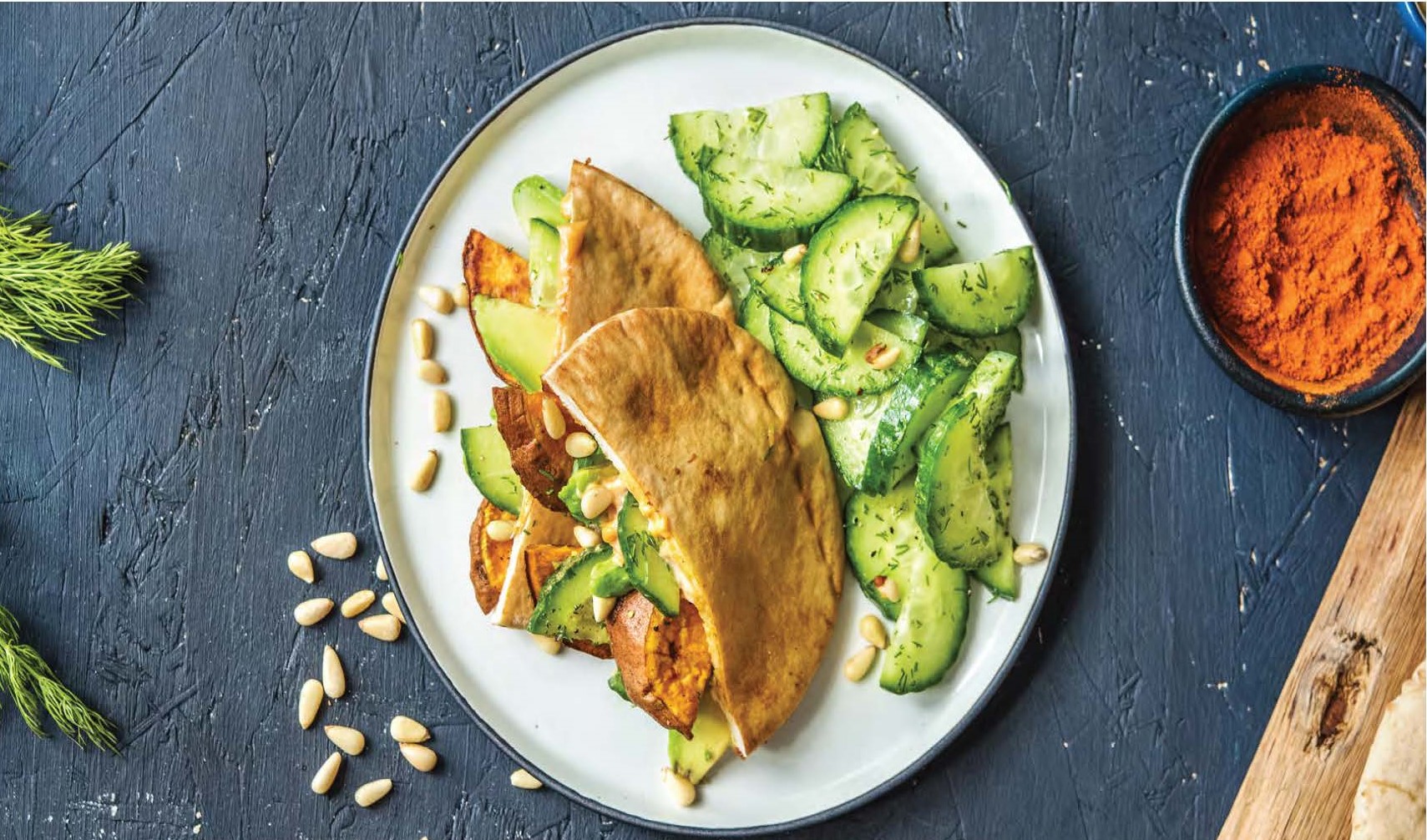
Harissa Sweet Potato Pita Pockets

with Cucumber Dill Salad


By Hello Fresh


Cooking Time: 30 mins

Servings: 4

Nutrition: 750 Calories

Ingredients:


  • Sweet Potatoes- 4
  • Harissa Powder- 2 tbsp
  • Garlic- 2 cloves
  • Cucumber- 2
  • Dill- 1/2 oz
  • Avocado- 2
  • Mayonnaise- 4 tbsp
  • White Wine Vinegar- 10 tsp
  • Whole Wheat Pitas- 4
  • Pine Nuts- 2 oz


1  ROAST SWEET POTATOES.    Wash and dry all produce. Adjust rack to middle position and preheat oven to 450 degrees.  Slice sweet potatoes into ¼-inch-thick rounds. Toss on a baking sheet with a drizzle of olive oil, 1 tsp harissa powder (we’ll use more later), and a pinch of salt and pepper. Roast in oven until tender, about 20 minutes, flipping halfway through.


PREP.     Mince or grate 1 clove garlic. Halve cucumber lengthwise, then slice into thin half-moons. Pick and roughly chop enough fronds from dill to give you 2 tsp. Halve, pit, and peel avocado, then thinly slice.


3 MAKE HARISSA MAYO   In a small bowl, combine 3 tbsp mayonnaise,  a pinch of garlic, and a pinch of harissa powder. Give mixture a taste and add more garlic and harissa powder as desired. Season with salt and pepper.


4  MAKE CUCMBER SALAD       In a medium bowl, toss cucumber, chopped dill, vinegar, a drizzle of olive oil, and a pinch of salt and pepper.


5  TOAST PITAS    Cut pitas in half to create 4 pockets and place on another baking sheet. When sweet potatoes are almost done, after 18-20 minutes of roasting, put pitas in oven. Toast until warmed through but not crispy, 2-3 minutes. TIP: If there’s room, you can place pitas on the same baking sheet as sweet potatoes instead of on a second sheet.


6  FINISH AND SERVE.     Spread harissa mayo inside each pita half, then fill with sweet potatoes, avocado, a few pine nuts, and a small amount of cucumber salad. Divide stuffed pitas between plates. Add remaining cucumber salad to the side and sprinkle with remaining pine nuts.

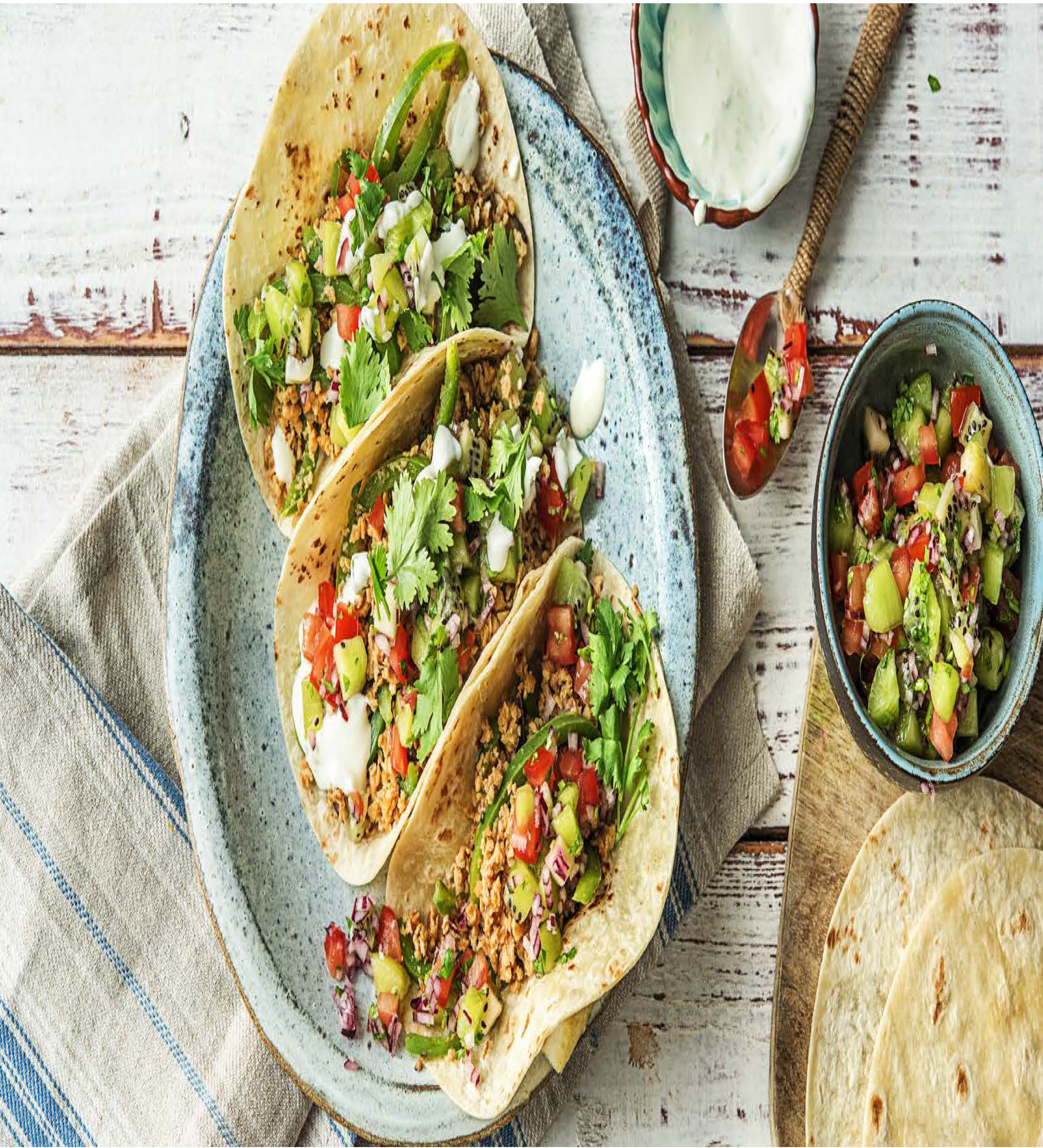
Veggie Chorizo Tacos

with Kiwi Salsa and Lime Crema


By Hello Fresh


Cooking Time: 30 mins

Servings: 4

Nutrition: 650 Calories

Ingredients:


  • Red Onion- 2
  • Poblano Pepper- 2
  • Roma Tomato- 2
  • Kiwis- 4
  • Cilantro- 1/2 oz
  • Lime- 2
  • Veggie Chorizo Crumbles- 16 oz
  • Sour Cream- 8 tbsp
  • Flour Tortillas- 12


1  PREP.    Wash and dry all produce. Halve, peel, and thinly slice onion. Mince a few slices until you have 3 TBSP minced onion. Core and seed poblano, then thinly slice. Core and seed tomato, then cut into ¼-inch cubes. Peel kiwis and cut into ¼-inch cubes. Finely chop cilantro. Zest a big pinch of zest from lime, then cut lime into wedges.


MAKE KIWI SALSA.     Combine tomato, minced onion, kiwis, a squeeze of lime juice, and half the cilantro in a small bowl. Season with salt, pepper, and more lime juice (to taste). Set aside.


3 COOK VEGGIES.       Heat a large drizzle of oil in a large pan over medium-high heat. Add poblano and sliced onion. Season with salt and pepper. Cook, tossing, until softened and slightly charred, 3-5 minutes.


4  WARM VEGGIE CRUMBLES       Add veggie crumbles and another drizzle of oil to pan and toss to combine. Season with salt and pepper. Cook until crumbles are warmed through and starting to brown, about 5 minutes. Reduce heat to low to keep warm, stirring occasionally.


5  MAKE LIME CREMA     In another small bowl, combine ime zest, a squeeze of lime juice, and sour cream. Season with salt, pepper, and more lime juice (to taste). Wrap tortillas in a moist paper towel and microwave on high until warm, about 30 seconds.


6  FINISH AND SERVE.     Fill tortillas with crumble mixture, then top with kiwi salsa and dollop with lime crema. Sprinkle with remaining cilantro. Serve with any remaining lime wedges on the side for squeezing over.

Tips to Stay Safe in Summer Weather

By StatePoint


Getting outdoors this summer? Keep in mind that weather patterns can be extreme at this time of year, introducing new safety hazards. Get weather-ready in the following ways.


Prepare for the Heat


When planning a day outdoors, most people pack items such as sunscreen, sunglasses and a hat. However, summer heat can be dangerous if you’re not prepared, so consider the following: make sure your vehicle’s air conditioning is in good working order well before a trip, have a rain umbrella on hand to shield you from the sun, as well as frozen water bottles and instant cold packs that can help cool you down quickly. Lastly, make sure you have plenty of water on hand when traveling with pets, and be sure to keep them out of unattended cars where temperatures can quickly reach fatal levels.


Know What’s Coming


Before heading to the pool or packing that picnic lunch, check the weather report to make smart decisions about where the day will carry you. For 24/7 access to accurate weather information, you can keep the world’s largest, fastest-growing and most trusted provider of weather forecasts and warnings at your fingertips with the AccuWeather app for your mobile device.


Available on iOS and Android, the app can help users prepare for intense heat, lightning, beach hazards and flooding prior to summer travel, events and activities. It also provides access to educational resources on the health impacts of different weather events, including safety tips and resources, personalized weather preparedness plans, detailed checklists and more.


Helpful year-round, the app can be particularly informative in summer, with its wealth of tips and resources on topics like avoiding rip tides, staying safe in extreme heat and preparing for tropical storms. To access these resources and download the app, visit AccuWeather.com/Ready.


Don’t Be Bugged


Take precautions against bug bites, particularly mosquitoes, which can be carriers of the Zika virus. Experts are warning that those located in or traveling to the southern United States should take precautions to guard against the disease, especially if you are already or planning on getting pregnant.


Be sure your backyard is drained of standing water. Use citronella candles to ward off bugs. Apply insect repellent on hikes and other times you’re in buggy areas, and if possible, avoid skin exposure during dusk, when mosquitoes are most active.


If you’re looking to travel this summer, check out AccuWeather’s first-of-its-kind Mosquito Zika Risk Index in advance, which gives users an easy way to view the likelihood of mosquito infestations that could lead to greater risk of contracting the Zika virus within the contiguous U.S. This new interactive Index, available now on AccuWeather.com, as well as the AccuWeather app on iOS and Android, showcases a week-by-week risk index for the next seven weeks that can help you make more informed decisions to stay out of harm’s way.


With a little preparation, you can make the most of the summer and your travel plans by dodging common weather risks and hazards.

Are We Winning the War on Cancer? What to Know

By StatePoint

New cancer cases and deaths are both predicted to rise over the next two decades, according to the latest World Cancer Report. Despite billions of dollars of investment in research, survival gains for the most common forms of cancer are still measured in additional months of life, not years.


Can cancer be cured? Some experts say the answer is yes, but that it will require reversing course on the way it’s researched and treated.


“Integrative medicine may allow us to win the war on cancer if done intelligently,” says Sylvie Beljanski, author of the new breakthrough book “Winning the War on Cancer: The Epic Journey Towards a Natural Cure,” which reveals the discoveries of her late father’s suppressed research — Dr. Mirko Beljanski, a biologist-biochemist at the Pasteur Institute who spent over 40 years studying the environmental impact on DNA replication and transcription.


“When my father started to rethink the origin of cancer and to develop molecules able to selectively block cancerous cell multiplication without killing healthy cells, he ran into major opposition,” remarks Beljanski. “The conventional oncology community ostracized him, despite the fact that his theories were aimed at complementing chemotherapy and radiation, not replacing them.”


Beljanski, founder of The Beljanski Foundation (www.beljanski.org), a non-profit organization dedicated to furthering her father’s research, says that in order to beat cancer, the following ideas and processes need to be adopted:


  • Patent Law Review. There is a need for powerful drugs, but there is also a need for a gentler, holistic approach. Under the current status quo, pharmaceutical companies are rewarded for creating synthetic and highly toxic drugs when elements of nature could be used safely and effectively in many instances, say experts.


  • Funding for Alternative Science Research. “My father had the idea that if nature came up with carcinogens, nature had also come up with anti-carcinogens. He discovered two of them: the bark of a tree from the Amazon rainforest and an extract from a bush in West Africa. Research confirmed their efficacy on a large array of cancers and their ability to work in synergy with chemotherapy,” says Beljanski.


  • Law Reform. Law reform that would allow legitimate dietary supplements to promote and highlight their benefits would help educate consumers. Furthermore, insurance companies should cover supplements, she urges.


  • Government Audit. The government should conduct an audit of its success and failures in funding cancer prevention and treatment research.


  • Data Sharing. “As long as pharmaceutical companies’ quest for innovation is solely driven by intellectual property rights, they will keep failing in the war on cancer,” says Beljanski, who advocates for a shared, centralized database and open collaboration from the best scientists, doctors and researchers.


  • Prevention and Education. In the long-run, the smartest approach is prevention. Citizens must continue to become informed, active consumers, taking the initiative to read labels, avoid junk food and addictive substances, relieve stress, exercise and eat balanced meals. “The mind-body connection is strong and individuals have the power to create a healthier life for themselves,” says Beljanski.


More information on cancer and Beljanski’s new book, is available at winingthewaroncancer.com. All of the author’s proceeds are being donated to help fund anticancer research.


While the war on cancer will be long and hard-fought, experts say that a shifted approach to prevention, treatment and research will ultimately mean lives saved.

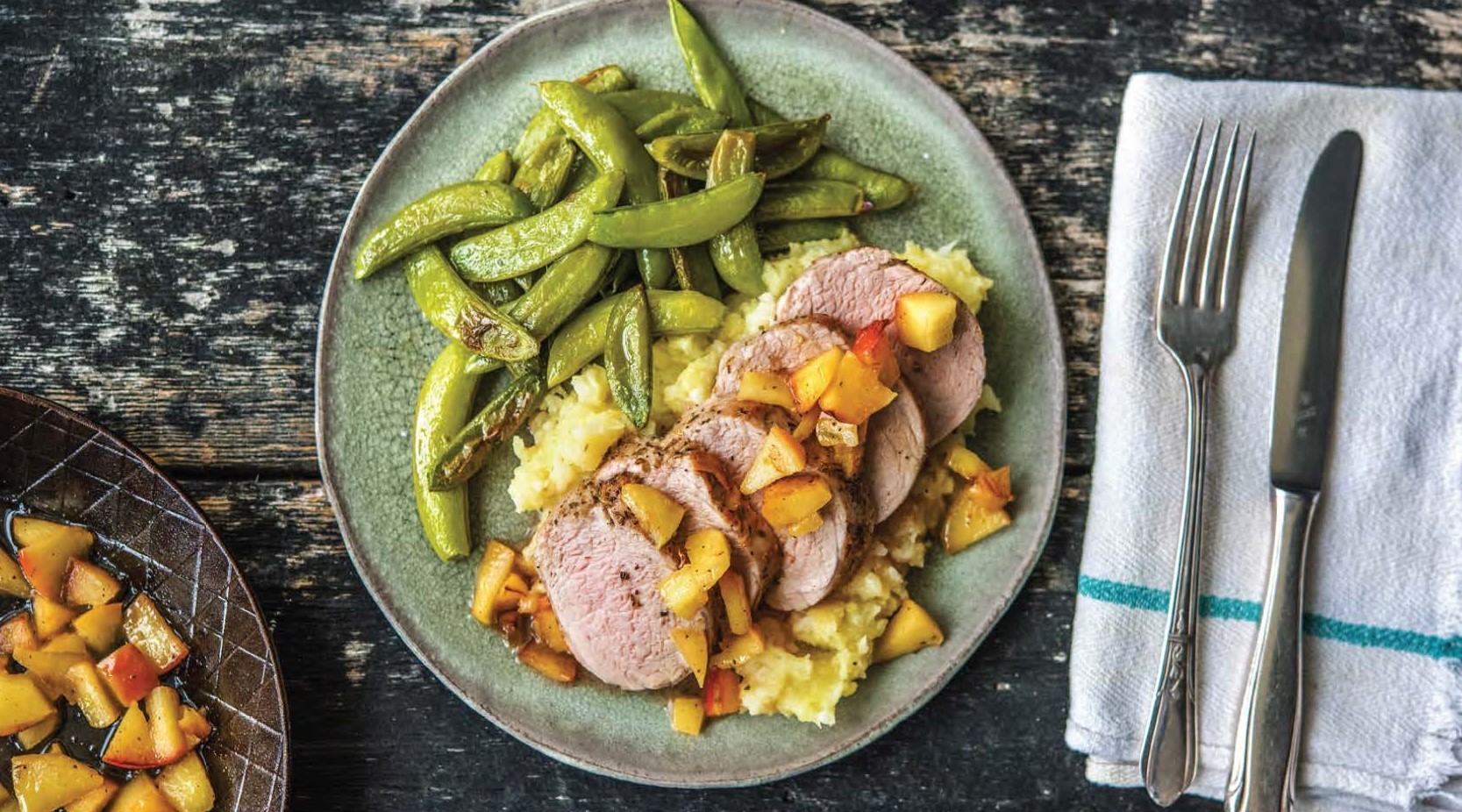
Sweet Apple Pork Tenderloin

with Cauliflower Mash and Snap Peas


By Hello Fresh


Cooking Time: 35 mins

Servings: 4

Nutrition: 570 Calories

Ingredients:


  • Yukon Gold Potatoes- 24 oz
  • Cauliflower Florets- 10 oz
  • Pork Tenderloin- 24 oz
  • Dried Thyme- 1 tsp
  • Sugar Snap Peas- 12 oz
  • Gala Apple- 2
  • Chicken Stock Concentrate- 2


1  BOIL POTATOES AND CAULIFLOWER.    Wash and dry all produce. Preheat oven to 400 degrees. Cut potatoes into 1-inch cubes. Place potatoes and half the cauliflower in a large pot with a pinch of salt and enough water to cover by 1 inch (we sent more cauliflower than needed). Bring to a boil and cook until very tender, 12-15 minutes. Drain and return to pot.


SEAR PORK.     Meanwhile, heat a drizzle of oil in a large pan over high heat. Season pork all over with salt, pepper, and ½ tsp thyme (we sent more). Add to pan and cook, turning occasionally, until browned all over, 4-8 minutes.


3 ROAST PORK AND SNAP PEAS.       Trim any tough ends or strings from snap peas. Once pork has browned, transfer to a baking sheet, placing toward one side. Add snap peas to other side and toss with a drizzle of oil and pinch of salt and pepper. Roast in oven until pork is cooked to desired doneness and snap peas are tender, 10-12 minutes.


4  MAKE PAN SAUCE.     Halve and core apple, then chop into ½-inch cubes. Melt 1 TBSP butter with a drizzle of oil in pan used for pork over medium heat. Add apple and cook, tossing occasionally, until golden, 5-7 minutes. Season with salt and pepper. Stir in stock concentrate and ½ cup water. Increase heat to medium high and cook until apple is tender, 3-4 minutes.


5  MAKE CAULIFLOWER MASH.    Add 1 TBSP butter to pot with potatoes and cauliflower. (TIP: If potatoes and cauliflower have cooled, reheat briefly over low heat.) Toss to melt butter. Mash with a potato masher or fork until mostly smooth. Season with salt and pepper.


6  FINISH AND SERVE.     Slice pork crosswise into medallions. Divide cauliflower mash and snap peas between plates, then top with pork. Spoon pan sauce over pork, making sure to include apple pieces.

Women’s Blood Vessels Stay Healthy With Turmeric

By Clarks Nutrition, Marueen Williams ND

Strength and flexibility are associated with youthfulness and good health. In the blood vessels, loss of flexibility and strength may be a sign of atherosclerosis, which increases heart attack and stroke risk. Regular exercise helps preserve elasticity and prevent hardening of blood vessels as we age, and a preliminary study published in Nutrition Research suggests that taking curcumin, a popular anti-inflammatory supplement derived from turmeric, may have similar benefits in postmenopausal women.

Curcumin [turmeric extract] may be as good as exercise for blood vessels

Comparing exercise to curcumin

The study included 32 healthy but sedentary postmenopausal women, divided into three groups: a group assigned to take 150 mg of curcumin per day; a group assigned to engage in exercise training three or more days per week; and, a control group that did not exercise or take curcumin.

Tests to measure blood vessel function were done at the beginning of the study and after eight weeks. These tests showed the following:

Systolic (the higher number) blood pressure dropped in women in the curcumin and exercise groups but not the control group.

Tests measuring blood vessel elasticity improved in exercisers and curcumin users but there was no change in women in the control group.

Changes in blood pressure and vessel elasticity were similar in women who exercised and women who took curcumin.

HDL (“good”) cholesterol levels”) and fitness testing improved only in the exercisers.

Curcumin may be as good as exercise for blood vessels

Starting an exercise program and taking the curcumin supplement were both associated with similar benefits on blood vessel function in the women in this study. “These findings suggest that curcumin could be [used] as a therapeutic strategy for the treatment of cardiovascular disease similar to exercise training in postmenopausal women,” the study’s authors said; however, the findings also unsurprisingly suggest that exercise may have advantages related to improved fitness that could contribute to a wider range of overall health benefits.

An anti-inflammatory lifestyle

Curcumin—a plant chemical known as a flavonoid—has strong antioxidant and anti-inflammatory properties, which are likely to be responsible for its positive effects on cardiovascular health. Exercise strengthens the muscles of the heart and artery walls and promotes circulation, which can lead to reduced inflammation. Combining curcumin with regular exercise might bring about a greater benefit than either alone, but researchers have yet to examine this.

Here are some other ways to reduce oxidative damage and inflammation and improve your heart health:

Include colorful vegetables. A diet high in red, yellow, and green veggies like tomatoes, squash, and kale is rich in antioxidants and protects against heart disease as well as other chronic diseases.

Use olive oil. Olive oil is an important part of the heart-healthy Mediterranean diet. Like curcumin, olive oil has anti-inflammatory and antioxidant properties and has been shown to increase vascular elasticity.

Eat fish. The polyunsaturated fats from fish are strongly anti-inflammatory. Eating fish and taking fish oil have both been found to protect the cardiovascular system. Eating meat, on the other hand, increases inflammation in the body.

Take a well-rounded vitamin E. In nature, vitamin E is a complex mixture of tocopherols and tocotrienols, and tocotrienols in particular have been found to slow the build-up of plaque associated with atherosclerosis. Nuts, seeds, wheat germ, rice bran, and plant oils, especially coconut and palm oils, are good sources of vitamin E.


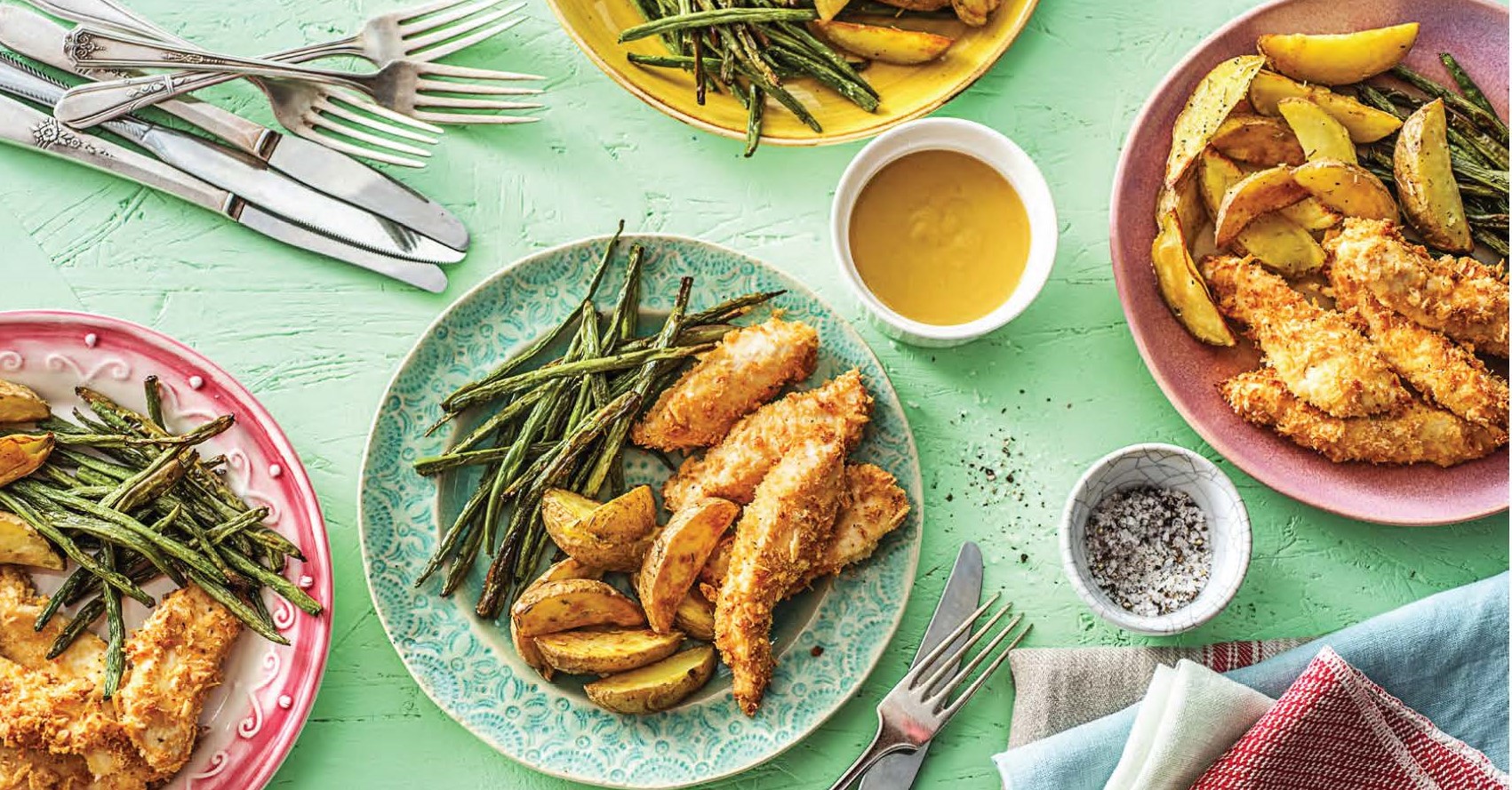
Parmesan Chicken Dippers

with Rosemary Fries, Green Beans, and Honey Mustard Sauce


By Hello Fresh


Cooking Time: 45 mins

Servings: 4

Nutrition: 640 Calories

Ingredients:


  • Yukon Gold Potatoes- 24 oz
  • Panko Bread Crumbs- 1 cup
  • Parmesan Cheese- 1/2 cup
  • Dried Rosemary- 1 tsp
  • Chicken Breasts- 24 oz
  • Eggs- 2
  • Green Beans- 12 oz
  • Honey- 3 oz
  • Dijon Mustard- 1/4 cup


1  PREHEAT AND PREP.     Wash and dry all produce. Preheat oven to 450 degrees, distributing racks evenly. Cut potatoes into ½-inch-thick wedges (like steak fries).


2  MAKE CRUST.     Spread panko on a baking sheet. Toast in oven until golden brown, 2-3 minutes. Transfer to a large bowl or shallow dish, then stir in Parmesan and a drizzle of olive oil. Season with salt and pepper.


3 BAKE POTATOES.  Toss together potatoes, a large drizzle of olive oil, rosemary, and a large pinch of salt and pepper on baking sheet used for panko. Bake in oven until nicely browned and crisp, 25-30 minutes, flipping halfway through.


4  COAT CHICKEN.  Cut chicken into 1-inch-wide strips. Season all over with salt and pepper. Crack eggs into a medium bowl and lightly beat. Working one piece at a time, dip chicken into eggs, letting excess drip off, then coat in crust mixture, pressing to adhere. Place on a lightly oiled baking sheet.


5  BAKE GREEN BEANS AND CHICKEN.    Toss green beans on a third baking sheet with a drizzle of olive oil and a pinch of salt and pepper. Bake green beans and chicken in oven until chicken is no longer pink in center and green beans are tender and slightly crisp at the edges, 12-15 minutes. TIP: Alternatively, you can cook the green beans with a drizzle of olive oil in a large pan over medium heat until tender, 4-5 minutes, then season with salt and pepper.


6  MIX SAUCE AND SERVE.     Stir together honey and ¼ cup mustard (we sent more) in a small bowl. Divide chicken, potatoes, and green beans between plates. Serve with honey mustard sauce on the side for dipping.

Is that ‘Junk’ in Your Attic or Basement Worth a Fortune?

By StatePoint

From baseball cards and sports equipment to postcards and toys, is that “junk” in your attic or basement dusty treasure or just dusty? We’ve all heard of families getting rich from the sale of rare memorabilia. So how can you tell if your stuff is valuable and how can you sell it, if it is?


“The general rule is that the older the item, the more valuable it is. 1980 is not old. 1960 is kind of old. 1910 is old,” says Al Crisafulli, Auction Director at Love of the Game Auctions, an internet sports auction house that has helped many families identify and sell valuable items.


In one instance, Crisafulli determined that a family’s baseball bat that spent decades beside their front door to protect from intruders, was actually used by Hall of Famer Lou Gehrig — and Love of the Game Auctions sold it for them for more than $430,000.


He is offering these tips to help determine if your items are valuable:


Baseball Cards


Cards from the 1960s and earlier are collectible, and those from before the 1940s can be extremely pricey. Do they have sharp corners, no creases and retain original gloss? Do they depict star players and Hall of Famers? A Babe Ruth, Ty Cobb, Honus Wagner or Mickey Mantle will sell for more than non-stars.


With particularly old cards from the 1880s and early 1900s, look for tobacco and candy brands, such as Old Judge, Piedmont, Sweet Caporal or American Caramel. Unopened packs from almost any era can be valuable.


Memorabilia & Equipment


Look for old advertising posters depicting sports stars and food, tobacco or sporting goods brands. This doesn’t mean ads torn from magazines, but those used as store displays and for other purposes. Tin signs are highly collectible from the 1900s into the 1960s, but low-quality reproductions aren’t. Pre-1950s catcher’s masks, baseball gloves and bats can be valuable, especially those endorsed by star players. Condition is important but used equipment can be valuable.


When you go to sell sports items, consider a specialty auction, such as Love of the Game, which has the expertise to properly research sports pieces, and maintains lists of bidders specializing in this area so it can get top dollar for these items. More information is available at loveofthegameauctions.com.


Postcards


Postcards of your vacation destinations likely are worthless. But those depicting famous people, such as movie star cards and vintage baseball postcards, can be valuable. Look for early “real photo” postcards from the 1900s through the 1940s, which are photographs printed on postcard backs. No matter the type, the older, the better, and the more famous, the better.


Old Halloween or Christmas postcards from the early 1900s can be expensive. The same goes for many intricate “hold-to-light” postcards, where portions of scenes light up when held to strong light.


Toys


Look for famous characters, such as early Walt Disney items, superheroes, Star Wars, etc. The most prized toys are those in original condition with no broken pieces and paint intact. And if you have original boxes, you might strike gold!


So, while you’re cleaning that attic, basement or garage, don’t rush to purge. Before throwing out old “junk,” determine if it’s valuable!


The Iron Complaint

Grilled salmon fillet fish steak with lemon on white plate

By Clark’s Nutrition


Iron has long been used as a therapy for weakness throughout history, even when the purveyors of this remedy knew nothing of its ability to mitigate weakness or lethargy. Hippocrates, the father of medicine, would recommend ferruginous (rich in iron) water treatments to individuals suffering from what was termed “chlorosis” or iron-deficiency anemia. It made sense to the Greeks that a condition of weakness (anemia) should be met with an element of strength (iron). The god of war, Ares, was associated with the element iron as it was the chief component in his spear (bronze-tipped) and shield, and was a symbol of strength. Yet aside from mythology, iron as a real cause and therefore treatment of lethargy, weakness, and a slew of other symptoms is well understood today and is one of the most researched and well-understood elements in the human diet.

Iron is important for metabolism (energy production), affects many hormones, such as thyroid hormone and testosterone, and is crucial for growth and normal development throughout life. While isolated iron deficiency is fairly uncommon in the US, infants, teenage girls, pregnant and lactating mothers, postmenopausal women, and those with poor diets are at a heightened risk. It is important to receive regular checkups and comply with doctor orders if diagnosed as deficient or anemic. Iron requirements change as we age and range from 8 milligrams (mgs) to 18 mgs and goes as high as 27 milligrams in pregnant and lactating women

Iron deficiency is commonly observed as anemia which may have some of the following symptoms:

Weakness, feelings of coldness

Decreased work and school performance

Slow cognitive or social development

Decreased immune function.

In nature, iron may be found bound to “heme” or without heme. Heme is a nitrogen-based cyclical structure that is a part of hemoglobin found in red blood cells, and myoglobin found in muscles that carry the oxygen we breathe to cells and carbon dioxide away from cells. Heme iron (found in animal foods) and nonheme iron (plant-based) may be absorbed differently and will certainly be found in different concentrations depending on the makeup of one’s diet. .

Iron from animal sources may be absorbed up to 35% and iron from plant sources may be 20% absorbed, yet this does not mean a non-meat eater needs to consume meat sources of iron. Iron needs in the body are closely regulated and our ability to absorb iron is based on our need to absorb iron. If we are deficient in iron, our body will absorb more in the gastrointestinal tract and if we are “topped” off in our tissues, we will absorb less. Therefore, iron absorption is more an issue of need than an actual issue of source.

The majority of iron supplements are the non-heme variety and absorption is increased when eaten with foods high in vitamin C such as orange juice, bell peppers, broccoli, and strawberries or with a vitamin C supplement (100-250 mgs). It should come as no surprise that the majority of iron consumption in the US comes from breads and grain-based desserts. Here are some excellent iron sources for anyone to include:

Heme (animal) iron sources

Liver, beef, & chicken

Clams & oysters

Salmon & tuna,

Non heme (plant) iron sources

Lentils & beans

Spinach & pumpkin seeds

Fortified cereals and grains

We have an evolved ability in today’s day and age to be diagnosed and remedy many things that afflict us. Luckily, iron deficiency is no longer viewed as a person’s lack of war-like aggression and treated with Ares’ spear. If you have been diagnosed with iron deficiency and given the go-ahead to seek out iron rich foods or supplements, speak to a nutritional consultant today and explore your iron needs. As always, have a healthy day!

Clark’s is a great find for anyone looking to improve their health. They have competitive pricing, knowledgeable staff, a great product selection and a beautiful Chino location close to home.

Visit this Chino treasure located at 12835 Mountain Ave in Chino or call (909) 993-9200. For other locations visit their website http://www.clarksnutrition.com


How to Care for Your Eyes as You Age

StatePoint

As we age, our bodies don’t perform as well as they once did, and vision is no exception. However, early detection and treatment of eye problems and diseases through an eye exam is the best way to protect your eyes and overall health.

To help keep your eyes healthy for years to come, consider the following tips.

  • Eat an eye-healthy diet. Fruits and vegetables, especially carrots and dark leafy greens, provide a hefty punch of key vitamins and a key vision protecting-substance called lutein. Find some new recipes to make filling up on these nutritious choices both delicious and fun.
  • Maintain a healthy weight. Did you know that by eating healthy portions, exercising regularly and doing your best to maintain a healthy weight, you can reduce your risk of cataracts? Conditions such as obesity and diabetes can lead to vision problems like cataracts.
  • Protect eyes from blue light. Most people today spend a lot of time in front of digital screens, such as smartphones, computers and televisions. These devices emit high-energy blue light, which causes digital eye strain that can lead to headaches, blurred vision, dry eyes and even neck pain. Ask your eye doctor about the best options to help reduce eye strain.
  • Get an eye exam. A yearly eye exam is one of the easiest and most important ways to reduce your odds of vision loss and protect your eyes. And it can also help you monitor and protect your overall health. Whether or not you wear glasses, be sure to schedule this crucial appointment. A routine eye exam can help detect signs of serious health conditions, like diabetes, high cholesterol, high blood pressure glaucoma and macular degeneration. Because more obvious symptoms of some health conditions don’t always appear until damage has already occurred, routine eye exams are a good way of keeping tabs on what’s happening in your body.
  • Make sure you have vision coverage. Do you have vision coverage through Medicare? Review your plan. Many people don’t realize that Traditional Medicare doesn’t cover routine eye exams, glasses or contact lenses. Check out such affordable options as VSP Individual Vision Plans, which offer comprehensive coverage with low out-of-pocket costs, savings on frames and lens enhancements such as progressives, and the ability to see the doctor you know and trust. Plans begin as low as $13 per month. For more information or to enroll, visit GetVSPDirect.com or call 877-988-4746.

With a few key daily and annual habits, you can make eye health the priority it needs to be as you age.


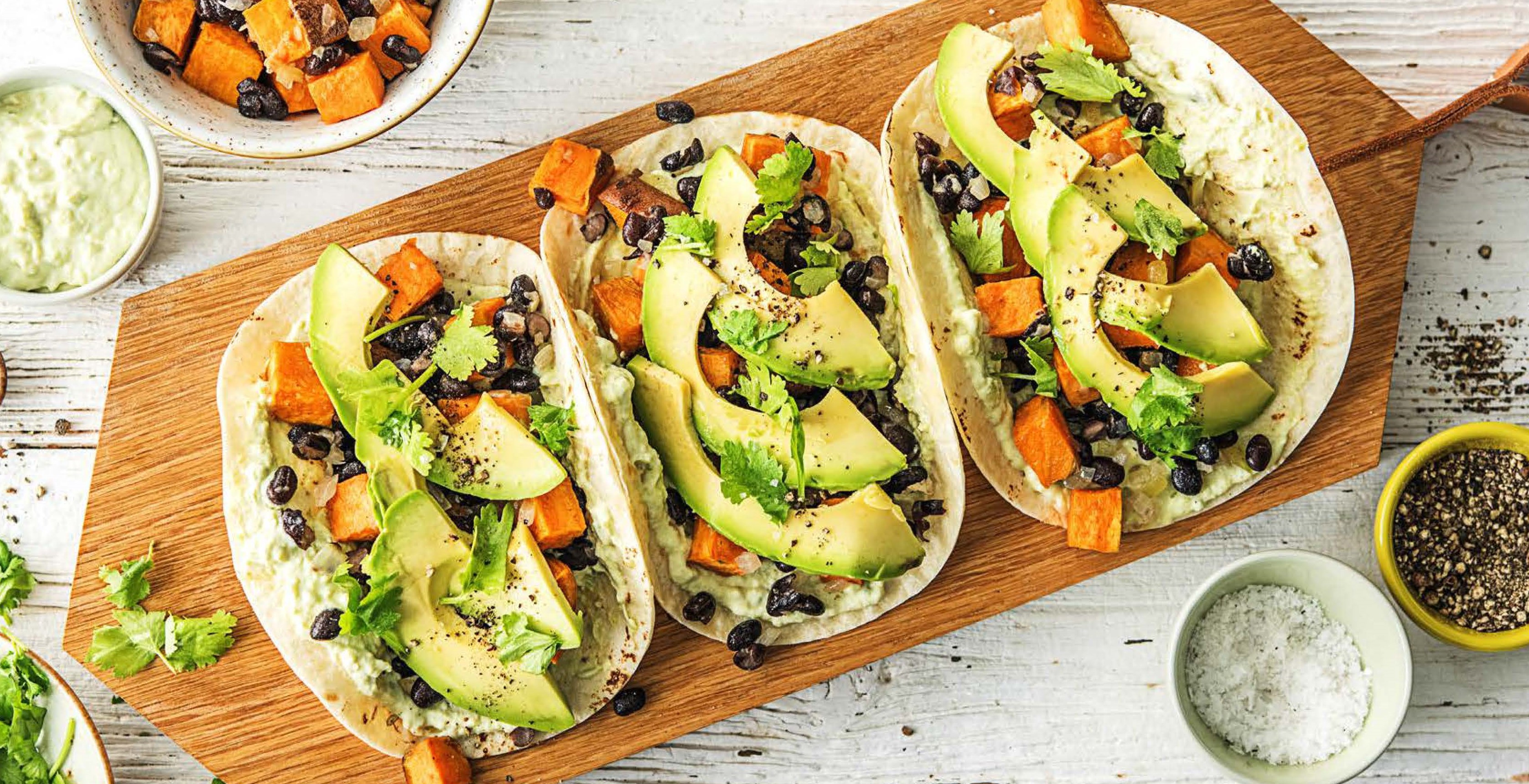
Sweet Potato and Black Bean Tacos

with Avocado Crema and Cilantro


By Hello Fresh


Cooking Time: 40 mins

Servings: 4

Nutrition: 860 Calories

Ingredients:


  • Sweet Potatoes- 4
  • Yellow Onion- 1
  • Cilantro- 1/4 oz
  • Garlic- 4 cloves
  • Black Beans- 13.4 oz
  • Lime- 2
  • Flour Tortillas- 12
  • Honey- 1 oz
  • Cumin- 2 tsp
  • Avocado- 2
  • Sour Cream- 8 tbsp


1  ROAST SWEET POTATOES.    Wash and dry all produce. Adjust rack to middle position and preheat oven to 400 degrees. Cut sweet potatoes into ½-inch cubes. Toss on a baking sheet with 1 TBSP olive oil and a pinch of salt and pepper. Roast in oven until tender and lightly browned, about 20 minutes.


PREP.    Meanwhile, halve, peel, and dice onion. Pick cilantro leaves from stems; discard stems. Mince or grate garlic. Drain and rinse half the beans from the box (use the rest as you like). Zest ½ tsp zest from lime, then cut into halves.


3 COOK AROMATICS AND BEANS.  Heat 1 TBSP olive oil in a large pan  over medium heat. Add onion and cook, tossing occasionally, until softened, 5-6 minutes. Season with salt and pepper. Add garlic and beans to pan. Cook, tossing, until fragrant and warmed through, 3-4 minutes.


4  WARM TORTILLAS AND TOSS FILLING. Wrap tortillas in foil and place in oven to warm, about 5 minutes. (TIP: Alternatively, wrap tortillas in a damp paper towel and microwave on high  until warm, about 30 seconds.) Toss sweet potatoes, honey, cumin, and juice from one lime half into pan with beans and cook until liquid is mostly evaporated, 2-3 minutes. Season with salt and pepper.


5  MAKE AVOCADO CREMA.     Halve, pit, and peel avocado. Cut one half into thin slices. Roughly chop other half and place in a medium bowl along with sour cream, juice from remaining lime half, and lime zest.  Mash with a fork until mostly smooth. Season with salt and pepper.


6  ASSEMBLE TACOS.     Spread avocado crema onto tortillas, then top each with filling, avocado slices, and cilantro. TIP: Break out the hot sauce if you like it spicy.

Asparagus Recipe

with Lime Aioli, Egg & Green Onion


By Clark’s Nutrition/ California Asparagus Commission


Cooking Time: 3 mins

Servings: 6

Nutrition: 220 Calories

Ingredients:


  • Lrg. Asparagus (trimmed, salt as needed)- 1.5 lbs.
  • Mayonnaise- 1/2 cup
  • Olive Oil- 2 tbs
  • Water- 2 tbs
  • Fresh Lime Juice- 1 tbs
  • Clove of Garlic (finely chopped)- 1 Large
  • Hard Cooked Eggs (roughly chopped)- 2
  • Green Onion (thinly sliced)- 3 tbs


This tasty salad works well as a light main dish for brunch, lunch, or as a festive spring side dish.


Directions:


Put asparagus into a large skillet of salted, boiling water. Boil until tender-crisp, about 3 minutes. Drain well; spread on paper towel to cool.

Meanwhile, to make aioli, mix mayonnaise with olive oil, water, lime juice, and garlic; reserve. Over a piece of wax paper or paper towel, force egg through a sieve with the back of a wooden spoon, making sure to scrape off the egg that clings to the underside of the sieve.

Arrange asparagus on a platter, then drizzle with reserve aioli. Sprinkle with egg, then green onion. Lightly season with salt.

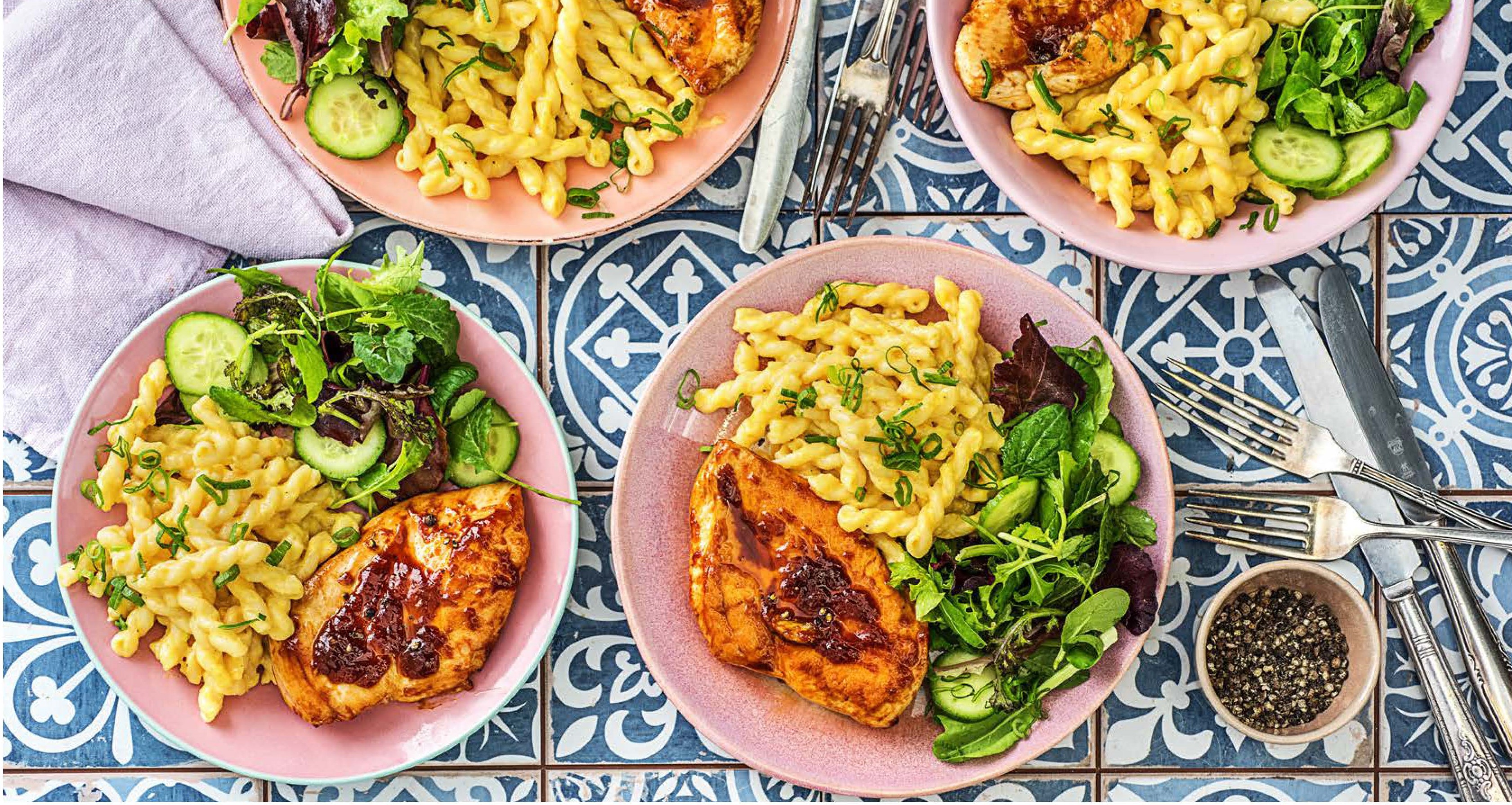
Stovetop Barbecue Chicken

with Mac ‘n’ Cheese and a Green Salad


By Hello Fresh


Cooking Time: 30 mins

Servings: 4

Nutrition: 550 Calories

Ingredients:


  • Scallions- 2
  • Cucumber-1
  • Lemon-1
  • Gemelli Pasta- 6 oz
  • Chicken Breasts- 24 oz
  • Cheddar Cheese- 1 cup
  • Cream Cheese- 2 oz
  • Barbecue Sauce- 1/2 cup
  • Spring Mix Lettuce- 4 oz


1  PREP    Wash and dry all produce. Bring a medium pot of salted water to a boil. Thinly slice scallions, keeping greens and whites separate. Slice cucumber into thin rounds. Halve lemon.


BOIL PASTA.     Once the water is boiling, add gemelli to pot. Cook, stirring occasionally, until al dente, 9-11 minutes. Carefully scoop out and reserve ½ cup pasta cooking water, then drain.


3 COOK CHICKEN       Heat a large drizzle of oil in a large pan over medium-high heat. Season chicken all over with salt and pepper. Add to pan and cook until no longer pink in center, 5-6 minutes per side.


4  STIR MAC ‘N’ CHEESE      After draining gemelli, heat a large drizzle of oil in pot used to cook it over medium heat. Add scallion whites and cook, tossing, until softened, about 1 minute. Add gemelli, cheddar, cream cheese, 1 TBSP butter, and reserved pasta cooking water. Stir until a creamy sauce forms. Season generously with salt and pepper. Set aside off heat until meal is ready.


5  COAT CHICKEN AND MAKE SALAD.    Once chicken is cooked through, add barbecue sauce to same pan. Turn chicken to coat in sauce. Set aside off heat. In a large bowl, toss together lettuce, cucumber, a few squeezes of lemon, and a large drizzle of olive oil. Season with salt and pepper.


6  PLATE AND SERVE.    Divide chicken, mac ‘n’ cheese, and salad between plates. (TIP: If mac ’n’ cheese has become stiff, add a splash of water and reheat briefly over low heat.) Drizzle chicken with any remaining sauce in pan. Sprinkle scallion greens over everything and serve.