Category Archives: Healthy Living

4 Facts About Seafood and Your Health

By StatePoint


We hear a lot about the important nutrients in vegetables and fruits, but the health benefits of eating seafood regularly aren’t always in the spotlight. It should be a no-brainer when it comes to seafood, which is packed with omega-3s. Yet, most Americans only eat one serving of seafood a week.

Here are some evidence-based facts to help set the record straight.

  1. How much seafood should I be eating?

Studies show that seafood benefits your heart, eyes and brain, and may also help you fight chronic diseases and memory loss. The 2015 Dietary Guidelines encourage all Americans to eat at least two servings of seafood each week. That’s double the amount most people currently eat. To reap the range of nutrients found in seafood, try to get a variety of fish in your diet, including shrimp, salmon, canned/pouched tuna, tilapia and pollock.

  1. What if you’re pregnant?

Seafood is especially important for pregnant and breastfeeding women, as well as young children, since it is one of the only natural food sources rich in healthy omega-3 fatty acids, EPA and DHA. EPA and DHA are critical for brain and eye development, supporting the old adage that fish really is “brainfood.” One recent study shows that moms-to-be who ate fish two to three times each week had babies that reached milestones — such as imitating sounds, recognizing family members and drinking from a cup — more quickly than children born to mothers who didn’t eat fish regularly during pregnancy. Another recent study found that pregnant women who ate at least two seafood meals each week helped boost their child’s IQ up three points by age 9. Learn more about the best fish to eat during pregnancy at AboutSeafood.com/seafood-pregnancy.

  1. How to get more seafood.

Incorporating more seafood into your diet doesn’t need to be a challenge. It’s easy to get the recommended two to three servings each week by simply swapping out the protein from your favorite dishes with seafood. For example, chicken tacos become fish tacos, and grilled steak salad becomes grilled shrimp salad. What’s more, seafood is just as healthy whether it’s fresh, frozen or canned, making it a convenient item to stock up on when shopping, and ultimately helping you eliminate wasted food in your household.

  1. Start the day right.

Nutrition experts recommend incorporating protein into your breakfast as a way to boost metabolism and balance your blood sugar levels for the entire day. Kicking off the morning with tuna avocado toast or salmon on a bagel will help keep you feeling fuller for longer, prevent cravings before lunchtime and help you reach your weekly seafood goals.

More nutrition facts, recipes and other resources can be found at AboutSeafood.com.

For better wellness, give your health a boost by eating a variety of seafood at least twice a week.
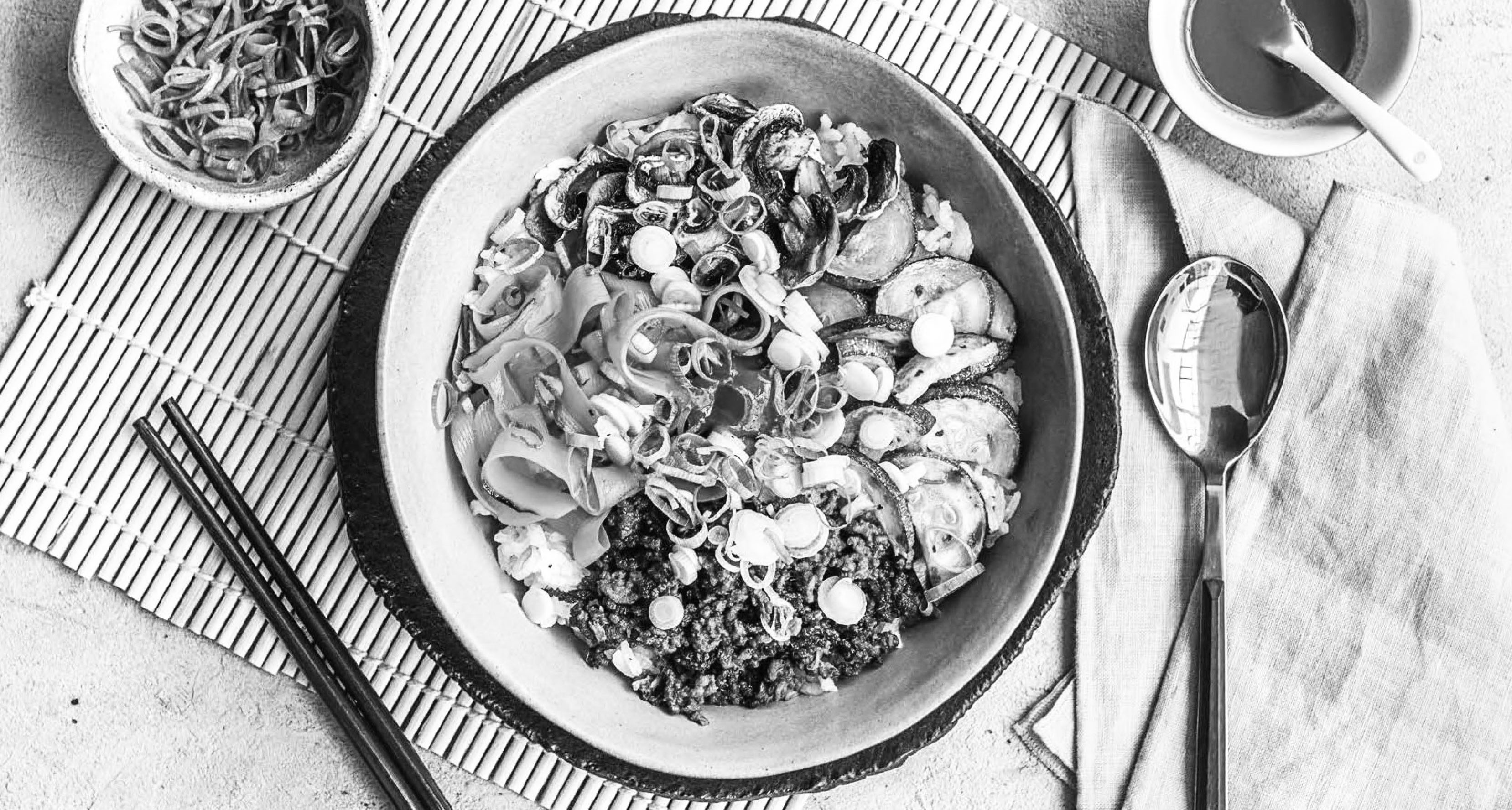
 

Korean Beef Bibimbap

with Zucchini, Mushrooms and Carrot


By Hello Fresh


Cooking Time: 30 mins

Servings: 4

Nutrition: 760 Calories

Ingredients:


  • Zucchini- 2
  • Button Mushrooms- 8 oz
  • Scallions- 4
  • Carrot- 2
  • Ginger- 2 thumbs
  • Garlic- 4 cloves
  • Jasmine Rice 1 1/2 cups
  • White Wine Vinegar- 10 tsp
  • Sesame Oil- 2 tbsp
  • Sriracha- 4 tsp
  • Soy Sauce- 6 tbsp
  • Ground Beef- 20 oz


1  PREP.     Wash and dry all produce. Bring 1 1/4 cups water to a boil in a small pot. Halve zucchini lengthwise; slice into thin half-moons. Trim and thinly slice mushrooms and scallions, keeping scallion greens and whites separate. Peel carrot; using a peeler, shave lengthwise into ribbons. Peel and mince ginger. Mince garlic.


COOK RICE.     Once water is boiling, add rice and a pinch of salt to pot. Cover, lower heat, and reduce to a gentle simmer. Cook until tender, 15-20 minutes.


3 PICKLE SCALLIONS AND MAKE SAUCE.       Toss scallion whites with vinegar and a pinch of salt in a small bowl. Set aside to marinate. In another small bowl, stir together sesame oil, 1½ TBSP sugar, up to half the sriracha, and 1½ TBSP soy sauce (we’ll use the rest of the sriracha and soy sauce later).


4  COOK VEGGIES.       Heat a drizzle of oil in a large pan over medium-high heat (use a nonstick pan if you have one). Add carrot; season with salt and pepper. Cook, tossing, until tender but still crisp, 3-4 minutes. Remove from pan and set aside. Add another drizzle of oil to pan and repeat with zucchini; remove from pan once cooked. Add mushrooms and another drizzle of oil to pan and cook until tender, 3-5 minutes. Season with salt and pepper. Remove from pan and set aside.


5  COOK BEEF     Heat another drizzle of oil in same pan over medium-high heat. Add garlic and ginger and cook until fragrant, about 30 seconds. Add beef, breaking up meat into pieces. Cook, tossing occasionally, until no longer pink, about 4 minutes. Increase heat to high and continue cooking until browned and crisp, about 3 minutes. Pour in remaining soy sauce and cook, tossing, until mostly evaporated, 1-2 minutes. Season with salt and pepper.


6  FINISH AND PLATE.     Divide rice between bowls. Arrange beef, zucchini, carrot, mushrooms, and scallion whites on top. Drizzle with sauce and remaining sriracha (to taste). Sprinkle with scallion greens and serve.

Spring Tips to Start an Exercise Routine

By StatePoint

Spring is an ideal time to get active outdoors and kickstart a fitness regimen that can carry you into beach and pool season.

Need some motivation? Try out these ideas for getting started and sticking with the program.

Get Social

A personal trainer can be expensive, but a friend is free and potentially just as motivating. Besides, a little friendly competition never hurt anybody. Find a buddy to join you for runs and hikes, and with whom to hit the new HIIT class — that’s high-intensity interval training — or spot you in the free weights section of the gym. Joining an organized run crew, cycling club or other fitness group can be another great way to keep yourself inspired to move — as these meet-ups can be fun social events in addition to a great workout.

Gear Up

New wearable technology is not only fun, it can help you analyze your daily movement and workouts. See how much progress you make with wearable devices like the GBA800 Training Timer, a water- and shock-resistant watch that comes equipped with a three-axis acceleration sensor tracking your step count, a countdown timer that allows for up to 20 timer combinations, as well as 200-lap memory. With the download of the dedicated G-SHOCK Connected app to a smartphone, the watch can even track movement and support daily fitness. Employing a new algorithm, the app displays a graph breaking down daily steps taken in each of five metabolic equivalent (MET) levels, from data based on your step count and walking pace. It also displays the exact location and time where the wearer’s calories were burned, while measuring MET levels, making it useful for interval training.

Give it a Purpose

Find your motivation and dedicate your workouts to this purpose. One great way to do this is to sign up for a competitive athletic event that requires training. Whether that’s an obstacle course, a triathlon or a 5k foot race, having such an event on your calendar will provide the daily motivation you need. Check out free training plans that can offer you guidelines for the best way to prepare for each type of event. Need further incentive? Use the event to raise money for a cause that matters to you.

From new friends to new gear, you can make getting active this spring easier with the right motivational elements.

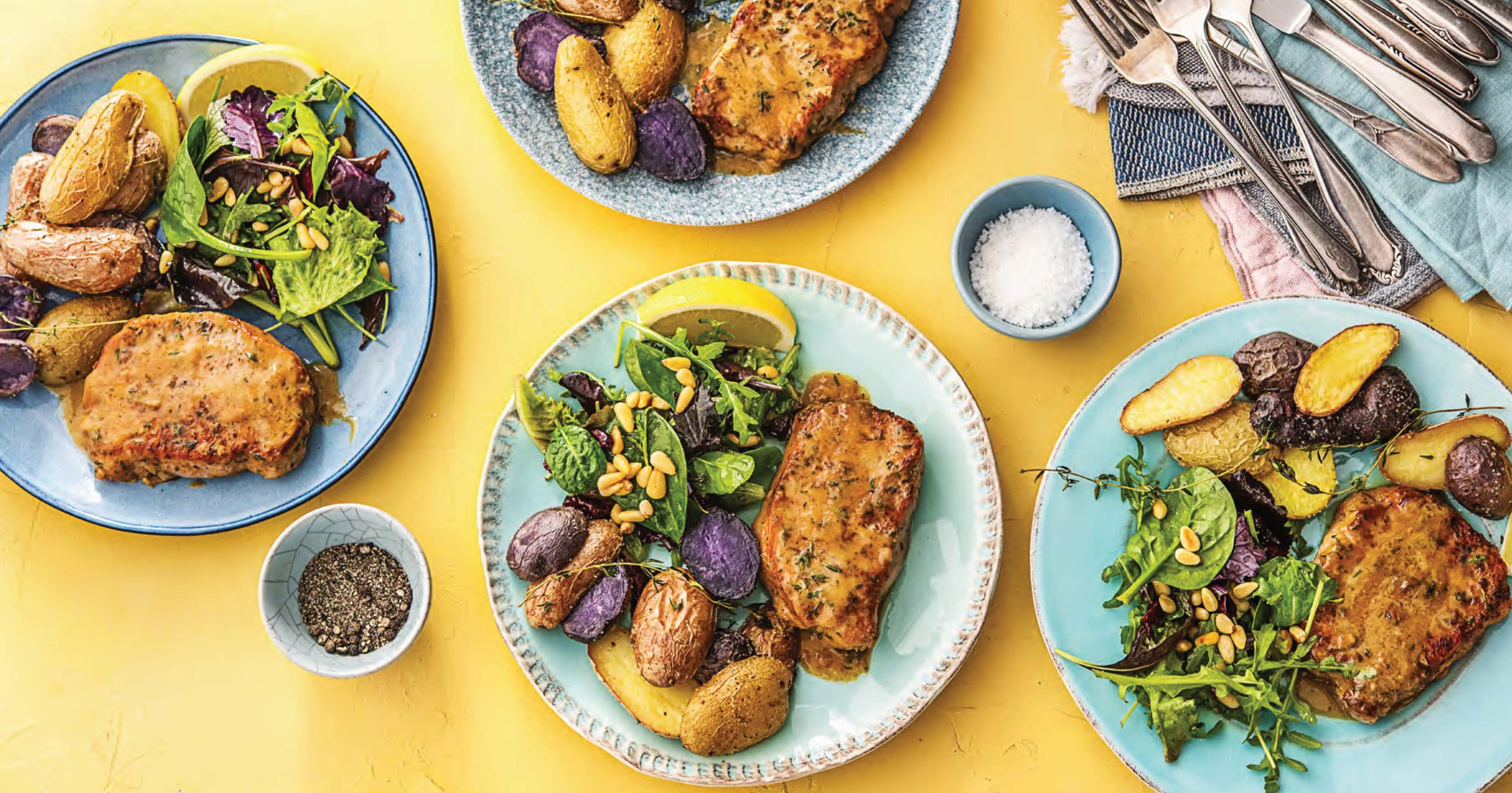
Maple and Mustard-Glazed Pork Chops

with Roasted Potatoes and a Cranberry and Pine Nut Salad


By Hello Fresh


Cooking Time: 40 mins

Servings: 4

Nutrition: 580 Calories

Ingredients:


  • Multicolor Fingerling Potatoes- 24 oz
  • Thyme- ¼ oz
  • Lemon- 1
  • Maple Syrup- 2 oz
  • Dijon Mustard- 4 tsp
  • Chicken Stock Concentrates- 2
  • Pork Chops- 24 oz
  • Fall Harvest Spice Blend- 1 tbsp
  • Spring Mix Lettuce- 4 oz
  • Dried Cranberries- 2 oz
  • Pine Nuts- 1 oz


1  ROAST POTATOES.    Wash and dry all produce. Adjust rack to upper position and preheat oven to 450 degrees. Halve potatoes lengthwise. Toss together potatoes, half the thyme sprigs, salt, pepper, and a large drizzle of olive oil on a baking sheet. Arrange potatoes cut-side down on sheet. Roast in oven until tender and browned, about 30 minutes.


PREP.    Strip 1 tbsp thyme leaves from remaining sprigs; roughly chop leaves. Halve lemon; cut one half into wedges. Stir together chopped thyme, maple syrup, mustard, and stock concentrates in a small bowl.


3 COOK PORK.       Heat a large drizzle of oil in a large pan over medium-high heat (use a nonstick pan if you have one). Season pork all over with 2 tsp harvest spice (we sent more), salt, and pepper. Add to pan and cook until browned on surface and just shy of desired doneness, 3-4 minutes per side.


4  GLAZE PORK.      Pour maple syrup mixture into pan with pork and let simmer until thickened to a glaze-like consistency, about 2 minutes. Toss pork to coat. Remove pan from heat and stir in a squeeze or two of lemon.


5  TOSS SALAD.    Toss together lettuce, cranberries, pine nuts, 2 TBSP olive oil, and a few squeezes of lemon in a large bowl. Season with salt and pepper. TIP: If you have an extra moment, toast the pine nuts first in a small pan over medium heat until golden, 3-4 minutes—the heat will make their flavor pop.


6  PLATE AND SERVE.     Discard thyme sprigs from sheet with potatoes, then divide potatoes, pork, and salad between plates. Drizzle pork with remaining glaze in pan. Serve with lemon wedges on the side for squeezing over.

What to Know About Seasonal Allergies and Your Eyes

By Statepoint

Suffering from itchy, watery eyes? You may have ocular allergies or you could have another issue entirely, such as chronic dry eyes. Experts say that getting the correct diagnosis is the only way to treat symptoms properly.


“Chronic dry eye often mimics the symptoms of seasonal allergies and must be approached entirely differently,” says Arian Fartash, VSP network optometrist. “Many over-the-counter allergy treatments can actually make dry eyes worse, so make an appointment with your eye doctor to determine the exact cause of your discomfort.”


If your itchy and watery eyes are diagnosed as ocular allergies, Dr. Fartash recommends taking the following steps.


  • Limit your exposure to pollen on high pollen count days.


  • Wash your face after being outside to reduce the amount of pollen on the skin.


  • Use cold compresses for some added relief.


  • Don’t rub your eyes, as this will increase your body’s overreaction to the irritants.


  • Remove contact lenses, which can attract allergens that accumulate throughout the day. Consider wearing your glasses or switching to daily disposable contacts during allergy season.


  • Try over-the counter eye drops. There are a number of allergy drops that are formulated to relieve itchiness, redness, and watery eyes. But consult your optometrist to find out which are the best recommended.


  • Consider prescription medications. If the symptoms won’t go away, you might need something stronger. Go see your eye doctor to discuss if a prescription medication is right for you. You can find a doctor local to you by consulting the VSP-network at vsp.com/find-eye-doctors.


Don’t suffer this season. See your best and feel your best by getting your eye symptoms properly diagnosed and treated.

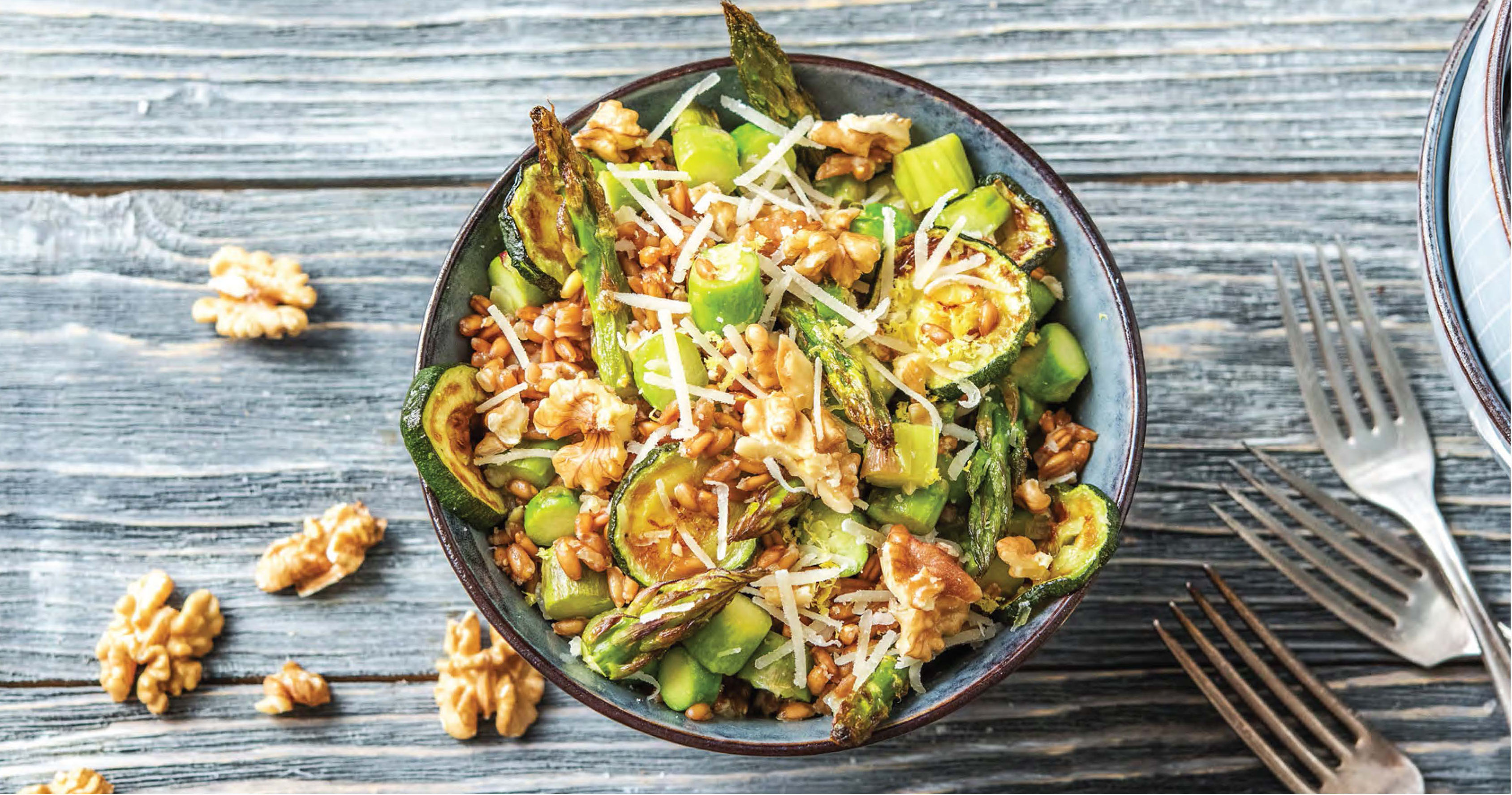
Gorgeous Greens Farro Bowl

with Grilled Zucchini and Asparagus


By Hello Fresh


Cooking Time: 40 mins

Servings: 4

Nutrition: 470 Calories

Ingredients:


  • Farro- 1½ Cups
  • Veggie Stock Concentrate- 4
  • Asparagus- 16 oz
  • Zucchini- 2
  • Garlic- 4 cloves
  • Yellow Onion- 2
  • Lemon- 1
  • Parmesan Cheese- ½ Cup
  • Walnuts- 2 oz


1  PREHEAT OVEN AND COOK FARRO    Adjust rack to middle position and preheat oven to 450 degrees. Combine farro, stock concentrates, and 3½ cups water in a medium pot. Bring to a boil and cook until farro is tender, 30-35 minutes total. TIP: If water evaporates before farro is cooked, add a splash more.


PREP.     Wash and dry all produce. Trim and discard bottom woody ends of asparagus. Cut off fuzzy tips and set aside. Chop stalks into ½-inch pieces. Slice zucchini into thin rounds. Mince or grate garlic. Halve, peel, and finely dice onion. Zest, then halve lemon.


3 ROAST VEGGIES.       Toss asparagus tips, zucchini, and a large drizzle of olive oil on a baking sheet. Season generously with salt and pepper. Roast in oven until nicely browned, 15-20 minutes, tossing halfway through.


4  COOK AROMATICS.      Meanwhile, heat a drizzle of olive oil in a large pan over medium-high heat. Add onion and cook, tossing frequently, until soft and translucent, 3-4 minutes. Add garlic and cook, tossing, until fragrant, about 1 minute.


5  FINISH FARRO.    Stir asparagus stalk pieces into pot with farro about 5 minutes before farro is done (grains should be just shy of al dente). Drain once both are tender, then add to pan with onion and garlic. Stir in juice of one lemon half, half the lemon zest, half the Parmesan, and 1 TBSP butter. Season with salt and pepper.


6  PLATE AND SERVE.     Divide farro mixture between bowls. Top with zucchini and asparagus tips. Sprinkle with walnuts and remaining Parmesan and lemon zest. Cut any remaining lemon into wedges and serve on the side.


Free Essential Oils Workshop

By Anthony Saude

Chino – There is so many uses for essential oils and countless combinations for even more uses, it can be downright confusing and overwhelming.

Clark’s Nutrition, as always, wants to inform and educate their customers on healthy habits and how it can affect their lives in a positive manner. The month of April is Essential Oils month at Clark’s in 2018. Every Tuesday at 6 p.m. during the month of April, Clark’s will have Free Essential Oils workshop at all locations. This workshop will educate you so you feel more comfortable with using your essential oils. You can come in for 1 hour every Tuesday and learn how to make your own essential oil blends. The last class will be on the last day of the month, a Saturday, and will be a 2 hour review of all that you have learned during all of the workshops combined. The Workshop schedule and topics are as follows:

Tuesday April 3 – Essential Oils Basics (How to use oils)

Tuesday April 10 – Spring in the Home

Tuesday April 17 – Spa Day!

Tuesday April 24 – Wellness Happy Hour

Saturday April 28 – Special 2-hour workshop on various oils from previous Tuesday classes

Maybe you just started using essential oils or maybe the thought of it is just overwhelming to think about come in, relax and let Clark’s do all the heavy lifting.  See ad on page 7 of the Weekly News for great deals on fruit and vegetables!

Waist Hip Ratio And Heart Disease

Starkie Sowers – Clark’s Nutrition

Waist hip ratio is a simple body check that can be done easily in the house. The method uses a simple tape measure that can be bought for a small amount of money. Measure the largest area around the buttocks, then measure the waist around the navel. Take the waist measurement and divide it with the hip measurement. The ratio that appears is called the waist hip ratio (WHR) and is a power full tool for preventing heart disease (atherosclerosis). The WHR is also a strong indicator for potential diabetes. The numbers you can look to for safety are .8 or below for females and .9 or below for males.Recent research has also indicated aging with increased WHR is more of a critical factor than obesity by itself in relation to mortality. Simply put abdominal fat around the waist is something to pay attention to for prevention of disease.

CALCIUM SUPPLEMENTATION: HEART DISEASE

For the last few years we have seen a lot of information about calcium and heart disease. Some studies indicate that the use of supplemental calcium and cardiovascular disease prevention is controversial. Some of the most recent studies have indicated calcium supplementation is not associated with cardiovascular disease risk. Recent research is not indicating dietary calcium isassociated with decreased CVD risk. This study done with a Korea population, most studies in the past have been done with Caucasian population, indicates that higher dietary calcium intake with food and supplementation had a decrease in cardiovascular disease, but did not have a reduction in stroke or bone fracture. Additionally the higher calcium consumption resulted in reduced blood pressure. Some individuals had a slight increase in BP for a short duration followed by a reduced BP, suggesting higher calcium intake is associated with reduced BP.


Seafood: Food for Thought During National Nutrition Month

By StatePoint

We hear a lot about the important nutrients in vegetables and fruits, but the health benefits of eating seafood regularly aren’t always in the spotlight. It should be a no-brainer when it comes to seafood, which is packed with omega-3s. Yet, most Americans only eat one serving of seafood a week.

Here are some evidence-based facts to help set the record straight during National Nutrition Month.

1. How much seafood should I be eating?

Studies show that seafood benefits your heart, eyes and brain, and may also help you fight chronic diseases and memory loss. The 2015 Dietary Guidelines encourage all Americans to eat at least two servings of seafood each week. That’s double the amount most people currently eat. To reap the range of nutrients found in seafood, try to get a variety of fish in your diet, including shrimp, salmon, canned/pouched tuna, tilapia and pollock.

2. What if you’re pregnant?

Seafood is especially important for pregnant and breastfeeding women, as well as young children, since it is one of the only natural food sources rich in healthy omega-3 fatty acids, EPA and DHA. EPA and DHA are critical for brain and eye development, supporting the old adage that fish really is “brainfood.” One recent study shows that moms-to-be who ate fish two to three times each week had babies that reached milestones — such as imitating sounds, recognizing family members and drinking from a cup — more quickly than children born to mothers who didn’t eat fish regularly during pregnancy. Another recent study found that pregnant women who ate at least two seafood meals each week helped boost their child’s IQ up three points by age 9. Learn more about the best fish to eat during pregnancy at aboutseafood.com/seafood-pregnancy.

3. How to get more seafood.

Incorporating more seafood into your diet doesn’t need to be a challenge. It’s easy to get the recommended two to three servings each week by simply swapping out the protein from your favorite dishes with seafood. For example, chicken tacos become fish tacos, and grilled steak salad becomes grilled shrimp salad. What’s more, seafood is just as healthy whether it’s fresh, frozen or canned, making it a convenient item to stock up on when shopping, and ultimately helping you eliminate wasted food in your household.

4. Start the day right.

Nutrition experts recommend incorporating protein into your breakfast as a way to boost metabolism and balance your blood sugar levels for the entire day. Kicking off the morning with tuna avocado toast or salmon on a bagel will help keep you feeling fuller for longer, prevent cravings before lunchtime and help you reach your weekly seafood goals.

More nutrition facts, recipes and other resources can be found at AboutSeafood.com.

This National Nutrition Month, give your health a boost by eating a variety of seafood at least twice a week.
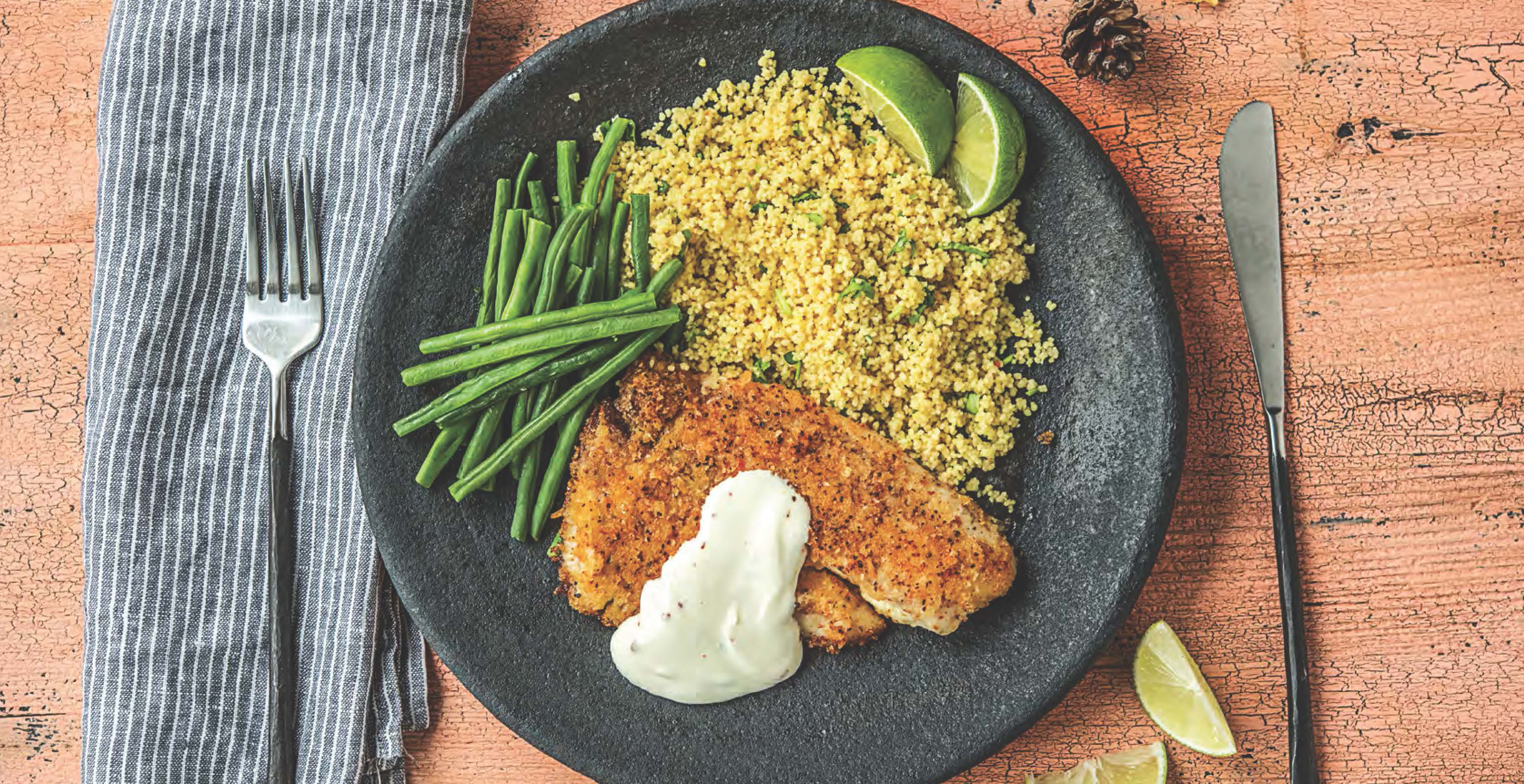
Tex-Mex Tilapia

with Cilantro Lime Couscous and Green Beans


By Hello Fresh


Cooking Time: 20 mins

Servings: 4

Nutrition: 600 Calories

Ingredients:


  • Veggie Stock Concentrate- 2
  • Cilantro-1/2 oz
  • Lime- 2
  • Panko Breadcrumbs- 1 cup
  • Southwest Spice Blend- 2 tbsp
  • Couscous- 1 cup
  • Tilapia- 22 oz
  • Sour Cream- 10 tbsp
  • Chipotle Powder- 1 tsp
  • Green Beans- 12 oz


1  HEAT STOCK AND PREP.    Wash and dry all produce except green beans. Bring ¾ cup water, stock concentrate, and a pinch of salt to a boil in a small pot. Finely chop cilantro. Cut lime into wedges. Stir together panko and Southwest spice in a shallow dish or bowl. Season with salt and pepper.


COOK COUSCOUS.     Once stock is boiling, add couscous to pot. Cover, then remove from heat. Let stand, covered, until liquid is absorbed and grains are tender.


3 COAT FISH.       Brush tilapia all over with 2 tbsp sour cream (1 pack). Season with salt and pepper. Dip each fillet into panko mixture, coating all over and pressing to adhere.


4  COOK FISH.       Heat a thin layer of oil in a large pan over medium-high heat (we used 2 TBSP oil; use a nonstick pan if you have one). Add tilapia to pan and cook until flesh is opaque and panko is golden brown, 4-5 minutes per side.


5  MAKE CREMA AND STEAM GREEN BEANS.    While fish cooks, combine remaining sour cream, a squeeze of lime, and chipotle powder (to taste) in a small bowl. Season with salt and pepper. Pierce green bean bag with a fork and place on a microwave-safe plate. Microwave on high for 3-4 minutes (or until green beans are tender), then carefully remove green beans from bag.


6  FINISH AND SERVE.     Fluff couscous with a fork, then stir in half the cilantro and a squeeze of lime. Season with salt and pepper. Divide between plates, then place tilapia on top. Dollop with crema. Season green beans with salt and pepper and serve on the side. Sprinkle remaining cilantro over everything. Serve with any remaining lime wedges.

Conquering Sugar Cravings

By Nia Saldana

Did you know that sugar and processed foods are as addictive as heroin and cocaine? It’s no wonder so many people are addicted to sugar.

“Sweet is the first taste humans prefer from birth,” says Christine Gerbstadt, MD, RD, a dietitian and American Dietetic Association (ADA) spokeswoman. She has also said that the sweet taste releases endorphins that help us calm down and relax, giving us a natural high.

Experts worry that since sugar makes up a third of our calorie intake, sugar overload is contributing to diabetes, heart disease and cancer.

Researchers at Yale University have revealed that after eating bad carbohydrates such as sugars and carbs, cause dramatic drops in blood sugar levels. The drop can leads to loss of self-control and cravings when it comes to high-calorie foods.

When trying to stop sugar cravings, it is important to never go hungry. Skipping a meal or two lowers the body’s blood sugar causing you to overeat to make up for the lost calories. Eating three balanced meals a day with two snacks keep your blood sugar stable reducing cravings.

Most people are guilty of having a sweet tooth especially in the evening hours after dinner. There are healthier ways to satisfy these cravings, such as fruits, smoothies, or even dark chocolates can be healthy than donuts and candies.

Here are a few examples of healthier sweet tooth remedies:

Yogurt Parfait ( about 300 calories)

Cereal and Milk (about 110 calories)

Fresh Fruit (about 54 calories)

Dark Chocolate ( about 155 calories)

Smoothie (about 90 calories)

Graham Crackers ( about 320 calories)

Remember to keep a positive mindset when trying to crush these cravings!


The Ultimate Healthy Blueberry Crumble

¾ cup (75g) old-fashioned oats (gluten-free if necessary and measured like this)

¼ cup (30g) whole wheat flour or millet* flour (measured like this)

1 tsp. ground cinnamon

2 tbsp. (30mL) pure maple syrup, room temperature

1 ½ tbsp. (21g) unsalted butter, melted

6 cups (840g) blueberries

3 tbsp (24g) cornstarch

Preheat the oven to 350°F, and coat an 8”-square pan with nonstick cooking spray.

To prepare the topping, whisk together the oats, flour, and cinnamon in a small bowl. Make a well in the center. Pour in the maple syrup and melted butter. Stir until fully incorporated.

To prepare the filling, toss the blueberries with the cornstarch in a large bowl until completely coated.

Transfer the filling to the prepared pan, and sprinkle evenly with the topping. (The topping tends to clump, so try to break it up into fairly small pieces.) Bake at 350°F for 45-55 minutes or until the juice is bubbling at the sides of the pan. Cool completely to room temperature; then refrigerate for at least 3 hours before serving to allow the juices to fully thicken.

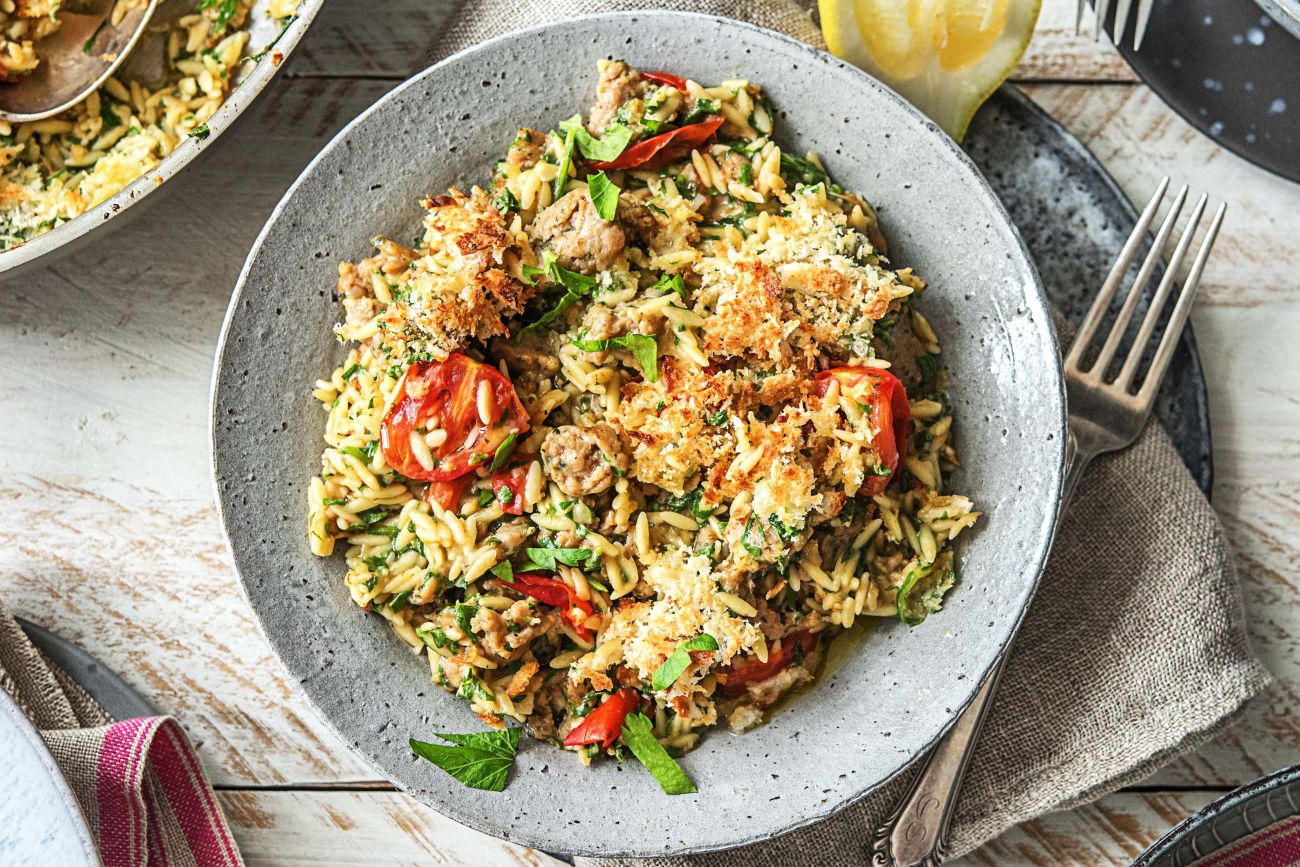
One-Pan Orzo italiano

with Chicken Sausage, Tomatoes, and Spinach


By Hello Fresh


Cooking Time: 30 mins

Servings: 2

Nutrition: 550 Calories

Ingredients:


  • Garlic- 2 cloves
  • Baby Spinach- 5 oz
  • Lemon- 1
  • Grape Tomatoes- 4 oz
  • Parsley- 1/4 oz
  • Italian Chicken Sausage- 6 oz
  • Orzo Pasta- 2/3 cup
  • Italian Seasoning- 1/2 tbsp
  • Chicken Stock Concentrate- 1
  • Mozzarella Cheese- 1/4 cup
  • Panko Breadcrumbs- 1/2 cup
  • Parmesan Cheese- 1/4 cup


1  PREHEAT AND PREP.     Wash and dry all produce. Preheat broiler to high. Mince garlic. Finely chop spinach until you have 1 cup very packed spinach. Halve lemon; cut one half into wedges. Halve tomatoes. Pick parsley leaves from stems and finely chop; discard stems. Remove 2 links sausage from casings (use other link as you like).


COOK SAUSAGE.      Heat a drizzle of olive oil in a large tall-sided pan over medium-high heat (use an ovenproof pan if you have one). Add sausage, breaking up meat into pieces. Cook until just browned, about 3 minutes.


3 START ORZOTTO.        Add tomatoes and garlic to pan with sausage. Cook, stirring occasionally, until tomatoes start to wilt, 2-3 minutes. Add ⅔ cup orzo and ½ TBSP Italian seasoning (we sent more of both). Cook, stirring, until orzo is coated in juices, about 1 minute. Season with salt and pepper.


4  FINISH ORZOTTO.       Add 2 cups water, stock concentrate, and a pinch of salt to same pan. Bring to a boil, then lower heat to medium. Let simmer, stirring occasionally, until orzo is almost al dente, 7-9 minutes. Stir in chopped spinach and cook until wilted, about 3 minutes more. TIP: If mixture seems dry, add water ¼ cup at a time until loose.


5  BROIL ORZOTTO.    Stir ¼ cup mozzarella (we sent more) and a squeeze of lemon into pan. Season with salt, pepper, and more lemon to taste. (TIP: If your pan is not ovenproof, transfer mixture to a baking dish at this point.) Sprinkle panko and Parmesan over top of orzotto. Broil until panko is golden brown, 1-3 minutes.

6  PLATE AND SERVE.      Divide orzotto between plates. Sprinkle parsley over top. Serve with

lemon wedges on the side for squeezing over.

Diet vs. Exercise: Which is Better for Weight Loss?

By StatePoint

What’s more important: diet or exercise? Anyone who’s tried to lose weight and maintain a healthy lifestyle has likely asked this question.

Sixty-eight percent of people want to lose 10 pounds or more, according to a recent Harris Poll on behalf of Nutrisystem. March is National Nutrition Month, and a good time to get started on your goals. So, should you focus on diet, exercise or both?

When it comes to weight loss, the split should be roughly 80 percent focus on what you eat and 20 percent on exercise. The logic is simple, say experts.

“It’s all about calories in and calories out. If you’re eating less and exercising, you’re going to burn more calories,” says Courtney McCormick, corporate dietitian at Nutrisystem. “However, exercise often makes us hungrier, which is why many people who only change their exercise habits don’t see the scale move.”

To achieve a healthier lifestyle and shed weight, consider these quick tips that combine both diet and exercise.

• Eat more often: A 2015 study from the Journal of the Academy of Nutrition and Dietetics found that on average, people who ate six times or more daily consumed fewer calories, had a lower body mass index, and ate more nutrient-rich foods than those who didn’t eat at least six times a day. Eating smaller meals every three hours keeps you feeling full, controls blood sugar and helps boost metabolism.

• Watch portions: American portions have become too big; and those used to dining out may consider restaurant portions to be correct, when they’re often four times as large as what’s recommended. Learning portion control is key to losing weight. When eating out, ask for a to-go box and save half for later. You can also turn to plans, like Nutrisystem, which deliver portion-controlled meals to your home.

• Veg out: Vegetables are low in calories, high in filling fiber and loaded with nutrients. For breakfast, add spinach to an omelet; at lunch, pile your sandwich high with fixings like tomatoes, cucumbers and peppers, or use lettuce as a wrap instead of bread. During snack time, munch on carrots dipped in hummus or blend kale into a fruit smoothie.

• Drink more water: A study found that when people drank six cups (48 ounces) of cold water, they increased their resting calorie burn by up to 50 calories each day. Another study found that dieters who drank two eight-ounce glasses of water before meals lost 36 percent more weight over three months than those who didn’t sip before sitting down to eat. So, fill up that water bottle!

• Get moving: The Centers for Disease Control and Prevention recommend 150 minutes of aerobic activity weekly, but research suggests that it doesn’t matter if you exercise for two-and-a-half hours straight or break it up into 10-minute chunks. Aim for 30 minutes of exercise per day then build up to 60 minutes when you’re ready.

More diet and exercise tips can be found at leaf.nutrisystem.com.

Remember the key to meeting your weight loss and health goals is to make sustainable lifestyle changes. Focus on eating better and moving more and you’ll be on the right track.

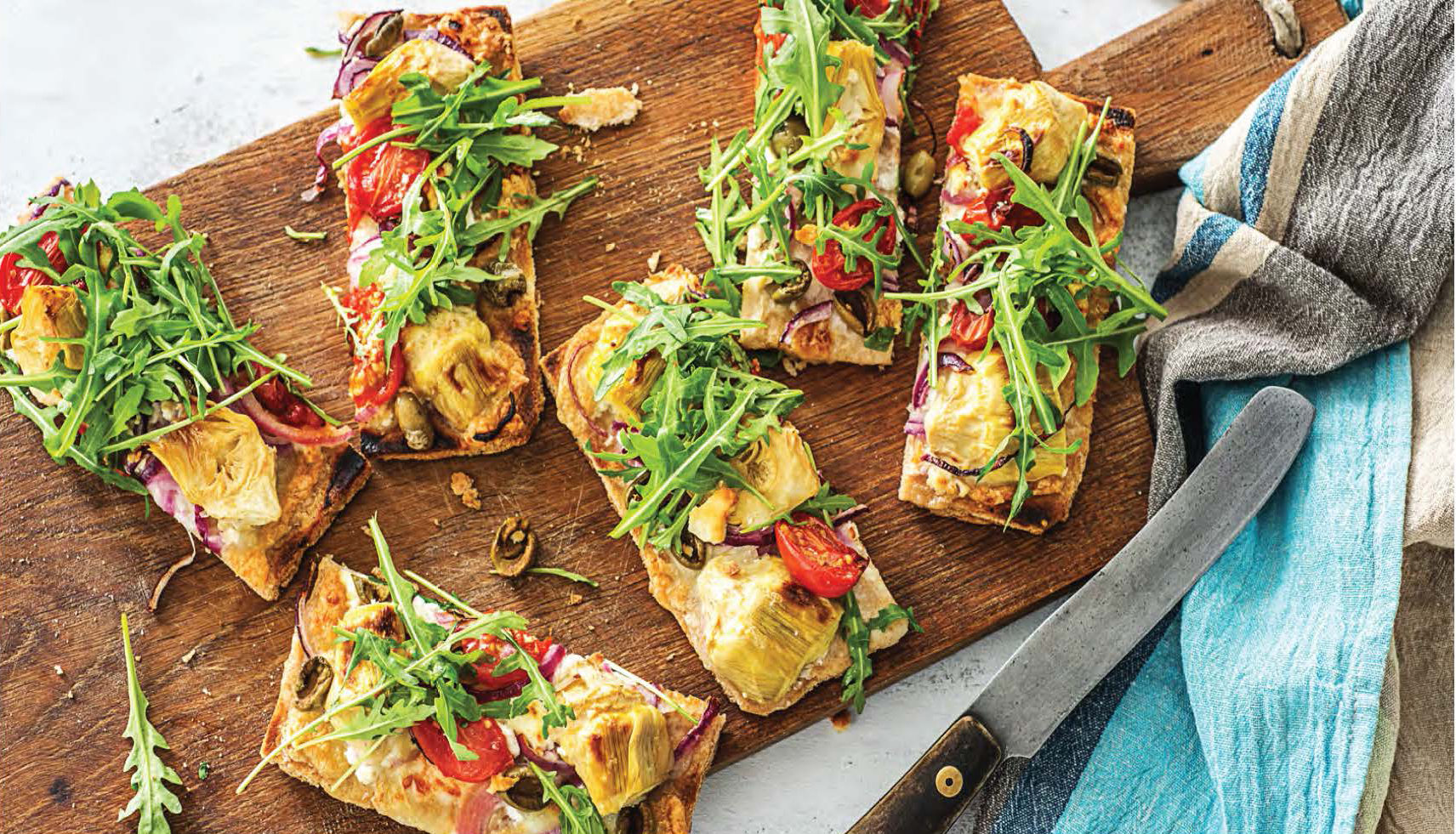
Greek Salad Flatbreads

with Artichokes, Olives and Feta


By Hello Fresh


Cooking Time: 25 mins

Servings: 4

Nutrition: 710 Calories

Ingredients:


  • Artichokes- 13 oz
  • Green Olives- 2 oz
  • Grape Tomatoes- 8 oz
  • Red Onion- 1
  • Garlic- 4 cloves
  • Fresh Mozzarella- 8 oz
  • Flatbreads- 4
  • Feta Cheese- 1/2 cup
  • Arugula- 4 oz
  • Balsamic Vinegar- 5 tsp


1  PREHEAT OVEN AND PREP VEGGIES.    Wash and dry all produce. Adjust rack to upper position and preheat oven to 425 degrees. Rinse and drain artichokes, then cut into halves through stem ends. Cut olives and tomatoes in half lengthwise. Halve, peel, and thinly slice onion. Mince or grate garlic.


PREP CHEESE.  Tear mozzarella into small piece with hands.


3 ASSEMBLE FLATBREADS.    Place flatbreads on a lightly oiled baking sheet. Spread out mozzarella in an even layer over tops of each. Scatter olives, artichokes, tomatoes, and feta cheese over tops, followed by as much onion and garlic as you like. Season with salt and pepper.


4  BAKE FLATBREADS.       Bake flatbreads in oven until crust is crisp and mozzarella is melted, 7-10 minutes.


5  DRESS ARUGULA.     Toss arugula in a medium bowl with 1 TBSP vinegar (we sent more) and a drizzle of olive oil. Season with salt and pepper.


6  FINISH AND SERVE.    Scatter arugula over flatbreads, then cut into slices and serve.

Tips to Refresh Yourself

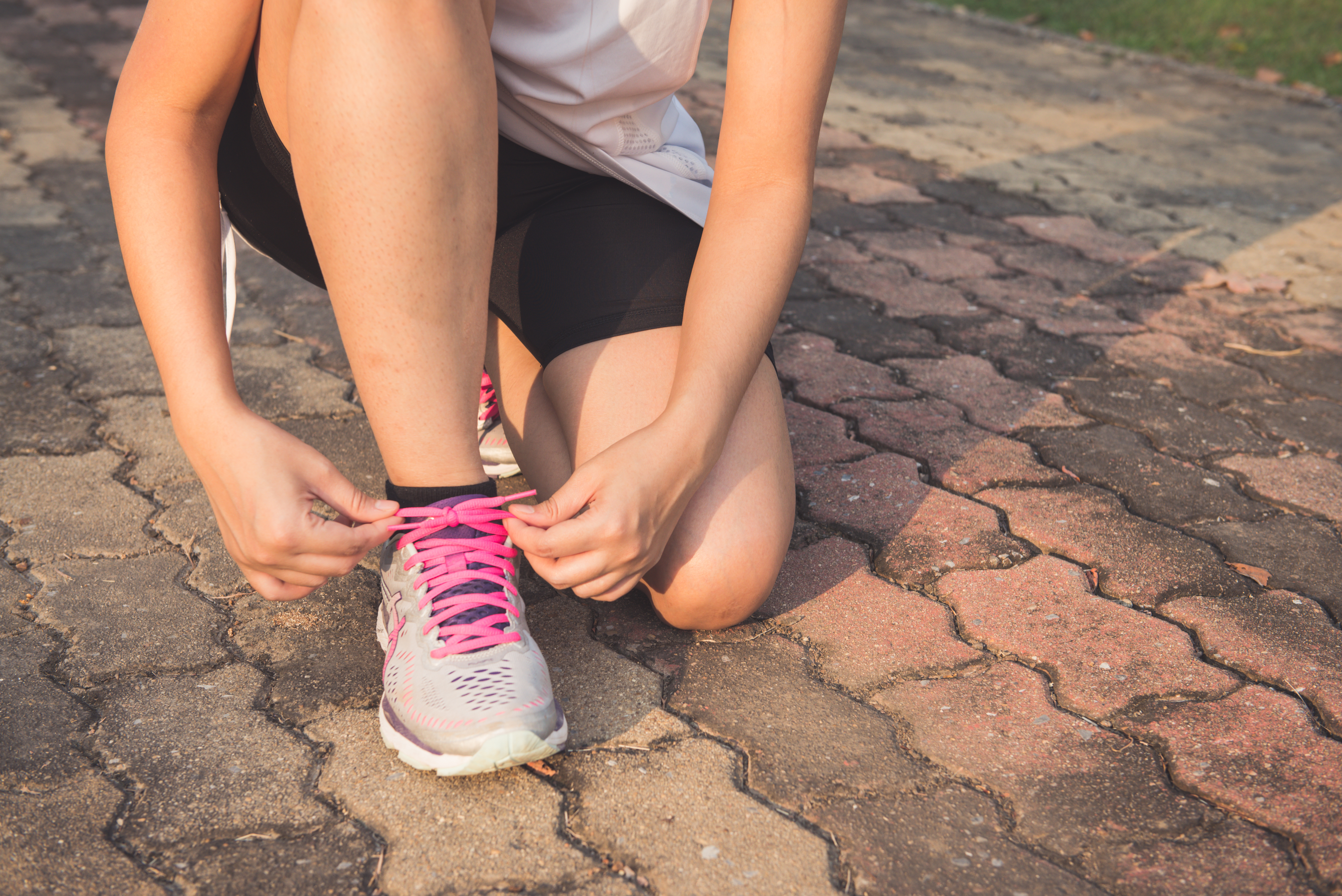
Running shoes – woman tying shoe laces. Closeup of female sport fitness runner getting ready for jogging outdoors on forest path in late summer or fall. Vintage effect style pictures.

By StatePoint

In a fitness rut? Instead of simply attempting to lose weight or drop a clothing size, consider placing a more positive spin on your objectives. Whether your stated goal is to try new sports and hobbies or to get in touch with nature, you can better refresh yourself by setting goals that help you get in shape while appreciating your surroundings and having fun.

Try Something New

Testing out new sports and hobbies doesn’t need to require a giant time or financial commitment. There are plenty of ways to dip your toe in the water. Thanks to online marketplace coupon services, it’s easy find discounted access to local experiences like orienteering and rock climbing classes, fishing excursions, white water rafting journeys and more. Consider giving your fun and fitness goals a recharge by trying out something completely different.

Make More of It

Whether you’re hiking, biking, skiing or trying any other new outdoor sport, consider making the most of your excursions with tech gear that enhances the experience. For example, the PRO TREK Smart Outdoor Watch WSD-F20 from Casio, powered by Android Wear 2.0, has GPS capabilities, a full color map display and water resistance of up to 50 meters, making it well suited for rugged adventures. Because it can be used offline in areas without cellular service, it’s can free you up to go farther off the beaten trail. Find a great fishing spot or vista on a hike? Spot some beautiful wildlife on the trail? Its Location Memory app instantly reads a user’s current location, so you can add notes to otherwise unmarked map spots. Additionally, Casio’s Moment Setter app gives users an opportunity to automatically receive important alerts, such as best fishing times, rest break intervals, and sunrise/sunset times.

Get Competitive

Having a race or competition up ahead on the calendar can be the motivating force that drives you to get off the couch, get fit and enjoy the outdoors. Whether it’s a 10k, obstacle race or a triathlon, training for such a competition can have cascading effects, leading to new healthy habits beyond more frequent workouts, such as getting more rest and hydration and eating a healthier diet. Completing your goal can be a truly rewarding experience.

When it comes to your health and wellness, think beyond the scale. Refresh your body and mind with new experiences that lead to healthy habits.

Italian Ciabatta Cheeseburgers

with Mozzarella, Onion, and Balsamic Greens


By Hello Fresh

Cooking Time: 30 mins

Servings: 4

Nutrition: 790 Calories

Ingredients:


  • Red Onion- 1
  • Garlic- 2 cloves
  • Tomato Paste- 1 tbsp
  • Balsamic Vinegar- 2 tbsp
  • Ground Beef- 20 oz
  • Mozzarella Cheese- 1 cup
  • Ciabatta Bread- 4
  • Heirloom Grape Tomatoes- 8 oz
  • Spring Mix Lettuce- 4 oz
  • Dried Cranberries- 2 oz


1  PREHEAT OVEN AND COOK ONION.    Wash and dry all produce. Preheat oven to 400 degrees or grill to high. Halve, peel, and thinly slice onion. Heat a drizzle of olive oil in a large pan over medium heat. Add onion and 1 tsp sugar. Cook, tossing, until browned, 6-8 minutes. Season with salt and pepper. Remove from pan and set aside.


MAKE VINAIGRETTE.     While onion cooks, mince or grate garlic until you have ½ tsp (you may have a clove left over). In a large bowl, whisk together ½ TBSP tomato paste, 1 TBSP balsamic vinegar, 1 TBSP olive oil, and as much minced garlic as you like (we sent more tomato paste and vinegar than needed). Season with salt and pepper.


3  COOK BURGERS.       Wipe out same pan, then heat a drizzle of olive oil in it over medium-high heat (skip if grilling). Shape beef into 2 patties slightly wider than the bread. Season with salt and pepper. Add to pan or grill. Cook until just shy of desired doneness, 2-4 minutes per side. Sprinkle mozzarella on top. Cover pan or grill and cook until cheese melts, 1 minute more.


4  TOAST BREAD AND PREP.        Split ciabattas in half. Toast in oven or on grill until golden, 3-5 minutes. Meanwhile, halve tomatoes lengthwise. TIP: A bread knife will slice right through those rolls.


5  TOSS SALAD.     Add mixed lettuce, tomatoes, and cranberries to bowl with vinaigrette and toss to combine. Season with salt and pepper.


6  ASSEMBLE AND SERVE.     Fill ciabattas with burgers, onion and a little bit of salad. Divide between plates and serve with remaining salad on the side.

What to Ask Your Doctor About Parkinson’s Disease

By StatePoint

Talking to your doctor about any health concern can be tough, particularly when symptoms catch you by surprise or cause concern. And when it comes to Parkinson’s disease (PD), experts say there are many symptoms that often go unreported at doctor’s appointments, making them difficult to diagnose and treat.

For example, many people are aware of visible symptoms associated with PD, like resting tremors and loss of balance. However, more than half of people living with Parkinson’s also experience a lesser known aspect of the disease — hallucinations and delusions.

“Over time, these symptoms may increase in frequency or become bothersome, as a person with Parkinson’s becomes less able to distinguish between what is real and what’s not. Fortunately, these symptoms often can be addressed.” says Neal Hermanowicz, MD, director of the Parkinson’s Disease & Movement Disorders Program at the University of California, Irvine.

To help you prepare for your appointment with a PD specialist, Dr. Hermanowicz says to consider the following statements, and if they apply to you, to tell your doctor at your next appointment.

• I sometimes feel out of touch with reality.

• Others tell me that what I am hearing, seeing or sensing (e.g., people, animals or objects) are not actually there (hallucinations).

• I have beliefs or fears that a loved one (perhaps a spouse, caregiver or friend) is stealing from me or being unfaithful (delusions).

Dr. Hermanowicz also suggests that caregivers prepare for the next appointment by considering the following statements and speaking to their loved one’s PD specialist if any of them apply.

• I have observed my loved one interacting with things, seeing things or sensing things that are not there (hallucinations).

• My loved one has had false beliefs toward me or others, such as believing someone is stealing from them or being unfaithful (delusions).

• These experiences have affected our daily life.

Learn more about hallucinations and delusions associated with Parkinson’s and download resources that will help initiate these critical conversations at MoretoParkinsons.com.

If you or someone you care for is experiencing these symptoms, you are not alone and you may be able to get help. Talk to a PD specialist to learn more about available treatment options. Be prepared for your next appointment by ensuring the conversation first starts at home.

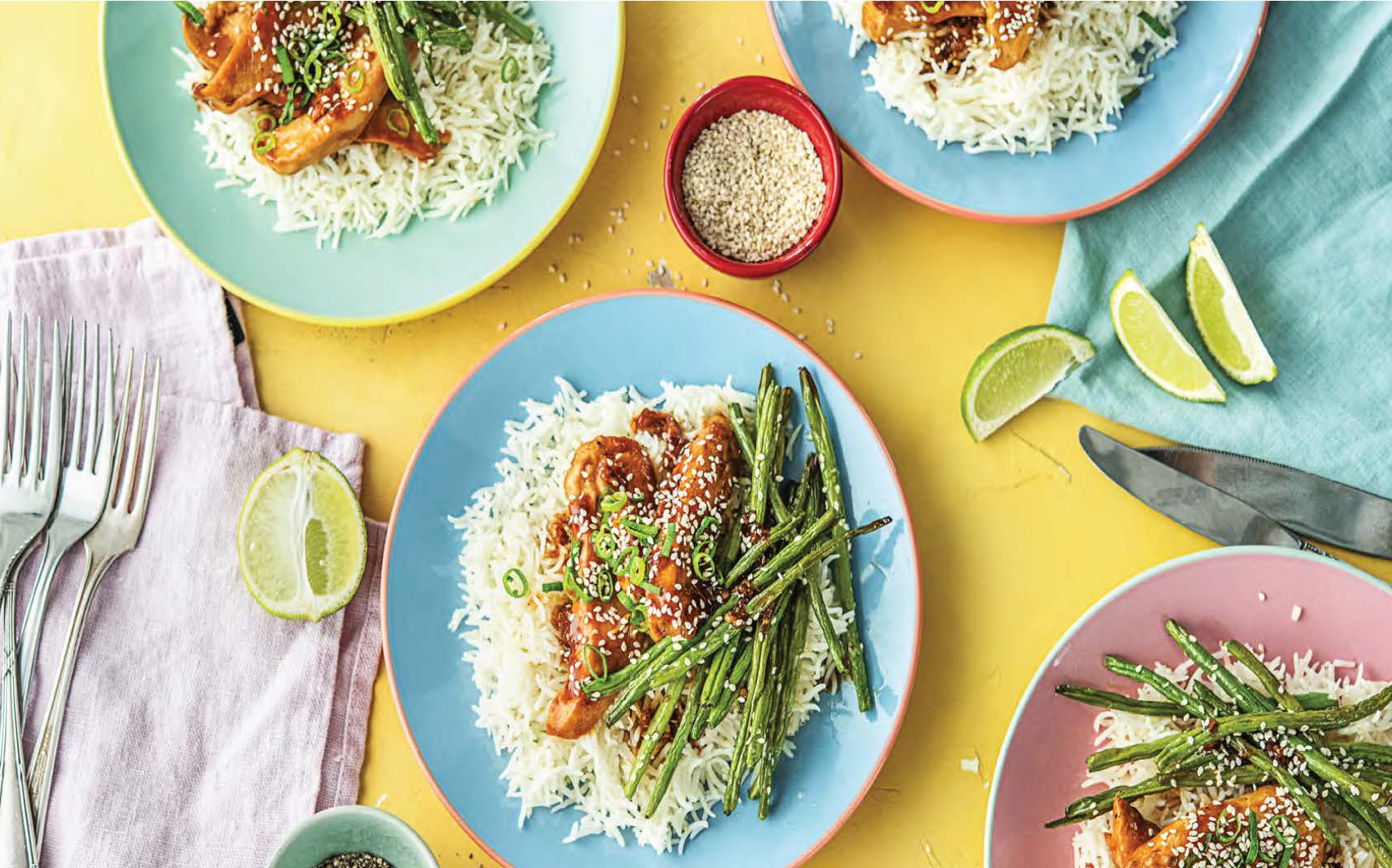
Super Soy Chicken Tenders

with Jasmine Rice and Green Beans


By Hello Fresh


Cooking Time: 35 mins

Servings: 4

Nutrition: 720 Calories

Ingredients:


  • Ginger- 1 thumb
  • Garlic- 4 cloves
  • Scallions- 2
  • Lime- 1
  • Jasmine Rice- 1 1/2 cups
  • Green Beans- 12 oz
  • Sesame Seeds- 1 tbsp
  • Chicken Tenders- 24 oz
  • Soy Sauce- 6 tbsp
  • Colavita White Wine Vinegar- 2 tbsp
  • Cornstarch- 1 tsp


1  PREHEAT AND PREP.    Wash and dry all produce. Preheat oven to 425 degrees. Bring 2½ cups water and a large pinch of salt to a boil in a medium pot. Peel ginger and mince until you have 2 TBSP. Mince garlic. Trim, then thinly slice scallions, keeping greens and whites separate. Halve lime; cut one half into wedges.


2  COOK RICE.     Once water is boiling, add rice to pot. Cover, lower heat, and reduce to a gentle simmer. Cook until tender, 15-20 minutes. Remove from heat and keep covered.


3 ROAST GREEN BEANS.        Toss green beans with a large drizzle of oil on a baking sheet. Season with salt and pepper. Roast in oven until crisp, 10-12 minutes. After they’ve finished roasting, toss green beans with 2 tsp sesame oil, half the sesame seeds, and a squeeze of lime (we sent more oil than needed).


4  COOK CHICKEN      Heat a large drizzle of oil in a large pan over medium-high heat. Pat chicken dry with a paper towel. Add to pan and cook until browned but not cooked through, 2-4 minutes per side. Remove from pan and set aside. TIP: Don’t overcrowd the pan with chicken—you may want to work in batches.


5  MAKE SAUCE.   Heat a large drizzle of oil in same pan over medium-high heat. Whisk together soy sauce, ¼ cup sugar, 2 TBSP Colavita white wine vinegar (we sent more), and cornstarch in a small bowl. Put scallion whites, garlic, and ginger in pan and cook, tossing, until softened, 1-2 minutes. Stir in soy sauce mixture and bring to a simmer. Let thicken slightly, about 2 minutes.


6  FINISH AND SERVE.     Return chicken to pan, toss to coat, and cook until no longer pink in center, 2-3 minutes. Add a squeeze of lime to rice, then fluff with a fork. Divide rice, green beans, and chicken between plates. Drizzle with any remaining sauce. Sprinkle with scallion greens and remaining sesame seeds. Serve with lime wedges.

Tips for Tackling Age-Related Skin Issues

By StatePoint

Aging is a fact of life, and your skin is no exception. However, experts say that there is a lot you can do to help your skin at all stages of life.

“By spotting signs that your skin is maturing, you can take steps to intervene early, helping skin stay as healthy and youthful looking as possible,” says Dr. Roger Ceilley M.D., a nationally and internationally recognized dermatologist with over 30 years of experience.

To tackle age-related skin issues, Dr. Ceilley recommends the following tips.

• Around age 40, begin examining your skin for changes. You’ll get a better understanding of your skin’s specific needs so you can address them accordingly. Be careful not to focus only on the face, as you may wind up playing catch-up with the rest of your skin late in the maturing process.

• According to Dr. Ceilley, the levels of collagen, elastin and fatty tissue important for making skin appear plump and youthful begin to diminish as you age, causing thinner-looking skin. Help counteract this process with a moisturizing cream or lotion that contains skin-nurturing ingredients like hyaluronic acid, retinol, glycolic acid and niacinamide. These can be found in products such as DerMend Fragile Skin Moisturizing Formula from the new DerMend Mature Skin Solutions line. In addition to those ingredients, the lightweight cream also features five critical ceramides to help make skin more resilient and fresher looking.

• A well-balanced diet promotes healthy, younger-looking skin. Make sure you are eating plenty of fruits and vegetables, lean proteins, and healthy fats each day.

• Thin, fragile skin can bruise more easily. Medications such as blood thinners may leave skin especially vulnerable to bruising. To help, keep a product on-hand like DerMend Moisturizing Bruise Formula which contains a blend of ceramides, alpha hydroxy acid, arnica oil and retinol.

• Dr. Ceilley also advises using gentle, unscented products when bathing or showering. Scented soaps, cleansers and alcohol-based products can leave aging skin feeling irritated and dry. Be sure to wash gently and avoid scrubbing or over-exfoliating as this can further irritate the skin.

• Itchy skin is not only a nuisance, but it can keep you from being comfortable and prevent a good night’s sleep, which can be detrimental to one’s health at any age. Though doctors are not certain why, itchiness is a very common problem in maturing skin. To temporarily relieve discomfort, use a steroid-free, anti-itch product containing pramoxine hydrochloride 1%, which can rapidly interfere with the itch/scratch cycle, helping to calm skin and allowing you to have a better night’s sleep.

• No matter what age you are, protect your skin from the sun and use sunscreen with SPF 50 or higher. Sun exposure throughout your lifetime can cause a myriad of skin problems as you get older including skin cancer, deep wrinkles, thinning skin, dark spots and broken capillary veins.

“Your skincare should be specific to your needs,” says Dr. Ceilley. “Watch for signs of aging and then adopt a routine that addresses every inch of your skin.”

For more information, please visit http://www.Dermend.com or http://www.FerndaleHealthCare.com.

By incorporating these tips along with specially-designed mature skincare products into your daily beauty routine, you can help tackle age-related skin conditions and help maintain healthy-looking skin for life.