Category Archives: Healthy Living

Is Sugar the Cause of Your Weight Gain? Tips to Cut Back

By StatePoint

February is American Heart Month and a great opportunity to focus on your cardiovascular health. According to the American Heart Association, cardiovascular disease accounts for about one of every three deaths.

Taking care of your heart starts with your diet and making healthy changes. Cutting down on sugar, which experts say most Americans consume far too much of on a daily basis, is the perfect place to start. Processed sugars add empty calories to your diet and can disrupt your metabolism, making weight loss or maintenance difficult and posing serious health risks.

Americans on average get about 16 percent of their daily calories from added sugars, according to an Food and Drug Administration report, but the USDA’s dietary guidelines recommend less than one-third of that amount. And it’s not just the usual suspects like candy, cookies and cake that can cause the sugar surplus.

“Foods like white bread and bagels break down the same as added sugar, so, it’s about the types of carbs you’re eating, too. In fact, I would say fats aren’t making us fat, sugar is.” says Dr. Arthur Agatston, founder of the South Beach Diet.

To avoid extra sugar in your diet and get on a path to greater health, consider these simple strategies.

• Shop the Perimeter. Sticking to the perimeter of the grocery store is a good rule of thumb, as this tends to be where you’ll find the least processed foods, such as vegetables, fruit, dairy, meat and seafood, most of which are free of added sugar.

• Read Food Labels. Seek out foods containing little to no sugar, being careful to read labels. You may have to look hard though, as sugar is ubiquitous in American foods. Bear in mind that ingredient listings on packaged foods are in order of volume.

• Learn Sugar’s Other Names. “Pretty much anything ending in ‘ose’ is a sugar. And whether it’s fructose, dextrose or sucrose, it will end up as a sugar in your body,” says Mandi Knowles, Registered Dietitian at South Beach Diet. Avoid them if you want to eat less sugar.

• Buy Unsweetened Foods. Look for food labels that say the food is unsweetened. Not “naturally sweetened.” Unsweetened. That means there won’t be anything lurking in there that could throw you off.

• Make Sugar Swaps. Simple swaps can help you save on sugar. Swap soda for unsweetened iced tea and save 31 grams of sugar. Swap non-fat flavored yogurt for Greek yogurt with fresh strawberries and save 19 grams of sugar. Swap your favorite vanilla latte for black coffee with a splash of cream and save 35 grams of sugar.

• Try Something New. Consider a diet plan that focuses on good carbs, good fats, healthy protein and high fiber, such as the South Beach Diet, which is proven to have a positive impact on heart health, weight loss and belly fat. Delivering on average just 1 percent of calories from added sugars, it was the first plan to propose dieters focus less on cutting out fats and carbs and focus more on considering the quality of the fats and carbs they’re eating.

A healthy diet and lifestyle are among your best defenses to help fight cardiovascular disease. This American Heart Month, you can help improve your heart health and overall health by reducing sugar in your diet.

Zucchini Noodles with Avocado Pesto & Shrimp

Recipe By: Breana Lai

“Cut some carbs and use spiralized zucchini in place of noodles in this zesty pesto pasta dish recipe. Top with Cajun-seasoned shrimp to complete this quick and easy dinner.”

Ingredients:

5-6 medium zucchini (2¼-2½ pounds total), trimmed

¾ teaspoon salt, divided

1 ripe avocado

1 cup packed fresh basil leaves

¼ cup unsalted shelled pistachios

2 tablespoons lemon juice


¼ teaspoon ground pepper

¼ cup extra-virgin olive oil plus 2 tablespoons, divided

3 cloves garlic, minced

1 pound raw shrimp (21-25 count), peeled and deveined, tails left on if desired

1-2 teaspoons Old Bay seasoning

Directions

1Using a spiral vegetable slicer or a vegetable peeler, cut zucchini lengthwise into long, thin strands or strips. Stop when you reach the seeds in the middle (seeds make the noodles fall apart). Place the zucchini “noodles” in a colander and toss with ½ teaspoon salt. Let drain for 15 to 30 minutes, then gently squeeze to remove any excess water.

2Meanwhile, combine avocado, basil, pistachios, lemon juice, pepper and the remaining ¼ teaspoon salt in a food processor. Pulse until finely chopped. Add ¼ cup oil and process until smooth.

3Heat 1 tablespoon oil in a large skillet over medium-high heat. Add garlic and cook, stirring, for 30 seconds. Add shrimp and sprinkle with Old Bay; cook, stirring occasionally, until the shrimp is almost cooked through, 3 to 4 minutes. Transfer to a large bowl.

4Add the remaining 1 tablespoon oil to the pan. Add the drained zucchini noodles and gently toss until hot, about 3 minutes. Transfer to the bowl, add the pesto and gently toss to combine.


Seitan Tacos El Diablo

with Kiwi Salsa and Lime Crema


By Hello Fresh


Cooking Time: 30 mins

Servings: 4

Nutrition: 650 Calories

Ingredients:


  • Red Onion- 2
  • Poblano Pepper- 2
  • Roma Tomato- 2
  • Kiwis- 4
  • Cilantro- 1/2 oz
  • Limes- 2
  • Chorizo Seitan- 16 oz
  • Sour Cream- 8 tbsp
  • Flour Tortillas- 12


1  PREP.    Wash and dry all produce. Halve, peel, and thinly slice onion. Mince a few slices until you have 3 TBSP minced onion. Core and seed poblano, then thinly slice. Core and seed tomato, then dice into ¼-inch cubes. Peel kiwis, then dice into ¼-inch cubes. Finely chop cilantro. Zest lime until you have a big pinch of zest, then cut into wedges.


MAKE KIWI SALSA.    Combine tomato, minced onion, kiwis, a squeeze of lime juice, and half the cilantro in a small bowl. Season with salt, pepper, and more lime juice (to taste). Set aside.


3 COOK VEGGIES.      Heat a large drizzle of oil in a large pan over medium-high heat. Add poblano and sliced onion. Season with salt and pepper. Cook, tossing, until softened and slightly charred, 3-5 minutes.


4  WARM SEITAN.      Add seitan and another drizzle of oil to pan and toss to combine. Season with salt and pepper. Cook until seitan is warmed through and starting to brown, about 5 minutes. Reduce heat to low to keep warm, stirring occasionally.


5  MAKE LIME CREMA.    In another small bowl, combine lime zest, a squeeze of lime juice, and sour cream. Season with salt, pepper, and more lime juice (to taste).


6  FINISH AND SERVE.    Wrap tortillas in a damp paper towel and microwave on high until warm, about 30 seconds. Fill tortillas with seitan mixture, then top with kiwi salsa and dollop with lime crema. Sprinkle with remaining cilantro. Serve with any remaining lime wedges on the side for squeezing over.

New Ways to Improve the Way You Feel

By StatePoint

Nearly 25 million Americans experience daily physical discomfort, according to the National Institutes of Health, which can affect mood, mobility and quality of life.

While the reasons for discomfort vary, the way it is experienced doesn’t — peripheral nerves are responsible for delivering sensory information, such as itch, temperature change and physical pressure to the brain.

With this in mind, experts are identifying new ways to promote nerve health and comfort by inhibiting inflammatory compounds in nerve cells, and at the same time, encouraging healthy neurotransmitter levels in the brain.

They have discovered that a fatty acid called palmitoylethanolamide (PEA), produced naturally by the body as part of a healthy inflammatory and immune response, inhibits the secretion of inflammatory compounds from mast cells, a type of white blood cell. As we age, our number of mast cells decreases, causing our remaining mast cells to work harder. That can make them overly sensitive, activating inflammatory processes linked to nerve discomfort.

“By inhibiting inflammatory compounds released by mast cells, PEA promotes the body’s natural response to uncomfortable nerve stimuli at the cellular level,” says Michael A. Smith, M.D., senior health scientist and spokesperson for Fort Lauderdale, Fla.-based Life Extension.

Smith points out that it is now possible to take PEA in supplement form. One option is Life Extension’s ComfortMAX, a dual-action nerve support supplement which contains both PEA as well as Honokiol, a naturally occurring lignan compound derived from magnolia that is shown to support “calming” receptors in the brain, known as GABA receptors, which affect the way the brain perceives discomfort.

These statements have not been evaluated by the Food and Drug Administration and these products are not intended to diagnose, treat, cure, or prevent any disease, however, many experts believe they can be effective in pain management. More information can be found at http://www.lecomfortmax.com.

“It’s only natural to think topically or locally when we wish to inhibit discomfort. However, taking in the bigger picture could mean more effective relief,” says Dr. Smith.

Crispy Cheddar Frico Cheeseburgers

with Caramelized Onion Jam and Roasted Broccoli


By Hello Fresh


Servings: 4

Nutrition: 800 Calories


Ingredients:


  • Red Onion- 1
  • Roma Tomato- 2
  • Brioche Buns- 4
  • Ground Beef- 20 oz
  • Broccoli Florets- 16 oz
  • Sherry Vinegar- 5 tsp
  • Cheddar Cheese- 1 cup
  • Ketchup- 4 tbsp


1 PREHEAT AND PREP. Wash and dry all produce. Adjust rack to upper position and preheat oven to 425 degrees. Halve, peel, and thinly slice onion. Slice tomato into rounds. Split buns in half. Shape beef into two evenly sized patties (make them slightly wider than the buns).


2  ROAST BROCCOLI. Toss broccoli on a baking sheet with a drizzle of olive oil and a pinch of salt and pepper. Roast in oven until lightly crisped, 15-20 minutes.


3 MAKE ONION JAM. Heat a drizzle of olive oil in a large pan over medium-high heat. Add onion and cook, tossing, until soft, 5-6 minutes. Stir in 3 tsp vinegar (we sent more) and 1 tsp sugar. Simmer until liquid is nearly evaporated, 1-2 minutes. Season with salt and pepper. Transfer to a small bowl and set aside.


4 MAKE CHEDDAR FRICO. Line another baking sheet with parchment paper. Place cheddar on it in two even piles. Bake in oven until melted in middle and crispy at the edges, 5-7 minutes. TIP: If you don’t have parchment, that’s OK. As soon as the frico come out of the oven, transfer to a plate to cool using a spatula.


5   COOK BURGERS AND TOAST BUNS.  Meanwhile, wipe out pan used for onion jam and heat a drizzle of olive oil in it over medium-high heat. Season patties all over with salt and pepper. Add to pan and cook to desired doneness, 3-6 minutes per side. Meanwhile, remove cheddar frico from baking sheet. Discard parchment and place buns on sheet. Toast in oven until golden, 3-4 minutes.


6   ASSEMBLE BURGERS. Fill each bun with a burger, onion jam, tomato slices, ketchup, and a cheddar frico. Serve with broccoli on the side.

5 ‘Healthy’ New Year’s Resolutions Worth Giving Up

By StatePoint

While most New Year’s resolutions are well-intentioned, sometimes they look better on paper than in practice, actually doing more harm than good. Here are five so-called “healthy” resolutions worth giving up in 2018, as well as better solutions.

Resolution 1: I’m going to take up permanent residence in the gym. Working out is an important piece of the weight loss puzzle, but moderation is key. Studies suggest that too much exercise can lead to a number of issues like hormonal imbalance, fatigue, insomnia and even depression. Many people also report experiencing a drastic increase in appetite after extreme bouts of physical activity, which can lead to overeating and negate the weight-related benefits. Plus, if you exercise so intensely that you’re injured or sore for days, it will be difficult to sustain this otherwise healthy habit.

Resolution 2: I’m saying goodbye to fats completely. Fatty foods have gotten a bad rap. The reality is there are good fats and bad fats. In humans, fat helps support normal growth and development, provides energy, allows for proper cellular function, provides protective cushioning for organs, and helps with absorption of certain vitamins. Bad fats are found in foods like meat, butter, lard, cream and trans fats (found in baked goods, fried foods and margarine) and can increase the risk of cardiovascular disease. Aim to replace these with good fats, which are associated with a decreased risk of chronic disease. Good fats include plant-based oils like olive and canola, avocados, nuts, seeds, and dairy, since these also offer the nutrition your body needs.

Resolution 3: I’m going to skip breakfast to cut calories. According to The Academy of Nutrition and Dietetics, if you’re skipping breakfast, you’re doing something wrong. Research shows breakfast helps support brain function, energy and mood. And research suggests that people who eat breakfast consume fewer calories throughout the day, weigh less and have fewer risk factors for heart disease. Just a few reasons to load up in the a.m.

Resolution 4: I’ll just crash diet to lose the weight. Crash diets don’t work and many people who do them end up just gaining the weight back.

“Sustainable weight loss should not involve hunger or deprivation,” says Mandi Knowles, dietitian for South Beach Diet. “Your weight loss efforts should include sensible changes that are easy to follow.”

Find a weight loss plan that’s convenient and lets you know with confidence that you are losing weight the healthy way. Plans like South Beach Diet teach portion control through a low-carb, high-protein approach with meals delivered to your door.

Resolution 5: I’m going to stop snacking. Snacks can account for more than a quarter of one’s daily calories. But if you munch on nutrient-dense foods (high in vitamins, minerals and fiber and low in calories), you’re more likely to maintain a healthy weight, according to the “National Health and Nutrition Examination Survey.” So, snack wisely.

For more weight loss tips, visit palm.southbeachdiet.com.

In the new year, ditch extreme diets and exercise schemes. You’ll find more success with sustainable health and wellness habits.


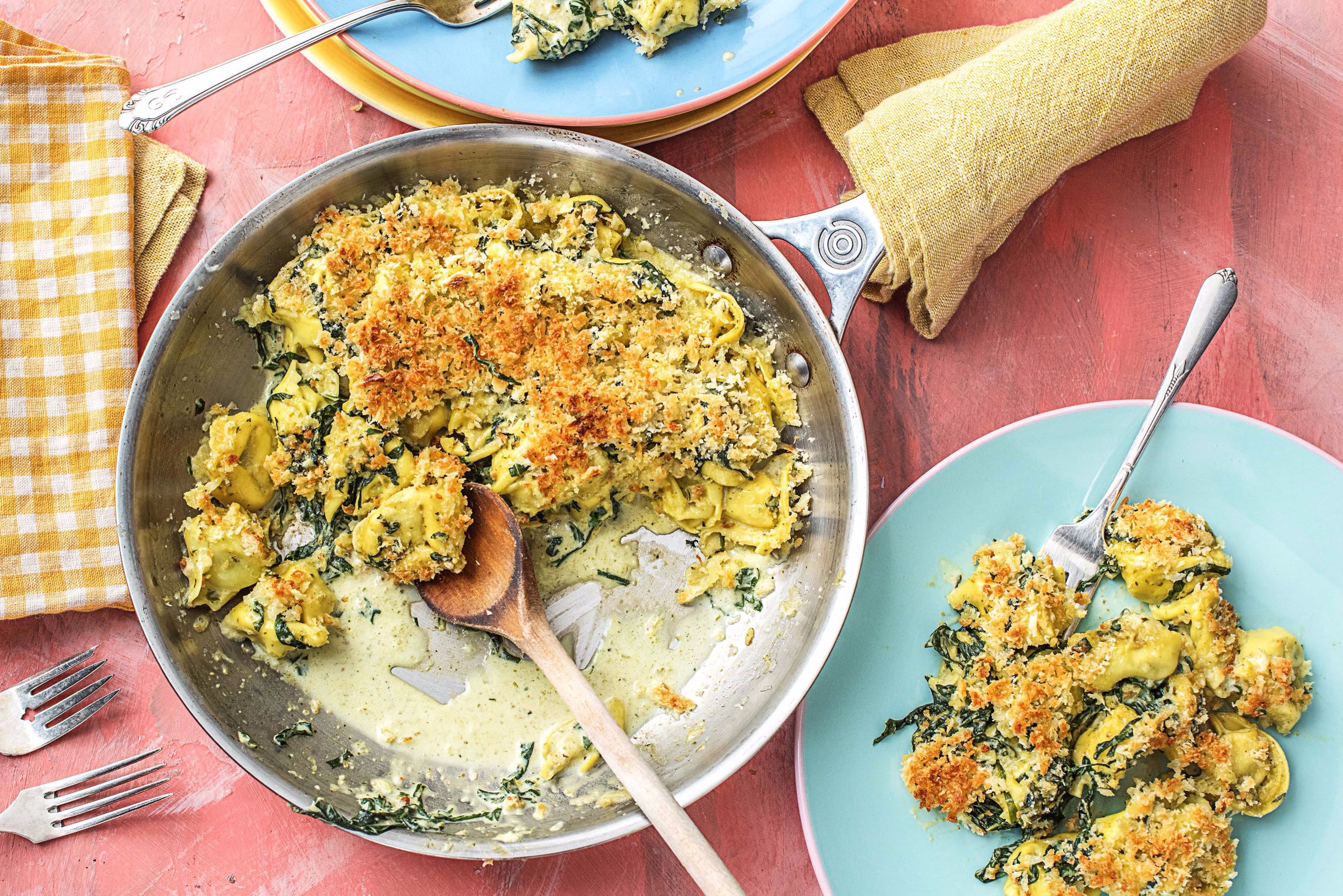
Easy-Peasy Ravioli Gratin

with Spinach, Thyme, and Parmesan Breadcrumbs

Just when we thought pasta night couldn’t get any better, our chefs doubled down on the spinach. This nutritious green can be found in the ravioli AND fresh in the gratin. But this dish is more than just a veggie-lover’s delight: there’s also a thick and creamy sauce and toasted breadcrumb topping that keeps things comfy, cozy, and utterly delicious.


Preparation Time

30 minutes

Cooking difficulty

Level 1


Ingredients

½  Onion

¼ oz Thyme

Vegetable Stock Concentrate

9 ounce Spinach and Ricotta Ravioli

¼ cup Panko

¼ cup Parmesan Cheese

4 tablespoon Sour Cream

5 ounce Spinach

1 tbs Butter

1 tsp Olive Oil

Salt

Pepper


Nutrition Values

Calories 530


  1. Wash and dry all produce. Preheat broiler to high or oven to 500 degrees. Halve, peel, and thinly slice half the onion (use the other half as you like). Strip thyme leaves from stems; discard stems.


  1. Melt 1 TBSP butter in a large pan over medium heat (use an ovenproof pan if you have one). Add thyme and onion. Cook until softened, 5-6 minutes. Season with salt and pepper. Pour in stock concentrate and 1½ cups water and bring to a simmer.


  1. Once stock mixture is simmering, add ravioli to pan. Cover and cook 4 minutes. Uncover and increase heat to high. Continue cooking, spooning stock over ravioli, until ravioli are tender and stock has reduced, 5-6 minutes. Shake pan occasionally to keep ravioli from sticking.


  1. Combine panko, Parmesan, a drizzle of olive oil, and a pinch of salt and pepper in a small bowl.


  1. Remove pan from heat. Carefully stir sour cream and spinach into pan until thoroughly combined and spinach is wilted. Season with salt and pepper. (TIP: Add a splash of water if sauce seems very thick.) If your pan is not ovenproof, transfer mixture to a baking dish at this point.


  1. Sprinkle ravioli in pan (or dish) with crust mixture. Place under broiler and broil until golden brown, 1-2 minutes. Divide between plates

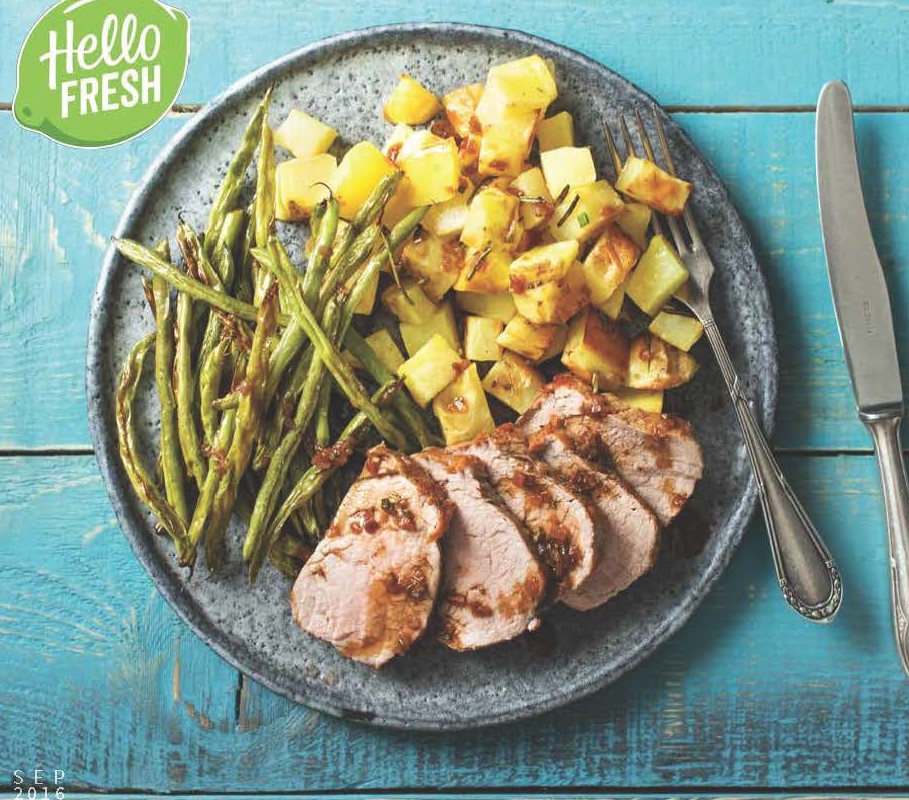
Roasted Pork

Photo courtesy: Hello Fresh

with Balsamic Fig Sauce, Green Beans & Rosemary Potatoes


By Hello Fresh


Servings: 4

Nutrition: 526 Calories

Ingredients:


  • Pork Tenderloin- 24 oz
  • Yukon Potatoes- 24 oz
  • Green Beans- 12 oz
  • Shallot- 2
  • Balsamic Vinegar- 4 tbsp
  • Chicken Stock Concentrate- 2
  • Fig Jam- 2 tbsp
  • Rosemary- 1/2 oz
  • Butter- 2 tbsp
  • Oil- 8 tsp


1  PREP.    Wash and dry all produce. Preheat the oven to 450 degrees. Halve, peel, and finely chop the shallot. Strip the rosemary from the stems and finely chop the leaves. Cut the potatoes into ½-inch cubes.


ROAST THE POTATOES. Toss the potatoes on a baking sheet with a drizzle of oil, half the rosemary, and a pinch of salt and pepper. Place in the oven for about 20 minutes, tossing halfway through, until golden brown and tender.


3 COOK THE PORK AND GREEN BEANS.       Meanwhile, heat a drizzle of oil in a large pan over medium heat. Season the pork on all sides with salt and pepper. Sear 2-3 minutes per side, until golden brown all around. Transfer to another baking sheet. Toss the green beans on the same baking sheet with a drizzle of oil and a pinch of salt and pepper. Place in the oven to finish cooking for about 10 minutes, until the pork is just barely pink in the center and the green beans are tender.


4  MAKE THE BALSAMIC FIG SAUCE.      In the same pan you cooked the pork in, heat a drizzle of oil over medium heat. Add the shallot and remaining rosemary. Cook, tossing, for 2-3 minutes, until softened. Add the fig jam, stock concentrate, ¼ cup water, and 2 Tablespoons balsamic vinegar to the pan. Stir to combine. Simmer 2-3 minutes, until thickened. Remove pan from heat and stir in 1 Tablespoon butter. Season with salt and pepper.


5  SLICE THE PORK.    Remove the pork from the oven. Let rest a few minutes before thinly slicing.


6  PLATE AND SERVE.     Serve the rosemary potatoes and green beans alongside the roasted pork. Drizzle the balsamic fig sauce over the pork and enjoy!

Pork Wonton Money Bags

Plus Grapefruit Mimosas with Ginger Syrup


By Hello Fresh


Cooking Time: 60 mins

Servings: 20 People

Nutrition: 200 Calories


Ingredients- WONTON:

  • Scallions- 4
  • Ginger- 4
  • Ground Pork- 20 oz
  • Panko Breadcrumbs- 1/2 cup
  • Sriracha- 6 tsp
  • Soy Sauce- 2 tbsp
  • Sesame Oil- 2 tbsp
  • Wonton Wrapppers- 2 packs
  • Lime- 2
  • Apricot Jam- 4 oz


Ingredients- COCKTAIL:

Servings: 10 People


  • Grapefruit- 4


APPETIZER

1  PREP AND MAKE FILLING.     Wash and dry all produce. Trim, then mince scallions. Peel 1 thumb ginger, then grate until you have 1 TBSP (save remainder for cocktail). Place pork, panko, scallions, grated ginger, 1 tsp sriracha (we sent more), soy sauce, sesame oil, and ½ tsp kosher salt in a medium bowl. Season with pepper. Mix to combine. Lightly moisten a few paper towels. Fill a small bowl with water.


2  ASSEMBLE WONTONS.     Place 6 wonton wrappers on a dry surface. Place 1 tsp filling in center of each. Wet your fingers with water in bowl, then dab edges of wrappers to moisten. Fold in corners of wrappers around filling, then press together to seal. Set aside on a baking sheet and cover with moist paper towels. Repeat with remaining wrappers and filling (you may have some wrappers left over).


3 FRY WONTONS.        Heat a 2-inch layer of oil in a large heavy-bottomed pot or Dutch oven over medium-high heat. Working in batches, carefully add wontons to oil and fry until golden brown and crisp, 3-4 minutes. (TIP: The oil should bubble when you add the wontons. If it doesn’t, heat it up more.) Remove wontons from oil with a slotted spoon and set aside on a paper-towel-lined tray.


4  MAKE SAUCE AND SERVE.       Halve lime. Stir together jam, remaining sriracha (to taste), 2 TBSP water, and a squeeze or two of lime in another small bowl. (TIP: Make sure to break up any larger lumps of jam.) Arrange wontons on a serving tray and serve with sauce for dipping.

APPETIZER

APPETIZER

COCKTAIL

1  MAKE SYRUP.     Thinly slice remaining 1 thumb ginger, then place in a small pot along with ½ cup water and ½ cup sugar. Give it a stir, then bring to a boil over medium-high heat. Once sugar dissolves, remove from heat and set aside to cool, then strain, removing ginger slices. TIP: Save the ginger slices—ginger is a natural remedy for an upset stomach (and may come in handy tomorrow).


2  JUICE FRUIT AND SERVE.     Halve grapefruits, then cut a thin round from one half. Cut round into 6 wedges and make a small slit at pointed end of each. Squeeze juice from remaining grapefruit halves into a measuring cup. Fill 4 or 5 champagne flutes with ¼ cup juice and 2 TBSP syrup each. Top with sparkling wine and garnish rims with grapefruit wedges.

Easy-Peasy Ravioli Gratin

with Spinach, Thyme, and Parmesan Breadcrumbs

By Hello Fresh

Just when we thought pasta night couldn’t get any better, our chefs doubled down on the spinach. This nutritious green can be found in the ravioli AND fresh in the gratin. But this dish is more than just a veggie-lover’s delight: there’s also a thick and creamy sauce and toasted breadcrumb topping that keeps things comfy, cozy, and utterly delicious.

Preparation Time

30 minutes

Cooking difficulty

Level 1

Ingredients

½  Onion

¼ oz Thyme

Vegetable Stock Concentrate

9 ounce Spinach and Ricotta Ravioli

¼ cup Panko

¼ cup Parmesan Cheese

4 tablespoon Sour Cream

5 ounce Spinach

1 tbs Butter

1 tsp Olive Oil

Salt

Pepper

Nutrition Values

Calories 530

Fat 26 g

Saturated Fat 15 g

Carbohydrate 48 g

Sugar 4 g

Dietary Fiber 3 g

Protein 24 g

Cholesterol 95 mg

Sodium 860 mg

Utensils

  • Large Pan
  • Small Bowl

Wash and dry all produce. Preheat broiler to high or oven to 500 degrees. Halve, peel, and thinly slice half the onion (use the other half as you like). Strip thyme leaves from stems; discard stems.

Melt 1 TBSP butter in a large pan over medium heat (use an ovenproof pan if you have one). Add thyme and onion. Cook until softened, 5-6 minutes. Season with salt and pepper. Pour in stock concentrate and 1½ cups water and bring to a simmer.

Once stock mixture is simmering, add ravioli to pan. Cover and cook 4 minutes. Uncover and increase heat to high. Continue cooking, spooning stock over ravioli, until ravioli are tender and stock has reduced, 5-6 minutes. Shake pan occasionally to keep ravioli from sticking.

Combine panko, Parmesan, a drizzle of olive oil, and a pinch of salt and pepper in a small bowl.

Remove pan from heat. Carefully stir sour cream and spinach into pan until thoroughly combined and spinach is wilted. Season with salt and pepper. (TIP: Add a splash of water if sauce seems very thick.) If your pan is not ovenproof, transfer mixture to a baking dish at this point.

Sprinkle ravioli in pan (or dish) with crust mixture. Place under broiler and broil until golden brown, 1-2 minutes. Divide between plates

Prime Rib

By Simply Recipes

Cooking Time: 1-2 hours
Servings: 2-3 Per Rib
Ingredients:
• One Standing Rib Roast
•3-7 Ribs
•Freshly ground black pepper

1 Salt roast and let sit at room temp:  Remove the beef roast from the refrigerator 3 hours before you start to cook it. Sprinkle it with salt all over and let it sit, loosely wrapped in the butcher paper. Roasts should be brought close to room temperature before they go into the oven, to ensure more even cooking.

2 Tie roast with kitchen string: If your butcher hasn’t already done so, cut the bones away from the roast and tie them back on to the roast with kitchen string. This will make it much easier to carve the roast, while still allowing you to stand the roast on the rib bones while cooking.

3 Preheat oven, season roast: Preheat your oven to 500°F (or the highest temp your oven reaches less than 500°F). Pat the roast dry with paper towels (pre-salting should have made the roast release some moisture), and sprinkle the roast all over with salt and pepper.

4 Place the roast fat side up and rib bones down in a roasting pan. Insert a meat thermometer (oven proof) into the thickest part of the roast, making sure that the thermometer isn’t touching a bone.

5 Brown roast at high temperature: Brown the roast at a 500°F temperature in the oven for 15 minutes.

6 Lower oven temp to finish roasting: Reduce the oven temperature to 325°F. To figure out the total cooking time, allow about 11-12 minutes per pound for rare and 13-15 minutes per pound for medium rare.

The actual cooking time will depend on the shape of the roast, how chilled your roast still is when it goes into the oven, and your particular oven. A flatter roast will cook more quickly than a thicker one. A chilled roast will take more time than one closer to room temp.

There are so many variables involved that affect cooking time, this is why you should use a meat thermometer. A prime rib roast is too expensive to “wing it”. Error on the rare side, you can always put the roast back in the oven to cook it more if it is too rare for your taste.

Roast in oven until thermometer registers 115°F for rare or 120°-130°F for medium. (The internal temperature of the roast will continue to rise after you take the roast out of the oven.)

Check the temperature of the roast using a meat thermometer an hour before you expect the roast to be done. For example, with a 10 pound roast, you would expect 2 hours of total cooking time for rare (15 minutes at 500° and 1 3/4 hours at 325°). In this case, check after 1 hour 15 minutes of total cooking time, or 1 hour after you lowered the oven temp to 325°. (A benefit of using a remote thermometer is that you don’t have to keep checking the roast, you’ll be able to see exactly what the temperature is by looking at the thermometer outside of the oven.)

If the roast is cooking too quickly at this point, lower the oven temperature to 200°F.

7 Let the roast rest: Once the roast has reached the temperature you want, remove it from the oven and place it on a carving board. Cover it with foil and let it rest for 30 minutes before carving. The internal temperature of the roast will continue to rise while the roast is resting.

8 Cut away strings, remove bones, slice roast: Cut away the strings that were used to hold the roast to the rack of rib bones. Remove the bones (you can save them to make stock for onion soup if you want.)

Then, using a sharp carving knife, slice meat across the grain for serving, making the slices about 1/4-1/2 inch thick.


Does Calcium Cause Heart Disease?

Photo Courtesy: Designed by Kjpargeter / Freepik

By Clark’s Nutrition

Calcium consumption from foods and supplementation has become somewhat controversial in the last few years. Osteoporosis prevention has centered on the consumption of calcium from foods and supplementation. Recently, (in October 2016) the Journal of the American Heart Association (JAHA) released a research article that suggested higher consumption of calcium from supplementation might increase the risk of coronary artery calcification (also known as CAC). The information contained in this article helped many individuals see a different view of calcium supplementation. Although it is important to note the JAHA study also suggested that total atherosclerosis was less with individuals who consumed more total calcium via foods and supplementation but suggested the food group was best.  There are also some other responses have come out in support of calcium supplementation. The National Osteoporosis Foundation and American Society for Preventive Cardiology convened an expert panel to look at research to determine other positions for calcium supplementation. These two groups concluded that supplemental calcium with or without vitamin D have no relationship either good or bad to the risk of cardiovascular disease and cerebralvascular disease mortality. They also found that generally there was no cause of mortality in healthy adults when using calcium supplementation. They also recommend that individuals consume no more than the upper daily limits for calcium at 2000-2500mg per day including foods and supplementation. Additionally the NOF suggested that calcium is a nutrient that is lacking in many individuals. Although there is a lot of negative press about the use of calcium, the Council for Responsible Nutrition also reported that the American Heart Association’s Multi-Ethnic Study of Atherosclerosis suggests that there is proof of safety in supplementation because of the positive association with total calcium consumption and reduction in lower rates of atherosclerosis. As always, if you have any questions about the use of supplementation, please consult with your doctor before using any products.


References

Lack of Evidence Linking Calcium With or Without Vitamin D Supplementation to CardiovascularDisease in Generally Healthy Adults: A Clinical Guideline From the National Osteoporosis Foundation and the American Society for Preventive CardiologyKopecky SL, Bauer DC, Gulati M, Nieves JW, Singer AJ, Toth PP, Underberg JA, Wallace TC, Weaver CM.Ann Intern Med. 2016 Oct 25. doi: 10.7326/M16-1743 https://www.ncbi.nlm.nih.gov/pubmed/2777636

Calcium supplements could increase risk of heart disease, new study findsBy Andrea K. McDaniels October 17https://www.washingtonpost.com/national/health-science/calcium-supplements-may-raise-risk-of-heart-disease/2016/10/17/a80285fe-9215-11e6-9c52-0b10449e33c4_story.html

http://www.crnusa.org/CRNPR16-NewStudyAffirmsCalciumSafetyHeartHealth101116.html

oRIGINAL RESEARCHOpen AccessCalcium Intake From Diet and Supplements and the Risk of Coronary Artery Calcification and its Progression Among Older Adults: 10‐Year Follow‐up of the Multi‐Ethnic Study of Atherosclerosis (MESA)John J.B. Anderson, Bridget Kruszka, Joseph A.C. Delaney, Ka He, Gregory L. Burke, Alvaro Alonso, Diane E. Bild, Matthew Budoff and Erin D. Michoshttp://jaha.ahajournals.org/content/5/10/e003815


Hydrogevity

Side view of confident young Caucasian businesswoman wearing jacket drinking fresh water

By C Doussett MPH, RDN

Five hundred years ago, the Spanish explorer, Juan Ponce de Leon became fascinated with sailing, by dint of the circumnavigating exploits of Christopher Columbus. While Ponce de Leon established himself as an adroit farmer and landowner in the New World, he is perhaps most ubiquitously known for his quest to discover the mystical ‘Fountain of Youth’. The Fountain was believed to impart vigor and longevity to anyone who imbibed from its crystal-clear waters. In fact, the rejuvenative powers of undiscovered bodies of water date back at least an extra two millennia when Alexander the Great went in search of the mystical ‘River of Death’. Yet pragmatically, (and luckily) the search for health and longevity has become an investigation into how treating our bodies, and social constructs, can produce almost magical outcomes.

Researchers from the University of California, Riverside, followed subjects for 20 years to examine life choices that influence longevity. One of the most significant findings was that individuals who avoid stress and work tend to live shorter lives. Being productive and dealing with stress directly and determinately is the best method to increase self-worth and efficacy. The best method to support these endeavors and a continual state of human production is to remain properly hydrated. Chronic dehydration, at levels of just 1% (think four glasses behind where you should be) can lessen our abilities to perform well cognitively and socially. This could translate to lower scores on tests and performance in the workplace or in a decline in creative pursuits, or in our ability to regulate mood, memory and relationships. In addition to these task-oriented and socio-cognitive aspects regarding hydration, there are certain physiological conditions that require constant thoughtfulness. Hydrated muscles perform more work, in a shorter amount of time, in a wider variety of settings, and among a broader set of tasks. Similar to muscles, bowels must remain properly hydrated to perform their tasks i.e., sustaining the multifarious microbiome that helps us to process foods, eliminate wastes, and protect against exogenous threats. In fact, all body systems require proper hydration to ensure their functions are performed in a manner (and rate) that is conducive to health and resistant to disease.

If aging can be conceptually distilled into how well we replicate endogenous proteins, free from the ravages of free-radical damage and replication errors (not in whole anyway), then on some level, providing the aqueous medium sufficient to maintain a healthy and organized system is our responsibility alone. Aging is usually represented by a curvilinear (bent line) continuum wherein the relatively healthy years (represented by the straight segment) starts to curve upward around age 50 and rises precipitously thereafter. This line, and the point where life curves into declining health, is not intrinsically predetermined; rather, it relies tremendously on individual effort or lack thereof. It is possible, via concerted individual and community efforts, to remove the curve from the line and live life straight on. To do so requires vigilance and a mindful approach to healthful pursuits, primary among them being hydration.

To this end, it is imperative to drink pure water daily and include high-water-containing fruits and vegetables, and may even be necessary to avoid caffeinated and carbonated drinks in the pursuit of metabolically-advantageous hydration levels. Finally, in place of looking for bodies of water, and their illusory promise of longevity, we should look at the water in our own bodies, and their demonstrated effects on quality and quantity of life.


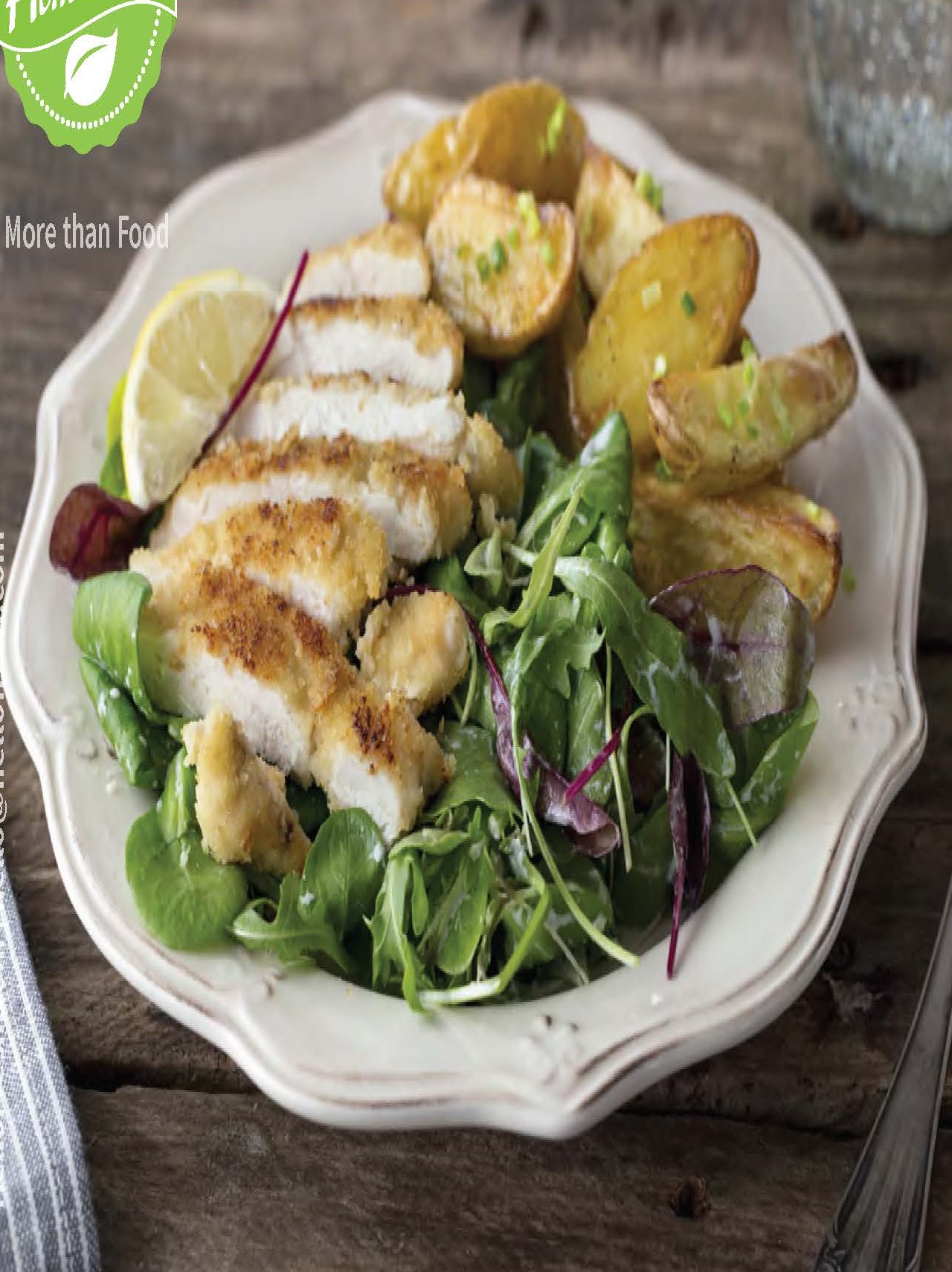
Chicken Milanese

Photo Courtesy: Hello Fresh

with Crispy Potatoes, Mixed Greens and Creamy Lemon-Chive Dressing


By Hello Fresh


Cooking Time: 35 mins

Servings: 4

Nutrition: 531 calories

Ingredients:


  • Chicken Breast – 24 oz


Yukon Potatoes 24 oz

Sour Cream 1) 6 T

Garlic Powder  2 t

Lemon 2

Chives ½ oz

Panko Breadcrumbs 1 C

Arugula 4 oz

Olive Oil* 2 T + 2t


Prep and roast the potatoes: Preheat the oven to 400 degrees. Cut

the potatoes into ½-inch wedges. Mince the chives. Zest and halve the

lemon. Toss the potatoes on a baking sheet with a drizzle of olive oil

and a pinch of salt and pepper. Place in the oven for 25-30 minutes,

tossing halfway through cooking, until golden brown.


2 Place the panko in a shallow dish with a pinch of salt and pepper. In a

medium bowl, combine the lemon zest, garlic powder, 2 Tablespoons

sour cream, and a pinch of salt and pepper.


3 Prep the chicken: Place the chicken breasts between two pieces

of plastic wrap and pound with a rolling pin, mallet, or a heavy-bottomed

pan until ½-inch thick. Season with salt and pepper, then toss each

breast with the sour cream mixture to coat. Press the chicken into the

panko mixture to adhere on both sides.


4 Cook the chicken: Heat a drizzle of oil in a large pan over mediumhigh

heat. Working in batches, if necessary, add the chicken to the pan

and cook for 3-4 minutes per side, until golden brown and cooked through.

HINT: If you need to work in batches, you can reheat the cooked chicken in

the oven before serving.


5 Make the dressing: In a small bowl, whisk together 1 Tablespoon

sour cream, 1 Tablespoon chives, a squeeze of lemon (about 2

teaspoons) and a large drizzle of olive oil. Season with salt and pepper.


6 Plate: Toss the arugula with just enough dressing to coat and serve

alongside the chicken Milanese and crispy potatoes. Sprinkle with the

remaining chives and enjoy!

Simple Tips to Reduce Suffering this Flu Season

By StatePoint


U.S. health officials are predicting a harsh flu season. While there is still no cure for flu, there are steps you can take to reduce suffering while the virus takes its course. Some experts suggest starting the quest to feel better by exploring your local health food store.


Dr. Lawrence Rosen, author of several books based on 25 years of practicing pediatric integrative medicine, is offering some advice to ease flu symptoms. While none of the items mentioned in this article have been evaluated by the U.S. Food and Drug Administration, most have a long history and are relatively inexpensive.


  • Curative Foods and Beverages: The digestive tract accounts for 70 to 80 percent of the immune system. When battling a virus, foods rich in vitamin C are essential to immune function. Try drinking a cup of hot water and lemon daily. Onion tea can promote a healthy respiratory system by relieving a cough and sore throat.


Honey, which is a superfood, is a good choice, coating and soothing the throat, helping control cough, and promoting a restful night’s sleep that is necessary for healing.


  • Spiced-up Recipes: Add garlic and oregano to foods for immune support. Basil, rosemary and thyme help the respiratory tract.


Try different recipes, too. One traditional bedtime treatment in the Dominican Republic is a paste of honey, finely chopped onion and garlic, and the juice of at least half a lime. The vitamin C content found in its ingredients helps boost immunity.


  • Indispensable Oils: Add eucalyptus oil to a bath to ease body aches from flu, or inhale drops added to a steaming bowl of water for clearer nasal passages. Inhale fennel oil similarly as a cough expectorant.


  • Homeopathic Medicine: There are few conventional over-the-counter (OTC) drugs specifically for flu symptoms. Antihistamines and decongestants help with head and upper respiratory symptoms that are mostly associated with colds. Flu affects the whole body with fever, chills, aches and fatigue, and a pain reliever can address some of these symptoms.


To shorten both the duration and severity of flu-like symptoms, consider a homeopathic medicine, such as Oscillococcinum. When patients took it within 24 hours of the onset of symptoms, nearly 63 percent showed “clear improvement” or “complete resolution” within 48 hours. It’s the number one over-the-counter flu medicine in France, where it’s been on the market for more than 70 years. The key is to take quick action against early symptoms. Recommended for anyone age 2 and up, Oscillo is non-drowsy and doesn’t interact with other medications.


  • Healing Herbs and Plants: Homeopathic OTCs use microdoses of plants, animals and minerals; whereas herbal supplements are less diluted with a different therapeutic principle. Astragalus and echinacea supplements purportedly boost immunity. Try teas with eucalyptus leaves or calendula for fever. Elderberry, when taken in extract form, boosts the immune system, which helps the body respond quickly and strongly to viruses such as influenza.


For more information, check out Dr. Rosen’s book, “Treatment Alternatives for Children,” a comprehensive reference guide for nearly 100 common illnesses, offering side-by-side comparisons between conventional and alternative treatment options.


Don’t suffer more than you must this flu season. Homeopathic medications and natural homemade treatments may help reduce the severity of symptoms.


Hearty Steak and Potatoes

with Balsamic-Cranberry Pan Sauce


By Hello Fresh


Cooking Time: 40 mins

Servings: 4

Nutrition: 535 calories

Ingredients:


  • Yellow Onion- 2
  • Rosemary- 1/4 oz
  • Yukon Gold Potatoes- 32 oz
  • Red Cabbage- 8 oz
  • Mustard Seeds- 2 tsp
  • White Wine Vinegar- 4 tbsp
  • Sirloin Steak- 24 oz
  • Balsamic Vinegar- 1 tbsp
  • Soy Sauce- 3 tbsp
  • Cranberry Jam- 8 tsp


1  PREHEAT AND PREP. Wash and dry all produce. Preheat oven to 425 degrees. Halve, peel, and thinly slice onion. Strip rosemary leaves from stems and finely chop until you have 1 TBSP. Discard stems. Halve potatoes lengthwise, then cut into 1-inch-thick wedges (like steak fries).

2  ROAST POTATOES. Toss potatoes on a baking sheet with a large drizzle of olive oil and chopped rosemary. Season with salt and pepper. Roast until lightly browned and crisp, about 30-35 minutes.

3  COOK CABBAGE. Heat and drizzle oil in a medium pan on medium-high heat. Add onion and cabbage and cook until softened, about 5 minutes, tossing. Add mustard seeds and cook until they start to pop. Stir in white wine vinegar, sugar, and a pinch of salt. Reduce heat to low, cover, and cook until cabbage is tender, about 10 minutes.


4  SEAR STEAK. While cabbage cooks, heat a drizzle of oil in another medium pan over medium-high heat. Pat steak dry with a paper towel, then season all over with salt and pepper. Add to pan and sear until browned and cooked to desired doneness, 4-7 minutes per side. Remove and set aside to rest.


5   MAKE PAN SAUCE. Add 1/2 tbsp balsamic vinegar, 1½ TBSP soy sauce, cranberry jam, and 3 TBSP water to same pan over medium heat. Stir to combine. Let simmer until reduced to a syrupy consistency, about 2-3 minutes. Remove from heat.

6   FINISH AND SERVE. Thinly slice steak against the grain. Divide steak, potatoes, and cabbage between plates. Drizzle glaze over steak and serve.


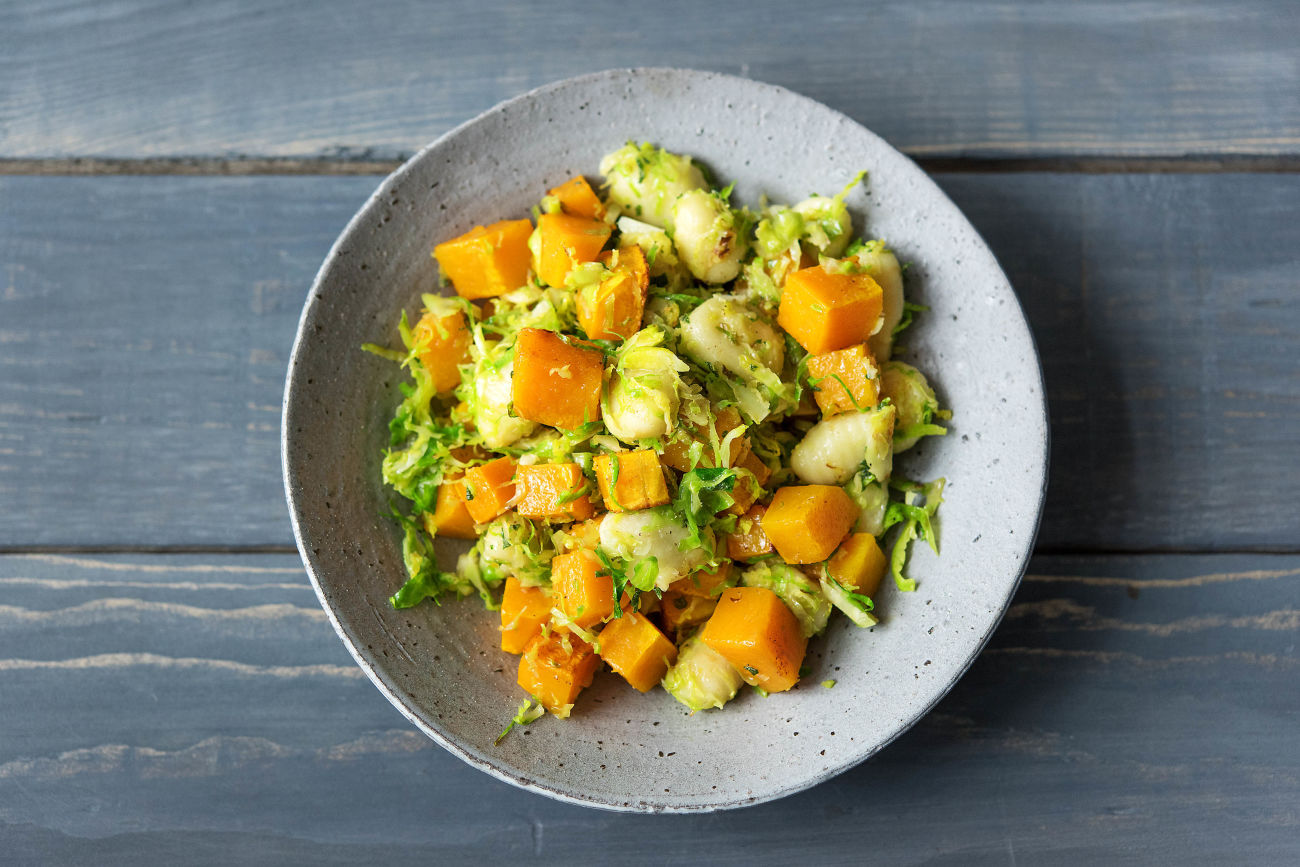
Maple and Brown Butter Gnocchi

Photo courtesy: Hello Fresh

with Butternut Squash and Sage


By Hello Fresh


Cooking Time: 30 mins

Servings: 4

Nutrition: 500

Ingredients:


  • Butternut Squash- 24 oz
  • Maple Sugar- 2 tbsp
  • Brussel Sprouts- 16 oz
  • Sage- 1/4 oz
  • Gnocchi- 18 oz
  • Olive Oil- 2 tbsp
  • Butter- 4 tbsp
  • Salt & Pepper


1  Wash and dry all produce. Adjust rack to middle position and preheat oven to 400 degrees. Bring a large pot of salted water to a boil. Toss squash on a baking sheet with a large drizzle of olive oil and ½ TBSP maple syrup (we’ll use more later). Season with salt and pepper. Roast in oven until lightly browned, 20-25 minutes.


2 Trim Brussels sprouts, then cut in half through stem ends. Slice halves crosswise into thin ribbons. Pick and thinly slice enough sage leaves from stems to give you 1 TBSP.


3 Heat a drizzle of olive oil in a large pan over medium-high heat. Add Brussels sprouts and season generously with salt and pepper. Cook, tossing occasionally, until softened and starting to brown, 3-5 minutes. Remove from pan and set aside.


4 Once water is boiling, add gnocchi to pot. Cook until tender and floating, 3-4 minutes, then drain.


5  While gnocchi cooks, add 2 TBSP butter and ½ TBSP maple syrup to pan used for Brussels sprouts over medium-high heat (you will have some syrup left over). Once butter is melted, add sliced sage and cook, stirring, until butter begins to brown and smells nutty, about 2 minutes. Season with salt and pepper, then remove from heat.


6  Toss roasted squash and Brussels sprouts into pan with sauce. Gently stir in gnocchi, then season with salt and pepper. Divide between bowls and serve.


Winter Squash At Clark’s Nutrition

By Judith Dern

Acorn, buttercup, butternut, delicata, hubbard, spaghetti, turban—a bounty of colorful winter squash and pumpkins overflow grocery produce tables every fall. A fruit (really!) native to North America, and a member of the gourd family like melons and pumpkins, squash is super-easy to stir into hearty autumn soups.

Squash is super-easy to stir into hearty autumn soups

Add squash to your diet for good health

“Winter squashes, especially pumpkin, are one of the most nutritionally valuable foods known to man,” says Steven Pratt, MD, coauthor of SuperFoods. Loaded with good-for-you nutrients, the richly colored interior flesh is the first clue to squashes’ nutritional benefits, which include:

Large amounts of carotenoids, the deep orange-, yellow-, or red-colored plant compounds that help fight a variety of diseases, including heart disease, various cancers, and eye diseases

Vitamins C and E, plus potassium, magnesium, and folic acid

High in fiber

Low in calories

Judith H. Dern, an independent writer living in Seattle, WA, loves vegetables and finds squash soup the perfect cold-weather dish

Fall For Delicious Squash Soups

By Judith H. Dern

Make an easy squash soup the star of your weeknight menu

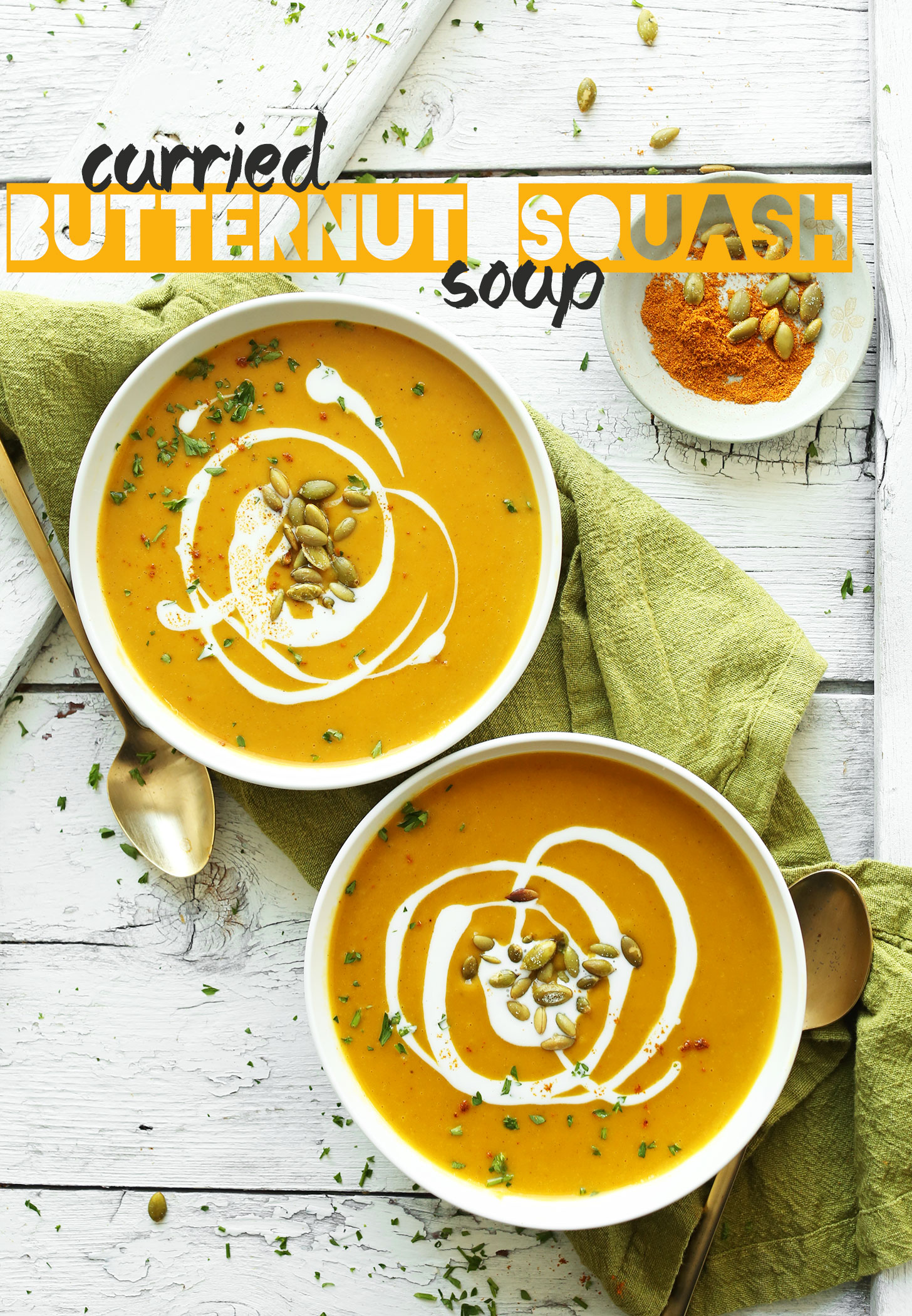
For a quick and easy squash soup, use fresh, canned, or frozen squash, or canned 100% pumpkin purée (not pumpkin pie mix, which includes sugar and spices) as the soup base.

To prepare squash: If using fresh squash peel a thin-skinned variety such as hubbard or butternut. Cut squash in half and use a large spoon to remove seeds and any fibers; cut squash into 2-inch chunks and set aside.

Two 1-pound (.45 kg) squash will serve four people.

If a squash is difficult to peel, or if you are using a different variety from the two above, use a small knife to poke a few holes in the squash; then bake at 350ºF (177ºC) for 40 minutes or microwave for 12 minutes before slicing.

To make savory curried squash soup: Using a heavy 5.5-quart pot, sauté 1/3 cup diced yellow onion in 1 tablespoon olive oil until translucent (about 5 minutes).

Add squash, 1 quart chicken or vegetable stock, and 2 cups water.

Cook covered over medium heat until squash is soft and blends into stock.

Add more stock to thin mixture, if desired. Add 1/2 tablespoon curry powder (or to taste), salt and pepper to taste, and 1 cup half-and-half; stir to blend. Serve hot, but do not let soup boil after adding half-and-half.

Tips to Safely Enjoy the Great Outdoors in Cooler Months

By Statepoint


It may be chilly, but that’s no reason to stay indoors. Some of the best opportunities for outdoor exploration can only take place during the coldest months of the year; it just requires special preparation.


Head-to-Toe Coverage

For maximum safety and comfort, it’s important to keep your head, fingers and toes dry and toasty. A good pair of waterproof hiking boots will help keep you warm on the trail. Be sure they are designed for the type of weather and terrain you expect to encounter. Wear a wind-proof hat and good pair of gloves that have a grip.


Mind the Sun

The sun may set sooner in winter, but it’s still a force to be reckoned with; wear sunglasses and apply sunscreen to exposed skin, as well as a lip balm containing SPF, to protect yourself from UV rays.


Get Smart

Wearable tech can put your mind at ease on outdoor excursions. Look for low-power GPS and full-color map functionality that can be used offline, as in the case of Casio’s PRO TREK WSD-F20 Smart Outdoor Watch, which features easy-to-read map data from Mapbox. This makes it easy to display your route and provide navigation guidance at a glance. Powered by Android Wear 2.0, it can be used with a range of apps to enhance your outdoor experience, and its design offers enhanced operability and toughness, making it an especially useful piece of outdoor gear.


Don’t Get Fooled

In hot weather, there’s almost never any question about whether you are thirsty during or following physical activity. It can be harder to gauge in cold weather. Remember, when you’re active, it’s always important to stay hydrated. Be sure your wattle bottle is built to withstand cold weather, and if you’re worried about it freezing, don’t fill the bottle to the top.


Communicate

With any excursion, it’s always good practice to share your itinerary with a loved one. Most importantly, let someone know exactly where you are going and when you plan to return.


With a few smart habits, and some high-quality gear designed to withstand the great outdoors, you can better enjoy nature this season, no matter where your adventures take you.