Category Archives: Weekly News Columns

Did You Know?

What to Know about Your Gut Health   

Photo courtesy: StatePoint

Photo courtesy: StatePoint

By StatePoint

Your gut health affects more than just how your stomach feels. Recent scientific breakthroughs have uncovered links between the state of the gut microbiome and a range of human health issues such as obesity, diabetes, gastrointestinal disease, cardiovascular disease, immune system disorders, asthma and even cancer and its treatment.

Experts say that understanding the gut microbiome may change how these diseases are diagnosed and treated. Additionally, specific microbes have been linked to good digestive health.

“The gut microbiome is currently subject to intense and growing interest within the medical and pharmaceutical industries, but is also of great interest to average people,” says Michael Farrell, PhD, Managing Director of Biome360, an emerging biotechnology and probiotics company.

Farrell says that with the right tools and knowledge, anyone can positively influence and manage his or her own gut microbiome in the pursuit of better overall health. He is offering the following tips:

  • Assess your existing gut health and monitor changes over time. New tools, like the Gut Microbiome Sampling Kit, from Biome360, make it possible to do so at home. The sample collection process requires no training or preparation and the Biome360 dashboard allows users to learn about and explore their gut microbiome, and compare it to age and gender-matched healthy peers.
  • Supplement your gut health with targeted probiotic strains such as Lactobacillus, Bifidobacterium and Streptococcus. Probiotics support digestive and immune health, can aid in weight loss and can lower the bad bacteria in your body that can cause infections and other problems. Probiotic supplements are especially important after a course of antibiotics.
  • What you eat matters. Make sure you get high-quality fiber in your diet — the recommended daily intake of 25 to 38 grams — and take steps to limit processed carbohydrates. Include fermented foods in your diet, which are packed with beneficial bacteria. Good choices include yogurt, cottage cheese, kimchi, tempeh, natto, kambucha, sauerkraut, miso, milk kefir and pickles.
  • Exercise early and often. Exercise, early in life, can alter microbial communities for the better, promoting healthier brain and metabolic activity over the course of a lifetime, according to recent research at the University of Colorado.

You may not realize how much control you have over your own health. With the right information at your fingertips, you can learn more about what is happening inside your gut, and take informed action to improve your health.

Straight Talk

I am always attracted to much older men- A letter from Kim B.

Danice Akiyoshi

Danice Akiyoshi

By Danice Akiyoshi, N.D.

Q: When we are out, people often assume that my date is my father and in the end this is why they always break up with me (I look very young for my age too). They say they feel embarrassed by these comments.  I do not have any father issues either.  I love my dad very much. I just seem to feel attracted to men who are about twenty years older than me.  Is this really that abnormal?

A: Human attractions are unique and personal.  There is nothing abnormal about that, it’s simply a fact.  You are not writing me about any father figure issues so I won’t address anything in that arena.  My suggestion is to spend your time with people you’re attracted to and hope that one day something greater develops with that special person.  This is the way it works for everyone.  If comments from outsiders are enough to cause someone to break up with you then you can be sure that it wasn’t a good match for you.  The right guy for you won’t get overly caught up in the opinions of others.  Meanwhile enjoy your days.


Surviving the Teen and Adolescent Years

Licensed Marriage Family Therapist

Nancy Stoops M.A., M.F.T Licensed Marriage and Family Therapist

By Nancy Stoops

Every parent of every generation eventually deals with a child that becomes an adolescent and then a teen.  Everything seemed to be going so well and there was peace in your household.  One day your child wakes up and now they are an adolescent and they seem different.  Your very loving, smart, considerate, affectionate child seems to have a new family in his or her friends.  These people, some of which you haven’t even met, seem to be as important as the air they breathe. Sometimes these friends are involved in things that are not appropriate but our adolescent or teen gets very defensive on their behalf. Sometimes our adolescents or teens get in trouble with these friends.  We as parents feel as if we are losing control and so we start to take away electronics out of desperation.  Our adolescents or teens then rebel and start very disrespectful behavior.

The trick is to be a fair parent and to find balance in your parenting.  As parents we must continue to recognize what our adolescents or teens are still doing right even if there is some rebelling and disrespect going on.  If we only give attention for what they are doing wrong that behavior will continue.  If we can somehow still see the good and comment on that while correcting the disrespectful behavior, we have a chance for change.  This is also very important in helping to build a high level of self-esteem in our youth in general.  It’s also important to not hang on too tightly because eventually you will launch them into this world.  The goal is to plant seeds by teaching lessons that will eventually be applied toward their adult lives.  As parents we hope and pray these seeds will take and that our adult children will put more into this world than they take out and be good people!!!!!

This article was written by Nancy Stoops M.A., M.F.T.  Nancy is a licensed Marriage and Family Therapist.  Nancy is now accepting new clients.  She also works as a motivational speaker.  Nancy runs free family support groups, a group on loss for seniors, and groups for teens and can handle many court mandated needs.  For more information about any of these services contact Nancy at (909) 229-0727.  You may e-mail Nancy at nancyjstoops@verizon.net. You may purchase Nancy’s books Live Heal and Grow and Midnight the Therapy Dog at Amazon.com.

History 101

Hurricane Katrina slams into Gulf Coast

By History.com  History-101-WEB

On this day in 2005, Hurricane Katrina makes landfall near New Orleans, Louisiana, as a Category 4 hurricane. Despite being only the third most powerful storm of the 2005 hurricane season, Katrina was the worst natural disaster in the history of the United States. After briefly coming ashore in southern Florida on August 25 as a Category 1 hurricane, Katrina gained strength before slamming into the Gulf Coast on August 29. In addition to bringing devastation to the New Orleans area, the hurricane caused damage along the coasts of Mississippi and Alabama, as well as other parts of Louisiana.

New Orleans Mayor Ray Nagin ordered a mandatory evacuation of the city on August 28, when Katrina briefly achieved Category 5 status and the National Weather Service predicted “devastating” damage to the area. But an estimated 150,000 people, who either did not want to or did not have the resources to leave, ignored the order and stayed behind. The storm brought sustained winds of 145 miles per hour, which cut power lines and destroyed homes, even turning cars into projectile missiles. Katrina caused record storm surges all along the Mississippi Gulf Coast. The surges overwhelmed the levees that protected New Orleans, located at six feet below sea level, from Lake Pontchartrain and the Mississippi River. Soon, 80 percent of the city was flooded up to the rooftops of many homes and small buildings.

Tens of thousands of people sought shelter in the New Orleans Convention Center and the Louisiana Superdome. The situation in both places quickly deteriorated, as food and water ran low and conditions became unsanitary. Frustration mounted as it took up to two days for a full-scale relief effort to begin. In the meantime, the stranded residents suffered from heat, hunger, and a lack of medical care. Reports of looting, rape, and even murder began to surface. As news networks broadcast scenes from the devastated city to the world, it became obvious that a vast majority of the victims were African-American and poor, leading to difficult questions among the public about the state of racial equality in the United States. The federal government and President George W. Bush were roundly criticized for what was perceived as their slow response to the disaster. The head of the Federal Emergency Management Agency (FEMA), Michael Brown, resigned amid the ensuing controversy.

Finally, on September 1, the tens of thousands of people staying in the damaged Superdome and Convention Center begin to be moved to the Astrodome in Houston, Texas, and another mandatory evacuation order was issued for the city. The next day, military convoys arrived with supplies and the National Guard was brought in to bring a halt to lawlessness. Efforts began to collect and identify corpses. On September 6, eight days after the hurricane, the Army Corps of Engineers finally completed temporary repairs to the three major holes in New Orleans’ levee system and were able to begin pumping water out of the city.

In all, it is believed that the hurricane caused more than 1,300 deaths and up to $150 billion in damages to both private property and public infrastructure. It is estimated that only about $40 billion of that number will be covered by insurance. One million people were displaced by the disaster, a phenomenon unseen in the United States since the Great Depression. Four hundred thousand people lost their jobs as a result of the disaster. Offers of international aid poured in from around the world, even from poor countries like Bangladesh and Sri Lanka. Private donations from U.S. citizens alone approached $600 million.

The storm also set off 36 tornadoes in Mississippi, Alabama, Georgia, Pennsylvania, and Virginia, resulting in one death.

President Bush declared September 16 a national day of remembrance for the victims of Hurricane Katrina.


A Penny For Your Thoughts

Pastor Mark Hopper

Pastor Mark Hopper

By Pastor Mark Hopper

In my last article, I shared my story of finding a penny at a local Hardware store.

It was a “Wheat Penny”.  It was dated 1914.  It was over 100 years old!

I smile when I think about where that penny has been over the past 100 years.  I wonder who has held it in their hand.  I wonder how many purchases it has made?  I wonder in what stores and in what states that penny has been?

No one can know for sure the answers to these questions, but here are some of my thoughts.  I’m sure you can add more.

That penny probably went as a shiny new coin from the US Mint to a large bank on the east coast.  I think there were three US Mints in the early 1900’s in San Francisco, Denver and Philadelphia.  I think this coin was made in Philly.

The First World War started in 1914 although our nation was not drawn into the war until 1917.  In those days, a few pennies could purchase a gallon of gas.  Maybe the penny ended up in the cash register of a local gas station?

That penny survived through the “Roaring Twenties”.  It may have traveled to Chicago during the days of prohibition.  It probably changed hands many times to pay for many things.

In the 1930’s, that penny was probably kept in a small tin box as people struggled to survive during the Great Depression.  A penny was probably worth a lot more than we can imagine today.

I wonder where the penny was during World War Two?  During the war, pennies were not made of copper because the copper was needed to make bombs and bullets.

I suspect that in the 1960’s that old penny may have ended up in an old cigar box of a young newspaper delivery boy in Arizona.

Or, maybe that middle aged penny stayed in circulation during the second half of the twentieth century.  It may have found its way to In N Out Burger, a local movie theater or a snack bar at the beach.  That penny probably helped purchase groceries and prescriptions at the local market.

I wonder how that coin got to California?   Did it get lost between the cushions of a couch or under the floor mat of a car?

With the use of debit cards and credit cards, that penny was probably used less and less. Who needs coins when you can buy things with a plastic card?

I wonder how that 1914 penny ended up at a local hardware store in Diamond Bar, California?  Did someone use it by accident or was a family member cashing in the coin collection of a relative that died?

It is fun to dream and imagine where a coin has been over the past 100 years.  We will never know the answer.

Let me encourage you to take a look in your purse or pocket.  See what coins have found their way into your life.  They may have a lot of stories to tell!

Pastor Mark Hopper is from the Evangelical Free Church of Diamond Bar, 3255 South Diamond Bar Blvd.  Sunday services are 9 a.m. and 10:45 a.m.  For more information, call (909) 594-7604 or visit Efreedb.org.


Did You Know

4 Key Factors That Can Improve Your Quality of Life As You Age

By Toni Tantlinger  Did-You-Know-WEB

When it comes to aging, Americans harbor plenty of concerns: Going broke, succumbing to Alzheimer’s disease, Spending the final lonely years in a nursing home, etc.

But there’s no need to think that grey hair and wrinkles automatically translate to a dreary existence.

“There are a number of things people can do right now that will increase the odds that their senior years will be healthy, productive and rewarding,” says Chris Orestis, a senior-care advocate and author of the books “Help on the Way” and “A Survival Guide to Aging.”

Orestis, CEO of Life Care Funding (www.lifecarefunding.com), has worked for years with families to help them afford the costs of long-term care, something that about 70 percent of people over 65 eventually need.

But he says it’s also important to help seniors and their families make the most of what should be the best years of their lives.

A healthy diet and exercise are two of the better known ingredients for improving the chances you’ll lead a long and fruitful life. Others include:

  • Attitude. Life hands everyone challenges, but it’s how you deal with those challenges that makes the difference. “Keeping a positive attitude is important,” Orestis says. “Do you approach each day with zeal or with dread? Are you active or sedentary? It’s critical to live life with a purpose because it will make you strive to be healthy of mind, body and in your attitude.”
    • Adaptability. People change as they age and so does the world around them. “You need to be prepared to manage a whole host of changes in a positive way,” Orestis says. “Your body changes. Your mind changes. There are changes in your career, in the community you live in and in the technology we all use every day.” Those who do the best job of adapting are the ones most likely to thrive, he says.
    • Relationships. People who nurture relationships are more likely to live higher-quality lifestyles. “As we age, relationships will change and it’s important to stay engaged, whether in person or from afar,” Orestis says. “We also need to build new relationships throughout our lives.”
    • Activities. Filling your time with activities – coaching a youth soccer team, learning guitar, traveling – can help give you a more meaningful and healthy life. “One of the keys to people who live long lives is that their life continued to have meaning,” Orestis says. “Hobbies, volunteer work, learning new skills or getting more involved with your family are all paths to an active and meaningful life.”

“Aging shouldn’t be a one-way ticket to poor health, loneliness, boredom and a declining quality of life,” he says. “The key to enjoying a long and fulfilling life is in your own hands.”


Recent Recalls

  1. Sauder Woodworking Chest of Drawers due to serious tip-over hazard; Sold Exclusively at Walmart.com. The recalled chests are unstable unless they are properly anchored to the wall.
  2. Dennis East International Whiskey Glass and Stone Sets due to Laceration Hazard-whiskey glass can spontaneously break during use.
  3. Kohler Power Systems Portable Generators due to Shock Hazard. The generators have a wiring error, which can result in an electrical shock risk if an electrical device is plugged into the generator.
  4. PharmaTech LLC issues Voluntary Nationwide recall due to Potential Risk of Product Contamination. PharmaTech, LLC of Davie, FL, is voluntarily recalling all liquid products from October 20, 2015 through July 15, 2016 as a precautionary measure due to a potential risk of product contamination with Burkholderia cepacia. If a product contains B. cepacia, its use could result in infections in patients with compromised immune systems and in patients with chronic lung conditions such as cystic fibrosis. Some of these infections may be serious or even life-threatening in the at risk patient population.
  5. Honda (American Honda Motor Co.) certain model year 2015-2016 CBR300RA, CBR300R and CB300F motorcycles. The affected motorcycles may have an improperly machined crankshaft which may result in the failure of the connecting rod bearing retainer.
  6. General Motors LLC (GM) certain model year 2016 Malibu Hybrid vehicles manufactured October 27, 2015, to June 3, 2016. The affected vehicles have a shut-off switch for the high voltage battery for use when servicing the vehicle. This manual service disconnect switch (MSD) may not be properly installed and thus may not lock into position, unexpectedly disconnecting the high-voltage power while driving, effectively stalling the vehicle.

Straight Talk With Danice

I do not want a gun – a letter from Evelyn

Danice Akiyoshi

Danice Akiyoshi

By Danice Akiyoshi

Q: My husband has become very paranoid about all of the shootings that have been on the news.  He owns several guns and he is always asking me to go with him to the shooting range to practice.   I go with him so I can keep up my skills and I hope this will help him feel better, but now he wants me to choose a gun for myself.  I do not want a gun for myself.  I do not really feel comfortable with guns.  I carry a taser device instead and I don’t want to go any further with my personal protection devices.  He says he needs me to be prepared to protect our family in case he’s not home, but guns are not for me. I don’t want my own personal gun.  I need your advice.

A: This is a personal choice. You have every right to make this decision for yourself.  The fact that you accompany him to the shooting range and are willing to understand basic gun operations in order to protect your family is quite cooperative of you.  If you don’t choose to be a gun owner yourself, state that firmly to your husband.  Let him know that you’ve agreed with and taken the proper steps to back him up in an emergency but you are just not willing to take it to the next level of purchasing a gun for yourself.  If he pressures you, then point out that he is acting in a way that is similar to the people he fears.

Our Internal Dialogue

Licensed Marriage Family Therapist

Nancy Stoops M.A., M.F.T Licensed Marriage and Family Therapist

By Nancy Stoops

We all have a dialogue that lives within us.  It tells us how we feel about ourselves.  It can make us fly or it can literally paralyze us.  Our internal dialogue usually is created in our childhood and it comes from how we feel we are perceived by others, especially our parents.  We learn at a very young age to love ourselves or to hate ourselves.  We adopt a belief system about who we are and about whether we deserve life’s best or whether we deserve nothing good at all.  This belief system can literally create a successful human being or a human being that is always failing.

It is possible to change your internal dialogue if it is destructive.  I think it starts by writing down all of the lies that you live by and correcting them by writing down the truth for every lie.  It sounds so very simple but it is hard work to be so very brutally honest with ourselves.  The alternative is being paralyzed and never having the life you were intended to have or never becoming who God intends you to be.  The alternative is being cheated of all the wonderful that this life does have to offer.

I believe we owe it to ourselves to right the wrong; to correct the irrational belief system that haunts us and steals our joy and hope.  I believe everybody deserves to be who God intends them to be.  Every being has the right to be his or her very best.  How dare we allow anything else for ourselves?  Make today the day that you start to change that internal dialogue.  Make today the day you start to settle for nothing but the best for yourself.  Today become your child’s most effective model for well being and success!

This article was written by Nancy Stoops M.A., M.F.T.  Nancy is a licensed Marriage and Family Therapist.  She has a private practice in Diamond Bar and is currently accepting new clients; she is also a motivational speaker who can inspire your employees or group members.  Nancy runs free family support groups, a group on loss for seniors, and groups on how to manage anger.    For more information about any of these services, feel free to page her at (909229-0727.  You may e-mail Nancy at nancyjstoops@verizon.net. You may purchase Nancy’s books Live Heal and Grow and Midnight the Therapy Dog at Amazon.com.


Italian Meatloaf

With Sun-Dried Tomatoes, Roasted Green Beans, and Garlic Rosemary Mashed Potatoes

By Hello Fresh  recipe-pic-1-WEB

We’re not sure what we like best about this recipe: the unique and flavorful ingredients, the quicker cook time of individual patties versus slow cooking, traditional meatloaf, or the silky, melt-in-your-mouth mashed potatoes. We’ll let you make the call.

Cooking Time: 45 min.

Servings: 2

Nutrition: Calories: 690 cal, Fat: 31g, Sat. Fat: 13 g, Protein: 43g, Carbs: 63 g, Sugar: 15 g, Sodium: 751 mg, Fiber: 10 g

Ingredients:

  • Ground Beef- 10 oz.
  • Russet Potatoes- 12 oz.
  • Green Beans- 6 oz.
  • Chicken Stock Concentrate- 1
  • Sun-dried Tomatoes- 1 ½ oz.
  • Shallot- 1
  • Rosemary- ¼ oz.
  • Garlic- 2 cloves
  • White Bread- 1 slice
  • Sour Cream- 2 T
  • Butter- 1 ½ T
  • Oil- 2t

Preparation:

  1. Prep: Wash and dry all produce. Preheat the oven to 400 degrees. Halve, peel, and mince the shallot. Mince or grate the garlic. Strip the rosemary leaves off the stems and finely chop (about 2 teaspoons). Finely chop the sun-dried tomatoes. Trim the ends of the green beans.
  2. Make the meatloaf: In a medium bowl, soak the bread with the stock concentrate and ¼ cup water. Break up the bread with your hands until a paste forms. Add the beef, sun-dried tomatoes, shallot, half the garlic, half the rosemary, and a large pinch of salt (we used ½ teaspoon kosher salt) and pepper to the bowl. Mix with your hands until just combined. Form the beef mixture into 2 oval patties, then place onto a lightly oiled baking sheet. Place in the oven for 20-25 minutes, until cooked through.
  3. Boil the potatoes: Meanwhile, peel and dice the potatoes into ½-inch cubes. Place in a medium pot with a large pinch of salt. Add enough water to cover, then bring to a boil. Reduce to a simmer and cook about 12 minutes, until potatoes are fork-tender.
  4. Roast the green beans: With 15 minutes left to go on the meatloaf, toss the green beans in a medium bowl with a drizzle of olive oil and a pinch of salt and pepper. Spread onto the baking sheet with the meatloaf. Cook about 15 minutes, until tender.
  5. Mash the potatoes: Once tender, drain the potatoes. In the same pot you cooked the potatoes in, heat 1½ Tablespoons butter, the remaining garlic, and the remaining chopped rosemary over medium heat. Cook 30 seconds, until melted and fragrant. Add the potatoes and sour cream to the pot. Mash with a fork or potato masher until very smooth, adding a splash of water (or milk) if necessary. Taste and season with salt and pepper.
  6. Serve: Plate the garlic rosemary mashed potatoes, then top with the roasted green beans and Italian meatloaf. Enjoy!

History 101

Althea Gibson becomes first African-American on U.S. tennis tour

By History.comHistory-101-WEB

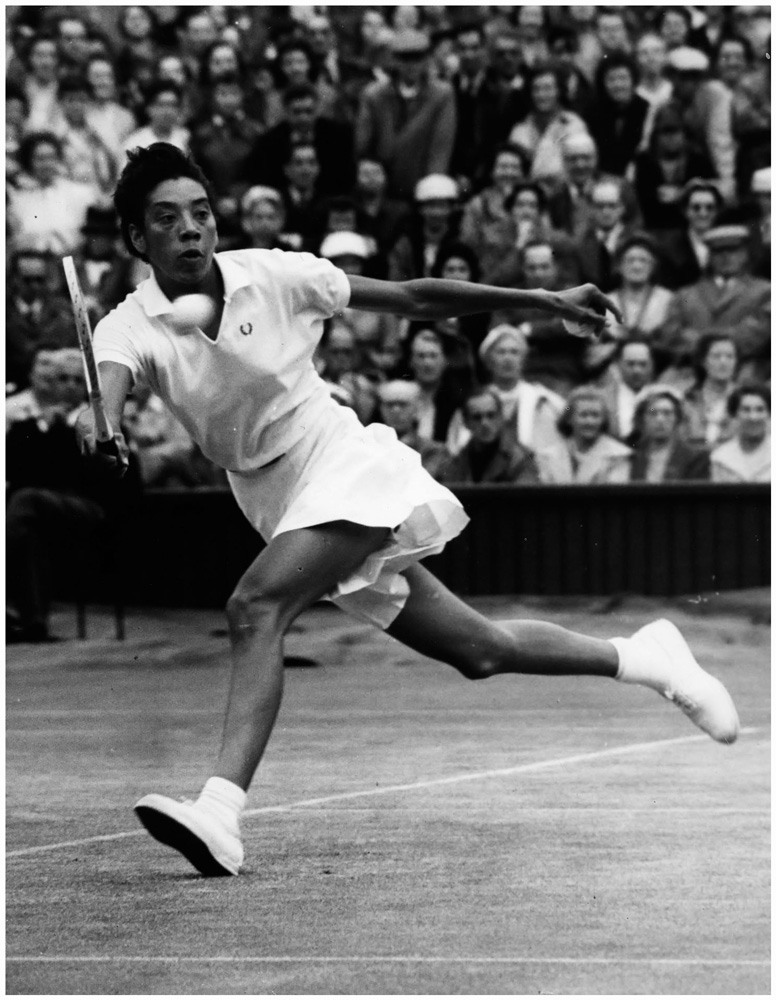
On August 22 in 1950, officials of the United States Lawn Tennis Association (USLTA) accept Althea Gibson into their annual championship at Forest Hills, New York, making her the first African-American player to compete in a U.S. national tennis competition.

Growing up in Harlem, the young Gibson was a natural athlete. She started playing tennis at the age of 14 and the very next year won her first tournament: the New York State girls’ championship, sponsored by the American Tennis Association (ATA), which was organized in 1916 by black players as an alternative to the exclusively white USLTA. After prominent doctors and tennis enthusiasts Hubert Eaton and R. Walter Johnson took Gibson under their wing, she won her first of what would be 10 straight ATA championships in 1947.

In 1949, Gibson attempted to gain entry into the USLTA’s National Grass Court Championships at Forest Hills, the precursor of the U.S. Open. When the USLTA failed to invite her to any qualifying tournaments, Alice Marble, a four-time winner at Forest Hills, wrote a letter on Gibson’s behalf to the editor of American Lawn Tennis magazine. Marble criticized the “bigotry” of her fellow USLTA members, suggesting that if Gibson posed a challenge to current tour players, “it’s only fair that they meet this challenge on the courts.” Gibson was subsequently invited to participate in a New Jersey qualifying event, where she earned a berth at Forest Hills.

On August 28, 1950, Gibson beat Barbara Knapp 6-2, in her first USLTA tournament match. She lost a tight match in the second round to Louise Brough, three-time defending Wimbledon champion. Gibson struggled over her first several years on tour but finally won her first major victory in 1956, at the French Open in Paris. She came into her own the following year, winning Wimbledon and the U.S. Open at the relatively advanced age of 30.

Gibson repeated at Wimbledon and the U.S. Open the next year but soon decided to retire from the amateur ranks and go pro. At the time, the pro tennis league was poorly developed, and Gibson at one point went on tour with the Harlem Globetrotters, playing tennis during halftime of their basketball games. In the early 1960s, Gibson became the first black player to compete on the women’s golf tour, though she never won a tournament. She was elected to the International Tennis Hall of Fame in 1971.

Though she once brushed off comparisons to Jackie Robinson, Gibson has been credited with paving the way for African-American tennis champions such as Arthur Ashe and, more recently, Venus and Serena Williams.


One Hundred Years Old

By Pastor Mark Hopper

Recently I was at the local hardware store picking up some metal brackets for a project we were doing at our church.

A group of men were constructing a new back drop for the stage in our Worship Center and they needed more brackets to finish the job.

Since I am not the handiest guy in the group and since they had plenty of help, they sent me to the hardware store.

As I was waiting to pay for my materials, I noticed a small box by the cash register that had some pennies in it.  The sign on the small box said something like, “Need a penny & leave a penny”.

I have seen these in other stores.  Customers are allowed to take a penny or two to complete their purchase and avoid getting a pocket full of change.

And, people who end up with a couple of pennies after their purchase are encouraged to leave the pennies for another customer who might need some.

I noticed that one of the pennies looked a little different than the others.  Sure enough, it was a “Wheat Penny”.

I am not an avid coin collector, but I know that the US Penny has changed over the years.  The penny has an image of Lincoln on one side, but the back side has changed over the years.

In the early 1900’s, the penny had Lincoln on the front and two grains of “Wheat” on the back.  In the 1950’s, the US Mint changed the back of the penny to the image of the Lincoln Memorial.

In the early 2000’s, the Mint changed the penny again with the image of Lincoln still on the front, but an image of a “Shield” with the words “one cent” on the back.

I asked the attendant if I could swap a penny for the one in the box.  Yes, she was glad to let me do that.  She was curious why I wanted the penny.  I briefly explained my interest in “Wheat Pennies”.

When I got home later that day, I looked for the date on the penny.  To my surprise, it read 1914!  That penny was over 100 years old!  Amazing!

I don’t think the penny has any significant collector value.  Millions of them were made in 1914.  But, it is remarkable that something over 100 years old is still circulating around in our pockets, purses, banks and stores.

I wonder where this penny has been and who it has belonged to over the past century.  It probably has many stories to tell!

Pastor Mark Hopper is from the Evangelical Free Church of Diamond Bar, 3255 South Diamond Bar Blvd.  Sunday services are 9 a.m. and 10:45 a.m.  For more information, call (909) 594-7604 or visit Efreedb.org.

Standing In The Light

By Michael Armijo
Doug was a simple guy who had worked hard to be “normal.” His upbringing wasn’t the best, but Doug beat the odds and found life within his spiritual realm. He found God and decided that his true place in life was with Him. He wanted to come out of the darkness and stand strong into the light.

One day Doug stood in line at a mini-mart when a young woman came in. He immediately noticed her long brown hair, her beautiful eyes, and her slightly crooked smile. She raced in for her purchase, and without noticing, dropped a fifty-dollar bill on the floor.

As he hesitated, Doug remembered his obligation to stand in the light. He remembered that he attends church on Sundays, and needs to do what is right; but he didn’t. A little voice in Doug’s head whispered, “Pick up the money and put it in your pocket.” He picked up the fifty, placed it in his pocket, and turned the negative into a positive by bragging about how “lucky” he was.

Soon after, he reexamined his actions and tried to justify them. He thought to himself, “God wanted me to have this money; he knew how much I needed it.” And then the guilt set in. He wasn’t comfortable attending church on Sundays, and he began to run from his guilt by not caring anymore. Doug was lost to guilt and temptation.

Several weeks went by and Doug’s dishonesty grew. He felt content about his new place because he received things he didn’t earn; he took things that he didn’t deserve. His ‘cheating the system’ helped him receive tangible items that he usually couldn’t afford. And then one day a friend invited him back to church and Doug was faced with an uncomfortable decision: Do I continue my wicked ways, or do I go back to the light?

If Doug was to give up his newfound lifestyle, he would then have to change what he was taking from others. He would have to exchange his financial riches for spiritual ones. Honesty would once again have to prevail in his life. All the taking, which had grown into a disease, would have to transform into giving. But Doug was afraid of doing what was right.

I believe that honesty doesn’t just happen, and to many, it has to be taught. To truly stand strong in the light requires commitment and focus on the bigger picture. And although life has given me unpredictable waves that have created confusion within my own life, I still believe that there is something out there, a higher power, and an incredible universe that shines brighter than imaginable. In those moments when we do the right thing, when we feel inexplicable happiness and peace, we draw from this power and feel the benefit of this light.

I hope for Doug, and the many others who have fallen into the darkness of life, that they can overcome their fears about love, affection, honesty, intimacy, goodness and truth. And is it really easier to live in that fear within the darkness? When we are able to overcome and understand who we really are, where we are going, and what we believe in, these elements of truth help keep us free from sin, pain, and being fearful. At that time we will have no fear, and we will stand strong with our hearts full of that light.

Ask Clark’s


"ask clarks" header I have been curious about cranberry juice. Is it helpful for the Urinary Tract System? –
a letter from Maria of Ontario

 By Clark’s Nutrition   

Is the use of cranberry juice for treatment of Urinary Tract Infections (UTI’s) common folklore or traditional use? Folklore or traditional use of a substance is often not scientifically substantiated. Challenging folklore with science helps us to better understand the action(s) a substance might have on the body and substantiate the folklore information being touted. Science is often limited to what it can provide and prove. Therefore it is often beneficial in the area of understanding the uses of a substance and expanding the use for that given substance.

Looking at a recent study of women who experience frequent UTI’s, there appears to be a significant reduction in the amounts of these UTI’s while consuming 8oz of cranberry juice daily. This study was a double blind placebo control study and lasted for two years (2013-15) making folklore use current. There have been several other studies with cranberries and UTI’s in previous years with many seeking the folklore prevention factor. Some of these studies have been done with the popular Ocean Spray Cranberry Company, using cranberry juice concentrate (2oz.) and low-calorie cocktail (300ml or 10oz) products providing significant positive results as well.

Another area to consider would be capsule or supplement products. Of these products, CranActin© at 400mg a day was effective in reducing UTI’s as well.

The most common explanation for cranberries effectiveness centers around (PAC-A ~ proanthocyanidin-A) an active antioxidant found in cranberries. Cranberry proanthocyanidins bind to proteins and specific bacteria like e-coli which can be a common culprit for UTI’s. This binding action carries away the bacteria from the body through elimination preventing infection by attachment to the urinary tract.

Finally, the use of cranberries and the reduction of UTI’s for over 100+ years is substantiated by current research. Additional information also suggests that cranberry can be used as an excellent antioxidant for the body. The use of science in this situation has brought about new information about cranberry, making it more valuable than what we had originally thought.  Remember it is always advisable to seek a physician if you have any concerns about infection of other health concerns.

Have a health related question?

Send us your question, your first and last name, and the city you live in to: askclarks@clarksnutrition.com

Due to the number of responses, we will only be able to answer published questions.

  1. Effect of oralcranberry extract (standardized proanthocyanidin-A) in patients with recurrent UTI by pathogenic E. coli: a randomized placebo-contr olled clinical research study.Singh I, Gautam LK, Kaur IR.Int Urol Nephrol. 2016 Jun 17. [Epub ahead of print] PMID:27314247ncbi.nlm.nih.gov/pubmed/27314247
  2. Consumption of acranberry juice beverage lowered the number of clinical urinary tract infectionepisodes in women with a recent history of urinary tract infection.Maki KC, Kaspar KL, Khoo C, Derrig LH, Schild AL, Gupta K.Am J Clin Nutr. 2016 Jun;103(6):1434-42. doi: 10.3945/ajcn.116.130542. ncbi.nlm.nih.gov/pubmed/27251185 summary and link below:
  3. 2014 Apr 14;15(4):1375-81. doi: 10.1021/bm401909c. Epu 2014 Mar 25.Evaluating the binding of selected biomolecules to cranberry derived proanthocyanidins using the quartz crystal microbalance.Weckman NE1, Olsson AL, Tufenkji N.

Barrett, PhD, The Handbook of Clinical Tested Herbal Remedies vol. 1 The Hawthorn Press.

Did You Know?

5 Easy Ways to Live More Sustainably

By StatePoint   

Consumers can take cues from eco-friendly brands like Musco to go green at home.

Consumers can take cues from eco-friendly brands like Musco to go green at home.

It might not feel like you alone can have an impact on the environment, but over time, small lifestyle changes can make a substantial difference.

Need some ideas to get started? Draw inspiration from the collective efforts of one California olive company working to run operations in an eco-friendly way.

“Our employees are vital to our zero waste efforts,” says Dennis Leikam, environmental manager at Musco Family Olive Company. “Through monthly sustainability topics and a compost program, they’re encouraged to reduce not only our corporate environmental impact, but also their personal impact away from work, as well.”

Over 75 percent of residential waste is recyclable, but most people only recycle 30 percent, according to the Environmental Protection Agency. While it may be unrealistic to produce zero waste at home, you can get closer to that goal.

Such commitment to sustainability is achievable in your own home. Here are some simple actions you can take.

Buy the Right Stuff

Musco has an ethical sourcing program to ensure that every part of the olive production process meets their sustainability goals. Do your own ethical sourcing by:

  • Buying local.
  • Buying products with minimal, recyclable packaging.
  • Reducing your use of disposable items.
  • Choosing products from companies with a commitment to sustainability.

Drive Less and Bike More

In an effort to reduce greenhouse gas emissions at its facilities by five percent, Musco is tracking emissions through Carbon Disclosure Project, the leading non-profit working to reduce greenhouse gas emissions. You can lower your carbon footprint by consolidating car trips, and walking or riding your bike to work and on errands.

Conserve Water

In the last 10 years, Musco has recycled almost 1.5 billion gallons of water onsite in a closed-loop system. They even grow a special grass that pulls salt from the soil, is harvested and becomes a tasty supplement for local cattle. Here are ways you too can conserve water:

  • Turn off the tap when you brush your teeth.
  • Use the dishwasher. Unless your dishwasher is more than a decade old, it uses less water than washing by hand. Really.
  • Put a brick in your tank to get a low-flow effect without the cost of a new toilet.
  • Add aerators to faucets. They cost less than $10 and the accumulated water savings is substantial.
  • Limit watering outdoors to the coolest times of day, use a moisture sensor, and landscape with native, drought-resistant plants.

Bring Your Own Bag

Remembering to bring your own bags to the supermarket is hard at first, but is a great habit. Keep market bags in the back of your car and get a foldable tote bag to store in your purse.

Feed the Soil

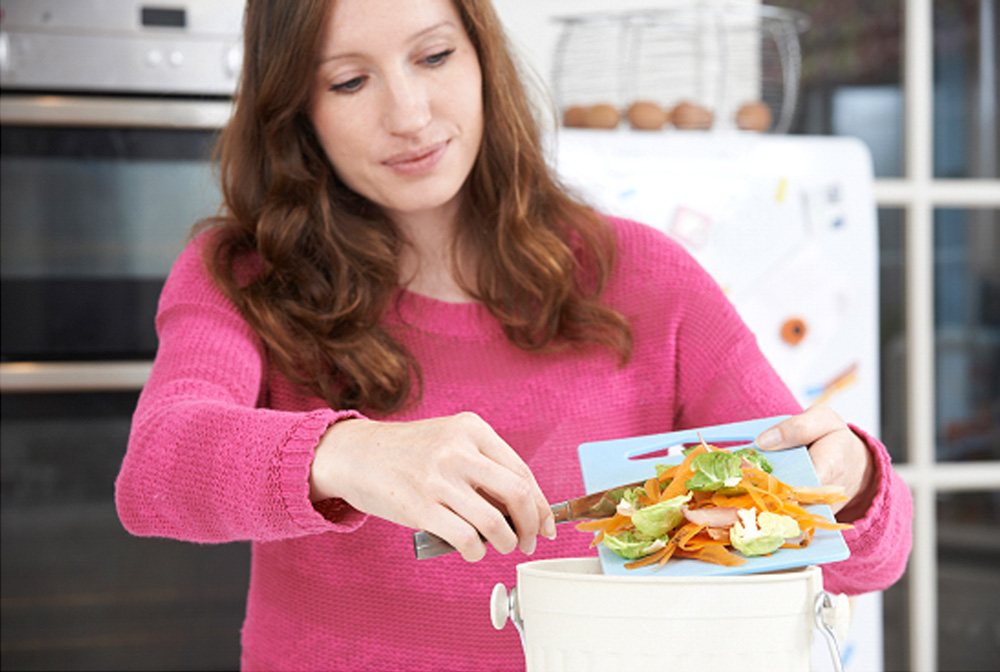
Take advantage of municipal compost programs. Most allow whole pizza boxes, paper plates, plate scraps, and bones in the green bin — all no-no’s for a backyard bin. Or, get yourself a worm box and compost small food scraps that will help your garden grow. You can also toss veggie scraps into a freezer bag until you have enough to make veggie broth.

To learn more about sustainability leadership, visit http://www.olives.com.

Remember every small step makes a difference.

Straight Talk With Danice

Danice Akiyoshi

Danice Akiyoshi

By Danice Akiyoshi


Help! I have toenail fungus – a letter from Lauren


Q: I have toenail fungus and an ongoing itchy rash on my back and chest.  My coworker thinks I need a Candida Cleanse because I constantly crave sugar too.  I never feel good and I’m only thirty five.  I’ve never heard of Candida Cleanse.  Do you think this is true?


A: The things you mentioned are indicative of Candida/ yeast problems.  The product that I recommend to my patients is called Candida Cell Wall Suppressor.  You can read up on this topic at www.candidacleanser.com/blog.   This site will help you decide for yourself if this protocol seems right for you.


Are You Living to Die or Dying To Live?

Licensed Marriage Family Therapist

Nancy Stoops M.A., M.F.T Licensed Marriage and Family Therapist

By Nancy Stoops

Our lives are truly about our mindset and how we view our lives.  I must ask you if you are living to die or are you dying to live.  These two ways for which people live sure do look and sound the same but they couldn’t be more different.  Take a look at the first one: living to die.  To me, that means the person is merely existing and just going through the motions until they die.  I don’t believe there is much joy or quality of life with this style of life.  I believe a pretty unhappy and dissatisfied person lives according to the idea of living to die. Now on the other hand, a person who is dying to live has a life of joy and quality.  I believe they are satisfied with their lives and appreciate each and every day they are honored with life.

So how do you live?  Which of these two mottos do you follow? It’s never too late to change.  It all starts by changing your mindset.  It starts by letting go of your past, forgiving yourself and others, and being grateful each and every day we are here.  As you begin the healing process, your mindset will start to help you see all the good in everyday and you will start to feel empowered by the self-induced changes in you and the way you think.

I hope the change will start by reading this article.  I hope you believe you deserve a better life and use this as a road map to take you there.  I have faith in you that you can make the change and get the life you are worthy of!


This article was written by Nancy Stoops M.A., M.F.T.  Nancy is a licensed Marriage and Family Therapist.  She has a private practice in Diamond Bar and is currently accepting new clients; she is also a motivational speaker who can inspire your employees or group members.  Nancy runs free family support groups, a group on loss for seniors, and groups on how to manage anger.    For more information about any of these services, feel free to contact her at (909) 229-0727.  You may e-mail Nancy at nancystoops@verizon.net. You may purchase Nancy’s books Live Heal and Grow and Midnight the Therapy Dog at Amazon.com.


Smoky Chicken Tacos

With Charred Corn, Sautéed Veggies, and Salsa Fresca

By Hello Fresh   

Photo courtesy: Hello Fresh

Photo courtesy: Hello Fresh

Celebrate taco Tuesday any day of the week with these crowd-pleasers. There’s a bit of heat thanks to our unique southwest spice blend, a kick of tang from the lime crema, and a pop of color with the addition of sweet corn and succulent tomatoes. It’s an unbeatable combination.

Cooking Time: 30 min.

Servings: 2

Nutrition: Calories: 647 cal, Fat: 22g, Sat. Fat: 7 g, Protein: 45g, Carbs: 65 g, Sugar: 11 g, Sodium: 618 mg, Fiber: 5 g

Ingredients:

  • Chicken Thighs- 12 oz.
  • Flour Tortillas- 6
  • Red Bell Pepper- 1
  • Red Onion- 1
  • Roma Tomato- 1
  • Lime- 1
  • Jalapeno Pepper- 1
  • Corn on the Cob- 1 Ear
  • Sour Cream- 2T
  • Southwest Spice Blend- 1t
  • Olive Oil- 2t

Preparation:

  1. Prep: Wash and dry all produce. Preheat the oven to 400 degrees. Shuck the corn then cut the kernels off the cob. Core, seed, and thinly slice the red bell pepper. Core, seed, and dice the tomato. Halve, peel, and thinly slice the onion. Mince the jalapeño, removing the ribs and seeds if you prefer less heat. Zest and halve the lime, then cut one half into wedges. Thinly slice the chicken into strips.
  2. Make the lime crema: Combine the sour cream, lime zest, and a squeeze of lime in a small bowl. Season with salt and pepper. Thin to a drizzling consistency with 1 teaspoon or so of water.
  3. Cook the veggies: Heat a drizzle of olive oil in a large pan over medium-high heat. Add the onion and bell pepper. Cook, tossing, for 5-6 minutes, until slightly caramelized. Add the corn. Cook another 3-4 minutes, until slightly charred. Season with salt and pepper. Remove from pan and set aside.
  4. Make the salsa fresca: Meanwhile, combine the tomato, a squeeze of lime, and as much jalapeño as you like (use with caution, start with 1 Tablespoon, you can always add more) in a small bowl. Season with salt and pepper.
  5. Cook the chicken: Heat another drizzle of olive oil in the same pan over medium-high heat. Add the chicken strips to the pan. Cook 3-4 minutes per side, until browned and cooked through. Sprinkle with the Southwest seasoning and toss to combine. Season with salt and pepper.
  6. Warm the tortillas and serve: Meanwhile, wrap the tortillas in foil, then place in the oven to warm about 5 minutes. Fill each tortilla with some chicken, veggies, salsa fresca, and lime crema. Serve the smoky chicken tacos with lime wedges for squeezing over and enjoy!

History 101

By History.com  

Photo courtesy: history.com

Photo courtesy: history.com

On August 15 in 1969, the Woodstock Music Festival opens on a patch of farmland in White Lake, a hamlet in the upstate New York town of Bethel.

Promoters John Roberts, Joel Rosenman, Artie Kornfield and Michael Lang originally envisioned the festival as a way to raise funds to build a recording studio and rock-and-roll retreat near the town of Woodstock, New York. The longtime artists’ colony was already a home base for Bob Dylan and other musicians. Despite their relative inexperience, the young promoters managed to sign a roster of top acts, including the Jefferson Airplane, the Who, the Grateful Dead, Sly and the Family Stone, Janis Joplin, Jimi Hendrix, Creedence Clearwater Revival and many more. Plans for the festival were on the verge of foundering, however, after both Woodstock and the nearby town of Wallkill denied permission to hold the event. Dairy farmer Max Yasgur came to the rescue at the last minute, giving the promoters access to his 600 acres of land in Bethel, some 50 miles from Woodstock.

Early estimates of attendance increased from 50,000 to around 200,000, but by the time the gates opened on Friday, August 15, more than 400,000 people were clamoring to get in. Those without tickets simply walked through gaps in the fences, and the organizers were eventually forced to make the event free of charge. Folk singer and guitarist Richie Havens kicked off the event with a long set, and Joan Baez and Arlo Guthrie also performed on Friday night.

Somewhat improbably, the chaotic gathering of half a million young “hippies” lived up to its billing of “Three Days of Peace and Music.” There were surprisingly few incidents of violence on the overcrowded grounds, and a number of musicians performed songs expressing their opposition to the Vietnam War. Among the many great moments at the Woodstock Music Festival were career-making performances by up-and-coming acts like Santana, Joe Cocker and Crosby, Stills, Nash & Young; the Who’s early-morning set featuring songs from their classic rock opera “Tommy”; and the closing set by Hendrix, which climaxed with an improvised solo guitar performance of “The Star Spangled Banner.”

Though Woodstock had left its promoters nearly bankrupt, their ownership of the film and recording rights more than compensated for the losses after the release of a hit documentary film in 1970. Later music festivals inspired by Woodstock’s success failed to live up to its standard, and the festival still stands for many as a example of America’s 1960s youth counterculture at its best.


Making New Friends (Part II)

mark-hopper-color-2x2By Pastor Mark Hopper


We recently concluded a wonderful week of Vacation Bible School at our church. Over 200 children attended and over 100 volunteers served on the leadership team.

The kids really enjoy VBS.  There was a lot of great music with the children singing songs and learning hand motions that go with each song.

They love making different crafts that they get to take home.  They cut and paste, color and decorate a variety of projects during the week.

Recreation is a lot of fun too.  The favorite day of the week is “Wet & Wild Wednesday”.  We were careful to conserve water this year, but the students still managed to get pretty wet in the relays and other water games.

Another important part of VBS is the snacks.  A whole team of volunteers work hard all week to provide healthy, tasty treats to feed these active young people.

The children also hear stories from the Bible and memorize Bible verses.  The kids love learning lessons from the Bible that relate to their daily lives.

The purpose of Vacation Bible School is to help children learn more about God and help them grow in their spiritual lives.

But, there is an unexpected benefit from VBS.  Not only do the children learn and grow, but the volunteers who lead the program do too!

And, many of the volunteers make new friends as they serve together.  Every year, I see new friendships formed, especially among the women who serve on the leadership team.

Our church is not large by California standards.  We have a several hundred people who come each week.  But, because we have two services each Sunday, many people never meet.

But, when you serve as a volunteer every day for a week at VBS, you meet people that you never see on Sunday morning.  And, as you serve together, you get to know others better. This is true at work and school, too.

I know people at our church who met as volunteers at Vacation Bible School and who have become long time friends.

Let me encourage you to find a place to serve.  It could be at your church, local school, or the YMCA.  If you invest your time in serving others, I’m sure you will find some new friends along the way!

Pastor Mark Hopper is from the Evangelical Free Church of Diamond Bar, 3255 South Diamond Bar Blvd.  Sunday services are 9 a.m. and 10:45 a.m.  For more information, call (909) 594-7604 or visit Efreedb.org.