Category Archives: SGV-IE Community News

Wasabi Lime Salmon

o

Photo courtesy: Hello Fresh

ver Soy-Simmered Rice with Baby Bok Choy


By Hello Fresh


Cooking Time: 30 mins

Servings: 4

Nutrition: 660 Calories

Ingredients:


  • Veggie Stock Concentrate- 2
  • Soy Sauce- 1 tbsp
  • Jasmine Rice- 1 cup
  • Baby Bok Choy- 4
  • Scallions- 4
  • Lime- 2
  • Ginger- 1 thumb
  • Garlic- 2 cloves
  • Mayonnaise- 4 tbsp
  • Wasabi Paste- 1 tsp
  • Salmon- 24 oz


  1. COOK RICE Bring ¾ cup water, stock concentrate, and soy sauce to a boil in a small pot. Once boiling, add rice. Cover, lower heat, and reduce to a simmer. Cook until tender, 15-20 minutes. Remove from heat and keep covered.


2.PREP Wash and dry all produce. Cut off and discard root ends of bok choy, then separate into individual stalks. Thinly slice scallions, keeping greens and whites separate. Halve lime. Cut one half into wedges. Peel, then finely grate ginger. Grate garlic.


  1. MAKE DRESSING In a small bowl, combine mayonnaise, a squeeze of lime juice, a pinch of garlic, a pinch of ginger, and wasabi paste (to taste—start with a pinch and go up from there). Stir in 2 tsp water. (TIP: Add more water as needed to give dressing a drizzly consistency.) Season with salt and pepper.


  1. COOK BOK CHOY Heat a drizzle of oil in a large pan over medium heat. Add scallion whites, remaining garlic, and remaining ginger. Cook, tossing, until slightly softened, 1-2 minutes. Add bok choy and 1 TBSP water. Cook, tossing, until leaves wilt, 2-3 minutes. Season with salt and pepper. Remove mixture from pan and set aside, covering with aluminum foil to keep warm.


5 COOK SALMON Heat a drizzle of oil in same pan over medium-high heat. Season salmon all over with salt and pepper. Add to pan skin-side down. Cook until skin is crisp and browned, 5-6 minutes. Lower heat to medium and flip salmon. Cook until opaque throughout, another 3-4 minutes.


6 PLATE AND SERVE Divide rice between plates. Top with bok choy and salmon. Drizzle with dressing and garnish with scallion greens. Serve with lime wedges on the side for squeezing.

Optimus Prime

By Craig “Deuce” Doussett MPH, RDN, Clark’s Nutrition

The vast majority of us want cut-and-dried answers. We want to know what the best supplements are, how much sleep to get, the right amount of water to drink, the best foods to consume in their proper ratios and times, and the most effective exercises and peak times to perform them. We desire to know the “best” (optimum) and “first in order” (prime) information to make our lives productive, rewarding, and free from distracting demands. In this spirit, here are a few answers that are steeped in science.

  1. Water is fairly easy, drink when thirsty and avoid darkly colored urine. While overhydration is not as common as dehydration, it can be just as dangerous, so drink plenty of water and always plan ahead. Stock up on water and have plenty of stainless steel or glass water containers on hand. As for food, Michael Pollan succinctly stated, “Eat food, not too much, mostly plants”. It does not matter what food camp we align with if the above dictum is ignored. One caveat, protein should be at every meal, carbs early in the day or after training, and fats in the afternoon. Protein powders can be excellent additions to busy lifestyles seeking simplified and salubrious solutions.
  2. Sleep seven to nine hours a night! In most individuals, less or more than this amount may result in overeating (non-homeostatic appetite), a decrease in resting metabolic rate, and hyperglycemia (high blood sugar [glucose]). All of the aforementioned conditions lead to weight gain and compromised immune systems. Experiment with natural and safe sleep aids such as melatonin (inform your physician), magnesium (with added L-Threonine to access neural tissue more effectively), and herbal teas such as valerian, chamomile, or hops.
  3. Exercise? A combination of cardiovascular exercise (running, swimming, biking etc.), resistance training (busting the weights), and high intensity interval training (HIIT), (start/stop movements cycled through power intervals) is best. Cardio is not only for heart health, it provides our brains with an influx of oxygen and nutrients, further increasing our odds of staving off forms of dementia and depression. Resistance training three time weekly (for skeletal and mitochondrial biogenesis) prepares the body for the demands of both daily and future life. Lastly, HIIT (flexibility, and lymphatic fluid movement) is an excellent way to challenge oneself and experience fat-burning and toning benefits simultaneously.
  4. When to work out? The short answer is whenever you enjoy it the most and will make it a lasting habit. The science shows, all things being equal, the afternoon is the best time. Firstly, in the afternoon our skeletal muscle is naturally less sensitive to insulin and exercise sensitizes our body to accept glucose and clear blood sugar before it moves to fat tissue to be repartitioned. Thus, afternoon exercise can help avoid a phenomenon known as “Afternoon diabetes”. Better sugar control means muscles perform better and longer. Secondly, while testosterone is higher in the morning, so is cortisol which is a hormone that can have delimitating effects on training adaptation. In the afternoon, the testosterone to cortisol ratio is improved (it is lower). Thirdly, we must consider our core temperature which is optimum in the afternoon for both genetic expression and mitochondrial output. Working out in the cold of morning means brains, muscles, cells, and bodily fluids are all at their slowest. Spoiler alert: there is a reason world records get broken in the afternoon.

Sometimes, it is best, in the face of undecided science, to follow the example of a certain brightly colored, anthropomorphized semi-truck and simply “Roll Out”! We do the best we can with the data we have until our choices are sufficiently challenged or our goals change. Ask a nutritional consultant to assist you in making your individualized approach to a healthy lifestyle.


Straight Talk With Danice

Danice Akiyoshi

Danice Akiyoshi

Dear Danice Akiyoshi,

My teenage son (13) thinks he doesn’t need to shower because he goes swimming in the pool.  He will go three or four days without taking a shower and it’s getting pretty bad.  Everything I say goes in one ear and out the other.  Do you have any suggestions?  I’m getting desperate.

M. R.


Hi  M. R.

Your complaint is very common.  Kids in this age group quite often don’t want to be bothered with things like personal hygiene.  Thankfully that doesn’t last forever in most cases.  My idea would be to explain to your son that chlorine is a chemical that isn’t overly friendly to skin and hair and really should be rinsed off with soap and shampoo after he’s enjoyed the pool.  If he still ignores you, be straight with him and tell him that you have no interest in living with someone who never smells fresh or clean.  Explain that you have basic standards for the family home and you expect every family member to respect those standards in order for everyone to enjoy a harmonious experience.

Good Luck,

Danice Akiyoshi

Danice Akiyoshi is a Naturopathic Doctor and the head of Candid Coaching Service. She offers personal coaching services relating to all types of issues and concerns. This is a letter she received from an anonymous reader. To send a question to Danice, email her at straighttalk@ candidcoachingservices.com. You can also visit her website at http://www.candidcoachingservices.com

Home Of The Brave

By Sarah Sanchez


My family and I went to a baseball game together a few years ago. A talented singer sang the Star Spangled Banner beautifully, as usual. I’ve heard this song countless times before. I’ve done the Pledge of Allegiance every day since I started school. These songs were routine, just another part of the agenda when we attend a public event.

However, this baseball game was suddenly different because I happened to look over at my mom during the Star Spangled Banner song. There she was singing along to the song, smiling, and with tears in her eyes. I asked her why she was crying and she said she always cries during that song because she remembers the day she officially became a citizen of this great country. To this day, I still remember that day and that statement.

My mom was born in Mexico and she came to this country with her family when she was a young girl. Her family looked for a better life here in America and she said that’s what they received. She says she will always remember the day she became a citizen, where she waved the little flag they gave her and heard the Star Spangled Banner for the first time. She said the National Anthem reminds her of that day every time.

I was truly touched by that moment at the baseball game because it’s such a routine to hear that song for us natural born citizens. Some of us will sing along because we’ve heard the song so much, some will cheer after the singer hits that amazing high note, and some of us will clap because the singer actually sang the song well.

But what we don’t realize is that this song means more than just something to be played at a baseball game. This song is our national anthem. It represents our country and it represents the freedom we have that many around the world don’t. And it represents the many soldiers that have risked and lost their lives for that freedom.

We live in a great country, despite the flaws we may have. We live in a fortunate country with a lot of opportunity, despite that fact that most of us inherited that fortune by just being born here. So every time we hear that Star Spangled Banner song, it should be more than just a routine. We should sing that song with pride, listening to and meaning every single word. And it should remind us of how fortunate we are to live in the land of the free and the home of the brave.

History 101

Photo courtesy: Google Images

July 4, 1776: U.S. Declares Independence


By History.com

In Philadelphia, Pennsylvania, the Continental Congress adopts the Declaration of Independence, which proclaims the independence of the United States of America from Great Britain and its king. The declaration came 442 days after the first volleys of the American Revolution were fired at Lexington and Concord in Massachusetts and marked an ideological expansion of the conflict that would eventually encourage France’s intervention on behalf of the Patriots.

The first major American opposition to British policy came in 1765 after Parliament passed the Stamp Act, a taxation measure to raise revenues for a standing British army in America. Under the banner of “no taxation without representation,” colonists convened the Stamp Act Congress in October 1765 to vocalize their opposition to the tax. With its enactment in November, most colonists called for a boycott of British goods, and some organized attacks on the customhouses and homes of tax collectors. After months of protest in the colonies, Parliament voted to repeal the Stamp Act in March 1766.

Most colonists continued to quietly accept British rule until Parliament’s enactment of the Tea Act in 1773, a bill designed to save the faltering East India Company by greatly lowering its tea tax and granting it a monopoly on the American tea trade. The low tax allowed the East India Company to undercut even tea smuggled into America by Dutch traders, and many colonists viewed the act as another example of taxation tyranny. In response, militant Patriots in Massachusetts organized the “Boston Tea Party,” which saw British tea valued at some 18,000 pounds dumped into Boston Harbor.

Parliament, outraged by the Boston Tea Party and other blatant acts of destruction of British property, enacted the Coercive Acts, also known as the Intolerable Acts, in 1774. The Coercive Acts closed Boston to merchant shipping, established formal British military rule in Massachusetts, made British officials immune to criminal prosecution in America, and required colonists to quarter British troops. The colonists subsequently called the first Continental Congress to consider a united American resistance to the British.

With the other colonies watching intently, Massachusetts led the resistance to the British, forming a shadow revolutionary government and establishing militias to resist the increasing British military presence across the colony. In April 1775, Thomas Gage, the British governor of Massachusetts, ordered British troops to march to Concord, Massachusetts, where a Patriot arsenal was known to be located. On April 19, 1775, the British regulars encountered a group of American militiamen at Lexington, and the first shots of the American Revolution were fired.

Initially, both the Americans and the British saw the conflict as a kind of civil war within the British Empire: To King George III it was a colonial rebellion, and to the Americans it was a struggle for their rights as British citizens. However, Parliament remained unwilling to negotiate with the American rebels and instead purchased German mercenaries to help the British army crush the rebellion. In response to Britain’s continued opposition to reform, the Continental Congress began to pass measures abolishing British authority in the colonies.

In January 1776, Thomas Paine published Common Sense, an influential political pamphlet that convincingly argued for American independence and sold more than 500,000 copies in a few months. In the spring of 1776, support for independence swept the colonies, the Continental Congress called for states to form their own governments, and a five-man committee was assigned to draft a declaration.

The Declaration of Independence was largely the work of Virginian Thomas Jefferson. In justifying American independence, Jefferson drew generously from the political philosophy of John Locke, an advocate of natural rights, and from the work of other English theorists. The first section features the famous lines, “We hold these truths to be self-evident, that all men are created equal, that they are endowed by their Creator with certain unalienable Rights, that among these are Life, Liberty and the pursuit of Happiness.” The second part presents a long list of grievances that provided the rationale for rebellion.

On July 2, 1776, the Continental Congress voted to approve a Virginia motion calling for separation from Britain. The dramatic words of this resolution were added to the closing of the Declaration of Independence. Two days later, on July 4, the declaration was formally adopted by 12 colonies after minor revision. New York approved it on July 19. On August 2, the declaration was signed.

The American War for Independence would last for five more years. Yet to come were the Patriot triumphs at Saratoga, the bitter winter at Valley Forge, the intervention of the French, and the final victory at Yorktown in 1781. In 1783, with the signing of the Treaty of Paris with Britain, the United States formally became a free and independent nation.

 

Rent or Buy? Part 2

By Nef Cortez

Nef Cortez

Part 1 of “Rent or Buy?” written last week covered some general factors that most people consider when deciding whether to buy or rent. I promised to provide in more detail what some of these factors are, and how they might impact you when considering renting or buying a home. According to Attom Data Solutions, buying is more affordable in 66% of the markets surveyed across the country. The major reason for that is that rents continue to rise, and although home prices are also rising, the historically low fixed interest rate on home mortgages continues to make owning affordable. 

As the Federal Reserve continues to push rates upward, and eventually long term mortgage rates rise, many will be convinced to lock in their long term interest rates on their home purchase this year.  Daren Blomquist, senior vice president of ATTOM Data Solutions was quoted in a recent report in which he said  “ While buying continues to be more affordable than renting in the majority of U.S. markets, that equation could change quickly if mortgage rates keep rising in 2017.”  He continued “In that scenario, renters who have not yet made the leap to homeownership will find it even more difficult to make that leap this year. Additionally, renting may end up being the lesser of two housing affordability evils in a growing number of high-priced markets.”

 This “push” to homeownership is based on the benefits of ownership and the negative consequences of being left out. These benefits summarized are: 1)  The stabilization of the cost of housing by locking in a long term fixed interest rate loan,  2) The pleasure and enjoyment of being able to customize one’s space, because they own it,  3) Owning a home has a forced savings component built into it, which is a long term benefit to the owner, 4) The tax deductibility of interest payments and the property taxed paid is another benefit and makes home ownership more affordable,  5)  Appreciation of real estate in the face of inflationary pressures protects a homeowner’s cash investment in the form of a down payment and allows for leveraged appreciation of the investment, and allows for the growth of an equity investment in the property.

Currently, in most cases, the benefits of buying outweigh the risks of doing so, and are providing the impetus for many to make the leap into homeownership in 2017.

This article was written by Nef Cortez, a licensed Real Estate Broker, Ca BRE # 00560181 since 1976. He can be reached via e-mail at nefcortez@gmail.com.  Please feel free to email any questions regarding real estate.

Celebrating the Simple Things

By Nancy Stoops

Licensed Marriage Family Therapist

Nancy Stoops M.A., M.F.T Licensed Marriage and Family Therapist

I believe each day that we have the honor of being alive is call for celebration.  Every morning as I awake and see the sun rising and filling the sky with majestic colors I am reminded of how lucky we are.  As I step out in the morning with Midnight my therapy dog I feel blessed for his friendship and for the health that we both have.  As we start our walk through our wonderful community I am proud to be part of it and I enjoy the morning song of the birds around us.  As we walk I enjoy the trees and flowers that represent life in the neighborhood.  Midnight and I are greeted by the other daily walkers with a friendly smile and warm hello.  It’s so nice to be part of such a wonderful neighborhood filled with such lovely people.  Sometimes the other dogs will visit with Midnight as we make our way through our neighborhood and that makes Midnight a very happy soul.

I think the feeling of the sun on my face is just magical.  The fragrant plants and flowers are intoxicating and so very delightful.  Swimming or floating in water has always been very freeing for me.  Laughter truly is the best medicine and I think we all could do a lot more of it.  Looking up at a night sky filled with stars and a full moon can be an experience that provides a wonderful kind of solace. Just hanging out with my grandson is fabulous.

These simple things I speak of don’t cost any money but are literally priceless.  I think if we all take time to appreciate the simple things that are so wonderful in our world we will be more positive.  I think then we will not dwell so much on what is wrong but focus on what is right!

This article was written by Nancy Stoops M.A., M.F.T.  Nancy is a licensed Marriage and Family Therapist.  She has a private practice in Diamond Bar and is currently accepting new clients; she is also a motivational speaker who can inspire your employees or group members.  Nancy runs free family support groups, a group on loss for seniors, and groups on how to manage anger.    For more information about any of these services feel free to contact her at 909 229-0727.  You may e-mail Nancy at nancyjstoops@verizon.net.  You may purchase Nancy’s books Life Heal and Grow and Midnight the Therapy Dog at Amazon.net.


A Bird In The Hand

By Mark Hopper


There is a familiar saying that says, “A bird in the hand is worth two in the bush”.  Basically it means that it is better to hold on to something you already have than to risk losing it by trying to get something more. I have come up with a better slogan, “A bird in the house is worse than two in the bush”.  During the past few months several birds have built nests in the rafters of our patio.  We enjoy watching the progress of nest building and the birth of new baby birds.  However, we don’t enjoy the mess that they make and leave behind.

One day we were surprised to see a new nest on top to the porch light next to our patio sliding door.  How did that happen?  The mother bird has been faithfully sitting on the nest.  But every time someone opens the patio door, she is frightened and quickly flies away. Recently, someone went out to the patio for a moment and forgot to close the door.  As usual the mother bird was started and quickly took flight.  But, instead of flying away, she flew into our house!  Suddenly we had an unexpected visitor.  The bird was frightened and confused.  We were also frightened and concerned.  What are we going to do with a wild bird in our house?  How do you get an uninvited guest to leave? Family members quickly sprang into action.  The grandkids opened the front door and the other two sliding doors in the house hoping the bird would use one of these safe exits.  One of the adults starting waving their hands trying to persuade the bird out of the house. Another adult grabbed a small blanket and held it up to try to block the bird from going further into the house.  To our surprise, the bird landed on the blanket and seemed to calm down.  Then the adult slowly walked toward an open door and gave the blanket a gentle shake and the bird flew away. Success!

I suspect most of you have had an unexpected guest in your house, too.  One time we had a skunk in our house.  You may have had a mouse, lizard, snake or other non-domesticated creature, too. I think most of these critters prefer the outdoors instead of indoor your house.  It can be a challenge keeping them out and it can be exciting getting them out when they find their way into your home. Jesus told his followers that our Heavenly Father knows how many hairs each of us has on our head and He knows when every Sparrow falls.  Since He knows every detail of our lives, I’m sure He knows when a bird finds its way into our house, too!   I’m not sure which is better –  the bird in the hand verses two birds in the bush.  But, I am certain that a bird in the house is worse than two birds in the bush.

Pastor Mark Hopper
Efree Church of Diamond Bar
3255 South Diamond Bar Blvd
Sunday Services: 9:00 & 10:45 AM
Efreedb.org 

An Optometrist WHO You Can Trust

Walnut Hills Optometry can be reached at (626) 965-3878 or (909) 594-1153. For more information, visit their website at http://www.walnuthillsoptometry.com

Staff Reports

Walnut – Do you know WHO will care for your eyes? Fire sale rookies at discount places are hard trust, assembly line medicine is no place for your vision!

Walnut Hills Optometry can satisfy all your optometry care needs with well over 20 years of experience, Walnut Hills Optometry (WHO) has taken excellent care of the vision needs of the community. They’ve been serving patients from Walnut, West Covina, Diamond Bar, and Chino Hills to patients from La Puente, Rowland Heights, Hacienda Heights and Whittier. Because of the quality of service provided, as well as the trusting care given by the doctor, patients travel from the Los Angeles and Inland Empire areas as well.

WHO considers vision to be a precious gift, and their office takes pride in providing comprehensive eye exams. 

WHO believes that quality eye care involves consistent care by a professional.  Carmela Larino, O.D., and her loyal staff, will give your eyes the personalized care and attention they deserve.

Dr. Larino is proud to serve the community she grew up in.  She attended Rowland Unified schools from elementary through high school, and then attended U.C. Irvine before receiving her doctorate degree from the Southern California College of Optometry.  In 2003, Dr. Larino was honored at her alma mater – Nogales High School – when she was inducted onto their Wall of Fame.  She is a member of the American Optometric Association, the California Optometric Association, and the Rio Hondo Optometric Society, where she stays current on the latest in eye care.  As a local resident, you might find Dr. Larino eating at your favorite restaurant, shopping in a local store, or attending a community event.

WHO offers personalized eye examinations, diabetic and eye health exams, and the management and care of a multitude of eye and vision concerns.  A wide variety of eyewear is also available, from progressive and polarized lenses to silicone high-oxygen contacts, and even designer frames. They also offer Lasik Surgery co-management. If you have used eyeglass frames scattered around the house, bring them to the WHO offices and they will donate them to those in need of frames.

WHO is conveniently located near the 10, 60 and 57 freeways, on the border of Walnut and West Covina, at 18800 East Amar Road # A5, inside the Walnut West Plaza. Their hours are Monday through Friday, 10 a.m. to 7 p.m.; and Saturdays, 9 a.m. to 2 p.m.  You can reach them at (626) 965-3878 or (909) 594-1153.  For more information visit their website at http://www.walnuthillsoptometry.com.

Walnut Hills Optometry thanks you for over twenty years, follow them for twenty more!

Local Bank Robbery Suspect Caught

IMG_4584

Staff Reports

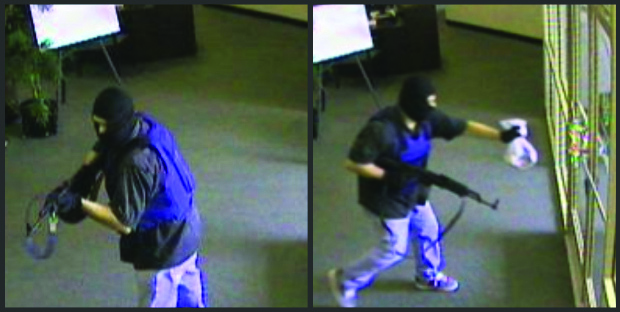
Chino – The “AK-47” bank robber who shot and wounded a local police officer back in 2012 was caught this week in another state. He is also accused of a string of bank robberies throughout the country. He was dubbed the “AK-47 Bandit” by FBI agents because in each robbery, the suspect brandishes an AK-47 –style assault rifle with a drum magazine. 

Richrd Gathercole, 39, was arrested in Helena, Montana for shooting at a Kansas State Trooper. While in jail, Gathercole himself tipped police off during a recorded phone conversation. According to a transcript, he apparently called his mother, whom he lived with, and instructed her to “get all the guns out of the house”. His mother, who was unnamed, agreed and then said “um, this is recorded. You know that.” Apparently he did not.

On Wednesday, Feb. 29, 2012, the California Bank & Trust on 5455 Riverside Drive in Chino, California, was robbed by a white male, described as 25-40 years old, with a stocky build.  The suspect was armed with an assault rifle, similar to an AK-47, with a sling and drum magazine.  Following the robbery, a police officer patrolling the area came upon the bank robbery suspect who was fleeing the bank.  The suspect fired upon the officer and seriously wounded him.  During and following the robbery, the suspect wore body armor over a dark-colored collared short-sleeved shirt and blue pants, as well as a ski mask covering his face. 

The suspect was seen leaving the scene in a vehicle described as a dark gray Nissan Maxima with four doors and tinted windows.  A witness described seeing Arizona license plates on the vehicle. The suspect was seen in bank surveillance video and photographs dressed in tactical gear over a dark-colored, short-sleeve collared shirt and blue pants. He also wore a black full-face ski mask, a blue ballistic vest and/or a green mesh vest marked “Sheriff.”  

“I was on my way to the post office and parked across from the Chino Valley Medical Center Emergency entrance as I usually do,” said Michael Armijo, a passerby. “Then comes a police car screeching down the street as though he didn’t have control of the vehicle.” He drove erratically because the officer had a bullet in his leg, the police department confirmed.

“The officer flipped the door open and yelled ‘I’ve been shot’ and I ran up to the car with another passerby. I instructed him to get help at the ER and I tried to help him get out of the car,” Armijo said. “He then proceeded to give me details about the incident and the suspect to tell the detectives when they got there, so I did.” Armijo also said the officer told him he just happened to pull up when the robber was walking out. It was just timing, the officer had no warning there was a robbery going on. The robber saw the policeman and just began to open fire on the police car, striking the car in the fender, the door and the rear panel. The officer was hit through the door and the bullet entered and exited his leg, while the gas tank was punctured but did not ignite, Armijo said.

FBI officials have been looking for years for the suspect in Vacaville, Rexburg and others in California, Washington state and Nebraska dating back to 2012.

FBI agents, along with officers from Chino; Rexburg, Idaho; and Montana’s Musselshell County searched Gathercole’s home in the town of Roundup, about 50 miles north of Billings, on Saturday, according to officials with the Musselshell County Sheriff’s Office. Inside, they found “numerous” improvised explosive devices that were removed by a bomb squad, the officials said in a statement. His arrest was for the attempted shooting of the trooper who was trying to pull him over on interstate 70, and the trooper wasn’t injured.

Anyone with information about this incident is urged to contact the Chino Police Department at 909 628-1234, their nearest FBI office or dial 911. For more information you can sign onto http://www.chinopd.org/.  The FBI’s wanted flyer announcing the reward can be found at http://www.fbi.gov/wanted/unknown/unknown-suspect-17/view.  Information can be provided confidentially.

Mt. Sac Chosen For Olympic Trials

IMG_4582

Photo courtesy: Google Images

By Michael Armijo

Walnut – Mt. San Antonio College’s new incoming stadium was chosen for the 2020 U.S. Olympic track and field trials, making this event an Olympic site for the first time in Southern California since 1984 when the games were held at the Coliseum. The Walnut stadium was chosen in an 11-2 vote by the USA Track and Field’s board of directors for the Mt. SAC proposal.
Mt. Sac’s Hilmer Lodge Stadium is no stranger to such an event as the women’s Olympic trials were held there in 1968. Twenty world records have been set at Hilmer Lodge Stadium, the annual site for the annual Mt. Sac Relays for the last 60 years. The stadium is under renovations and is scheduled to reopen in 2019 with an expanded seating capacity of 21,000 captacity. The trials, scheduled for Jun 19-28, 2020, will select US track and field delegation for the Tokyo Games.
“We honored to be chosen over such prestigious institutions,” said Mt. Sac Board Member, David Hall in a phone interview Thursday morning. “Our long heritage, very successful trials in past years, the many records set at the college, and the new state of the art facility, are great factors for their choice.”
“I’m very proud of the team that helped bring this to fruition, and excited by the challenge” said Doug Todd, Director of Track and Cross Country for Mt. Sac told OurWeeklyNews.com. “We are excited by the challenge and anxious to finalize the last few details for the organization to get the planning started.” Todd is the “meet manager” and Bob Seagrem, a former Olympic Gold Medalist, will be the chairperson of the committee.
The last three U.S. Olympic track and field trials were held at Hayward Stadium in Eugene, Ore., the city known as Track Town for its pervasive running culture. The 2000 and 2004 trials were held at Hornet Stadium in Sacramento. Attendance was robust in both cities and both made bids for the 2020 trials. Los Angeles, once the home of many professional track and field meets, hasn’t supported the sport at the pro level in recent years, leaving the Mt. SAC Relays the area’s most prestigious competition, according to the LA Times.
“Our team is cohesive and our historical success are just many factors Mt. Sac is a great choice for this event,” David Hall concluded. “We are looking forward to another successful event.”

Walnut Teen Killed in West Covina Crash

Staff Reports

Walnut –Wednesday morning, a 17-year-old student was killed when a vehicle he was driving collided with a tree on the center divider on Nogales Street.
According to local reports, Ali S. Rizvi died when the minivan he was driving crashed into a tree on Nogales Street between Francesca Drive and Shadow Oak Drive. West Covina police spokesman Eddie Flores said someone heard the crash and called police at around 3 a.m. According to Flores, Police believe the minivan was southbound on Nogales Street when it hit a tree in the center median.
Coroner’s spokesman, Ed Winter, said Rizvi was pronounced dead at Pomona Valley Hospital Medical Center at about 4:44 a.m.
Officers found the minivan and the injured driver and have not determined what led to the crash. A local resident was reported as saing he heard a loud crash around 3 a.m. and it was common to hear drivers speeding on Nogales Street. When he woke up around 7 a.m., he saw officers asking neighbors if they saw anything related to the crash.

OurWeeklyNews.com Complete Edition 7.01.17

The Weekly News covers community news for Chino, Chino Hills, Diamond Bar, Walnut, Rowland Heights and surrounding areas of San Gabriel Valley and the Inland Empire.Click this link to access the complete issue in PDF format: OurWeekly.2017-07-01

Fire in DB: 1 Dead

Staff Reports

Diamond Bar – A man in his 50’s was found in a fire at a Diamond Bar home early this morning but was pronounced dead at the scene, LA County fire department officials said.
Around 4 am this morning in the 23400 block of Wagon Trail Road fire fighters arrived to flames coming out of the first floor of the home. After a search, they found the man unconscious with severe burns on his body. The home is north of Sycamore Canyon park, and just south west of Golden Springs and Diamond Bar Blvd.
Responding firefighters found flames and smoke coming from the first floor of the home. While searching the house, they found a man in his 50s inside with major burns He was removed from the home and died at the scene. His name was not released.
The fire was contained in about 45 minutes and arson and homicide investigators were on the scene. There was no word yet on the cause or if foul play was involved. As of press time no details were available and the investigation was ongoing.
Anyone with any information please contact the Walnut-Diamond Bar Sheriff’s station at 909.595.2264.

Redemption

By Michael Armijo

One day, my friend told me a story about a freshman in high school named David that touched me so deeply. This is what I call redemption:
David saw a kid named Ron walking home from school. It looked like Ron was carrying home all of his books, which was strange because classes aren’t all on the same day. He thought to himself, “Why would anyone bring home all his books on a Friday? He must really be a nerd.” But he shrugged his shoulders and went on.
As he was walking, David saw a bunch of kids running toward Ron, knocking his books out of his arms and tripping him. Ron’s glasses went flying and landed in the grass. When David handed the glasses to him, he looked up he saw this terrible sadness in Ron’s eyes. Somehow he felt his pain.
David said, “Those guys are jerks. They really should get lives.” Ron looked at him and lowly said, “thanks.” There was a slight smile on Ron’s face. It was one of those smiles that showed real gratitude. David helped him pick up his books, and as it turned out, Ron lived near David. They talked all the way home and Ron turned out to be a pretty cool kid.
Over the next four years, Ron and David became best friends. When they were seniors, they began to think about college. Ron decided on Georgetown, and David was going to Duke. They knew that they’d always be friends, and that the miles would never be a problem.
Ron became valedictorian of their class, and had to prepare a speech for graduation. David was so glad ihe didn’t have to get up there and speak.
On graduation day Ron looked great. He was one of those guys that really found himself during high school. All the girls loved him. David was just jealous. He could see that Ron was nervous about his speech, so David smacked him on the back and said, “hey, big guy, you’ll be great!” He looked at David with one of those looks (that really grateful one) and smiled.
As he started his speech, he cleared his throat, and began. “Graduation is a time to thank those who have helped you make it through those tough years. Your parents, your teachers, your siblings, maybe a coach…but mostly your friends. I am here to tell all of you that being a friend to someone is the best gift you can give them. I’m going to tell you a story.”
David looked at his friend with disbelief as he told the story of the first day they met. Ron talked of the day he had cleaned out his locker. He talked of how he was distraught about his life. He talked about how lonely he was. So lonely, he had planned to kill himself that weekend. But he didn’t, because his new friend unknowingly stepped in. He showed kindness. He showed compassion. He showed, by his actions, that life is worth the struggle.
Ron looked hard at David and gave him a little smile. “Thankfully, I was saved. My friend saved me from doing the unspeakable.”
David heard the gasp go through the crowd as this handsome, popular boy told them about his weakest moment. He saw Ron’s mom and dad looking at him and smile with that same grateful smile. Not until that moment did David realize it’s depth.
It was then that David realized how important it is to never underestimate the power of one’s actions. With one small gesture you can change a person’s life. For the better, or for the worse.
The most compelling element about the story of Ron and David’s friendship is how it relates to so many lives. Personally, I’ve hoped that somewhere within my past that I’ve been a “David” to someone I’ve met. And what fills my spirit with more emotion is that I know I’ve felt like a “Ron” many times. What perplexes me even more is that I don’t know which role I’ve felt more often.
Someone once said “Friends are angels who lift us to our feet when our wings have trouble remembering how to fly.” To so many, each day, this is true. I’ve always valued my friends with depth and sincerity. I’ve always believed in the importance of being friends, and the importance of having friends.
As the story continues, it emphasizes that there is no beginning or end. Yesterday is history. Tomorrow is mystery. But today is a gift. This reminds me that giving the ultimate gift of friendship is what I call the inner spirit of your heart, that gives us the true feeling of redemption.

OurWeeklyNews.com Complete Edition 6.24.17

The Weekly News covers community news for Chino, Chino Hills, Diamond Bar, Walnut, Rowland Heights and surrounding areas of San Gabriel Valley and the Inland Empire. Click this link to access the complete issue in PDF format: OurWeekly.06-24-2017WEB-

Southwestern Stuffed Peppers

​with Ground Beef, Quinoa, and Monterey Jack Cheese

By Hello Fresh

Cooking Time: 30 mins
Servings: 4
Nutrition: 710 Calories
Ingredients:

• Chicken Stock Concentrate- 2
• Yellow Onion- 2
• Scallions- 4
•Limes- 2
•Quinoa- 1 cup
• Ground Beef- 16 oz
• Southwest Spice Blend- 2 tsp
•Red Bell Pepper- 2
• Yellow Bell Pepper- 2
•Crushed Tomatoes- 2 boxes
• Monterey Jack Cheese- 1 cup

1. PREHEAT AND PREP Wash and dry all produce. Preheat oven to 400 degrees. Bring 1 cup water, stock concentrate, and a pinch of salt to a boil in a small pot. Halve, peel, and dice onion. Trim, then thinly slice scallions. Cut lime into wedges.

2.COOK QUINOA Once water is boiling, add quinoa to pot. Cover, lower heat, and reduce to a simmer. Cook until tender, 15-20 minutes.

3. START FILLING Heat a drizzle of olive oil in a large pan over medium-high heat. Add onion and scallions and cook, tossing, until softened, 4-5 minutes. Season with salt and pepper. Add ground beef, breaking up meat into pieces. Cook until browned, 3-4 minutes. Stir in Southwest spice blend and cook until fragrant, about 30 seconds. Season with salt and pepper.

4. PREP AND ROAST PEPPERS While onions and beef cook, halve bell peppers lengthwise, then remove white ribs and seeds. Rub with a drizzle of olive oil, then season with salt and pepper. Place on a baking sheet. Roast in oven until softened, 5-7 minutes. Once cool enough to handle, arrange bell peppers cut-side up on baking sheet.

5 FINISH FILLING Stir crushed tomatoes into pan with beef and bring to a simmer. Let simmer until flavors have come together and tomatoes have reduced slightly, about 5 minutes. Once quinoa has finished cooking, add it to pan and stir to combine. Season with salt and pepper.

6 BAKE AND SERVE Stuff bell peppers with as much filling as will fit. Sprinkle Monterey Jack cheese over top of each. Return to oven and continue roasting until very soft, about 10 minutes. Divide remaining filling between plates, then place stuffed peppers on top. Serve with lime wedges on the side for squeezing over

Do You Practice Safe Sun Habits?

By StatePoint

Summertime is all about trips to the pool, beach and park. And it also means time spent in the sun.

Over the past three decades, more people have had skin cancer than all other cancers combined, according to The Skin Cancer Foundation, making proper sun protection a must. As you enjoy time outdoors, it’s important to understand and follow sun safety guidelines.

Sun Protection for Families

A new survey reveals some surprising facts.

When moms with children younger than 18 were asked about the correct amount of sunscreen needed to apply to the face and body, fewer than half knew the right amount. And nearly two in 10 were unaware that after an initial slathering of sunscreen, they needed to reapply more. So says a new survey of moms commissioned by NO-AD Sun Care.

“The correct amount of sunscreen to be applied — or reapplied — is one ounce,” says Brevard, Florida-based dermatologist, Dr. Richard C. Kirkpatrick. “Think of a shot glass of sunscreen or an amount the size of a golf ball.”

Parents should apply a broad-spectrum sunscreen to themselves and children 15 minutes before going out in the sun to give it time to bond to skin, and then reapply at least every two hours or after swimming, sweating and immediately after towel drying.

More than half of moms responding believe the proper time to apply sunscreen is as soon as they start feeling skin burn.

“By the time you feel your skin burning, the sun’s UV rays are damaging your cells’ DNA. Skin cancers get a foothold when this damage affects the DNA of genes that control skin cell growth,” says Dr. Kirkpatrick.

The cost of sun protection may become a concern as families begin to apply the proper amount of sunscreen. If that is the case, one cost effective choice is NO-AD, which offers a selection of products that are affordable and widely available.

Sun Protection for Women

Beautiful summer skin is all about making safe sun care a habit. A routine is easier when you find products you will love to use. Look for lightweight, fast-absorbing formulas comprised of ingredients that have benefits for skin. For example, Ocean Potion offers formulas with sea kelp, Vitamins D3 and E, and a pleasant orange cream scent. The line is PABA-free, (which is an allergen for some people.) For those who want to avoid the sun altogether, a self-tanner such as Ocean Potion EverGlow, can help you get the sun kissed look without the exposure.

Don’t let summer fun distract you from protecting skin from harmful UV rays, every time you leave the house.


History 101

Photo Courtesy: Google
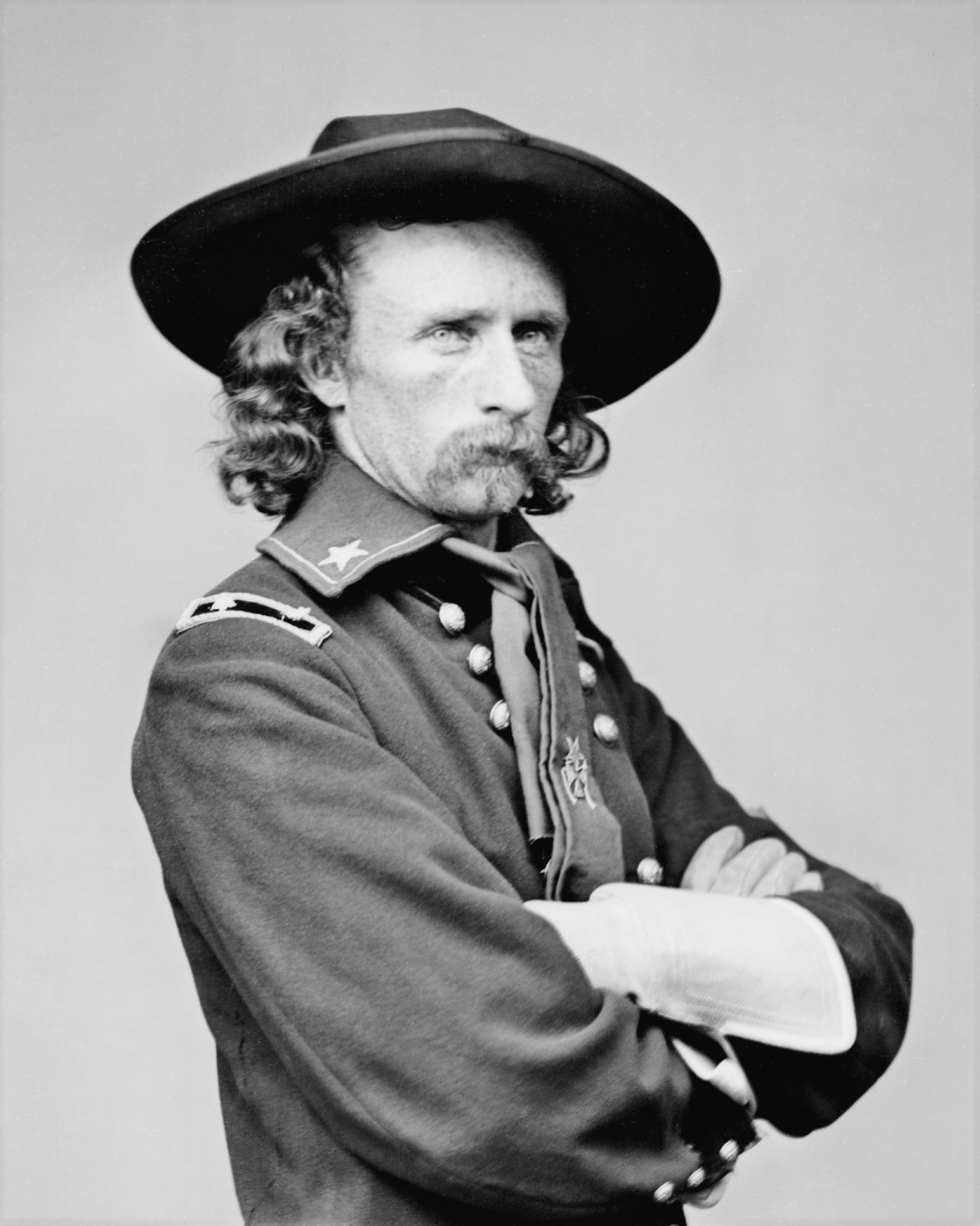
Chief Sitting Bull (above) and Chief Crazy Horse, tribal leaders of the Sioux tribe, joined forces to defeat Colonel Custer at the Battle of Little Bighorn in southern Montana.

June 25, 1876: The Battle of Little Bighorn

By History.com

On June 25, 1876, Native American forces led by Chiefs Crazy Horse and Sitting Bull defeat the U.S. Army troops of Lieutenant Colonel George Armstrong Custer in a bloody battle near southern Montana’s Little Bighorn River.

Photo Courtesy: Google
In an overwhelming defeat, Lieutenant Colonel George A. Custer (above) and all 600 of his men were killed by Sioux warriors during the Battle of Little Bighorn.

Crazy Horse and Sitting Bull, leaders of the Sioux tribe on the Great Plains, strongly resisted the mid-19th-century efforts of the U.S. government to confine their people to reservations. In 1875, after gold was discovered in South Dakota’s Black Hills, the U.S. Army ignored previous treaty agreements and invaded the region. This betrayal led many Sioux and Cheyenne tribesmen to leave their reservations and join Sitting Bull and Crazy Horse in Montana. By the late spring of 1876, more than 10,000 Native Americans had gathered in a camp along the Little Bighorn River–which they called the Greasy Grass–in defiance of a U.S. War Department order to return to their reservations or risk being attacked.
In mid-June, three columns of U.S. soldiers lined up against the camp and prepared to march. A force of 1,200 Native Americans turned back the first column on June 17. Five days later, General Alfred Terry ordered Custer’s 7th Cavalry to scout ahead for enemy troops. On the morning of June 25, Custer drew near the camp and decided to press on ahead rather than wait for reinforcements.
At mid-day, Custer’s 600 men entered the Little Bighorn Valley. Among the Native Americans, word quickly spread of the impending attack. The older Sitting Bull rallied the warriors and saw to the safety of the women and children, while Crazy Horse set off with a large force to meet the attackers head on. Despite Custer’s desperate attempts to regroup his men, they were quickly overwhelmed. Custer and some 200 men in his battalion were attacked by as many as 3,000 Native Americans; within an hour, Custer and every last one of his soldier were dead.
The Battle of Little Bighorn–also called Custer’s Last Stand–marked the most decisive Native American victory and the worst U.S. Army defeat in the long Plains Indian War. The gruesome fate of Custer and his men outraged many white Americans and confirmed their image of the Indians as wild and bloodthirsty. Meanwhile, the U.S. government increased its efforts to subdue the tribes. Within five years, almost all of the Sioux and Cheyenne would be confined to reservations.

Early In The Morning

Pastor Mark Hopper

By Mark Hopper

Recently my wife and I were in Arizona visiting some family members. As usual, I found myself helping with another home improvement project.

Every project seems to start at a local Home Improvement center like Home Depot. The closest one to us opened at 5:30 in the morning. I was surprised at how many people were already there that early in the day.

The parking lot was filled with pick-up trucks. Many were pulling trailers filled with tools, equipment and materials for another day’s work. Home Depot was a busy place.

I was impressed by the people that I saw. These were hard working people. Most were wearing jeans and work shirts that had paint and stains on them. Their hands and arms looked strong and sturdy.

I was also impressed by the spirit of these working people, too. There was laughter in their conversation. People greeted one another. Many seemed to know one another. There were smiles as people acknowledged fellow workers.

At the same time, there was a sense of urgency. They were there to pick up materials that were needed for the day’s work ahead. People were not loitering around. They were ready to get what the needed and get to the job site. No time for a long conversation. It was time to get to work.

I envy the skills and abilities for these hard working people. There were painters and carpenters. I saw men loading cement blocks and sheets of plywood with their bare hands. Others had filled their truck or trailer with bags of garden soil, bushes and trees ready for planting. There were a couple of plumbers, too. These were experienced, skilled working people.

As I finished shopping for the items I needed for my home improvement project, I couldn’t help but smile. I was ready to set out on a project, too. It was an honor to be among these gifted workers.

There is a verse in the Bible that is a helpful reminder for all of us who work with our hands and our minds. “Do your work with all your heart, as if you were doing it for the Lord and not just men” (Ephesians 6:7). Whatever our profession, we should strive to do our jobs well – not just to please others, but to please God.

Let me encourage you to do your work well. Be a good employee. Do all you can to encourage your co-workers, too. And, if you employ workers at your home or business, I hope you will express your appreciation to them too. Say “thanks” to the hard working people around you this week.
You will be glad you did and they will too!